
Prague reads like a wartime script. This semi private WWII Prague tour follows the occupation, resistance, and aftermath through real locations, with stories anchored in English. I love that it stays small (max 6 people) and that the guide stitches big events to the exact corners you can still stand in today.
I also like how the tour uses both scholarship and human detail. At Wenceslas Square, the stories are tied to the work of Czech historian Jiří Klůc, and at the train station, the narrative centers on Sir Nicholas Winton and his rescue of 669 children. One caution: the subject matter is heavy and the walk includes multiple outdoor stops, so wear comfortable shoes and be ready for dark history.
Key Highlights You’ll Feel Right Away
- Small group size (up to 6) keeps questions and pacing comfortable
- Wenceslas Square storytelling connects the occupation’s early days to visible landmarks
- Heydrich Terror memorial focus includes bullet holes and the church resistance used
- Nicholas Winton’s 669 children story is tied to places connected to his work
- 1945 context throughout links liberation, bombing, and fear under Nazi control
- Mobile ticket in English makes it straightforward to show up and go
Why This WWII Prague Tour Feels Personal, Not Generic
A good history tour should do two things at once: give you dates you can use, and show you why those dates mattered to real people. This one does both, and the small group size makes a difference. You can actually ask questions without the guide rushing to catch a clock.
The guide behind Local Historian Tours is Hanna, and the vibe is warm and human rather than lecture mode. Many history walks sound rehearsed. Here, Hanna’s approach feels like she’s meeting you where you are, then guiding you through Prague’s wartime geography in a tight 2 hours 30 minutes.
You can also read our reviews of more private tours in Prague
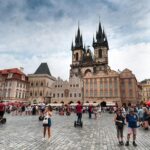


The Meeting Point Advantage: Starting Where Prague Shows Its Tension
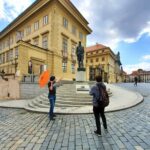
The tour begins at the Statue of Saint Wenceslas on Václavské náměstí in Prague 1, and it ends near the Dancing House on Jiráskovo náměstí in Prague 2. That route matters, because you start in one of the city’s most symbolic spaces and end in a modern landmark that still connects back to the 1945 story.
You’ll also be walking in central areas where public transport is nearby. The tour includes all fees and taxes, but public transportation is listed as extra, so plan for that €1.30 per person if you are coming from farther out.
Wenceslas Square: Seeing the Nazi Occupation Begin in Real Space
Wenceslas Square is not a museum hallway. It’s a wide, active public space, and that’s exactly why it’s so effective for understanding the early occupation. This stop is built around stories from the beginning of the Nazi occupation, told through the square and its historic surroundings.
The tour connects those events to the work of Czech historian Jiří Klůc, which helps turn what could be vague into something grounded. I like that you do not just hear what happened. You also learn how Prague residents experienced the shift in power, what changed in daily life, and why the square became a place people associated with control, fear, and propaganda.
Time on stop: about 25 minutes.
Admission: free.
Prague National Theater and 1945 Liberation: Patton, the Uprising, and the Turning Point
Next you reach the Prague National Theater area, where the tone changes from occupation pressure to liberation and its violent complexity. This part focuses on 1945, including the advance of the U.S. Army led by General George S. Patton in western Bohemia.
You also get stories tied to the Prague Uprising in 1945, which can be easy to reduce to one dramatic day if you only rely on general accounts. Here, the guide connects the uprising to the broader push and pull of liberation in the final stretch of the war, so you come away with a clearer sense of timing and stakes.
Time on stop: about 20 minutes.
Admission: free.
Prague hlavní nádraží: Nicholas Winton and the 669 Children Story
At Praha hlavní nadrazi, the tour shifts from military events to a rescue story that hits a different part of your heart. You’ll focus on Sir Nicholas Winton and his efforts to save 669 children, mainly Jewish, through train transports. The film One Life is part of the cultural trail connected to Winton’s story, but this tour keeps you anchored to the real places connected to the history.
One of the most compelling parts here is that Hanna presents the narrative through her own research. She also shares that she had a rare chance to interview some of the children he rescued, which adds a direct human layer to what could otherwise feel like a statistic. Even if you already know Winton’s name, this stop helps you connect the rescue to a specific, physical setting in Prague.
Time on stop: about 30 minutes.
Admission: free.
The Heydrich Terror Memorial: Operation Anthropoid and a Resistance Hiding Place
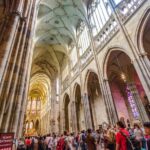
If there is one stop that tends to stay in your thoughts, it’s the National Memorial to the Heroes of the Heydrich Terror. This is where the tour turns to Operation Anthropoid and the assassination of Reinhard Heydrich, described here as the third-highest-ranking Nazi leader and a key figure in Holocaust leadership.
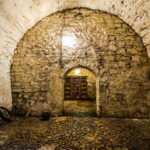
You’ll see bullet holes and visit the church where resistance members hid after the assassination. That detail matters. Without it, the story can feel like a headline. With it, you start to understand the immediacy of fear, the speed of the crackdown, and what it meant to shelter someone hunted by the Nazis.
This stop also includes admission tickets, so it’s the one place on the route where you can expect there to be an additional formal entry element covered in the tour price.
Time on stop: about 45 minutes.
Admission: included.
Dancing House: Why a Modern Landmark Still Tells a 1945 Bombing Story
After the heavier resistance material, the tour moves to the Dancing House, where the theme is different but the war remains present. Here you’ll hear a story of the American bombing of Prague in 1945 and how that event shaped the city’s final-war experience.
I like that this stop does not try to pretend the war is only about one theater, one leader, or one operation. Prague’s story includes air raids and civilian damage, and the guide frames the bombing as part of the broader turning of the war rather than a separate chapter with no connection.
Time on stop: about 15 minutes.
Admission: free.
Petschkův palác: Gestapo Headquarters and the Machinery of Fear
The final meaningful stop is Petschkův palác, presented here as Gestapo headquarters. This is the kind of place where you can feel the history, because the topic is not abstract. You are hearing about the machinery of fear, surveillance, and repression that operated through Nazi control in Prague.
The tour keeps this stop short at about 15 minutes, which I think is a smart call. You get the essentials without dragging the mood down longer than needed. If you are sensitive to intense topics, you still get a clear, respectful picture of how the Nazis functioned locally, and then the tour moves you toward the end point near the Dancing House.
Time on stop: about 15 minutes.
Admission: free.
Price and Value: What You’re Really Paying For at $62.47
At $62.47 per person for about 2 hours 30 minutes, the price sits in the “good value if you care about quality” range. The big reason is not just the duration. It’s the structure: you’re paying for a guided narrative through multiple sites, plus all fees and taxes are included.
Most stops have free admission, which helps keep the overall cost aligned with what you receive on the ground. The one exception is the memorial stop where an admission ticket is included. In practice, that means you’re not piecing together separate ticket lines or worrying about which part of the story costs extra.
The only clear add-on is public transportation, listed as €1.30 per person. If you’re already in central Prague, you may be able to walk between points. If you’re farther out, plan for that small extra cost.
Also, this is a semi private format with a maximum of 6 travelers. That’s a value marker because you get more interaction time than you would on a large-group bus-style tour.
Who This Tour Is Best For (And Who Should Think Twice)
This tour is ideal if you want a thoughtful, place-based WWII Prague experience and you like asking questions as you go. It suits history buffs, first-timers who want a well-organized start, and anyone who appreciates stories that balance major events with personal stakes.
It might be a less comfortable fit if you prefer lighter sightseeing during your trip. The route includes operation-level violence and Holocaust-related context. You do not have to seek it out, but you should go in knowing it is honest about the human cost.
If you travel with teens or family, it can work well too, especially because Hanna’s style is warm and interactive. Just be ready for heavy topics and have conversations planned for after the tour while it’s still fresh.
How to Get More Out of It Without Overthinking
Come with at least a loose mental map: occupation, resistance, assassination, and liberation. The guide will do the heavy lifting, but you’ll enjoy it more if you can connect the dots between stops.
I also recommend bringing a notepad or using notes on your phone. The names and operations come fast, and writing down key terms like Operation Anthropoid or Reinhard Heydrich helps you keep track.
Finally, wear shoes that work for standing and walking on city streets. The tour is not designed for long museum seating breaks. It’s made for moving through Prague while the story stays tied to the street level.
Should You Book This WWII Prague Semi Private Tour?
If you want a WWII Prague tour that feels grounded in real locations, with a guide who can talk about both big events and personal impact, I think this is an excellent choice. The small group size, the Heydrich memorial stop, and the Nicholas Winton segment about 669 rescued children give you coverage you won’t get from a generic “see the sights” walk.
Book it if you’re excited by Operation Anthropoid, the Prague Uprising in 1945, and the city’s wartime geography. Skip it if you’re trying to keep your day light or you know you do not handle difficult Holocaust-era and resistance-era material.
FAQ
How long is the WWII Prague semi private tour?
The tour runs for about 2 hours 30 minutes.
Is the tour offered in English?
Yes, it is offered in English.
What is the group size limit?
The maximum group size is 6 travelers.
Where does the tour start and end?
It starts at the Statue of Saint Wenceslas (Václavské nám., 110 00 Praha 1-Nové Město) and ends at the Dancing House (Jiráskovo nám. 1981/6, 120 00 Praha 2-Nové Město).
Is a mobile ticket provided?
Yes, the tour includes a mobile ticket.
What admissions are included?
All fees and taxes are included. Admission is specifically included at the National Memorial to the Heroes of the Heydrich Terror, while the other listed stops are free.
Is public transportation included in the price?
No. Public transportation is listed as €1.30 per person and is not included.
Can I get a full refund if my plans change?
Yes. Free cancellation is available up to 24 hours in advance for a full refund. If you cancel less than 24 hours before, the amount paid is not refunded.
More Private Tours in Prague

More Tours in Prague
More Tour Reviews in Prague
Not for you? Here's more nearby things to do in Prague we have reviewed




Communism & WWII History Tours, compared.
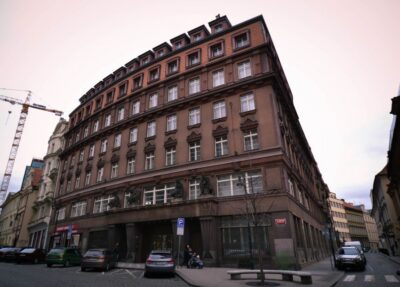 ★ 4.7Communism History and Nuclear Bunker Guided TourFrom $442,417 reviews
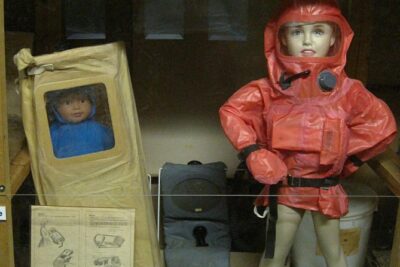 ★ 5.0Prague Communism History and Nuclear Bunker TourFrom $451,742 reviews
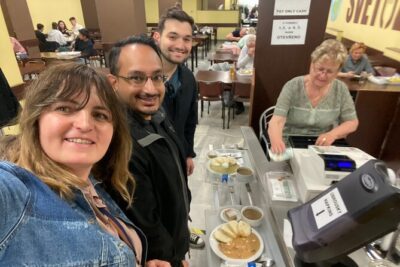 ★ 5.0Communism & Nuclear Bunker Tour + 70s Canteen Lunch (own expense)From $351,036 reviews
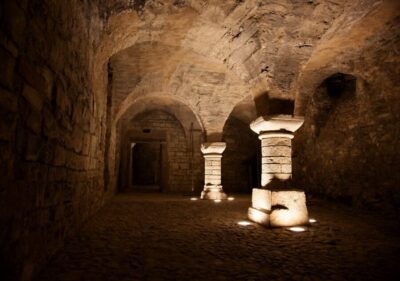 ★ 4.7WWII Guided Tour & The Crypt of Operation AnthropoidFrom $421,030 reviews
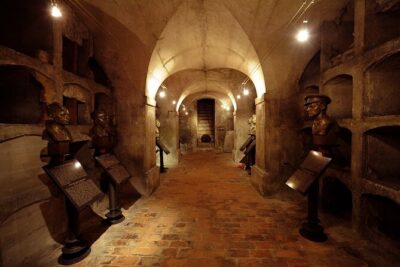 ★ 5.0WWII in Prague Tour & The Crypt of Operation AnthropoidFrom $43817 reviews
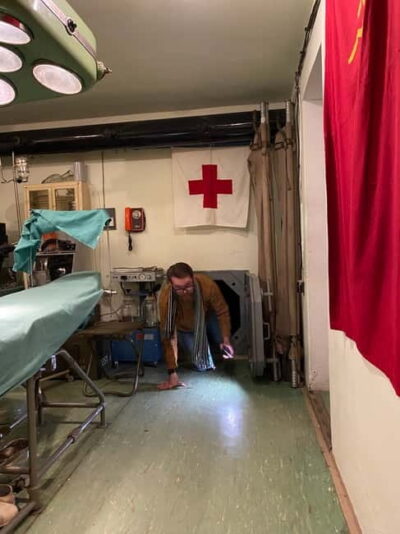 ★ 4.8Communism and Bunker Tour with 70s Canteen LunchFrom $33250 reviews
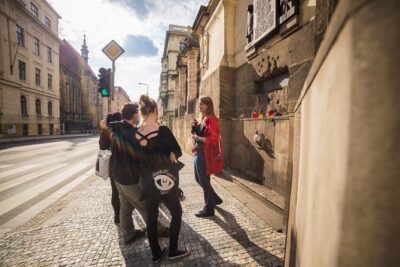 ★ 5.0Small-Group World War 2 & Operation Anthropoid Tour in PragueFrom $33231 reviews
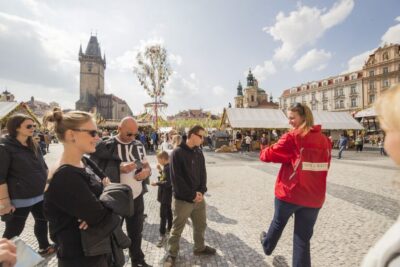 ★ 4.8World War 2 and Operation Anthropoid Walking TourFrom $32193 reviews
Browse the lists this tour appears in