
REVIEW · COMMUNISM & WWII HISTORY TOURS
Prague Communism History and Nuclear Bunker Tour
Four floors underground changes your view of history. This Prague tour pairs Cold War street stops with a real nuclear bunker visit, so you go from political speeches and protests to the fear of what might happen in minutes.
I really like two things about it. First, the StB Holding Cells stop turns abstract communism into something physical, with the story tied to Vaclav Havel. Second, the bunker portion is not just a quick peek. You get an underground museum experience that also comes with a photo booklet and a bunker survival guide, which makes the “why” behind the bunker easier to understand.
One consideration: if you are sensitive to tight spaces, this may not be for you. The tour is not recommended for claustrophobia, and the bunker visit involves stairs and time underground.
Key highlights worth planning for
- StB Holding Cells: Secret police history tied to Vaclav Havel
- Velvet Revolution Memorial: A clear explanation of 1989 and the shift away from communism
- Wenceslas Square and August 1968: Soviet invasion context plus Alexander Dubcek
- Olšanské náměstí socialist district: 1970s-style housing you would likely skip on your own
- Four floors down: A Prague nuclear bunker museum experience plus survival guide
- Small group size: Up to 26 people, making the guide’s stories easier to follow
Getting oriented at Malé Náměstí and the Passage start
The tour starts in the heart of Prague 1, at Malé Náměstí, inside a passage near Hotel U Prince. Plan to be there a few minutes early so you do not miss the handoff to your guide. This area is also convenient for ending the tour in the same neighborhood.
You’ll be doing a guided walking circuit with stops around the city and then a longer bunker visit underground. That matters because you will want to wear comfortable shoes from the start, not “later.”
You can also read our reviews of more historical tours in Prague
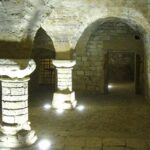
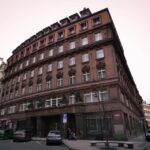
StB Holding Cells: the secret police story behind Vaclav Havel
One of the most memorable parts of the day is the stop at the StB Holding Cells, the former secret police building. Even if you already know Prague has a complicated 20th-century past, this is where the tour makes it feel immediate.
What I like here is the way the guide connects place to people. The tour includes the story of former president Vaclav Havel, which helps you understand why dissidents, surveillance, and detention were central to daily life under the communist regime. It also gives you a human thread you can carry forward into later stops about resistance and political change.
A practical note: this is still a short stop in the flow of the day, so arrive ready to listen. If you tune out here, you can miss the tour’s main “through-line” about control, fear, and survival.
Velvet Revolution Memorial: what the 1989 shift actually meant
After the secret police stop, you move to the Velvet Revolution Memorial, focused on the events of 1989. This is where the tour shifts tone from repression to change.
You’ll get an explanation of the Velvet Revolution’s story, and the guide’s job is to show you that it was not just a slogan. It was a chain of political pressure, public action, and momentum that eventually pushed communism out of power. That context pays off later when you stand in other important locations connected to resistance and national identity.
If you want a clearer timeline of modern Czech history, this is a good anchor stop. It gives meaning to the later “how we got here” locations, including sites tied to Soviet-era decisions.
Národní třída to Wenceslas Square: August 1968 and Alexander Dubcek
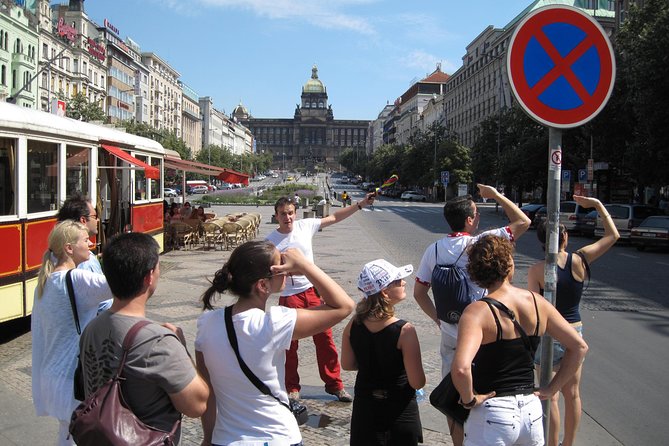
The tour continues with a stop at Národní třída, where the guide connects historical events to more recent Czech political history. It is a reminder that the stories you hear in Prague are not locked in the past. People build national memory on specific streets.
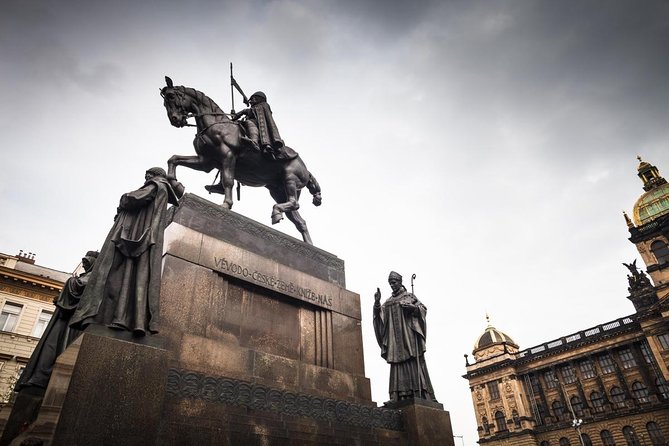
Then comes Wenceslas Square, one of Prague’s most famous public spaces. Here the focus is the Soviet invasion of August 1968 and the role of Alexander Dubcek. This part is valuable because it puts a spotlight on the moment when hope for reform met a hard external reality.
Two things to watch for here:
- Listen for how the guide explains reform attempts and why they mattered.
- Pay attention to how the story is tied to place. Wenceslas Square is big and open, which makes it easy to daydream, but the guide uses it to explain political pressure in a very grounded way.
Olšanské náměstí: socialist architecture you can actually spot
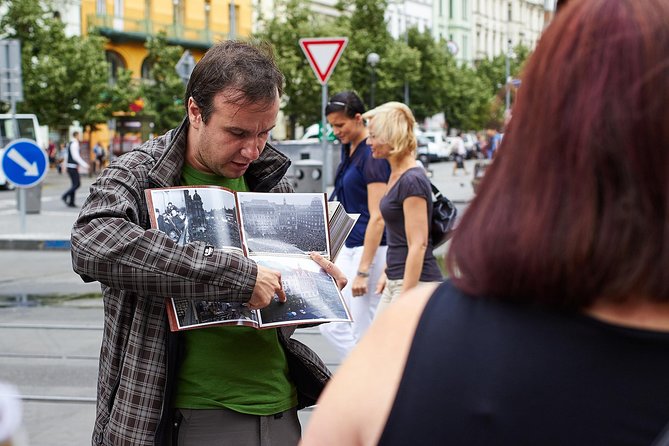
At Olšanské náměstí, the tour slows down just enough for you to notice what you might otherwise walk right past. The area is described as part of a former workers district, and the tour points out the typical socialist architecture and original buildings from the 1970s concrete era.
This stop helps you see communism beyond government buildings and memorials. You get a view of the urban planning mindset, the housing legacy, and how the state shaped daily environments. If you like photography, this is also a great place to pause and frame streets and building forms with your camera.
One drawback for some people: it can feel a bit “architectural” compared to the more story-driven stops. If you are only there for protests and dramatic political moments, you might want to listen closely for what the guide says about how these spaces affected ordinary life.

Four floors underground: the Prague nuclear bunker museum
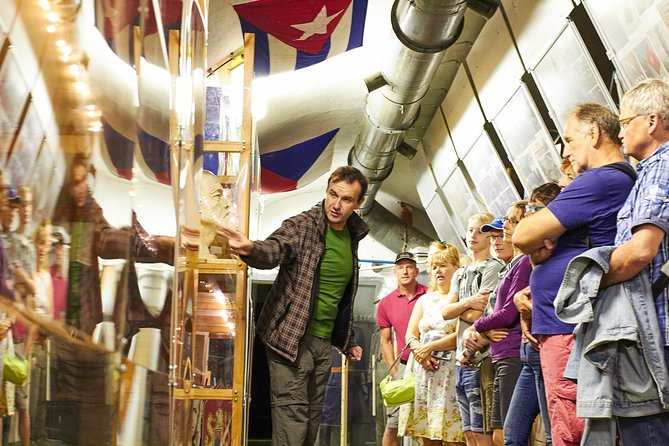
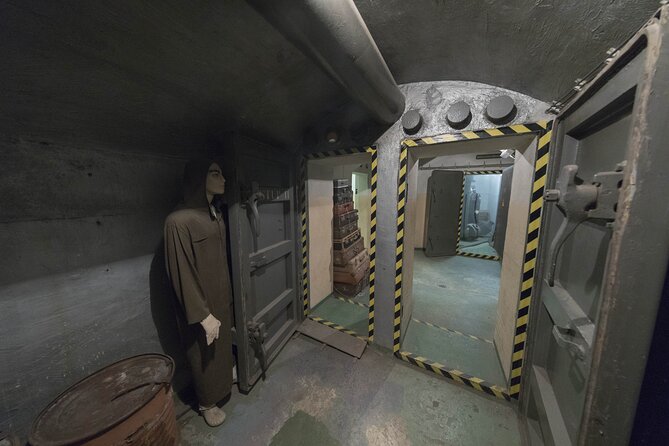
Now for the big shift: the nuclear bunker visit, hidden four floors underground. This is not a themed classroom. It’s an underground museum designed around the Cold War fear of what might happen during a crisis.
You should know what you are getting into before you go in:
- You will handle stairs and ramps in the bunker environment.
- Photos are allowed, but video recording requires special permission.
- You are underground for a significant stretch of the day, and the tour is not recommended for claustrophobia or serious heart issues.
The experience is also supported by practical materials. You get a photo booklet and a bunker survival guide, which helps turn the rooms from “props” into a coherent story about preparedness and the mindset of the era.
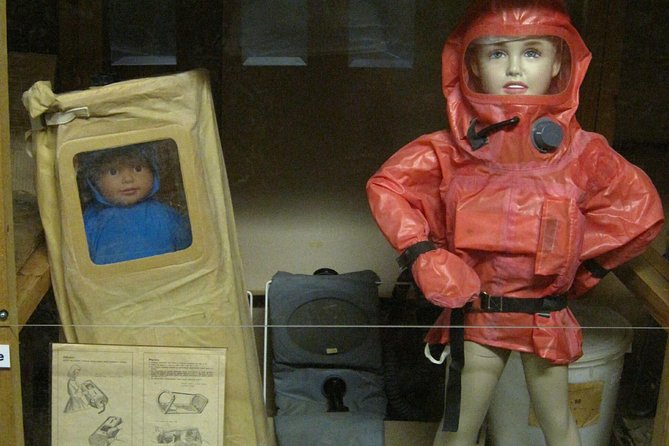
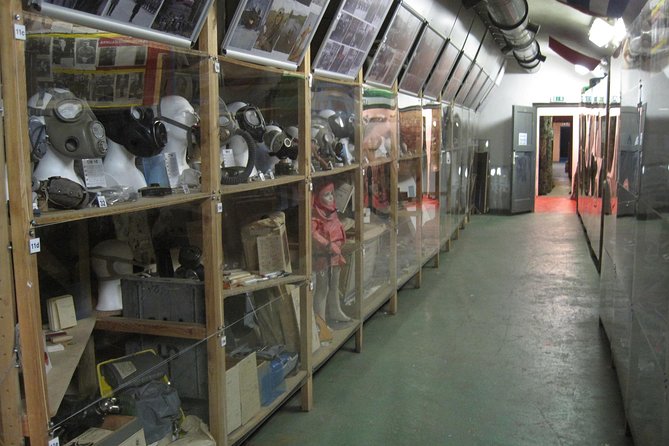
Is it for everyone? The negative feedback I’ve seen from some visitors is that parts of the bunker museum can feel like mannequin displays and 1980s-era memorabilia. That does not make it useless, but it does mean your payoff depends on your interest in how Cold War planning looked in real life, not just on fear and big headlines.
If you are the type who likes to picture daily routines and emergency procedures, you’ll likely leave feeling sobered and informed. If you mainly want political history at ground level, the bunker portion may feel more static. Still, the contrast between Prague’s bright streets and the bunker’s reality is the point.
The guide matters: personal Cold War stories with humor and edge
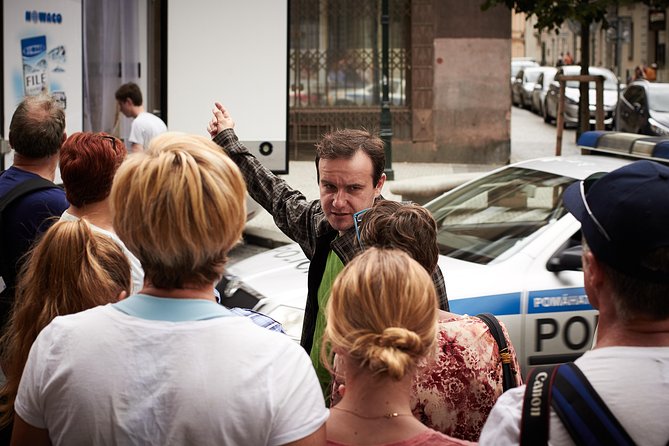
A lot of this tour’s strength comes from the guide. Many departures are led by people who can explain not only events, but what the era felt like.
You’ll often hear named guides like Ladislav, Stan, Pavel, Tom, Maki, Karl, or Lada referenced by guests for their storytelling. What they tend to do well is mix facts with personal perspective, sometimes with humor to keep the mood from becoming one-note. That matters in a topic like communism, where the subject can get heavy fast.
At the same time, one of the only fair cautions I would give is this: the style can vary. Some guides may spend more time on commentary or repetition than you want, and the bunker route can include enough transit time that the total experience may feel longer than expected to certain people.
My advice: if you care most about clear facts and a tight timeline, arrive with that mindset. Ask yourself if you are looking for more political analysis or more emotional, story-driven realism. This tour can be both, but different guides lean different ways.
Timing, walking load, and what to wear
The tour runs about 2 hours 20 minutes, with a possible variation of plus or minus 10 to 15 minutes depending on group size. That variation is normal for a guided day with stops and a bunker entry schedule.
You also need to plan for the physical side:
- Walking tour with live commentary
- Not possible for people with walking disability or mobility issues
- Not recommended for high pregnancy
- Comfortable shoes are strongly recommended
If you have a preference, you’ll be happiest with this tour if you are comfortable with steady walking and you do not mind stairs as part of a museum visit. Bring a water bottle if you get thirsty walking, and keep your phone accessible for quick photo moments where allowed.
Transport and group size: what to expect during the ride
The tour includes transport to and back from the bunker. In practice, you may take a trolley or tram segment as part of the route to reach the underground site. One visitor noted a longer tram stretch, so I’d plan for the possibility that some group movement eats up time.
Group size is capped at 26 travelers. That is a sweet spot for a city walk plus a bunker tour, because it is small enough for the guide to manage questions while still having enough people to keep energy up.
If you’re the kind of traveler who needs full silence or hates any “pause” during transit, this one can feel busy. But if you like guided storytelling while moving through the city, this size usually works.
What $45.16 gets you in value terms
At $45.16 per person, the price is not a bargain deal. But it can be good value because the bunker portion includes the entrance to the nuclear bunker museum, and the tour also includes an English live guide, plus the photo booklet and bunker survival guide. Transport to and from the bunker is included too.
Here is how I’d judge value for you:
- If you would not pay for a bunker entry ticket on your own, then the package becomes simpler and more cost-effective.
- If you want guided context for politically sensitive sites like the former secret police building and the Velvet Revolution Memorial, a live guide is doing real work, not just “pointing.”
Where the price can feel heavy is when you expected more time in exhibits or more day-to-day life detail about communism. The bunker is still a museum, and museums are not always as lively as a street protest. Your interest level in Cold War emergency preparedness will decide whether the value feels worth it.
Who should book this Prague Communism and Nuclear Bunker tour
I’d put this tour on your shortlist if you:
- Love 20th-century history, especially Cold War Europe
- Want context for Soviet-era events, including August 1968
- Like seeing the urban physical legacy of socialism, not only plaques
- Are curious about how fear and preparedness shaped everyday planning
I would skip it, or at least think twice, if you:
- Have claustrophobia or serious heart issues
- Struggle with stairs and underground spaces
- Need a fully accessible walking experience, because this tour is not designed for mobility limits
Language also matters. The tour requires you to speak the chosen language of the tour, and you cannot translate into another language during the experience.
Should you book this Prague Cold War bunker tour?
Yes, you should book it if you want a guided story that connects Prague streets to Cold War reality, with the four floors underground experience as the emotional peak. The visit to the StB Holding Cells, the Velvet Revolution Memorial, and the stop points tied to Soviet invasion and Dubcek make this more than a “bunker ticket.” It becomes a full narrative arc.
Book it with eyes open if you dislike heavy talking time, do not enjoy underground stairs, or expected more hands-on “life under communism” detail than museum-style exhibits provide. In that case, you might prefer a more focused walking history tour and a separate, shorter bunker visit.
If you fit the first group, this is one of the more striking ways to understand why Prague’s recent history still feels close to the surface.
FAQ
How long is the Prague Communism and Nuclear Bunker Tour?
The tour lasts about 2 hours 20 minutes, and timing may vary by plus or minus 10 to 15 minutes depending on group size.
What is included in the tour price?
You get an English live guide, entrance to the Nuclear Bunker Museum, a photo booklet and a bunker survival guide, and transport to and back from the bunker.
Where does the tour start and end?
The meeting point is inside the Passage at Male Namesti Square Nr. 459/11, about 20 meters to the right from Hotel U Prince. The tour ends back at Malé Náměstí 459/11.
Is this tour suitable for people with walking or mobility issues?
No. The tour is not possible for people with any walking disability or mobility issue.
Is the tour suitable for claustrophobia?
No. It is not recommended for people with claustrophobia or serious heart issues, since the bunker is four floors underground and involves stairs.
Are photos and videos allowed?
Photos are allowed. Video recording is only allowed with special permission.
How big is the group?
The tour has a maximum of 26 travelers.
Is it okay for small children?
No. The tour is not allowed for the smallest children under school age.
More Historical Tours in Prague

More Tours in Prague
More Tour Reviews in Prague
Not for you? Here's more nearby things to do in Prague we have reviewed





Communism & WWII History Tours, compared.
 ★ 4.7Communism History and Nuclear Bunker Guided TourFrom $442,417 reviews
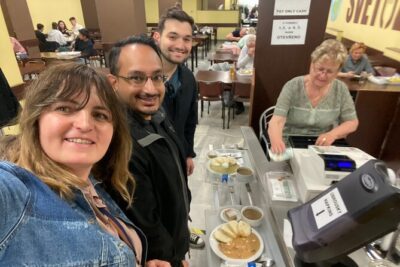 ★ 5.0Communism & Nuclear Bunker Tour + 70s Canteen Lunch (own expense)From $351,036 reviews
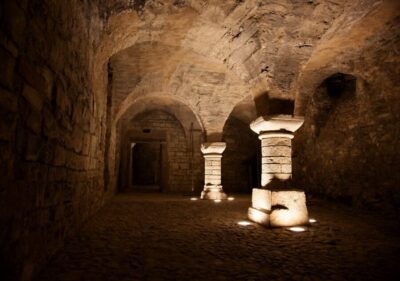 ★ 4.7WWII Guided Tour & The Crypt of Operation AnthropoidFrom $421,030 reviews
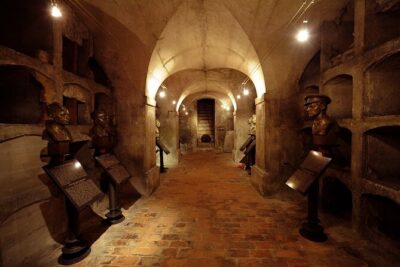 ★ 5.0WWII in Prague Tour & The Crypt of Operation AnthropoidFrom $43817 reviews
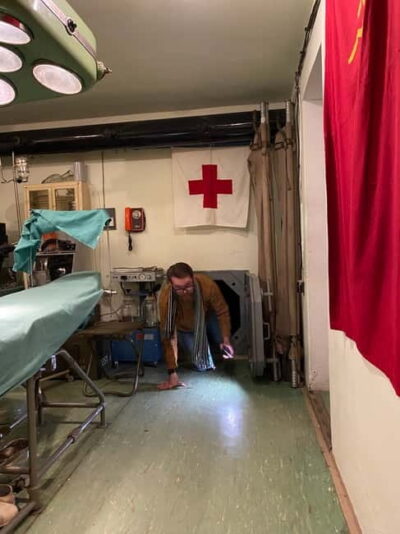 ★ 4.8Communism and Bunker Tour with 70s Canteen LunchFrom $33250 reviews
 ★ 5.0Small-Group World War 2 & Operation Anthropoid Tour in PragueFrom $33231 reviews
 ★ 4.8World War 2 and Operation Anthropoid Walking TourFrom $32193 reviews
 ★ 4.7World War II and Communist History TourFrom $34130 reviews
Browse the lists this tour appears in