
REVIEW · COMMUNISM & WWII HISTORY TOURS
Small-Group World War 2 & Operation Anthropoid Tour in Prague
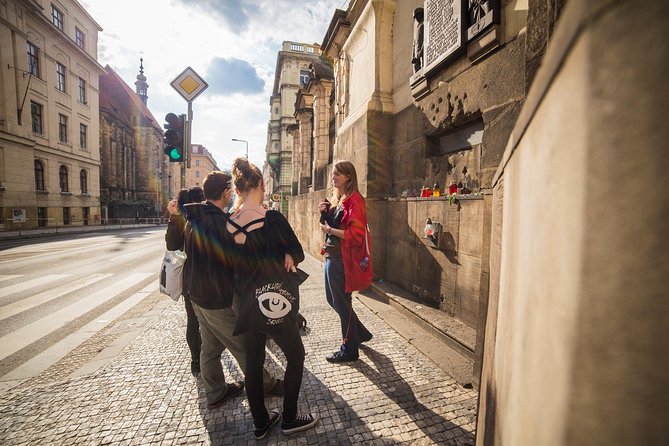
A single assassination changed Prague forever. This small-group WWII walk connects you to the streets, buildings, and hidden spaces tied to Operation Anthropoid and Reinhard Heydrich, from the lead-up after WWI to the reprisals that followed. I love the way the route mixes major historic moments with real locations you would likely miss alone, and I also love that it stays to about 3 hours so it fits real itineraries. One drawback to plan for: it is a standing and walking tour on uneven city pavement, and the subject matter is heavy, so it is not for tiny kids.
You meet in central Prague and finish near the Orthodox Cathedral of Saints Cyril and Methodius, after a guided visit to St. Cyril and St. Methodius Cathedral and then a memorial and crypt connected to the paratroopers. The price is low enough that you can book last minute if your schedule shifts, but still high value because you are buying a local guide plus access to the most emotionally loaded end stops.
Key highlights before you go
- Operation Anthropoid on real streets, including the events after Heydrich’s assassination and the Nazi crackdown
- Resistance hideouts and safehouse stories tied to Prague addresses, not just museum panels
- Clear, practical pacing, with a tight 3-hour route through Old Town and New Town
- The Lidice reprisal story, told where the cultural memory of it stays alive
- Petschek Palace as a Gestapo headquarters, giving context for betrayal and the hunt for the assassins
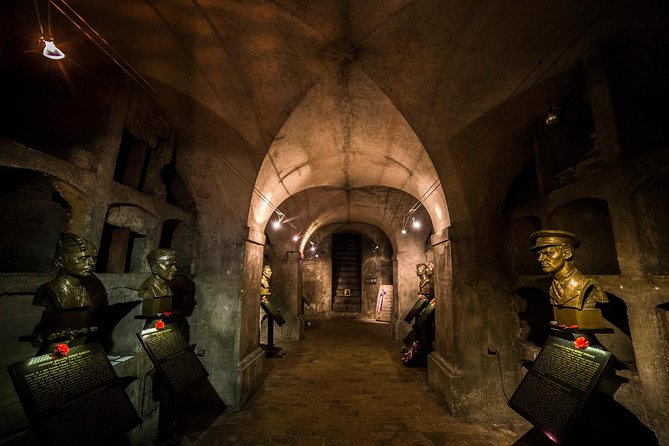
- St. Cyril and St. Methodius Cathedral plus the crypt, the tour’s most atmospheric finale
A 3-hour Operation Anthropoid walk through Prague
If you like your history grounded in places, this is built for you. Prague has beautiful architecture, but this tour steers you into the darker side of the Nazi occupation, with a storyline that moves from political causes to daily control to resistance action and brutal reprisals.
What I like is the balance: you get the big events, like the assassination of Reinhard Heydrich and the Prague Uprising, but you also hear how ordinary life got squeezed under occupation policies. The result is not a lecture in a quiet room, it is a guided walk through the city’s memory.
You can also read our reviews of more tours and experiences in Prague.
Price, group size, and the meeting point you should not miss
At about $33.88 per person for roughly 3 hours, you are paying for a local guide and a guided church visit, not just a walk for the views. The tour also includes a mobile ticket, and it is offered in English, which makes planning simple if you do not want to hunt for another language option.
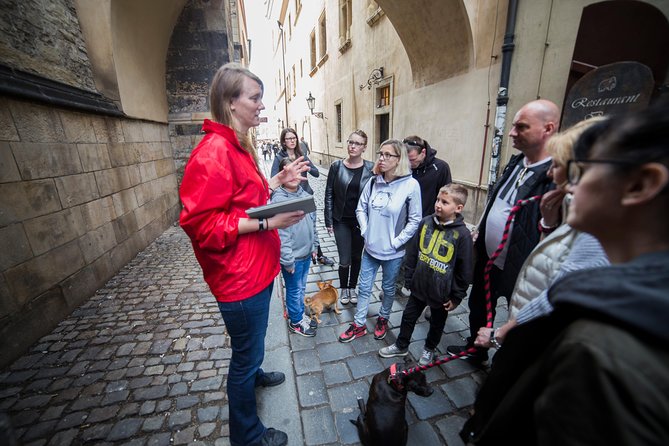
Group size matters here. The tour caps at 30 travelers, which is large enough to run smoothly but small enough for most people to hear the guide without sprinting for a good spot. Still, you should arrive on time because the tour starts at 1:30 pm and you are walking right away.
Meet at Týnská 627/7, Staré Město (Old Town) at the Týnská address near McGee’s Trips & Tickets. For the ending, you finish at the Orthodox Cathedral of Saints Cyril and Methodius, Resslova 9a, in Nové Město.
WWI to WWII: U Budovce and the Stone Bell House
The tour begins near Týnská and quickly sets the context. You start with the idea that WWII was not sudden, it grew out of WWI outcomes, economic strain, and political shifts across Europe.
At U Budovce, you hear how the Treaty of Versailles reshaped the region, how the fall of major power players created new nations, and how instability carried forward into inflation and the Great Depression. The point is to help you understand why extremist politics gained traction, including how Hitler’s popularity grew.
A short step away at the Stone Bell House, the story narrows to Czech and German politics in the late 1930s. You look at the Sudeten Deutsche Party, the Munich Agreement, and then the formation of the Protectorate of Bohemia and Moravia. It is a crucial pivot in this tour, because it explains how Prague went from a sovereign target to a controlled space.
Old Town landmarks tied to occupation and the 1945 uprising
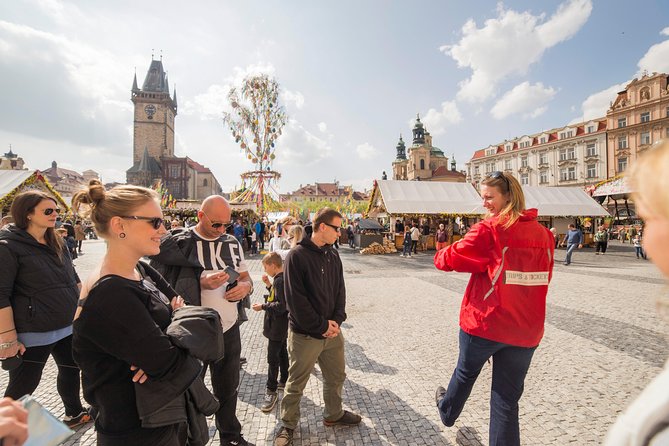
Prague’s historic center looks calm today. The tour uses that contrast on purpose.
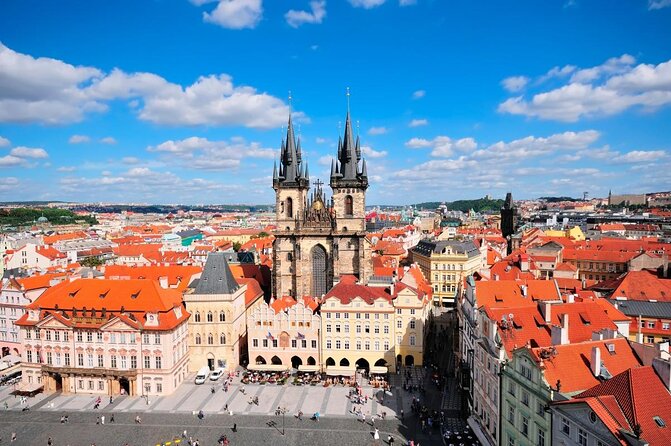
You get a view of a major Gothic church that has been the main church of this part of the Old Town since the 14th century. Even without a deep architectural lesson, this stop helps you “see” the city as it would have looked during occupation years, before you layer on the war story.
Next is Staroměstská radnice, the Old Town Hall area. Here you focus on what happened during the Prague Uprising in 1945, including the detail about a wing destroyed during that fighting. The guide also connects occupation-era daily life to the May uprising, ending with the end of the war on May 8. If you only know Prague for its postcards, this stop is a wake-up call in a single block.
Then you shift onto the streets where occupation control sharpened. At Celetna Street, the tour discusses November 17, 1939, with the execution of Czech students and the closure of Czech universities. You also hear about Konstantin von Neurath as part of how the country was folded into the Third Reich, and then the appointment of Reinhard Heydrich on September 27, 1941, described as a turning point for the Protectorate.
Resistance safehouses at Melantrichova, and why addresses matter
One reason this tour feels more real than many history walks is the attention to specific places where people lived and hid. At Melantrichova, you hear about the exiled government in London and operations connected to preparation and sabotage, including Operation Benjamin and the missions referenced as Silver A and Silver B.
Then you get a concrete anchor: the building with the apartment tied to Josef and Marie Svatoš, described as a key resistance hideout. This is where your brain stops treating the war like a distant timeline and starts treating it like a chain of human choices, carried out from normal addresses.
If you are wondering what to do in Prague beyond castles and bridges, this is one of the best answers. You are learning how resistance networks used the city itself.
Heydrich’s assassination story from the Bata storefront to Wenceslas Square
The tour moves from planning to the moment and its aftermath. At the Baťa department store, you learn how the site was used to exhibit objects found after the assassination of Heydrich. Even if you do not linger long, it is a telling way to show how the occupiers turned shock into propaganda.
From there, the story heads toward Wenceslas Square, where you hear about Lidice. This stop focuses on the grim reprisal: on June 10, 1942, around ten in the morning, men were executed and women were taken to concentration camps, and the village ceased to exist. The lesson is not just the date, it is the logic of terror, the idea that punishment was used to break future resistance.
Gestapo fear at Esplanade Hotel and Petschek Palace
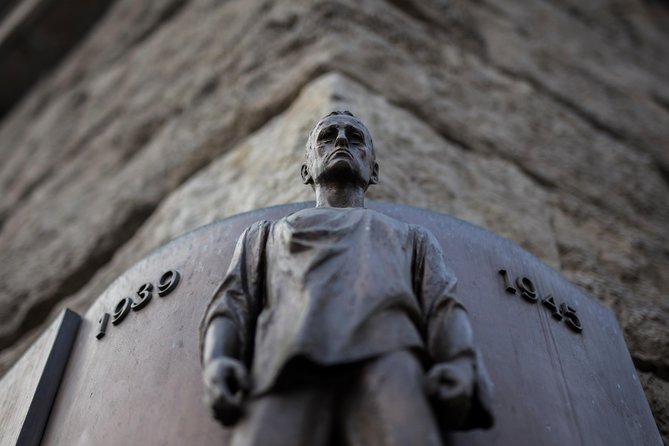
Two stops in a row show the Nazi presence in different shades.
At Esplanade Hotel Prague, the tour frames it as a favorite hotel of the Nazis during the occupation. That might sound like a travel trivia detail, but it matters because it helps explain how power behaved in Prague, where officials lived, met, and projected normalcy while control tightened.
Then comes Petschek Palace, one of the most intense stops on the walk. The tour presents it as a Gestapo headquarters, where Czechoslovaks were interrogated, tortured, and killed in large numbers. The story then turns on a single name and a single betrayal: Karel Čurda, entering the building on June 16, 1942, which is described as a turning point in the search for Heydrich’s assassins.
If you remember only one stop from this tour, make it this one. Not because it is pleasant, but because it gives context for how the resistance could be hunted so relentlessly.
New Town clues, unsuccessful operations, and the 1945 bombing
After the central Nazi story, the tour widens the map again.
At Vodičkova, you pass through a New Town street and hear about two covert but unsuccessful operations, referenced as Tin a Bioscop. The reason this works in a tour like this is that it reminds you resistance was not always triumphant. Sometimes the plan failed, and the cost of failure was still real.
At Karlovo náměstí, the tour includes the bombing of Prague in 1945. Prague may not be known for the same battlefield intensity as some other European cities, but this gives you the larger picture of how the final phase of war also reached civilian life.
Ending at St. Cyril and St. Methodius, then the Heydrich terror crypt
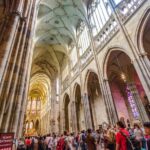
The final stretch is guided in a way that matches the subject. You visit St. Cyril and St. Methodius Cathedral with the guide, then move on to the National Memorial to the Heroes of the Heydrich Terror.
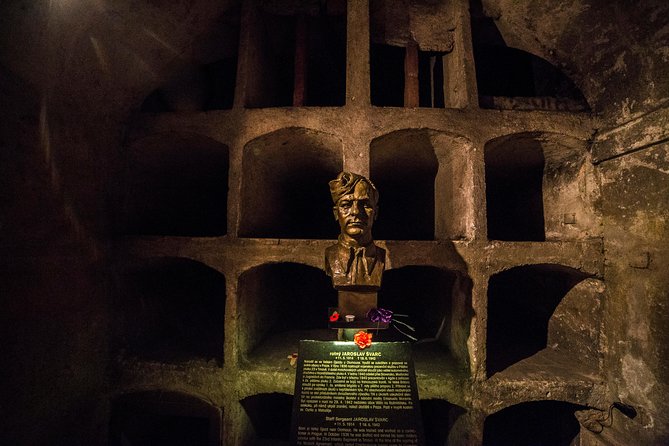
At the memorial, you visit the memorial space and the crypt where the Czech paratroopers paid the ultimate price. This is the part many people remember as the tour’s emotional peak because you are not just hearing about underground resistance stories, you are finishing in the place connected to the resistance’s last stand and sacrifice.
The tour ends in central Prague near the Orthodox Cathedral area, so you can keep going with dinner plans or other sights without feeling stranded on the edge of the city.
What makes the guides so effective, from Daniel to Dana
The biggest consistently praised element is the human one: guides who know the material and can tell it in a way that stays respectful.
I’ve noticed a pattern in how guides in this tour are described: Daniel, Allen, Dan, Richard, Pablo, Martin, Robin, and Dana are named by guests for being enthusiastic, clear, and able to answer questions without making the tour feel robotic. Several guides are described as passionate about Czech resistance history, and a few are specifically credited for being sensitive to the emotional weight of the topic. That matters here, because the Lidice story and the Gestapo stops can feel brutal if handled carelessly.
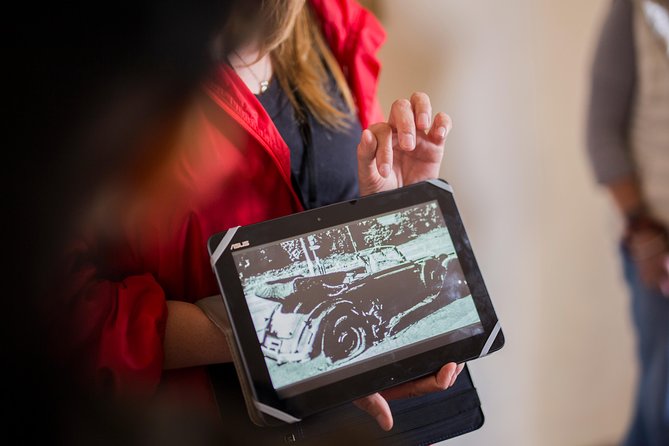
One more practical point: some guides use photos to bridge gaps where there is little visible today. In a city like Prague, a doorways-only stop can feel flat if you have no context. The guide’s storytelling is what turns those short stops into something you remember later.
Who this WWII Prague tour is for
This tour fits best if you want WWII history connected to the city, not generic facts. You’ll especially like it if you care about:
- Operation Anthropoid and the Heydrich assassination aftermath
- Czech resistance networks, hideouts, and the consequences of betrayal
- The link between political events after WWI and what happened in Prague during the occupation
- A guided route that avoids you getting lost in central streets
It is not an easy fit for very young children, and the operator notes that the topic is historical and not recommended for small children. You are also told to have moderate physical fitness, and it is a walking and standing tour.
If you are visiting Prague with someone who thinks they are not a history person, this can still work because it stays on one storyline and uses real locations to keep the history concrete.
Should you book this Prague WWII and Operation Anthropoid tour?
Book it if you want a small-group, English-friendly way to understand Prague’s WWII story through the real streets tied to Heydrich, Operation Anthropoid, and the resistance. At this price, you are not only paying for walking access, you are paying for context that would be hard to piece together on your own in a few hours.
Skip or rethink it if you dislike heavy subject matter or if you need lots of seats and minimal standing. Also, if you expected a tour packed with battles and visible wreckage at every stop, this is more about occupation control, resistance action, and the consequences that followed. Prague’s war story here is focused, and that is part of why the tour works, but it may not match every expectation.
If you can handle a serious, well-paced history walk, this is a strong choice.
FAQ
What is the duration of the Small-Group World War 2 & Operation Anthropoid Tour in Prague?
It runs for about 3 hours.
What time does the tour start?
The start time is 1:30 pm.
Where do I meet the guide?
Meet at Týnská 627/7, Staré Město, 110 00 Praha 1, Czechia.
Where does the tour end?
The tour ends at the Orthodox Cathedral of Saints Cyril and Methodius, Resslova 9a, 120 00 Praha 2-Nové Město, Czechia.
Is the tour offered in English?
Yes, it is offered in English.
What is included in the ticket price?
A local guide is included, and there is a visit to St. Cyril and Methodius Church. The tour also includes the guide-led cathedral and memorial portions, with tickets marked as included for the church and end memorial.
Is food included?
No. Food and drinks are not included.
Are there age limits or rules for children?
Children up to 6 years old are free of charge. Children must be accompanied by an adult, and the tour is not recommended for small children because it includes historical facts related to WWII.
What is the cancellation policy?
You can cancel for free up to 24 hours in advance for a full refund. If you cancel less than 24 hours before the experience starts, the amount paid will not be refunded.
More Tours in Prague
More Tour Reviews in Prague
Not for you? Here's more nearby things to do in Prague we have reviewed







Communism & WWII History Tours, compared.
 ★ 4.7Communism History and Nuclear Bunker Guided TourFrom $442,417 reviews
 ★ 5.0Prague Communism History and Nuclear Bunker TourFrom $451,742 reviews
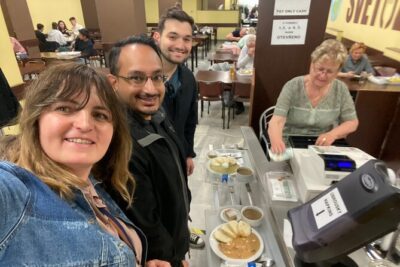 ★ 5.0Communism & Nuclear Bunker Tour + 70s Canteen Lunch (own expense)From $351,036 reviews
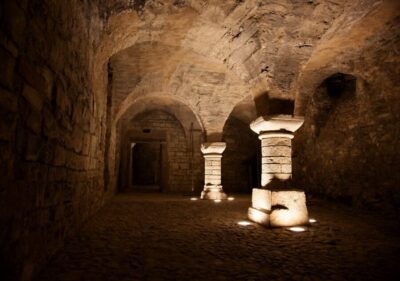 ★ 4.7WWII Guided Tour & The Crypt of Operation AnthropoidFrom $421,030 reviews
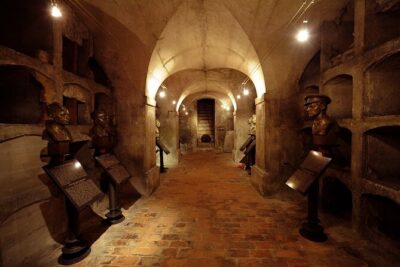 ★ 5.0WWII in Prague Tour & The Crypt of Operation AnthropoidFrom $43817 reviews
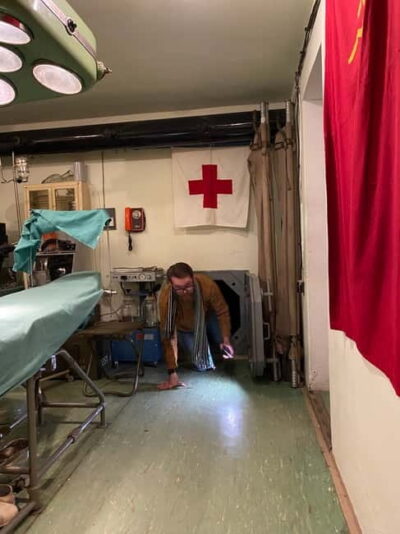 ★ 4.8Communism and Bunker Tour with 70s Canteen LunchFrom $33250 reviews
 ★ 4.8World War 2 and Operation Anthropoid Walking TourFrom $32193 reviews
 ★ 4.7World War II and Communist History TourFrom $34130 reviews
Browse the lists this tour appears in