
REVIEW · COMMUNISM & WWII HISTORY TOURS
Private Prague Cold War Walking Tour
Communism lingers on Prague walls, and this private 3-hour Cold War walk connects Soviet-era Prague sites to how people lived from 1948 to 1989. I love the historian guide who ties monuments to real stories, and the route is focused enough that you can actually see the details on places like the Hall of the Red Army. With private, undivided attention the pace feels personal, but there is a steep climb on Vitkov Hill that you should plan for if you have mobility limits.
You can choose a morning or afternoon start, and the tour stays tightly in central Prague so you are not spending your time commuting. It is designed for small groups, up to 10 people, with tram tickets included so you can keep moving.
Expect a mix of eerie Cold War leftovers and major public squares, from a pedestrian tunnel with sealed bomb shelter corridors to a big view from Žižkov Television Tower. You will also stop at the John Lennon Wall and walk around Wenceslas Square, where the 1968 crackdown and 1989 Velvet Revolution played out. The tour runs about 3 hours, in English, and you get a mobile ticket where it helps.
Key things that make this Prague Cold War tour worth your time
- Private 3-hour format: a historian guide and an on-foot route built for attention, not crowd herding.
- Soviet-era landmarks with specific backstories: Red Army commemoration spaces, the Gottwald mausoleum, and protest sites.
- John Lennon Wall plus Wenceslas Square: two of the most direct symbols of Cold War resistance and 1989 change.
- Vitkov Hill views from the top: sweeping city sights that add context to the political geography below.
- A stop that feels straight out of a thriller: the Karlin-Zhizhkov pedestrian tunnel with locked nuclear shelter corridors.
A private historian-led route through Soviet Prague
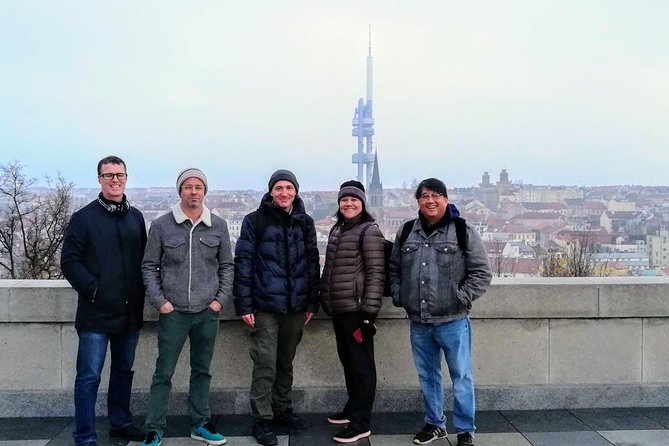
This is the kind of Prague tour I like for history, because you are not just collecting names. You get a historian guide and a route that stays focused on Prague during the Cold War years, with a clear line from communist control to people pushing back.
It is private, limited to your group (up to 10 people). That matters, because the best guides can shape the pace around your questions and the way you like to learn. Some guides associated with this route, like Alzbeta and Vadim, are described as bringing extra human context, including personal, family-level details, and they tend to engage you instead of reciting a script.
You also get tram tickets included, which is a small thing that makes a big difference. When transit is handled, you can spend your energy watching what is actually around you.
You can also read our reviews of more walking tours in Prague
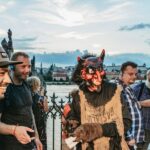
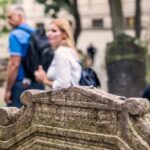
Karlin-Zhizhkov pedestrian tunnel: sealed corridors and Cold War fear
One quick but memorable opener is the Pedestrian Tunnel Karlin-Zhizhkov. You walk through the tunnel and look at the locked doors that lead to nuclear bomb shelter corridors that were built and are still maintained.
This stop works because it turns politics into infrastructure. You can see how the Cold War mindset was built into daily movement, not just speeches and posters. It is also short (about 10 minutes), so it is not a marathon warm-up.
A practical note: since doors and corridors are locked, you should set expectations that you are observing, not exploring. Bring your best “look closely” mindset, and focus on what the tunnel suggests about how fear was planned for.
Vitkov Hill and the National Monument: the Soviet Soldier gets a stage
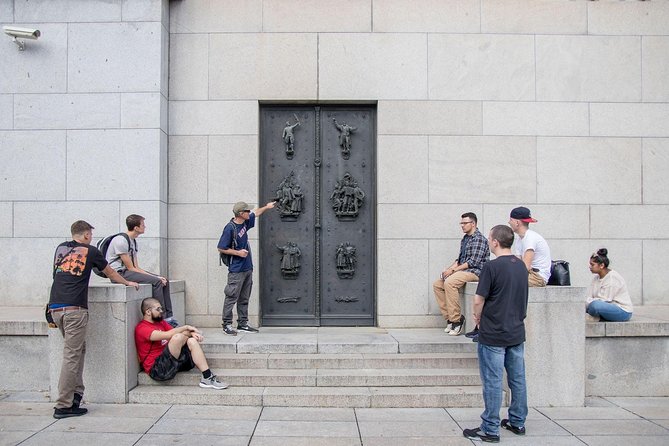
The heart of the tour is the National Monument at Vitkov. Plan on roughly 30 minutes here, and you should know that admission for the monument is not included, so budget for entry if you want to go inside.
Vitkov is also where the tour’s walking challenge shows up. There is a steep climb of about 20 minutes up the hill, and if mobility is an issue, the tour can adjust by skipping Vitkov Hill and focusing on other Cold War sites instead. That flexibility is worth noting, because the view and the symbolism are tied to being at the top.
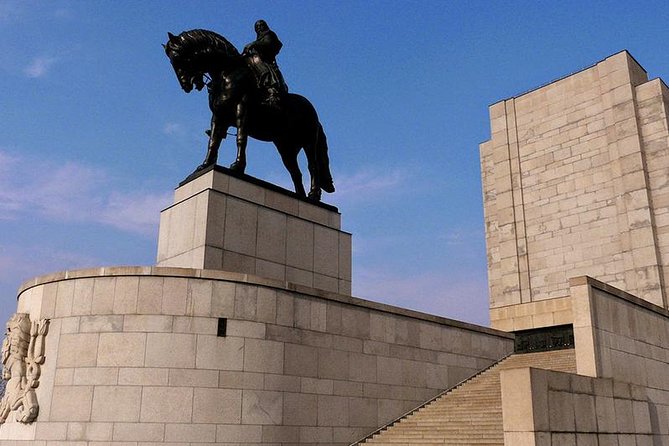
What you get at Vitkov is a heavy mix of commemoration and political theater. You will see the Hall of the Soviet Soldier, the monument area linked to Soviet war memory, and the former mausoleum connected to Klement Gottwald. You will also see large commemorative elements like the monument to Jan Žizka, including the fact that it is the third largest bronze equestrian statue in the world.
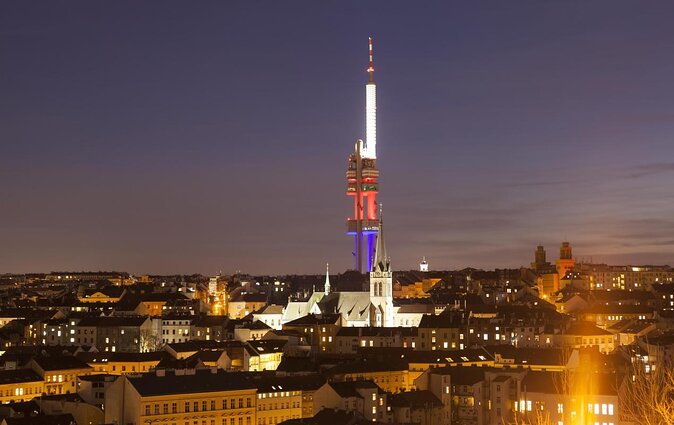
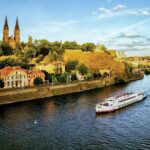
And you get the visual payoff. From Vitkov, you take in sweeping views over Prague, including the Old Town and the Žižkov Television Tower on the horizon. That view helps you understand why regimes cared about controlling space, sightlines, and the story people saw from where they lived.
The Hall of the Red Army and Gottwald’s mausoleum
If you want a single stop that captures how authoritarian systems try to manage memory, this is it. At Vitkov, you will visit the Hall of the Soviet Soldier and also the former mausoleum where Klement Gottwald’s body was displayed.
Gottwald was Czechoslovakia’s President from 1948 to 1953, and the mausoleum originally held his mummified body. The tour also points out the laboratory and the temperature-control center where staff tried to maintain the embalmed body. That detail lands because it is unsettlingly practical. Propaganda has a technical side too.
The Hall of the Soviet Soldier is described as being designed to honor Soviet soldiers killed during World War II in Eastern Europe. In the Cold War version of history, these spaces are not neutral. They are meant to communicate who counts, who sacrificed, and what loyalty should feel like.
Practical tip: because monument admission is not included, check how you want to handle entry when you get there. If you are the kind of person who hates surprises, consider setting aside time and money for the paid parts so your energy stays on the content.
Žižkov Television Tower: a Brutalist contrast to Soviet solemnity
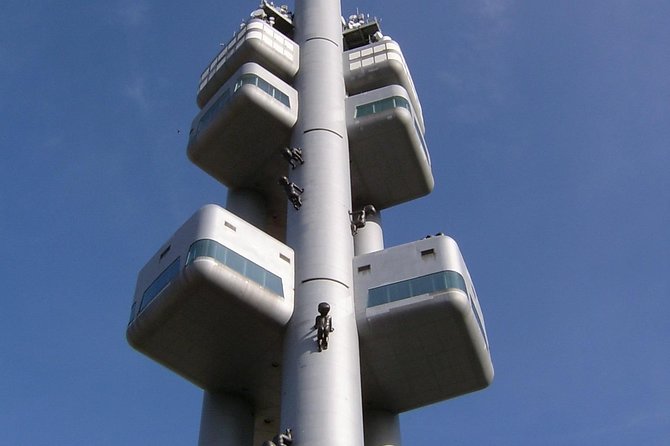
After Vitkov, the tour gives you a quick shift in tone. You stop at the Prague TV tower, Žižkov Television Tower, mainly for the best view of the Brutalist-style structure.
This is only about 5 minutes, but it adds something important: the city did not freeze in one style. Even while political systems changed and hardened, architecture kept evolving. The tower is also a useful visual anchor because it sits in the same “Prague panorama” zone you saw from Vitkov.
If you are doing this on a clearer day, the contrast between the memorial hill and the stark tower can help your brain connect the dots between propaganda-era monuments and the city’s broader physical language.
You can also read our reviews of more private tours in Prague


Letna Hill and the John Lennon Wall: protest turns into public art
The tour moves from big official spaces to places where people expressed resistance more informally. You will look at Letna Hill, where one of the world’s largest statues of Josef Stalin once stood, glaring over the city. That detail matters because it shows how power tried to install itself in the skyline.
Next, you stop at the John Lennon Wall. This is where Western-style freedom sparked graffiti messages of hope and revolution during the Cold War. The famous idea here is simple: when official language is controlled, people try different channels. Paint and slogans became their own kind of press.
I like that this stop is not just aesthetic. It gives you a Cold War “tone shift” from the heavy memorial mood to everyday creativity under pressure. Also, it helps you understand why 1989 felt possible to ordinary people, not only leaders and elites.
Wenceslas Square: where the 1968 crush and 1989 celebration share the same streets
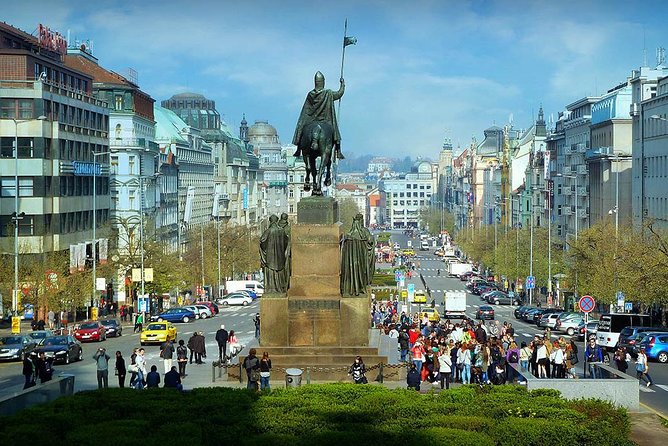
Then you hit Wenceslas Square, the epicenter of big political moments. The walk here is about 20 minutes, and you consider the square’s history from its 14th-century founding through military parades by occupying powers. The tour focuses especially on the Prague Spring era and the Velvet Revolution.
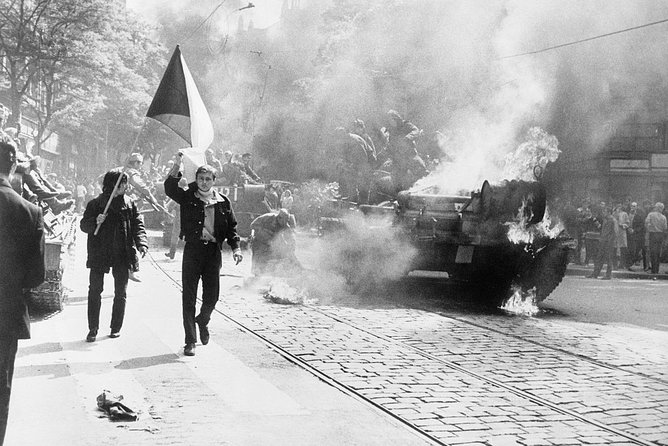
Here is the key context you get on the ground. In 1968, Warsaw Pact tanks converged on Wenceslas Square to crush the Prague Spring. That crackdown ended an eight-month period when freedom of speech and an independent press were allowed to blossom.
Then, later, the square becomes the stage for the 1989 Velvet Revolution. You walk past monuments to brave Czech protestors and you get a clear sense of how the mood flipped from fear to collective momentum.
This is a strong stop for anyone who wants to connect history to real street space. When you stand on a parade route, you can feel how power wants to be seen and how resistance also learns to use visibility.
The upside-down King Wenceslas: political irony you can’t miss
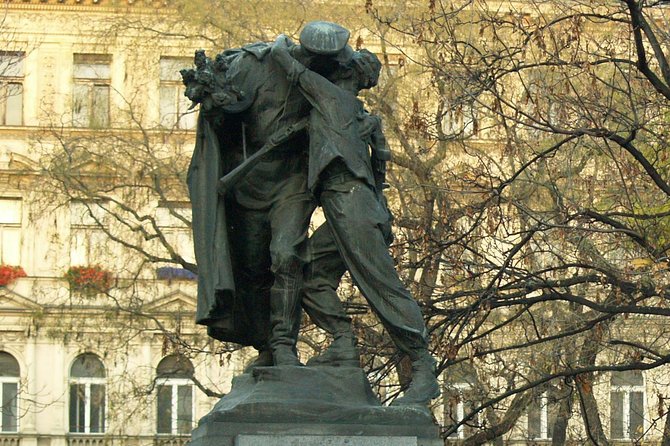
Just off the main square area, you also see the Upside-Down Statue of King Wenceslas Riding a Dead Horse. The stop is short, about 5 minutes, and the tour frames the sculpture as ironic commentary tied to the contemporary political atmosphere.
This kind of monument works well in a Cold War route because it shows that political messages did not stop after communism. Even after regimes change, symbolism keeps talking. The irony here is the point, and it gives your brain a break after the heavier story moments.
Price and logistics: is $390.37 per group good value?
The price is listed as $390.37 per group, for up to 10 people. That is private-tour pricing, so the value depends on how many people split it.
If you bring 10 people, you are looking at roughly $39 per person for about three hours with a historian guide and tram tickets included. If it is just two people, it becomes about $195 per person. Either way, the tour gives you something you cannot easily buy with a self-guided walk: a guided narrative that connects Soviet-era sites to daily life, with the chance to ask questions instead of guessing.
Also, most of the Cold War stops on this route are free to view from the outside. The paid element that you should keep in mind is the National Monument at Vitkov, where admission is not included. So while the core tour value is strong, you should plan for at least one ticket cost if you want to experience the indoor spaces.
One more small value point: tram tickets are included. That reduces the mental load. You are not stopping to figure out what to buy or how to get across town while a guide is waiting to tell you the next piece of the story.
Pickup is listed as offered, but hotel pickup and drop-off are listed as not included. So if you want curbside convenience, confirm what is arranged for your specific booking.
Who this Prague Cold War walking tour suits best
This tour fits best if you want meaning with your walking. If you like history that explains why buildings and monuments were built the way they were, you will probably enjoy the pacing and the mix of sites.
It is also ideal for people who want a private setting with undivided guide attention. That is where the tour’s format pays off, since you can tailor the pace and ask follow-up questions instead of being stuck listening at the edge of a group.
The one real limitation to respect is physical effort. The route includes a steep climb of about 20 minutes up Vitkov Hill. If you have mobility issues, the tour suggests letting the operator know so Vitkov Hill can be left out in favor of other Cold War sites.
Should you book this private Prague Cold War walking tour?
If you want Prague’s communist-era story told in a straight line, with the key landmarks you actually need to see in order to understand it, I would book this. The big win is the combination of a historian guide, a private format, and stops that connect propaganda spaces like the Hall of the Soviet Soldier to protest symbols like the John Lennon Wall and the political turning points around Wenceslas Square.
Before you hit confirm, think honestly about the Vitkov climb. If stairs and steep hills are a no-go, ask for the adjusted version that skips Vitkov Hill. If you are comfortable with it, the views from the top and the monument context make the climb feel like part of the story, not just exercise.
FAQ
How long is the Private Prague Cold War Walking Tour?
It lasts about 3 hours.
What group size is this tour for?
It is a private tour, and only your group participates. The price is per group for up to 10 people.
What Cold War sites does the tour include?
You will see Soviet-era landmarks and sites tied to communist rule, including the Hall of the Red Army, the former mausoleum of Klement Gottwald, the John Lennon Wall, and Wenceslas Square.
Is hotel pickup included?
Hotel pickup and drop-off are listed as not included. Pickup is offered, so you should confirm what is available for your booking.
What is included in the tour price?
The tour includes a historian guide and tram tickets, plus you receive a mobile ticket.
Is the tour difficult to walk?
It is listed as requiring moderate physical fitness. There is a steep climb of about 20 minutes up Vitkov Hill, and the tour can skip Vitkov Hill if you have mobility issues.
Can I cancel and get a full refund?
Yes. You can cancel up to 24 hours in advance for a full refund, and you must cancel at least 24 hours before the start time.
More Walking Tours in Prague
More Tours in Prague
More Tour Reviews in Prague
Not for you? Here's more nearby things to do in Prague we have reviewed



Communism & WWII History Tours, compared.
 ★ 4.7Communism History and Nuclear Bunker Guided TourFrom $442,417 reviews
 ★ 5.0Prague Communism History and Nuclear Bunker TourFrom $451,742 reviews
 ★ 5.0Communism & Nuclear Bunker Tour + 70s Canteen Lunch (own expense)From $351,036 reviews
 ★ 4.7WWII Guided Tour & The Crypt of Operation AnthropoidFrom $421,030 reviews
 ★ 5.0WWII in Prague Tour & The Crypt of Operation AnthropoidFrom $43817 reviews
 ★ 4.8Communism and Bunker Tour with 70s Canteen LunchFrom $33250 reviews
 ★ 5.0Small-Group World War 2 & Operation Anthropoid Tour in PragueFrom $33231 reviews
 ★ 4.8World War 2 and Operation Anthropoid Walking TourFrom $32193 reviews
Browse the lists this tour appears in