

REVIEW · COMMUNISM & WWII HISTORY TOURS
Prague Communism and World War II Walking Tour
Prague’s 20th-century story is right on the street. This 2-hour walking tour links the Nazi period, the rise of communism, and the long road to the Velvet Revolution, using real landmarks and clear human stories. I love the chronological flow that helps you build a map in your head fast, and I really like how the guides bring local perspective rather than treating history like a textbook. One consideration: the topics are heavy, and if you want a lighter, purely scenic walk, this one may feel emotionally intense.
You’ll start at Křižovnické náměstí, then move through the Old Town and on into New Town and Wenceslas Square, with stops timed for key moments in Czech history. Along the way, you’ll get the kind of context that makes famous sites click, like why Prague Castle matters politically and how the Soviet takeover reshaped daily life. The tour can also run longer than the advertised time if your guide has lots of questions and discussion going.
Key things I’d plan for before you go: wear comfortable shoes, because you’re on your feet through central Prague, and you should be ready to hear about Nazi occupation and communist repression. If you’re hoping for very specialized WWII stops like underground hideouts, you may find this tour stays more at the major-eras level than on niche sites.
Key highlights and what makes this tour work
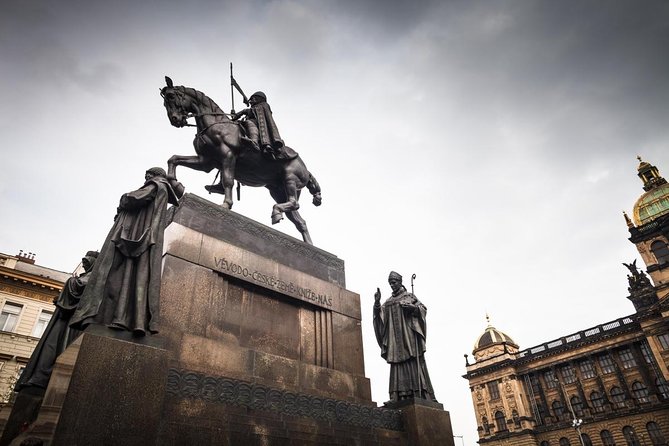
- A tight timeline across major eras, so the city’s story makes sense as you walk
- Old Town views with big symbolism, including the Stalin statue that once stood near Prague Castle
- WWII and Operation Anthropoid context, explained as part of what came after
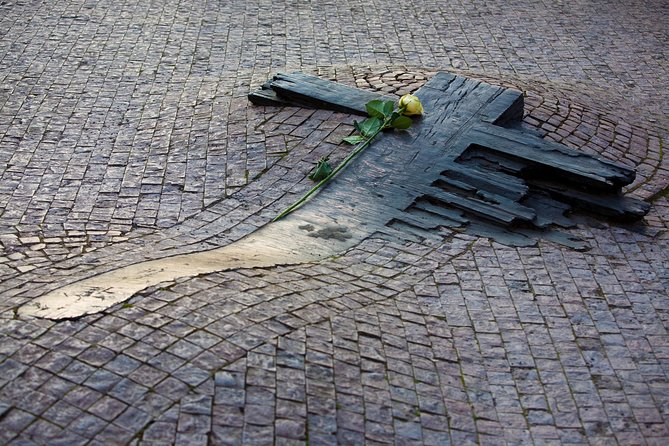
- Prague Spring, 1968 invasion, and the 1969 student memorial, all anchored to Wenceslas Square
- Velvet Revolution coverage that connects to what changed in 1989, not just what went wrong
- Small group feel, capped at 25 people, which makes questions easier
Getting oriented at Křižovnické náměstí (and why that first view matters)
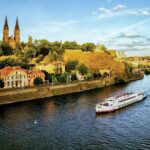
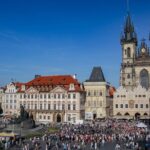
The tour kicks off at Křižovnické náměstí, right in the Old Town area near a classic Prague crossing, and that choice sets you up well. Before you even go deep into political history, you get a sense of how Prague Castle looms over the city and how power historically looked from the streets. It’s not just sightseeing, it’s orientation.
At this first step, the guide guides your eyes toward the Prague Castle area and uses that panoramic perspective to frame what you’ll hear next. You’ll learn about a striking detail that helps the political tone of the walk click into place: not far from Prague Castle once stood the largest statue of Joseph Stalin in the world. That kind of fact does two things at once. It creates a memorable hook, and it shows how ideology physically occupied the city.
I like this approach because it stops the usual “look at the building” pattern. Instead, you start seeing streets as part of a larger story about control, propaganda, and resistance.
What to watch for: this opening is only a short stop, so if you’re the type who loves to take in views slowly, plan to linger for a minute after the group moves on.
You can also read our reviews of more walking tours in Prague
The Old Town Bridge Tower moment: Prague Castle as a political stage
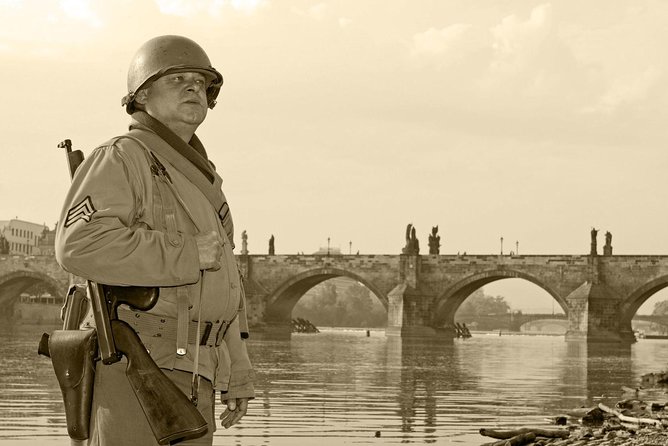
After you meet, you’ll walk through the Old Town rhythm with your guide explaining the major events step by step. This is where the tour earns its reputation for structure. The route is designed so you keep moving while the guide connects dots across decades.
Prague Castle comes up early and repeatedly in how you’re taught to think about history here. Even if you’ve seen it from photos, hearing it placed into a 20th-century framework makes it feel less like a postcard and more like a command center. The guide uses the skyline and nearby landmarks as evidence for how rulers and regimes wanted to be seen.
That also matters for first-timers. A lot of Prague tours try to cram in too much early. Here, you get the big political geography first, which makes later stops feel earned rather than random.
A practical tip: if you want photos, bring your camera ready right at the beginning. The best vantage points appear at the start of each era, not at the end of the group’s patience.
New Town Czechoslovakia to Nazi occupation, including Operation Anthropoid
The next major shift takes you into Nove Mesto, and the guide uses the space to explain what led from the Austrian monarchy’s grip to an independent Czechoslovak democratic state. That background is more than trivia. It helps you understand why the Nazi period felt like a violent break rather than just another change of rulers.
You’ll hear how Czechoslovakia built strong institutions and an economy that ranked among the best of its time, and how democracy survived longer here than in much of Eastern and Central Europe. Then the story turns darker with the Nazi protectorate period, framed as the suffering under the Protectorate of Bohemia and Moravia.
One of the most memorable segments is the explanation of Operation Anthropoid. Your guide describes it as the only successful assassination of a senior Nazi leader during World War II. Even if you already know the name, the value comes from hearing where it sits in the timeline and why it mattered for resistance and reprisals afterward.
Why this stop is valuable for you: if you’ve visited Prague Castle or Old Town streets but your history understanding feels patchy, this is where it starts to click. You’re not just learning facts, you’re building a cause-and-effect chain.
Possible drawback: if you were hoping for a very hands-on WWII experience, this is still a walk focused on interpretation. It’s not built around underground routes or hidden escape sites. You’ll get the big narrative, but it may not satisfy you if you want tunnel-level detail.
Wenceslas Square: Prague Spring, 1968 invasion, and the 1969 memorial
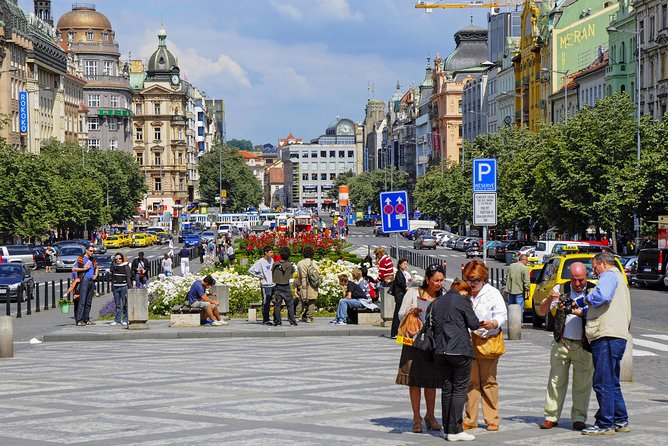
Wenceslavske NamEsti is where the tour turns from broken hope to outright resistance. The guide sets the scene with the euphoria of Prague Spring, then immediately counters it with the reality of Soviet tanks invading Prague in 1968. The story anchors to a specific place tied to that violence, including the building of the National Museum as the tour explains what happened on Wenceslas Square.
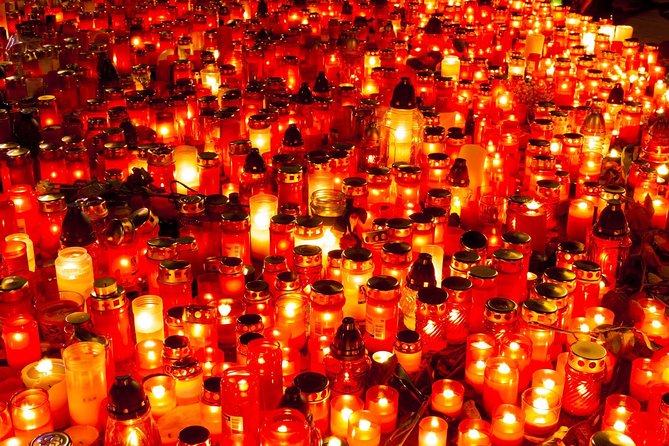
Then you get one of the tour’s most haunting moments: the memory of young students who burnt themselves alive in 1969. Your guide ties it directly to the goal of uniting the nation against the common enemy. It’s not only tragic detail. It shows how nonviolent political energy and desperate personal sacrifice fed each other under pressure.
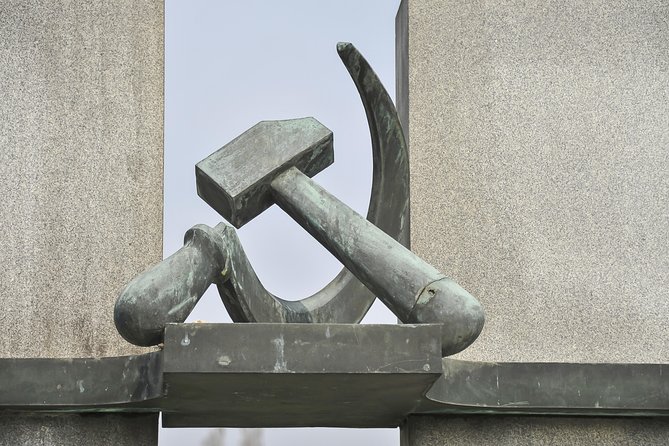
As the route continues through the streets you pass, you can feel how the guide makes the 1970s and 1980s come alive. This is where communist rule isn’t just described, it’s explained through methods and strategies, and through the lingering influence of the USSR as it seized power and transformed democracy into dictatorship where human life was treated as less important.
Later, the guide connects the long road to 1989. You’ll hear about Václav Havel and courageous student actions, plus the brutal police forces and clashes at Narodní třída. The story ends with the Velvet Revolution as the victory of democracy after more than 40 years of communism.
Why I think you’ll appreciate this ending: Prague is full of bright facades, cafés, and music. This tour forces the city to speak honestly. Once you’ve heard how people fought and how close the streets came to catastrophe, you’ll notice a different kind of atmosphere as you walk out afterward.
Guides with lived perspective, not just facts (and why it changes the walk)
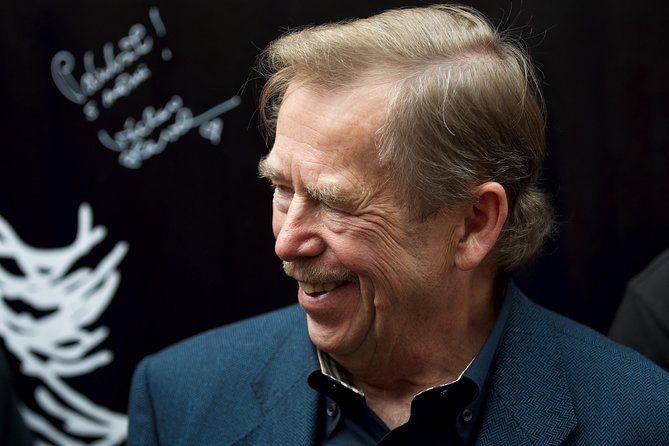
The tour is led by a professional guide, and the strongest part is how the best guides connect the era to real daily life. In different departures, guides such as Tomas, Martin, Maria, Dominick, and Zdenek have shared personal angles, including family experience and firsthand connection to the communist years.
That lived perspective shows up in how questions get answered. In one case, a guide with experience as a student demonstrator during the Velvet Revolution helped turn 1989 from a headline into something you could feel. In another, a guide explained childhood realities like atomic drills in primary school. Even when the topic is political, those details make it human.
This matters for you because it’s easy to get overwhelmed by 20th-century dates in Central Europe. A guide who can translate big events into everyday moments helps you remember what matters. You’ll also get the benefit of a Q and A friendly pace, because the group stays small and the guide can respond in the moment rather than rushing to fit a script.
One practical consideration: this is not a lecture with silent listening. If you tend to ask questions, you’ll likely get more out of it. If you want a strict, silent, step-by-step route, pick a time when you feel ready for discussion.
How long it takes, how much walking to expect, and what to bring
The tour runs about 2 hours, but it can stretch a bit depending on the pace and how much the guide engages with your questions. The key is that you’re moving between central Prague neighborhoods, from Old Town toward New Town and on to Wenceslas Square.
Most people should be able to participate, but you’ll still want to treat it like a real morning walk. Reviews consistently point out that comfortable shoes are not optional, because you spend a good chunk of your time on foot rather than stopping for long museum-style breaks.
Also, food and drinks are not included. That doesn’t mean you need to skip snacks. It means you should plan for water and a quick something if you get hungry. If you do a late breakfast, you’ll likely feel better during the tougher story moments later on.
Your best timing move: start your day with this tour if possible. I like history walks early because they change how you experience the rest of Prague that day, from where you focus your photos to how you interpret plaques and monuments.
Price and value: why $30.12 can make sense for Prague history
At about $30.12 per person for a roughly 2-hour walking tour, this is priced like a solid, guided-history experience. What makes it good value is not the cost alone, it’s the payoff: you get a structured overview across WWII, the Nazi protectorate period, communist takeover, Prague Spring, and the Velvet Revolution, all tied to real places.
The tour also includes the guide, and several stop moments involve free access tickets for the specific viewpoints included in the walk. Even when admissions are free, the bigger value is interpretation, meaning you’re not left alone trying to connect scattered plaques and street names.
For context, Prague has plenty of free walking tours and self-guided routes. This tour earns its price when you want someone to answer the hard questions quickly, like why democracy broke, how the communist system functioned, and why 1989 happened when it did.
Who gets the best deal from this tour
- You love history buffs style tours that connect eras
- You want a city orientation that goes beyond architecture
- You enjoy asking questions and getting real explanations
- You want the big narrative without needing extra museum planning
Should you book the Prague Communism and World War II Walking Tour?
If you want a single walk that gives you the 20th-century backbone of Prague, I think this is an easy yes. The strongest reasons to book are the clear timeline, the way the tour anchors stories to meaningful landmarks, and the fact that guides often bring a personal connection to the communist era. Starting at Křižovnické náměstí and ending on Wenceslas Square also gives you a satisfying north-to-center storyline.
Here’s the only real “wait or reconsider” factor. If your dream WWII experience is ultra-specific, like visiting hidden shelters and specialized underground sites, this tour is less built for that. It’s built for the broader story of how Prague and Czechoslovakia changed under pressure, and it does that well.
If that sounds like what you want, book it, wear comfortable shoes, and come ready to listen closely. You’ll leave with a much sharper sense of why Prague looks the way it does today, and what people had to risk to change it.
FAQ
What is the duration of the Prague Communism and World War II Walking Tour?
The tour is about 2 hours.
How much does the tour cost per person?
The price is listed as $30.12 per person.
Where does the tour start and where does it end?
It starts at Křižovnické náměstí in Prague city center and ends in Prague city centre.
What time does the tour start?
The start time is 10:00 am.
What language is the tour offered in?
The tour is offered in English.
Is a mobile ticket included?
Yes, you get a mobile ticket.
What is included in the price?
A professional guide is included.
Is food or drinks included?
No, food and drinks are not included.
How big is the group?
The maximum group size is 25 travelers.
Is it suitable for children?
Children must be accompanied by an adult.
Is there free cancellation?
Yes, free cancellation is available if you cancel up to 24 hours in advance for a full refund.
More Walking Tours in Prague
More Tours in Prague
More Tour Reviews in Prague
Not for you? Here's more nearby things to do in Prague we have reviewed





Communism & WWII History Tours, compared.
 ★ 4.7Communism History and Nuclear Bunker Guided TourFrom $442,417 reviews
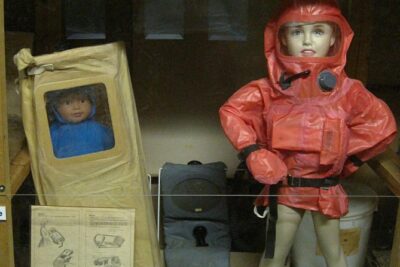 ★ 5.0Prague Communism History and Nuclear Bunker TourFrom $451,742 reviews
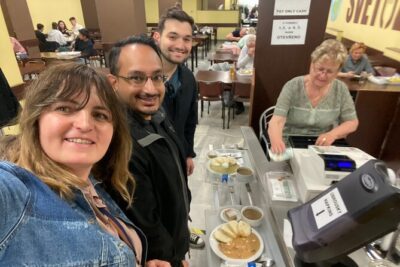 ★ 5.0Communism & Nuclear Bunker Tour + 70s Canteen Lunch (own expense)From $351,036 reviews
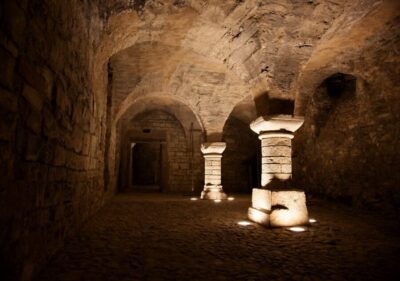 ★ 4.7WWII Guided Tour & The Crypt of Operation AnthropoidFrom $421,030 reviews
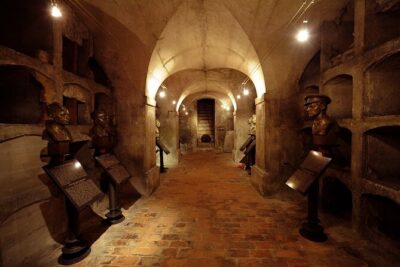 ★ 5.0WWII in Prague Tour & The Crypt of Operation AnthropoidFrom $43817 reviews
 ★ 4.8Communism and Bunker Tour with 70s Canteen LunchFrom $33250 reviews
 ★ 5.0Small-Group World War 2 & Operation Anthropoid Tour in PragueFrom $33231 reviews
 ★ 4.8World War 2 and Operation Anthropoid Walking TourFrom $32193 reviews
Browse the lists this tour appears in