
REVIEW · COMMUNISM & WWII HISTORY TOURS
Prague Cold War Walking Tour
Prague under Communism is history you can still touch. This 3-hour Cold War walking tour threads together the big monuments and the street-level symbols, with a historian guiding you through how power was sold, built, and eventually rejected. I especially like the small group size (max 8), because questions actually land, not get swallowed. I also love how the route pairs famous places like Wenceslas Square with less obvious leftovers like Cold War shelter corridors. One thing to plan for, the steep climb to Vitkov Hill can be a deal breaker if uphill walking is hard for you.
You start by going to St. Joseph Church, then follow a specially designed path through Prague’s most important Communist sites, finishing where the Velvet Revolution gathered force. Along the way, you’ll see statuary, official symbolism, and propaganda logic, plus the human side of what these systems did to real people. If you want a tour that feels like a history lesson with street corners as the textbook, this one fits.
The tour is priced at $126.43 per person, which sounds steep until you factor in the historian-led focus and the tram tickets included for your route. If you’re trying to see Prague at high speed with zero guided context, you may feel it’s not your best value. If you want to understand what you’re looking at, you’ll probably feel like you got your money’s worth.
Key highlights you should know before you go
- Historian guide, not just a script: You’ll get the political and social logic behind the monuments, not only dates.
- Communist Prague, site-by-site: From Cold War weapon-era infrastructure to Communist-era political symbolism.
- Vitkov Hill is the physical centerpiece: Expect a steep uphill climb, about 20 to 30 minutes.
- Wenceslas Square to the Velvet Revolution: One square, many eras, and a clear story arc by the end of the walk.
- Small group of up to 8: Easier pacing and more personal back-and-forth with your guide.
Starting in the right mindset at St. Joseph Church
This tour begins at St. Joseph Church, and that matters more than it sounds. Starting here puts you in the older layers of Prague before you start spotting 20th-century power messaging. From there, your guide builds the walk like a timeline you can physically follow.
The pace is designed for a 3-hour window, with multiple stops that are short but meaningful. You’ll spend time looking, then hearing how the place fits into Communist strategy in Czechoslovakia. It is not only about who ruled, it’s about how rule was displayed, enforced, and eventually broken.
You can also read our reviews of more walking tours in Prague
The nuclear-bomb shelter tunnel under Karlin-Zizkov
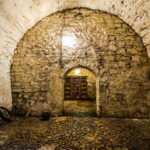
One of the most memorable early moments is the Pedestrian Tunnel Karlin-Zhizhkov. You walk through the tunnel and you can see locked doors that lead toward Cold War nuclear bomb-shelter corridors, still maintained.
This stop works well because it shifts the Cold War from a political headline to a physical reality. It’s one thing to read about fear, it’s another to stand where people planned for the unthinkable. Even if you do not love the grim parts of history, this is the kind of detail that makes the whole tour click.
It’s also a practical breather. The time at this stop is short, about 10 minutes, so it doesn’t feel like you’re stuck waiting around.
Vitkov Hill and the story packed into the National Monument
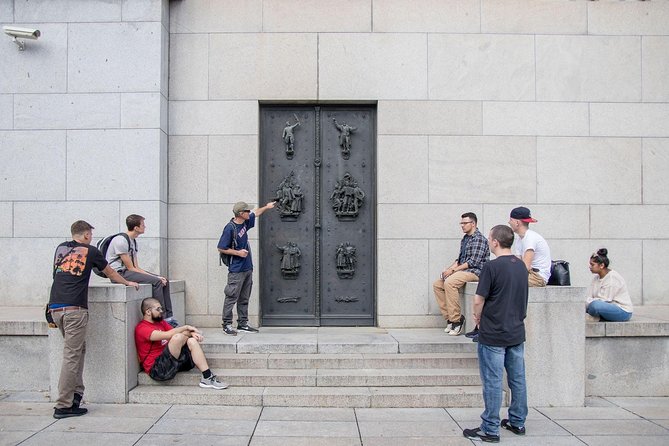
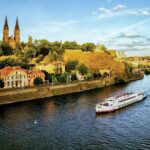
Vitkov Hill is where the tour turns from “history lesson” into “stand back and look.” You’ll head to the National Monument at Vitkov, a big memorial complex connected to World War I and Czech and Slovak fighters. From there, your guide focuses on what the Communist era did to the space and meaning.
Expect to spend about an hour here. The highlight is the connection to Klement Gottwald, where his mummified corpse was displayed, along with an adjoining laboratory where his body was embalmed. That detail is heavy, but it’s also central to understanding how regimes treat leaders like symbols, not people.
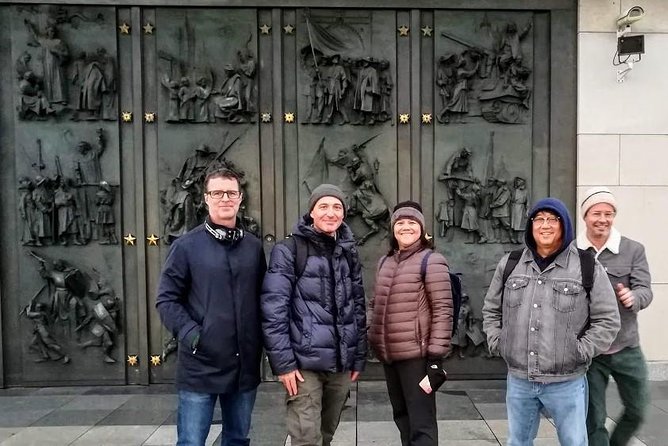
You’ll also hear about the Hall of the Soviet Soldier and the Hall of the Red Army style messaging, including how Communist architecture and statuary turned politics into something you could walk through. And yes, you’ll get the sweeping views that come with Vitkov Hill, but they cost effort.
The uphill climb is real, plan for it
This tour includes a steep climb up to Vitkov Hill, with an uphill walk that takes about 20 to 30 minutes. If your legs do not handle climbs well, think seriously about skipping Vitkov Hill or choosing a version of the tour that leaves it out. You still get Cold War context in the city center, just without the hill.
If you do go, wear shoes you trust. This is not a moment for stylish but slippery footwear.
Jan Žižka, brutal bronze, and how nationalism played with Communism
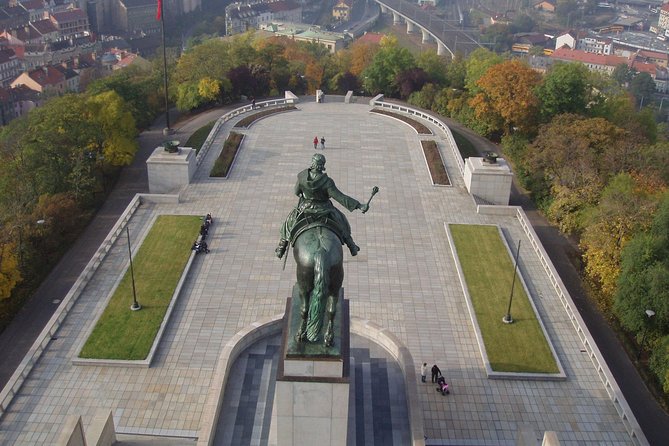
At Vitkov you’ll also meet Jan Žižka through the equestrian statue on the monument grounds. Your guide talks about him in a way that connects Czech nationalism to local Communist rule.
That’s a key point of this tour: Communism was not one-size-fits-all here. The regime used national symbols and historical heroes to make itself feel rooted and legitimate, even when it was ideological and imported. Watching how propaganda borrows local pride helps you read other parts of the tour with sharper eyes.
This is also one reason the guide matters. If you only see bronze and scaffolding, you miss the politics. With the historian context, the statue becomes a clue.

Zizkov Television Tower, a quick hit of Brutalism
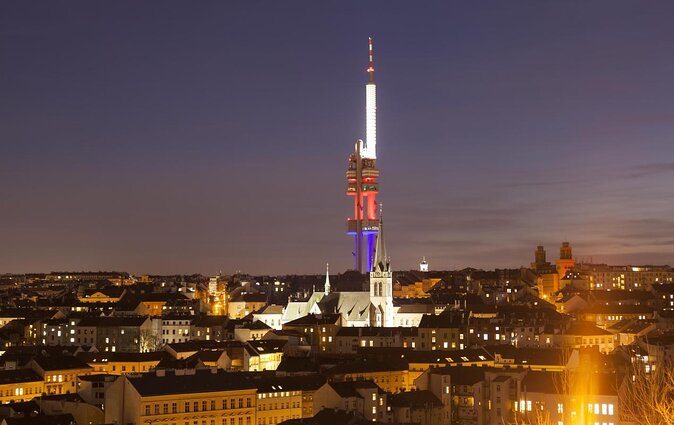
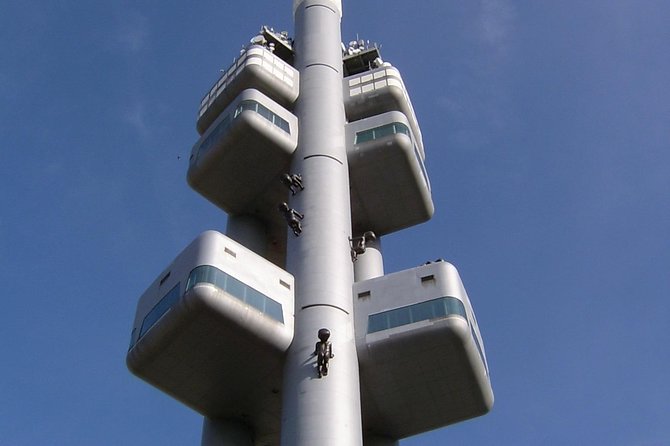
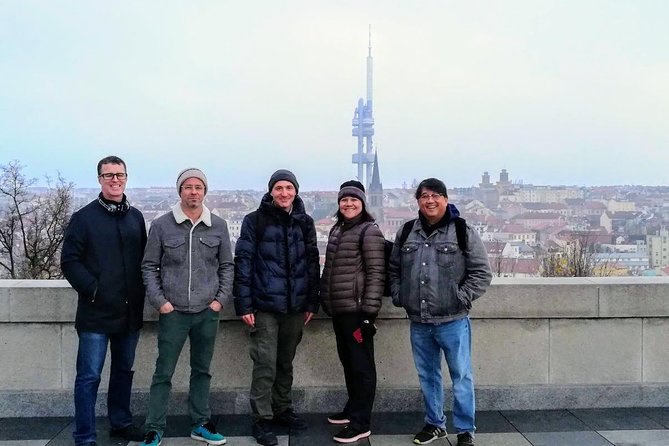
Between big monuments, you get a short stop at the Prague TV tower in Žižkov. It’s brief, about 5 minutes, and the goal is perspective. You’ll get one of the best views of the Brutalist style tower, so the city’s modern edges show up in your mental map.
This stop can feel like a palette cleanser, but it’s not random. Communist-era Prague wasn’t only about the past, it was also about what a new state wanted to build, and how it wanted to look. Brutalism is a style that can feel aggressive or cold, and that mood helps with the tour’s overall theme.
Wenceslas Square, where each era leaves its mark
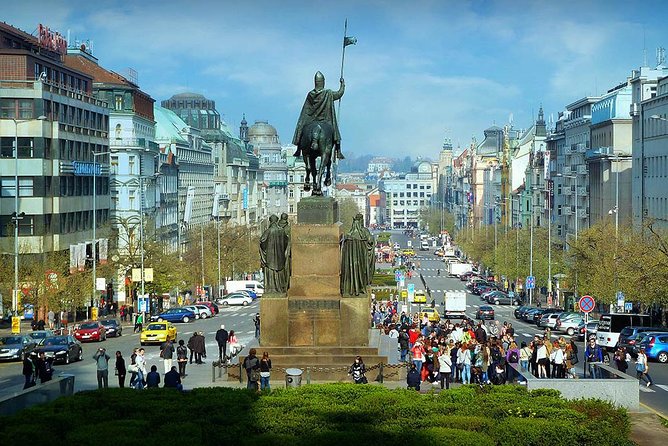
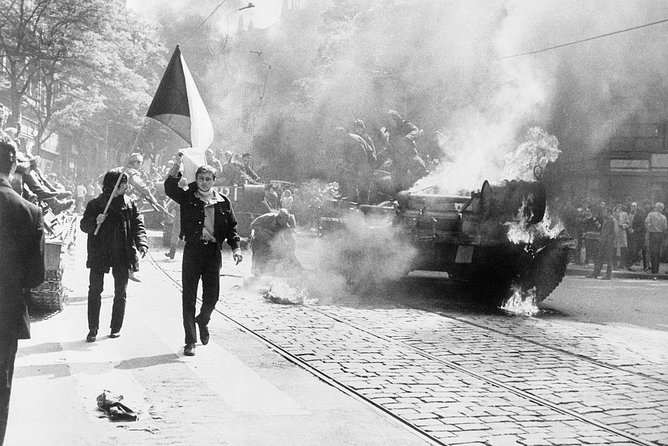
The heart of the story lands at Wenceslas Square. You’ll walk through it for about 20 minutes, and your guide ties the square’s history across centuries into one readable path. The square starts in the 14th century, then moves through occupying forces staging parades, through the tragic events of Prague Spring, and then ends with the ecstatic gathering that helped ignite the Velvet Revolution in a single day.
This is one of the tour’s strongest parts because Wenceslas Square is a stage. You can look around and feel how public space can become a political megaphone.
As you hear the different meanings layered onto the same streets, you’ll likely start spotting symbolism on your own during the rest of your visit. It’s the kind of mental shift this tour is designed to create.
The upside-down King Wenceslas statue and modern political humor
Right after Wenceslas Square, you’ll also see the Upside-Down Statue of King Wenceslas riding a Dead Horse. It’s a short stop, about 5 minutes, but it lands with a lot of meaning because it turns historic authority into irony.
Your guide connects it to the contemporary political atmosphere of Central Europe. That’s what I like about this tour’s balance. It doesn’t stop at the fall of Communism as if history turns off. It points to echoes that still show up in public art and public attitude.
More Communist-era sites you’ll connect as you walk
Even though some stops are short, the overall route aims to connect multiple Communist touchpoints into one clear picture. Along the way, you’ll learn about KSC propaganda and politics, including how major events like the 1948 power shift influenced the visual language of the state.
You’ll also hear about Prague locations tied to major political moments and protests, including the area around the John Lennon Wall and the National Assembly building that served as the seat of Communist government. And the tour also reaches beyond the most obvious monuments, with storytelling tied to places like Letna Hill, the former site of an enormous Stalin statue, and the tragic story of its sculptor.
One reason this works is that it turns scattered landmarks into a single story thread. By the end, the Velvet Revolution isn’t just a date, it’s a turning point with consequences you can still see.
Tram tickets, timing, and why $126.43 can make sense
The price is $126.43 per person for roughly 3 hours. On the surface, that’s not a budget tour. But you get a historian guide, a small group capped at 8, and tram tickets included to keep the route efficient.
If you’re the type of traveler who reads museum labels but wants more human interpretation, this is the kind of guiding that pays off. You’re paying for synthesis, the act of taking a complicated 20th-century system and turning it into something you can understand while walking.
You should also know what is not included. Food and drinks are on you, and there’s no hotel pickup or drop-off. So plan your day like a normal walking tour: arrive on time, use nearby transit to reach the meeting point, and bring water if the weather is warm.
Group dynamics: small enough for real questions
A maximum of 8 travelers is a big deal for a tour with serious content. You’re more likely to get back-and-forth answers, not just a one-way lecture. The historian can also adjust pacing if you want extra time at a symbol-heavy stop, like the monuments or the political street art.
It also means you should come ready to pay attention. This is not a casual stroll where you can zone out and still “get the value.” The tour asks you to look and think.
Best departure choice: morning vs afternoon
You can choose a morning or afternoon departure when booking. The details provided here show an afternoon start at 2:00 pm, but the key point is that you’re not locked into one schedule. If you prefer lighter crowds and better morning light for photos, mornings can be a good pick. If you want to sleep in and still get your guided content, the afternoon option fits well.
Who this Prague Cold War walk is for
This tour is a strong match if you:
- Want a historian guide focused on life under Communism, not only leaders and dates
- Like political art and symbolism, and want help reading it
- Enjoy walks with meaning, where each stop connects to the next
It might be less ideal if you:
- Mostly want scenic Prague photos with minimal historical context
- Struggle with steep climbs, since Vitkov Hill requires uphill walking
- Need a fully flat route and want to avoid hills altogether
Should you book this Prague Cold War Walking Tour?
I’d book it if you want one focused, guided way to understand Communist Prague, including the Velvet Revolution’s build-up and impact. The small group size, the historian-led approach, and the mix of dramatic monuments with quieter Cold War remnants make it a practical way to learn without spending your whole trip in museums.
I would skip or modify it if the Vitkov Hill climb is a problem for you. The tour can still work as an idea, but you’ll want the version that avoids the steep ascent so you can enjoy it instead of rushing through it.
If you book, wear good shoes, bring a curious mindset, and expect the guide to connect the dots between stone, statuary, and political control. That is where the value really shows.
FAQ
How long is the Prague Cold War Walking Tour?
It runs for approximately 3 hours.
What is the meeting point for the tour?
The start is at Náměstí Republiky 1077/2, Nové Město, 110 00 Praha-Praha 1, Czechia.
What time does the tour start?
The provided start time is 2:00 pm for the afternoon departure. Morning departure is also available if you choose that option when booking.
What does the tour cost?
The price is listed as $126.43 per person.
Is the tour in English?
Yes, the tour is offered in English.
How big is the group?
The maximum group size is 8 travelers.
What is included in the price?
Included items are a historian guide and tram tickets.
Is food included?
No. Food and drinks are not included.
More Walking Tours in Prague
More Tours in Prague
More Tour Reviews in Prague
Not for you? Here's more nearby things to do in Prague we have reviewed







Communism & WWII History Tours, compared.
 ★ 4.7Communism History and Nuclear Bunker Guided TourFrom $442,417 reviews
 ★ 5.0Prague Communism History and Nuclear Bunker TourFrom $451,742 reviews
 ★ 5.0Communism & Nuclear Bunker Tour + 70s Canteen Lunch (own expense)From $351,036 reviews
 ★ 4.7WWII Guided Tour & The Crypt of Operation AnthropoidFrom $421,030 reviews
 ★ 5.0WWII in Prague Tour & The Crypt of Operation AnthropoidFrom $43817 reviews
 ★ 4.8Communism and Bunker Tour with 70s Canteen LunchFrom $33250 reviews
 ★ 5.0Small-Group World War 2 & Operation Anthropoid Tour in PragueFrom $33231 reviews
 ★ 4.8World War 2 and Operation Anthropoid Walking TourFrom $32193 reviews
Browse the lists this tour appears in