
REVIEW · COMMUNISM & WWII HISTORY TOURS
Prague Communism tour with visit of Communism museum
Communism in Prague feels uncomfortably close. This 3-hour private tour pairs a Museum of Communism visit with a guided walk past key 1948-1989 turning points, so big ideas meet real street corners.
I like the mix of classroom context and on-the-ground sights, especially the way the guide connects events to everyday life. I also like the personal storytelling element, including first-hand style context shared by guides such as Lenka, who grew up under the communist era.
One thing to consider is cost: the museum entrance ticket is extra, about €15 per person, so your final spend is higher than the base price.
Private group format (only your group) with a local guide, which usually means more time for questions.
Museum visit sets the timeline with about 1 hour 30 minutes inside, before you walk.
Short, focused street stops at major sites like Wenceslas Square, Národní třída, and the Jan Palach memorial area.
Real-world reminders you can see in the city, including marked places tied to oppression and persecution.
English-language guide for travelers who want history explained clearly, not just listed.
Runs in all weather, so bring a jacket and plan to move outside between stops.
The Museum-Plus-Walk Approach That Makes Prague’s 20th Century Make Sense
Prague can look elegant and timeless. Then someone shows you what life looked like under a system designed to control people, and the city suddenly feels sharper.
What works here is the order. You start in a focused museum space for grounding, then you step into the streets where the guide can point out reminders you would otherwise miss. That “context first, location second” rhythm is exactly what turns dates into something you can picture.
Price and What You Actually Get for $114.39
At $114.39 per person for about 3 hours, you are paying for a private guided experience, in English, with a local guide and a set route that includes multiple city stops. The time is also split in a way that respects your attention span: you get substantial museum time, then shorter walks.
The main caveat is the museum ticket. The base price does not include admission, and the museum entrance is listed at €15 per person. Do the math before you go, so the total feels fair rather than surprising.
There’s also a practical bonus in the details: this is near public transportation, and the tour ends in the city center. That helps if you want to keep exploring afterward without a long backtrack.
You can also read our reviews of more museum experiences in Prague



Starting Point at V Celnici and the Finish in the City Center
You meet at 4, V Celnici 1031, Nové Město, and the tour finishes at Národní třída in central Prague. That matters because you are not stuck commuting across town after the tour is over.
The route itself is built for easy movement. Stops like Wenceslas Square and Národní třída areas are walkable within the general city center zone. Still, wear shoes you can stand in, because you will be outside between the museum and the street memorial points.
Inside the Museum of Communism (About 1.5 Hours)
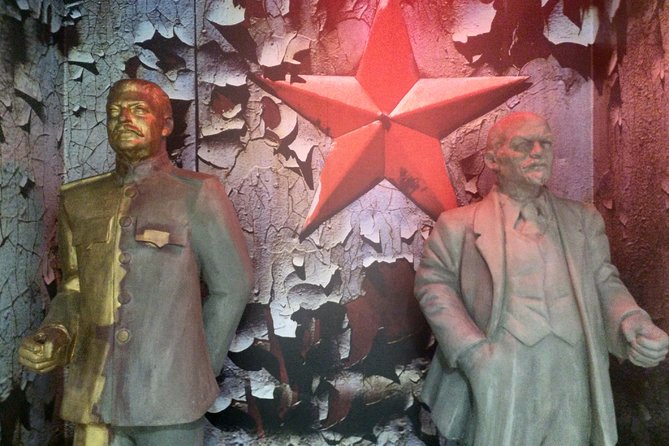
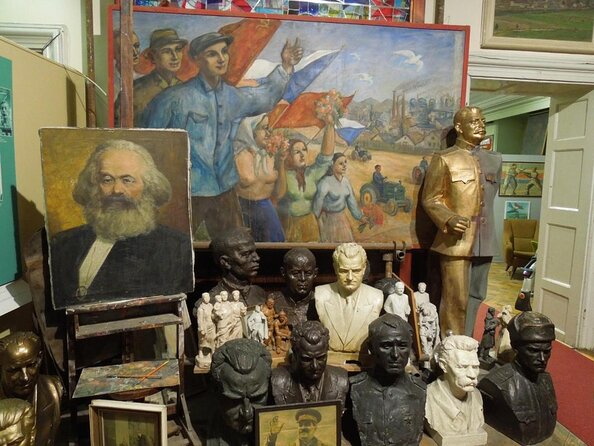
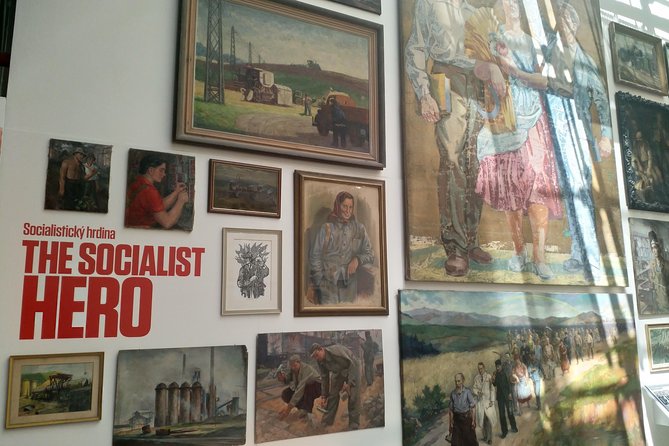
The highlight of the schedule is the Museum of Communism visit, with about 1 hour 30 minutes on-site. This is where you get the “why” behind the “what.” Instead of only seeing monuments and plaques, you learn how the system shaped daily life.
Expect more than generic posters. The museum portion is often where personal and emotional context clicks, including how people were impacted by the regime in day-to-day terms. In one described walkthrough, the guide connected the timeline to what you were seeing, then used the museum as a kind of anchor for the street stops that followed.
A useful thing to know before you go: admission is not included, so make sure you have the museum ticket ready for that first block. If you show up without planning for that extra €15, the start of the tour can feel like a speed bump.
Wenceslas Square Stop: Politics in the Middle of Daily Life
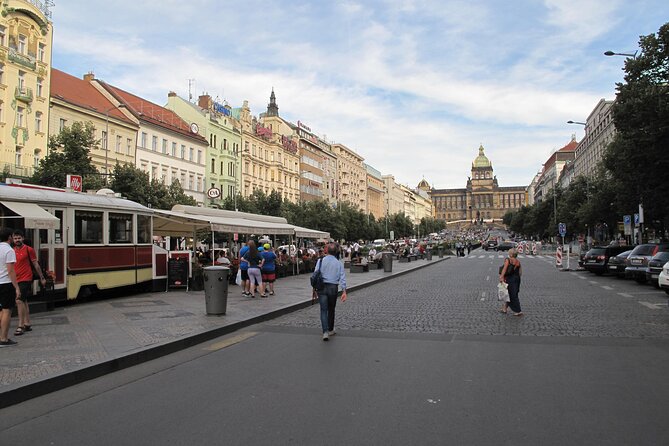
You spend about 20 minutes at Wenceslas Square. This stop is short, but it is placed intentionally. It is one of those big public spaces where history and public mood can collide.
Your guide’s job here is to connect the square to wider events across 1948-1989, not just treat it like a postcard location. When someone explains the political pressure and public tension that built up around places like this, the square stops being generic and becomes a stage.
This stop is also a good reminder that oppression is not only about secret police and posters. It is also about how people move, gather, and speak in the open, and what happens when dissent becomes too visible.
National Avenue and the Velvet Revolution Link
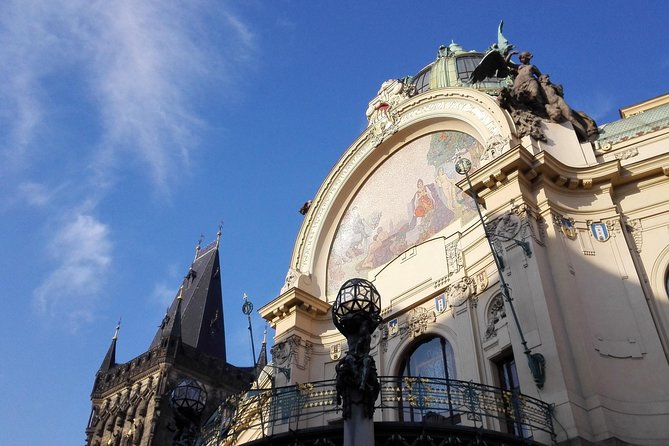
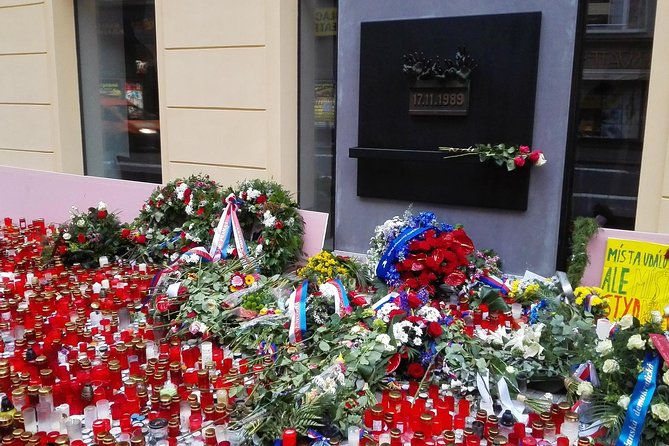
Next comes a 20-minute stop at the National Avenue (Národní třída) area, described as where it sparked for the Velvet Revolution. This is the kind of point where Prague history becomes very human.
The guide can connect the atmosphere of the era to what you see in front of you. One vivid example from the experience description involves seeing symbolic elements across the city tied to oppression and protest, then tying those symbols back to the Velvet Revolution push for change.
In practical terms, this is where you start noticing how public art, street markings, and memorial details can function like a map. If you usually walk past things without reading them carefully, this stop helps you slow down.
Jan Palach Memorial: When Protest Becomes a Message
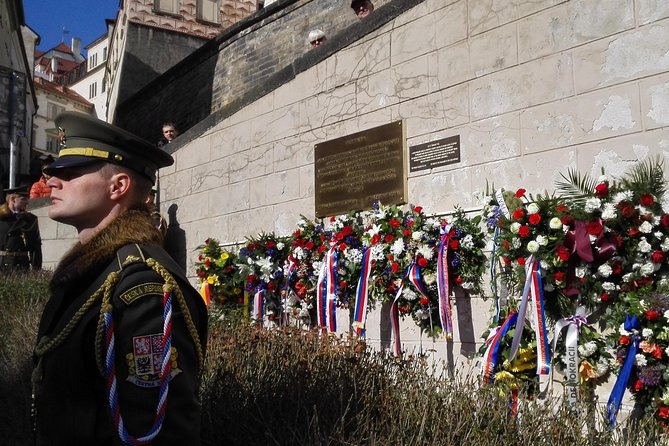
The tour includes about 20 minutes around the Jan Palach memorial in the center. This stop is emotionally heavier than it looks from a distance.
Jan Palach is remembered as a student who burned himself in protest, and the guide can connect that act to the broader climate of fear and control that people were living under. You also may see the kinds of symbolic reminders that help explain why these stories still matter.
This is not the kind of stop where you want to rush. If you are the type who likes to take in memorial spaces quietly, give yourself a moment to do that while the group moves.
How the Guide Turns Facts into Stories You Can Remember
The strongest praise for this tour is about the guide’s storytelling. In particular, Lenka is highlighted for combining clear explanations of the communist era and events with personal context from growing up under the regime.
That combination matters. A guide who can explain history like a timeline is useful. A guide who can connect it to how it felt to live under the rules is what makes you remember the tour after you get back to your hotel.
You may also encounter concrete reminders described in the experience, like:
- a death mask of a student who burned himself in protest
- sculptures that communicate how living under oppression damages people’s spirit
- brass commemorative plates on sidewalks tied to the persecution of Jews, including references to homes where people were dragged out and sent to extermination camps
Even though the stops are brief, the guide’s job is to make these details mean something, not just list facts. That is the difference between “seeing” and actually understanding.
Group Size, Timing, and the Feeling of a Private Tour
This is listed as a private tour where only your group participates. That is a big deal on a subject like this, because you will likely have questions. You can also ask the guide to explain an event from a different angle, like daily life versus politics.
The pace is steady rather than frantic. You are looking at roughly 1 hour 30 minutes inside the museum, then a series of shorter outdoor stops of about 20 minutes each. If you like tours that keep moving but do not sprint, this schedule usually fits.
Because it runs in all weather conditions, plan to dress for Prague conditions that can shift quickly. Bring a layer you can put on right away. You do not want to spend the museum portion thinking you will rush through the outside stops.
Getting Value From the Tour You Can’t Replicate on Your Own
You could technically read plaques and museum materials on your own. But this tour is built to save you time and confusion.
Here’s what you gain from having a local guide with a structured flow:
- You see a curated set of key sites connected to the 1948-1989 period, instead of picking random memorials.
- You get translation of context, so you understand why a location matters, not only what it is.
- You link museum themes to street realities, which is the whole point for remembering history.
The private format adds extra value if you are traveling with friends or family and want questions answered without waiting for a large group. It is also a comfortable fit if you prefer a quieter pace over a big bus tour.
Who This Tour Suits Best in Prague
This is a strong pick if you want a history tour that is more than monuments. You should enjoy it if you like learning how political systems shape daily behavior, fear, and resistance.
It is also a good fit if you want a guide who can handle sensitive material with care and clarity. The Jan Palach memorial stop and the persecution reminders in the city are not just “information moments.” They are part of an emotional story.
Most travelers can participate, and service animals are allowed. If you can stand and walk short distances, you should be fine.
Should You Book This Prague Communism Tour?
If your priority is understanding what communism meant in real life, and you like the idea of pairing museum context with street-level sights, I would book this. The private format makes it feel more personal, and the guided structure means you are less likely to miss the meaning behind what you see.
I would think twice only if you are trying to keep every cost to the base price. The museum admission of €15 per person is an extra line item you need to plan for. If that is manageable, the overall setup feels like solid value for a focused 3-hour guided experience.
If you want a meaningful Prague story that goes beyond postcards, this is the kind of tour that helps the city’s 20th century finally click.
FAQ
How long is the Prague Communism tour?
The tour is about 3 hours, with the museum visit taking about 1 hour 30 minutes and the outdoor stops around 20 minutes each.
What is the price per person?
The listed price is $114.39 per person.
Is the museum admission included in the price?
No. The Museum of Communism entrance ticket is not included and is listed at €15.00 per person.
What language is the tour offered in?
The tour is offered in English.
Is it a private tour?
Yes. It is described as a private tour or activity where only your group participates.
Where does the tour start and end?
It starts at 4, V Celnici 1031, Nové Město, Prague 1, and it ends at Národní třída in Prague 1 in the city center.
What are the main stops?
The tour includes the Museum of Communism, Wenceslas Square, National Avenue (Národní třída) related to the Velvet Revolution, and the Jan Palach memorial area.
Do I need to buy tickets in advance?
The information provided says you should have the museum entrance ticket because it is not included, but it does not state timing for advance purchase.
Does the tour run in bad weather?
Yes. It operates in all weather conditions, so dress appropriately for being outside.
Can I bring a service animal?
Yes. Service animals are allowed, and most travelers can participate.
More Museum Experiences in Prague

More Tours in Prague
More Tour Reviews in Prague
Not for you? Here's more nearby things to do in Prague we have reviewed





Communism & WWII History Tours, compared.
 ★ 4.7Communism History and Nuclear Bunker Guided TourFrom $442,417 reviews
 ★ 5.0Prague Communism History and Nuclear Bunker TourFrom $451,742 reviews
 ★ 5.0Communism & Nuclear Bunker Tour + 70s Canteen Lunch (own expense)From $351,036 reviews
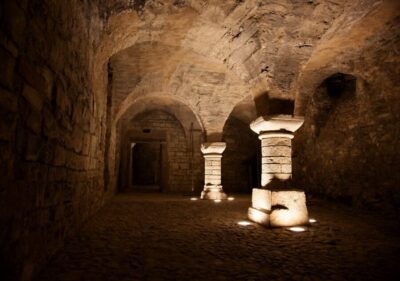 ★ 4.7WWII Guided Tour & The Crypt of Operation AnthropoidFrom $421,030 reviews
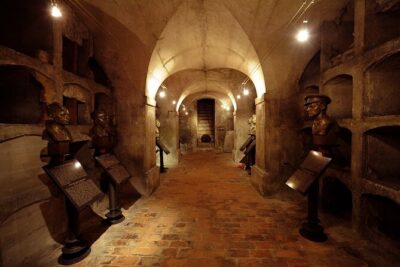 ★ 5.0WWII in Prague Tour & The Crypt of Operation AnthropoidFrom $43817 reviews
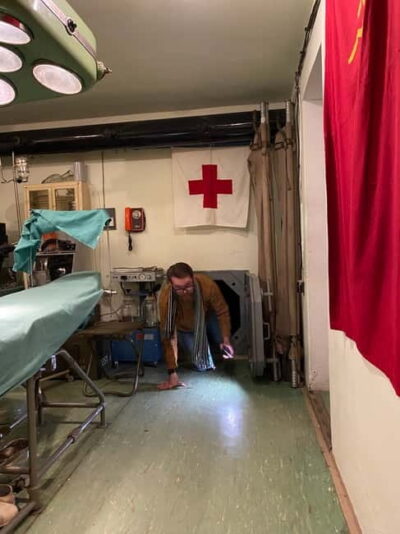 ★ 4.8Communism and Bunker Tour with 70s Canteen LunchFrom $33250 reviews
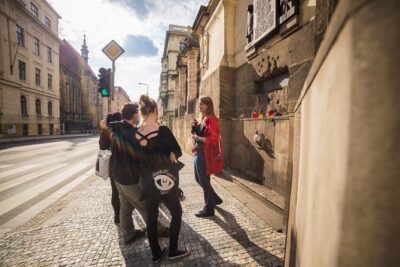 ★ 5.0Small-Group World War 2 & Operation Anthropoid Tour in PragueFrom $33231 reviews
 ★ 4.8World War 2 and Operation Anthropoid Walking TourFrom $32193 reviews
Browse the lists this tour appears in