
REVIEW · JEWISH QUARTER TOURS
Private Stories of Jewish Prague Walking Tour
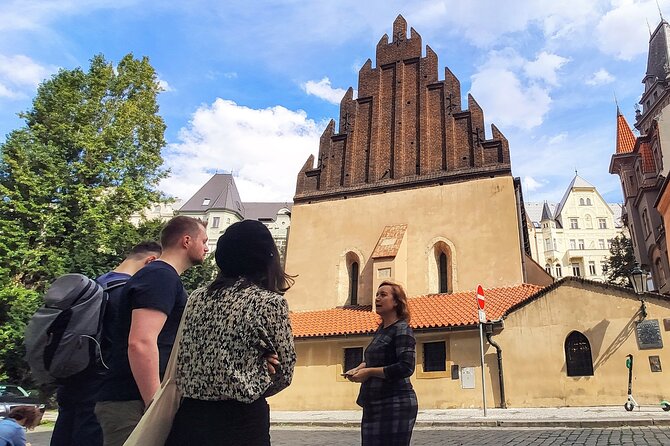
A private walk through Jewish Prague. This 3-hour Jewish Quarter tour in Prague’s Josefov starts at the Old-New Synagogue and connects medieval life to 20th-century upheaval, then to the community’s modern revival, with a historian guide and room for your questions.
I love the private setup. Your group can stay flexible, ask follow-ups, and move at a pace that fits your interests. I also like the route’s focus on major Jewish landmarks in one sensible loop, so the stories do not feel like random stops.
One thing to plan for: entrance fees are not included, and there are steep staircases in several synagogues, including a few steps down into the Old-New Synagogue.
Key things that make this tour worth your time
- Historian guide with space to ask questions as you go
- Old-New Synagogue (Altneuschul), Europe’s oldest active synagogue, plus Gothic architecture and legends
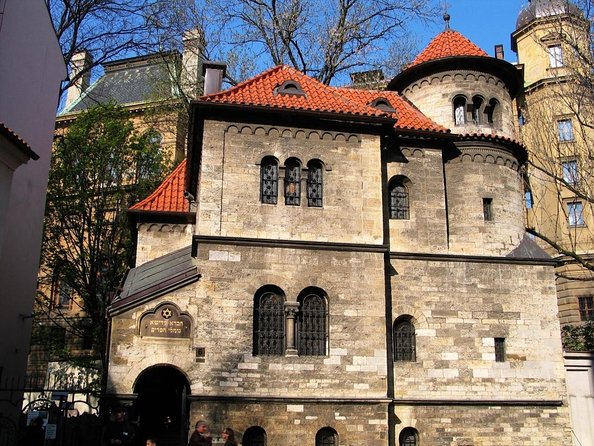
- Old Jewish Cemetery where you can connect names, memory, and centuries of community life
- Jewish Museum in Prague with large-scale collections of Judaica, books, and archives
- Pinkas Synagogue remembrance for about 78,000 Czech Jewish victims, plus children’s drawings from Terezin
- Morning or afternoon start times, making it easier to fit into your Prague schedule
Why a private Jewish Quarter walk feels different
Prague’s Jewish Quarter can be intense even before you learn the details. That is exactly why I like the private format here. Instead of threading through Josefov while someone talks at you, you can slow down when something hits, ask what a term means, or get context for a date that seems to come out of nowhere.
This is also a strong choice if you want both the big arc and the personal texture. You are not just seeing buildings. You are moving through medieval Jewish customs, then confronting how Nazi policy unfolded in Prague, including the implementation of the Final Solution. After that comes the communist years, and finally the revival of today’s Jewish community.
And you get that local “why does this place matter” feeling without turning it into a lecture. A historian guide brings the story to street level, so the tour reads more like a guided conversation than a checklist.
You can also read our reviews of more walking tours in Prague

Starting at Maiselova: your entry point into Josefov
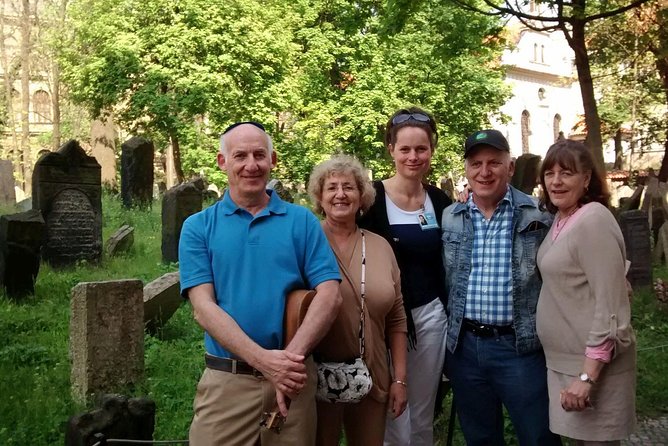
You meet near the Jewish Museum Information Center and Café Maiselova, at Maiselova 38/15, Prague 1-Josefov. If you do not arrange hotel pickup, plan to arrive about 15 minutes early. This matters more than it sounds, because the tour begins at the Old-New Synagogue area and you want your group ready to start on time.
Pickup is offered, but only if you set it up in advance. Either way, you are in a walkable part of Josefov, close to public transportation. That is handy because after the tour you can keep exploring, grab food nearby, or hop to another Prague neighborhood without a long transfer.
One practical note: this is offered in English, and the tour runs about 3 hours. With a shorter time window, starting on schedule keeps the experience from turning into a sprint.
The Old-New Synagogue: Gothic stone and centuries still in use
Most people expect a synagogue tour to feel old. This one adds a different layer: the Old-New Synagogue is Europe’s oldest active synagogue. So you are not just looking at a restored site. You are stepping into a living thread.
Here, your guide explains the mid-13th-century roots and points out the Gothic character, a style that shows up early in this part of Prague. You also learn medieval context, including Judaic social and religious customs, not in abstract terms, but as something that structured daily life.
A bonus you will appreciate if you like the human side of history is the way this place mixes documented meaning with legends. That is not fluff. It helps you understand why people clung to stories when the political world around them kept shifting.
Plan for some movement up and down. The tour includes steep stairs in the synagogues, and you should expect at least a few steep steps down into the Old-New Synagogue itself. If mobility is a concern, the tour can be modified to leave out upper levels. Just know there is still that main step down.
The Old Jewish Cemetery stop that turns dates into names
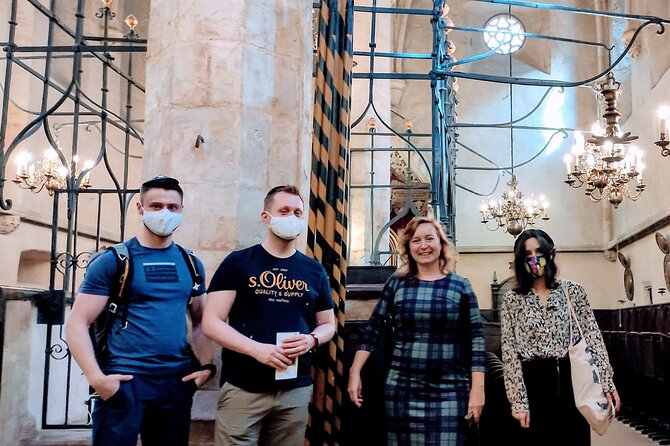
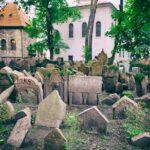
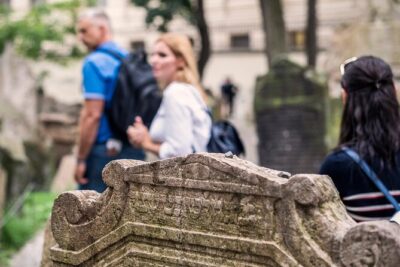
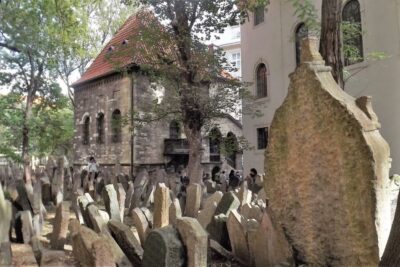
After the synagogue, you step into the Old Jewish Cemetery, one of the largest of its kind in Europe and a major historical monument in Prague. This is not the time for rushing. The value of the cemetery stop is that it grounds the larger events in human memory.
You will see graves stretching across centuries of community life, used from the first half of the 15th century until 1786. Your guide explains the stone markers, the grave houses, and why the cemetery matters historically. Among the stones is the one marking the grave of the legendary Renaissance-era Rabbi Low.
This part can be emotionally heavy, but it is also where the tour becomes more than sightseeing. If you like architecture, you will notice the workmanship in the stones. If you like history, you will appreciate how the cemetery functions like an outdoor archive. If you just want to understand what was lost, this stop does that in a direct, respectful way.
Wear shoes you trust. Even if the Prague day is dry, cemeteries can be uneven and worn. Bring a calm head and a slower pace, because the site encourages it.
Jewish Museum in Prague: the big “how we know” stop
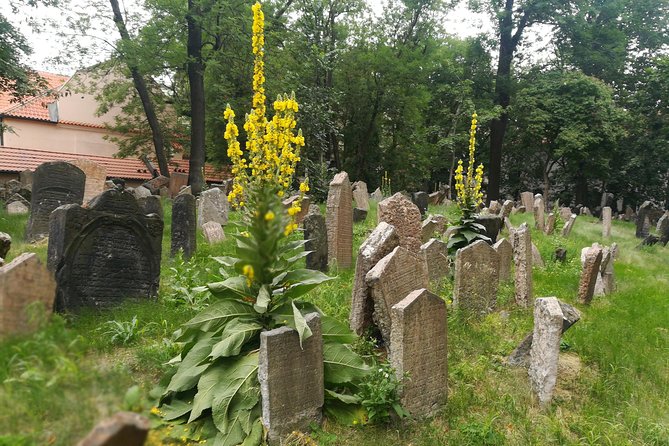
The Jewish Museum in Prague is a major reason this tour works. You spend time walking through sites and exhibits connected to the Jewish Museum, and it is where the story gets evidence-based.
The museum’s collections are described as huge in scope: about 40,000 objects, 100,000 books, and extensive archives of Czech and Moravian Jewish community history. That matters because it gives you more than a timeline. It gives you the sense that real lives, documents, and cultural artifacts are preserved here.
This is also where the tour’s 20th-century chapters land with clarity. Your guide talks about the Nazi policy known as the Final Solution in Prague and also covers Hitler’s invasion of Czechoslovakia. You then hear about Jewish community experiences during the communist years and what Jewish life looks like today, after the revival.
A practical tip for this stop: since the museum portion is likely the longest part of your visit, pace yourself. If you feel you are reading too fast, ask your guide to highlight what matters most. Private tours are built for that kind of course correction.
You can also read our reviews of more private tours in Prague





Jewish Town Hall in Josefov: a Renaissance neighbor to worship
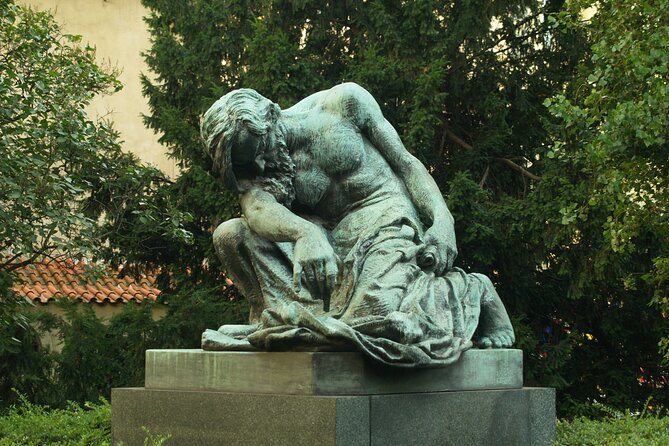
Between the major synagogues, you also come across the Jewish Town Hall in Josefov, constructed next to the Old-New Synagogue at the corner of Maiselova and Červená Ulice. Built in 1586 in Renaissance style under the sponsorship of Mayor Mordechai Maisel, it later gained a Rococo facade in the 18th century.
This stop is short, but it helps connect the dots. It shows that Jewish community life was not only religious. It was also civic, political, and tied to local leadership. Even when a building is not a synagogue, it can tell you how communities organized and interacted with the larger city.
If you love the visual shift from Renaissance to later styles, this quick exterior helps you notice the layers that make Prague feel like a palimpsest of eras.
Pinkas Synagogue: remembrance you can read
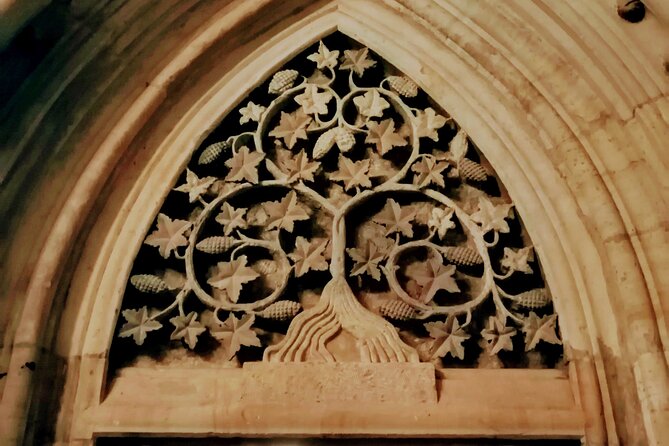
Pinkas Synagogue is one of the most powerful stops on this route. It is administered by the Jewish Museum in Prague, and it commemorates about 78,000 Czech Jewish victims of the Shoah.
You will also see an exhibit featuring children’s drawings created under the supervision of Friedl Dicker-Brandeis. That name may be new to many people, but the emotional impact here is immediate. This part of the tour does not just ask you to understand history. It asks you to witness it through human creativity and loss.
If you are traveling with kids, this stop can still work, but you should be ready for the subject matter. One of the strongest guide strengths highlighted by past visitors is the ability to handle different ages and moods with tact. Guides have experience pitching the right level of detail without turning the moment into awkwardness.
The downside is also simple: it is not a short, light diversion. It is a remembrance stop. Plan for a reflective mindset, not just photos.
Spanish Synagogue and Klausen: two styles, one continuing story
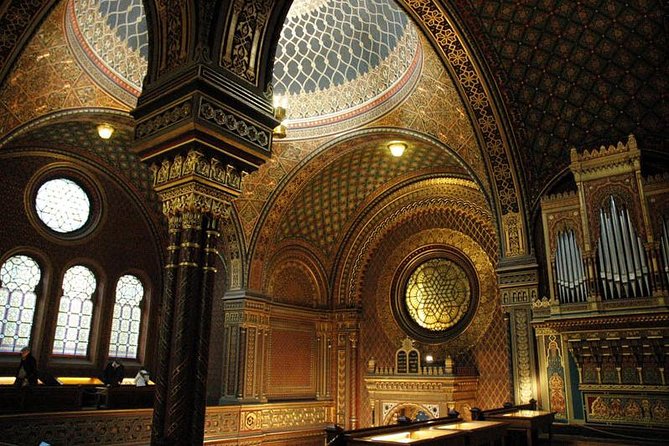
The tour continues into other synagogues that show how Jewish architecture evolved in Prague.
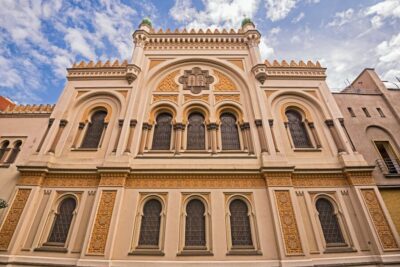
The Spanish Synagogue, built for the emerging Reform community in the 19th century, is described as inspired by Moorish Revival style. That likely refers to design influences that echo Arabic-era Spain. Inside, the synagogue also hosts a modern Jewish history exhibit related to Prague, Czechia, and Czechoslovakia.
If you like architectural shifts, this is where you see how religious spaces can change with movements and cultural currents. It also helps you understand that Jewish history here is not frozen in the medieval past. It continues through reforms, political changes, and community re-formation.
Then there is Klausen Synagogue, an ornate Baroque synagogue that houses an impressive collection of Judaica. This stop adds a sense of lived tradition through objects, not only through walls. It can be especially satisfying if you enjoy seeing how ritual items connect to everyday meaning.
Together, these synagogues make the tour feel like a chain of continuity. Different styles, different eras, and the same underlying thread of community and identity.
What you really pay for: value in a historian-led private format
The price is $397.38 per group, up to 10 people, for about 3 hours with a historian guide. If you fill the group, the cost per person drops fast. Even if you do not fill it, you are paying for private pacing and guided context, which can be worth it in a place where the stories are complex and emotional.
Entrance fees are not included. Specifically, entrance tickets for the Old-New Synagogue and the Jewish Museum are listed at 600 CZK for adults and 400 CZK for students. You should plan for those separate costs.
I like this pricing structure because it separates what you are really buying, the guide and the time, from the ticketing, which can vary by site and visitor status. It also means you can decide how much museum time feels right once your guide has oriented you.
One more value point: the tour is booked about 130 days in advance on average. That tells you something practical. Popular time slots can go early, especially for visitors who plan around museum hours and synagogue access.
The guide makes it, and the proof is in the names
A standout theme in the guide experience is how personal and flexible it can feel. Names that come up include Amalie, Amalka, and Andrei. The consistent note is that guides can explain history with clarity while also handling real-life travel moments, including adjusting timing when schedules shift.
For example, one tour was moved to 3 PM to fit a train arriving around 1:30 PM, which is the kind of stress relief that makes a history tour actually enjoyable. Another guide was praised for being able to communicate in English and for connecting with a grumpy 12-year-old without losing the thread of the story.
That is not a small detail. In a tour that includes Nazis, communism, and the Shoah, you want a guide who can keep the tone respectful, the explanations clear, and the group feeling safe enough to ask questions.
Logistics that matter on a 3-hour route
A few practical points will help your day run smoothly:
- Expect steep steps at synagogues, including about 3 steep steps down into the Old-New Synagogue. The tour can skip upper levels if mobility issues require it, but the main steps down are still part of the route.
- Bring a layer. Synagogues and museums can feel cooler than outdoor streets.
- Use comfortable shoes. You are walking between stops and standing for parts of the explanations.
- If you need tickets, factor in the entrance costs for the Old-New Synagogue and the Jewish Museum. Tickets are not included in the tour price.
Your confirmation arrives within 48 hours of booking, based on availability. And cancellation is free up to 24 hours in advance, which makes it easier to juggle plans if your Prague schedule is still changing.
Should you book Private Stories of Jewish Prague?
Book it if you want a private Prague Jewish Quarter tour that connects buildings, exhibits, and real historical events into one coherent walk. The combination of synagogues, the cemetery, and the Jewish Museum makes this more than a photo tour. The historian guide also helps you handle the heavier chapters with clarity instead of confusion.
Skip or consider alternatives if stairs are a dealbreaker for your group. Even with modifications for mobility needs, the route includes steep steps down into the Old-New Synagogue. Also, if you hate ticket lines or unexpected add-on costs, remember that entrance fees for the Old-New Synagogue and the Jewish Museum are extra.
If you have limited time in Prague and you want the Josefov highlights with context, this is a strong choice. With an average booking window of about 130 days in advance, you will likely want to lock your preferred morning or afternoon slot sooner rather than later.
More Walking Tours in Prague
More Tours in Prague
More Tour Reviews in Prague


Not for you? Here's more nearby things to do in Prague we have reviewed






Jewish Quarter Tours, compared.
 ★ 4.7Jewish Quarter Walking Tour with Admission TicketsFrom $763,729 reviews
 ★ 4.8Old Town and Jewish Quarter Guided Tour in GermanFrom $293,143 reviews
 ★ 4.6Old Town and Jewish Quarter Guided Walking TourFrom $222,847 reviews
 ★ 4.4Jewish Quarter Ticket with optional Audio GuideFrom $551,107 reviews
 ★ 4.7Classical Concert in the Spanish SynagogueFrom $501,104 reviews
 ★ 5.0Prague’s TOP Sights – Old Town, Jewish Quarter, Charles Bridge (Tip-based tour)From $3843 reviews
 ★ 5.0Prague Old Town New Town and Jewish Quarter Morning TourFrom $32757 reviews
Browse the lists this tour appears in