
REVIEW · TEREZíN MEMORIAL DAY TRIPS
Private Former Concentration Camp Terezin Tour from Prague
Terezin hits hard, and guidance helps. This private tour pairs a dedicated English-speaking guide with included entrances, so you can focus on what you are seeing instead of managing tickets. The day is still emotionally heavy, and the pace is fixed enough that you may want a little more time in the places that move you most.
I like that you get real time with each site, not a rush-through script, plus round trip transportation that keeps you from juggling buses and schedules. I also like that it stays private, so your questions do not get lost in a crowd.
One consideration: six hours can feel full in a large site, and you should expect plenty of walking. If you are the type who wants to sit and reflect for long stretches with no schedule at all, you might find this structured route a bit tight.
Key highlights you should care about
- Private, only-your-group experience with an English guide
- Hotel or Airbnb pickup in Prague, starting at 9:00 am
- Included entrance tickets and help getting in faster at stops
- Smart route through the Small Fortress, museums, ghetto sites, and the Jewish Cemetery
- A calm pace with defined time at each location (including a free cemetery stop)
- Mobile ticket for a smoother check-in
From Prague to Terezin with pickup that actually helps
The tour begins right in central Prague, with pickup offered from your hotel or Airbnb as long as you share the exact name and address. The listed starting point is the Prague Marriott Hotel on V Celnici 8, Nové Město. You start at 9:00 am, then you return to the meeting point at the end.
That door-to-door element matters more than it sounds. Terezin is not a quick hop, and a private car transfer gives you one less thing to think about while your mind is already bracing for a difficult day. It also gives you time to get your bearings before you step into the Small Fortress area.
You can also read our reviews of more private tours in Prague



Why a private guide changes how you experience Terezin
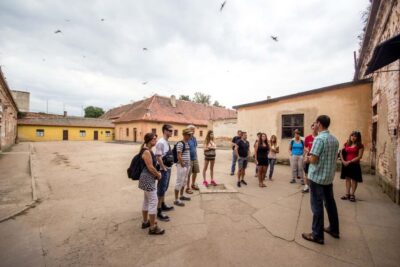
Terezin is not just a set of buildings. It is an emotional story with layers, and the order you hear things in can shape how it lands. On this private format, your guide can slow down where you need it, explain connections between sites, and answer questions as you go.
The reviews strongly emphasize how this kind of guide makes the visit feel more respectful and less distracted. People mention having an expert like Eva (Eva Prague Tours), with another guide name Simona appearing in feedback as well. One reviewer even described the feeling as more than a tour, like guide support that helps you carry what you are learning through the day.
There is a practical upside too. With included entrances, you are less likely to waste the most sensitive minutes of the visit standing in lines. In a place like this, those minutes matter.
The Small Fortress: Joseph II’s cornerstone, and how “secure” became a jail
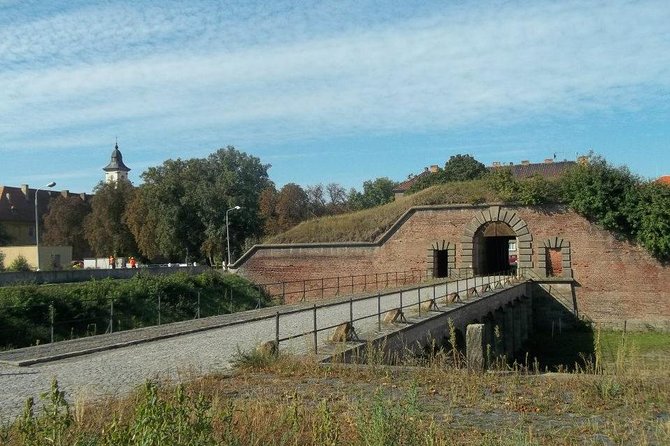
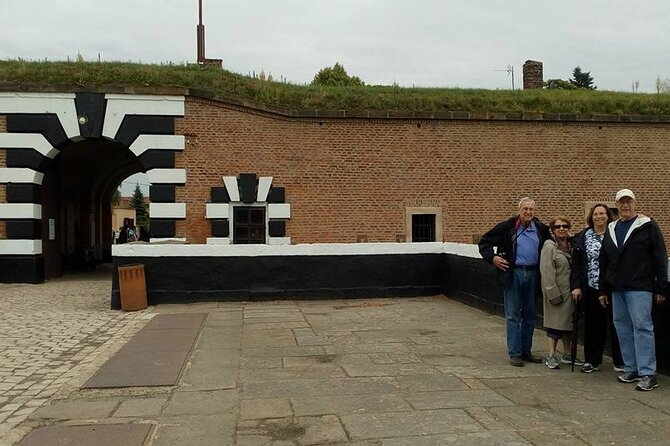
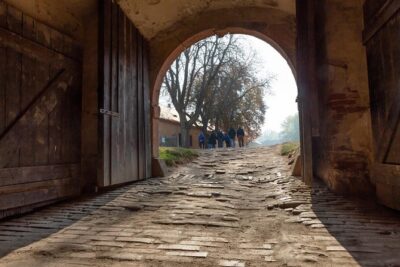
Your first stop is Mala Pevnost, the Small Fortress. It was built in the late 18th century, intended as a proud and impregnable fortress, complete with flood trenches and defensive systems around it. The first cornerstone was laid by Emperor Joseph II, and the name ties back to his mother, Empress Maria Theresa. Construction took 11 years.
But the story changes. By the mid-19th century, Terezín became a jail, long before the Nazis. One striking name connected to the site is Gavrilo Princip, the man who fired the shot in Sarajevo that helped trigger World War I. Princip was brought here in 1914.
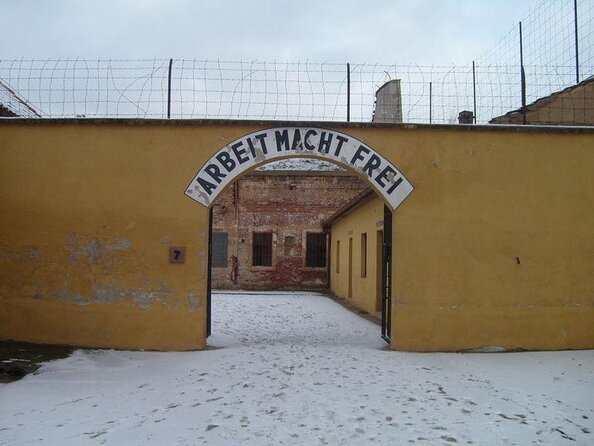
Then comes the Second World War turning point. In 1940, the Small Fortress became a prison for the Prague Gestapo, especially for political prisoners. Only a year later, the whole town was turned into a collective and pass-through camp for Jews.
You typically spend about 1 hour here, with admission included. That hour is a good match for the way the fortress layout forces you to piece together what happened. The fortress spaces can also feel physically claustrophobic, so having a guide to translate the space into meaning helps you connect the dots without forcing yourself to interpret everything alone.
National Cemetery: what exhumation after liberation can teach you
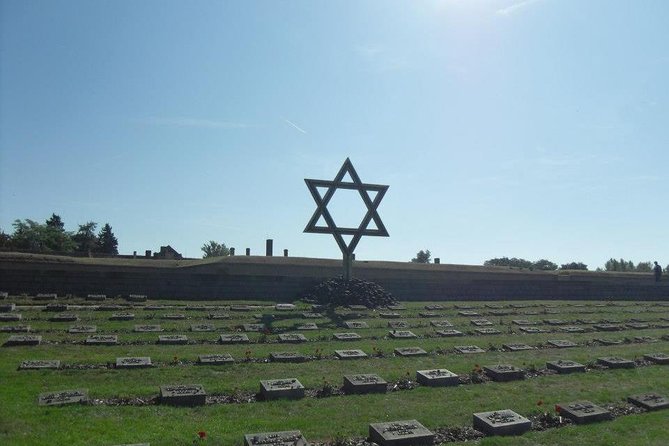
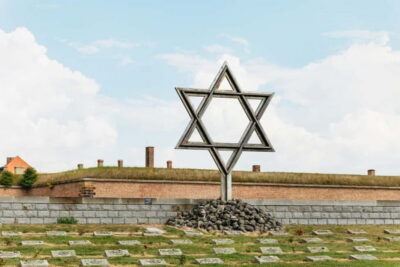
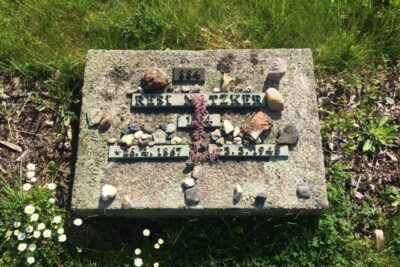
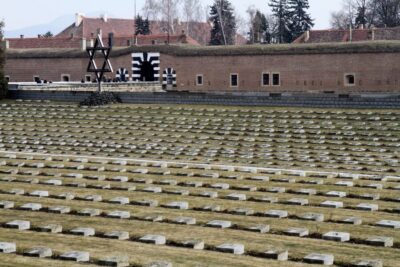
Next is Terezín Memorial, the National Cemetery. This section was created artificially after liberation in 1945. The impetus came from former prisoners and heirs of those who died, who asked for physical remains to be exhumed from mass graves in the fortress ramparts.
The timeline is specific: remains were exhumed from six mass graves used from March 1 to May 7, 1945. Among the people exhumed were prisoners from a death march that arrived at the Small Fortress in May 1945.
Your time here is shorter, about 15 minutes, and admission is free. I like this stop because it shifts the focus from the camp’s machinery to what happened immediately after, including the work of recovering and honoring lives that the system tried to erase. It is also a natural emotional reset before you move into the ghetto-focused museum.
Ghetto Museum: history told through rooms, objects, and children’s art
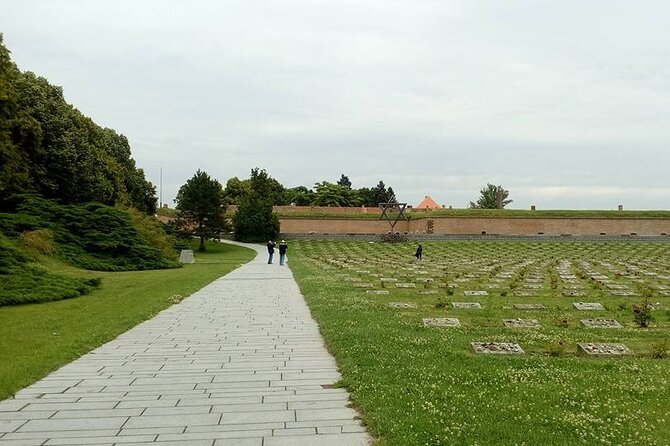
The heart of the ghetto story is the Terezín Memorial, Ghetto Museum. You start in a former municipal school, and the museum opened in 1991. The goal is dignified commemoration and clear explanation of the ghetto’s history, with the work supported by staff, former inmates, and public figures.
One of the most important parts is the museum’s permanent exhibition, titled Terezín in the Final Solution of the Jewish Question, 1941-1945, inaugurated in 2001. You also find a Memorial Hall of the Terezín Ghetto’s Children, dedicated to the youngest victims. The museum includes drawings made by children from the ghetto, which is one of the ways the exhibits put human presence back into the record.
You will also see interpretive tools designed for visitors: a scale model of the ghetto with an electronic orientation system showing thematic areas. There is a local reading room and a cinema screening documentary films.
This stop takes about 45 minutes with admission included. I recommend treating this as your “anchor” visit. After the fortress, you need the shift from confinement to forced community, from security walls to everyday survival, from policy to lived reality.
If you are prone to information overload, ask your guide to point out what to notice first in the exhibition, not everything at once. The museum is designed to support that kind of guided pacing.

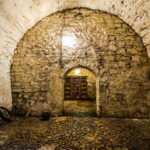

A prayer room kept secret, then found again
After the Ghetto Museum, you visit the Terezin Memorial stop, centered on a small Jewish prayer hall. This space was founded during the ghetto period to serve spiritual needs of prisoners who lived in nearby houses.
Ownership adds another layer of history. The prayer room belonged to František Bubák, and before World War II it served as part of a funeral parlor. Bubák’s family had to leave Terezín during 1942, but after the war they reclaimed the property. Because they feared repercussions from the Communist regime, they kept the prayer room’s existence secret while using it as storage.
It only became visible to visitors after the Velvet Revolution in 1989. The family’s descendants did not notify authorities until after the political shift, and visitors have been allowed to see the room since the late 1990s.
Plan for about 30 minutes here. This stop can feel quietly powerful because it shows continuity and fear, faith and silence, all in one small space. It also helps you understand that history does not always stop at liberation. Sometimes it continues through what families could and could not safely preserve.
Magdeburg Barracks and the ghetto’s controlled “local” life
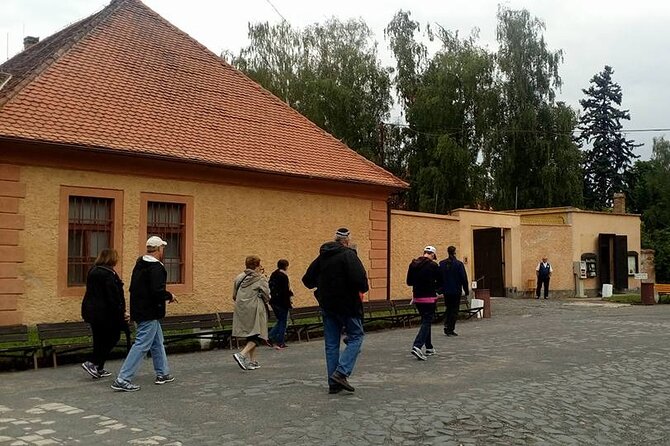
You then move to Magdeburská Kasarna (Magdeburg Barracks). In the ghetto period, the Jewish ghetto’s local government was headquartered here. The official purpose was handling internal affairs, though key decisions remained under SS camp command control.
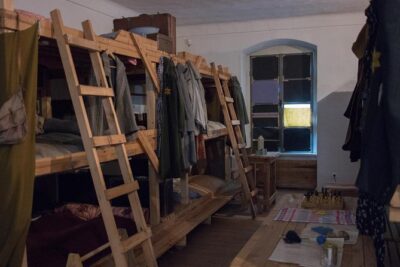
After renovations, the building reopened as a visitor site in 1997. Today, it includes a replica of ghetto-period prison barracks and features an exhibition about the ghetto’s artistic and cultural life. The museum focuses on artifacts related to music, visual arts, literature, and theatre, tied to the forced inhabitants’ strong desire for humanity and hope even under concentration camp conditions.
Alongside the exhibition, the building has an educational Meeting Centre.
You spend about 30 minutes with admission included. I like this stop because it refuses the easy story that only one thing happened. The camp system was brutal, yes, but within that brutality there were also forms of resistance, expression, and community. Your guide can help you keep that in context, so it does not turn into a “survival stories only” framing.
The Jewish Cemetery crematorium: the mechanics of death you cannot unsee
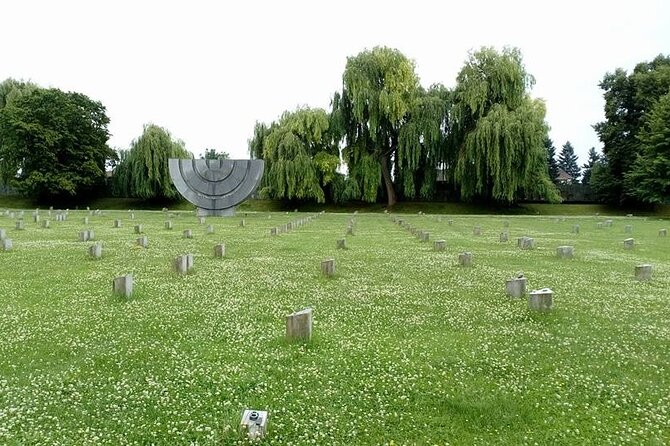
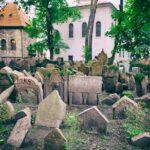
Your final stop is the Jewish Cemetery area, with the crematorium at its center. The crematorium was built by ghetto prisoners under SS orders, with operation beginning at the start of October 1942.
The facility’s central part included four oil-powered incinerators, supplied by Ignis Hüttenbau from Teplice-Šanov. The front section served as an unloading space for corpses from coffins. On one side, the crematorium bordered with an autopsy room, and on the other side it had an annex housing guards made up of Czech police officers and prisoner workers.
The human labor detail is part of what makes the site so disturbing. At the peak mortality period, there were up to 18 prisoner workers in permanent rotations. When mortality dropped, the number of workers decreased to four. The crematorium was supervised by SS-Scharführer Heindl, and routine checks were also carried out by camp commanders.
You spend about 30 minutes here with admission included. This is not a “learn and move on quickly” stop. Even if you think you are ready, the physical layout and the operational details can hit you in a way that facts alone do not predict. If you feel overwhelmed, give yourself permission to slow down and follow your guide’s pacing. That is one reason private is helpful, your guide can adjust in real time.
Price and logistics: what you are paying for, and what you get
At $356.42 per person for a private group, this is not a bargain-basement tour. But you are paying for the value that matters on a day like this.
You get:
- Private guide time in English
- Round trip transportation from Prague
- Pickup from your Prague hotel or Airbnb
- Included entrance at multiple sites, with help skipping the ticket line
Also, this is typically booked far ahead, with an average booking window of 108 days. That suggests demand for this specific approach, and it often means you should secure your date early rather than hoping for last-minute availability.
The main tradeoff is simple: private means fewer seats and a higher price per person than a group bus tour. If you are traveling with someone who will appreciate the guided structure and your own space to ask questions, the cost can feel more reasonable than it looks on paper.
How to plan your day so the visit feels respectful
This tour is about 6 hours in total, with the site time broken across several stops. With 1 hour at the Small Fortress and shorter segments at the memorial sites, you should expect a schedule that keeps you moving, even if your guide lets you linger at moments that matter to you.
Dress code is smart casual, and the tour uses a mobile ticket. Plan for you to walk around the camp complex grounds. One useful mindset is this: you are not “touring” a museum shop. You are visiting a place that demands calm attention.
I suggest bringing your own internal pacing plan. Decide ahead of time if you want to take notes, if you prefer questions, or if you want silence between stops. A private guide can support your style, but you need to decide what you can handle that day.
Who should book this private Terezin tour
This one makes the most sense if:
- You want a calmer, less chaotic visit with room for questions
- You value a guide who can connect the story across the Small Fortress, ghetto museum areas, and cemetery crematorium
- You are visiting Prague and want a full, structured half-day without transit stress
- You like the reassurance of included entrances and hotel pickup
It may be less ideal if:
- You want an all-day, free-form experience with no schedule at all
- You are extremely sensitive to crowds but also need more time than the fixed stop windows allow
From the reviews, I also take away that the best experiences seem to happen when you lean into the guide’s explanations, even if you think you already know the basics. The day is heavy, and having someone frame it clearly helps you process what you see instead of just passing through.
Should you book? My take
If you are going to Terezin from Prague, this private format is a strong choice. The biggest value is not just the transportation, it is the way a dedicated guide can help you see each location as part of one story, with the right tone and the right pacing. The included entrances and skip-the-ticket-line benefit also protect your time at the most important moments.
If you read about Terezin and think you need structure to feel grounded while you visit, book this. If you are planning for a short visit and want the essential sites covered in about six hours, this route is practical.
FAQ
What time does the tour start?
The tour starts at 9:00 am.
Where does pickup happen?
Pickup is offered from the Prague Marriott Hotel (V Celnici 8, Nové Město) and also from your hotel or Airbnb in Prague, if you provide the exact name and address.
Is this a private tour?
Yes. It is private, and only your group participates.
What language is the tour offered in?
The tour is offered in English.
How long is the tour?
The duration is approximately 6 hours.
Are entrance tickets included?
Entrance tickets are included for several stops, and the National Cemetery stop has free admission.
Is there a mobile ticket?
Yes, the tour includes a mobile ticket.
What is the dress code?
The dress code is smart casual.
Are children allowed?
Children must be accompanied by an adult.
What is the cancellation window?
You can cancel for a full refund up to 24 hours in advance of the experience’s start time.
More Private Tours in Prague



More Tours in Prague

More Tour Reviews in Prague
Not for you? Here's more nearby things to do in Prague we have reviewed






Terezín Memorial Day Trips, compared.
 ★ 4.5From Prague: Terezin Concentration Camp Guided Tour w/ AudioFrom $671,959 reviews
 ★ 4.4From Prague: Tour of Terezin Concentration CampFrom $661,269 reviews
 ★ 4.0Terezin Concentration Camp Day Tour from PragueFrom $781,007 reviews
 ★ 3.7From Prague: Terezin Concentration Camp TourFrom $53573 reviews
 ★ 4.3From Prague: Terezín and Ghetto Museum Guided TourFrom $86571 reviews
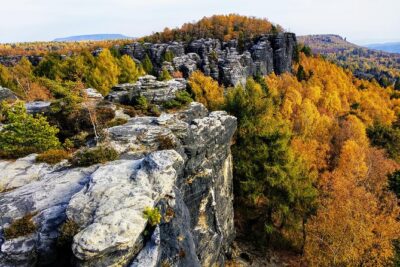 ★ 5.0Terezin & Bohemian Switzerland from Prague: Bastei, Narnia & CaféFrom $145445 reviews
 ★ 4.5Terezin Concentration Camp Day Tour Including Admission From PragueFrom $96179 reviews
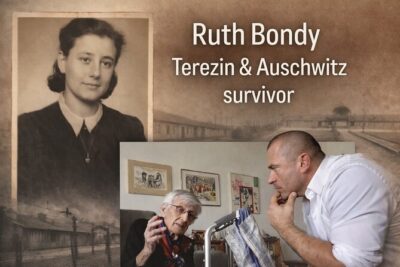 ★ 5.0Terezin In-Depth Holocaust Tour From Prague’s Center (max 7 pax)From $145170 reviews
Browse the lists this tour appears in