
REVIEW · OLD TOWN & ASTRONOMICAL CLOCK
Prague: Plague Doctor Old Town History Walking Tour
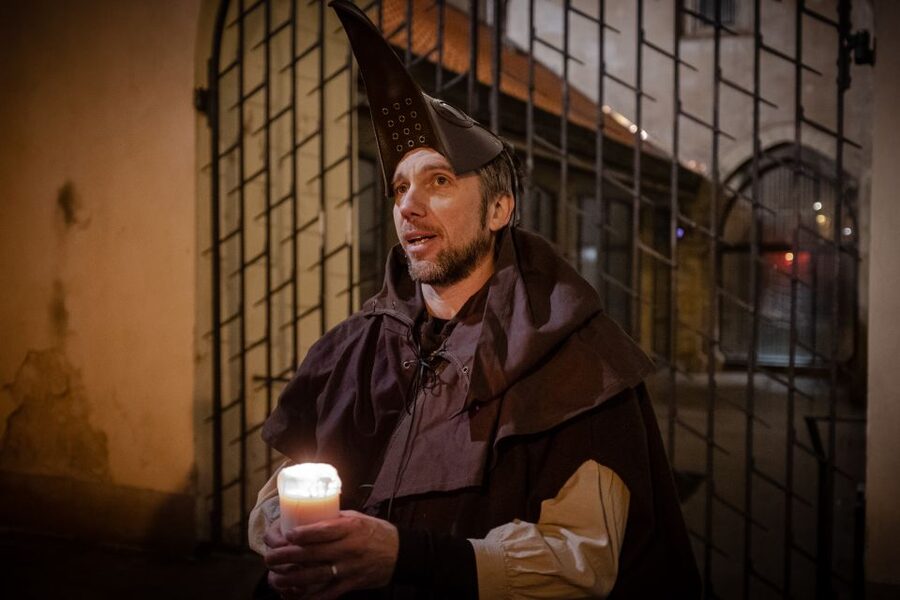
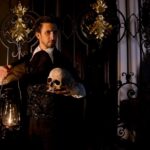
A plague doctor leads you through Prague after dark. What makes this walk special is the combination of character-led storytelling and real-world plague details as you move spot to spot in the Old Town.
I especially love how the guide makes the topic feel human, not just spooky: you learn about how people coped in daily life, you hear why plague doctors became a symbol, and you get a look at the PPE from that era. I also like the pacing, it is short enough to stay fun, and long enough to hit the main landmarks plus some quieter corners.
One thing to consider: this is rain or shine, and some guides may not be able to wear the full heavy costume comfortably in hot weather. If you hate wet streets or long standing moments, plan your timing and clothing accordingly.
Key things you will notice on this walk
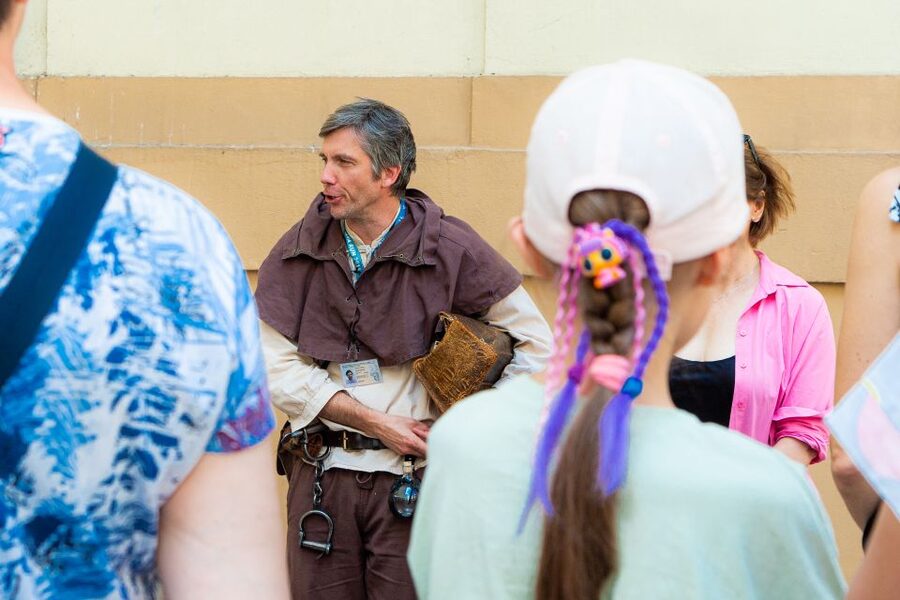
- A 1713 plague doctor guide that stays in character and talks you through the history as you walk
- Plague-era locations you can actually picture, including Na Františku Hospital, the Convent of St. Agnes, and St. Castulus Church
- A. Schamsky, the 1713 plague fighter that adds a real-name anchor to the story
- PPE lessons that explain what plague doctors wore and why it mattered
- Q and A built in, so you can ask about what you are hearing instead of just listening
- Humor with respect, with guides who know when to lighten the mood and when to slow down
Starting at Seminářská and finding your guide fast
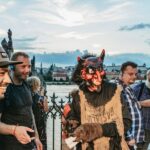
The tour begins at Seminářská 175/2, in Staré Město, Prague 1. You do not have to guess where to stand, just look for the guide dressed as a plague doctor. That costume detail matters more than it sounds. It sets an immediate tone, so the rest of the information lands like a story instead of a lecture.
Once you spot your guide, the 90 minutes start to feel like a guided route you can follow even after you finish. The group stays together, and the guide uses each stop to explain a piece of the plague puzzle: the fear, the response, and the weird mix of medicine, religion, and everyday survival.
If you like tours that give you a sense of place, this is one of those formats. You are not just collecting facts, you are collecting images. You will end at Church of St Castulus, so the walk has a natural arc rather than a random start and finish.
You can also read our reviews of more walking tours in Prague
Clementinum, Mariánské náměstí, and Old Town Square as your opening chapter
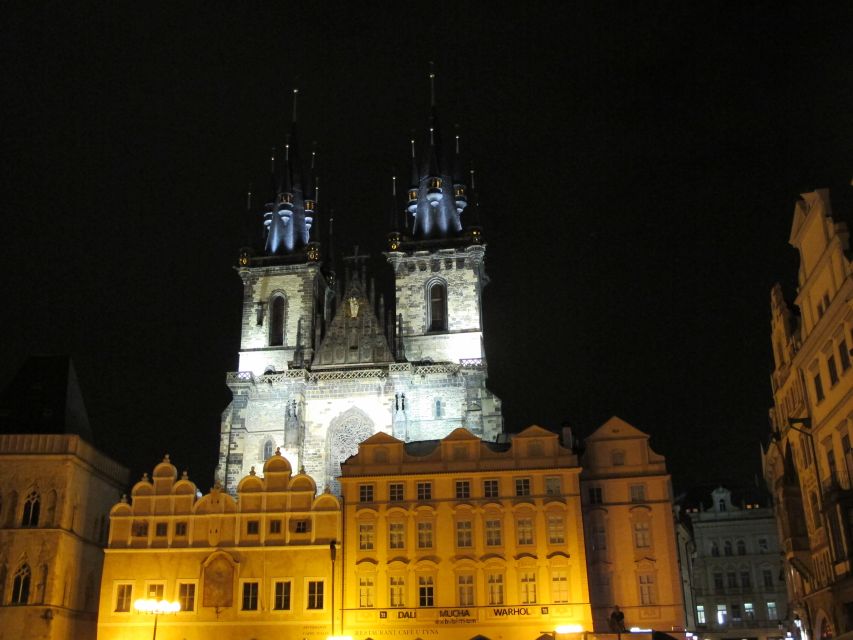
Early on, you hit a sequence of major squares and notable streets: Clementinum, Mariánské náměstí, and then Old Town Square. Each stop is brief, but that is part of the design. You get a quick visual hit, then the guide connects it to plague-era themes.
I like this approach for two reasons. First, you get oriented fast. Even if you only know Prague by postcards, these stops help you map the Old Town in your mind. Second, the guide can build momentum. The story has a beginning, and you feel it as the walk goes on.
At Old Town Square in particular, the tour gives you a chance to look at the space through a different lens. Even if your only takeaway is the contrast between today’s busy streets and what the plague era represented, that mental switch is useful. It makes the rest of the walk feel less like theatre and more like history you can picture.
The possible drawback here is simple: this is a walking tour in an active tourist area. If you need silence to focus, the open spaces and crowd energy may compete with the storytelling. If you can roll with that, the guide’s in-character performance usually keeps it moving.
Josefov and the Kafka Monument: how the guide links people to place
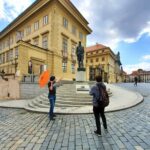
Next comes Josefov, followed by a stop at the Franz Kafka Monument. The route moves from broad landmarks into slightly more specific neighborhoods and names. That matters because plague history is not just about the disease. It is about how cities worked, how people got through the day, and how communities responded when everything felt unstable.
I like that this part of the tour does not ignore modern Prague. Kafka’s name is a strong cultural marker, and it helps the guide bridge the gap between centuries. You are still learning about the 1713 moment, but you are also learning how Prague remembers and reshapes stories over time.
If you are doing this as a first evening, this section can be extra helpful. Several guides mention building familiarity and comfortable pacing, and the route supports that. It is a smart way to get your bearings without a long day commitment.
Na Františku Hospital: where the story turns from legend to routine
One of the most important stops is Na Františku Hospital. You spend about 15 minutes here, which signals that the guide treats it as more than a photo stop. This is where the tour leans into how the plague affected real life, and how people tried to manage it.
In plague history, hospitals and medical spaces are powerful because they represent the moment when fear met procedures. You start hearing details about how people lived with the threat around them, not just what doctors might have done in theory. The guide also ties in the broader idea of plague response in a way that feels grounded.
If you want your storytelling dark without becoming hopeless, this is the balance point. The guide may talk about saints and the medical world side by side. That blend is part of what makes the plague era such a compelling subject. It was not one thing. It was religion, practice, rumor, and survival, all tangled together.
Convent of St. Agnes: saints in the plague era
After the hospital stop, you reach the Convent of St. Agnes. You spend around 10 minutes there. This is another clue that the tour is not only a history of illness. It also highlights the spiritual and cultural responses that shaped behavior.
Many plague narratives focus only on medical ideas, but this walk pays attention to saints and the human need for meaning during outbreaks. You will hear how religious figures and places fit into the overall atmosphere of that time, including how communities interpreted suffering.
I like this stop because it gives you a more complete picture. The plague doctor story alone can feel like a single theme. Adding a religious location makes the story broader and more believable. People in that era did not separate faith from daily decisions.
This is also a good moment to ask questions. The tour is set up for interactive Q and A, and the guide often responds in character. If you are curious about how different roles and beliefs shaped response, this is where you will get a satisfying answer.
You can also read our reviews of more historical tours in Prague
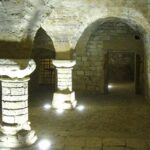

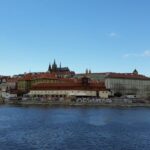

St. Castulus Church finish: PPE, humor, and what survival means
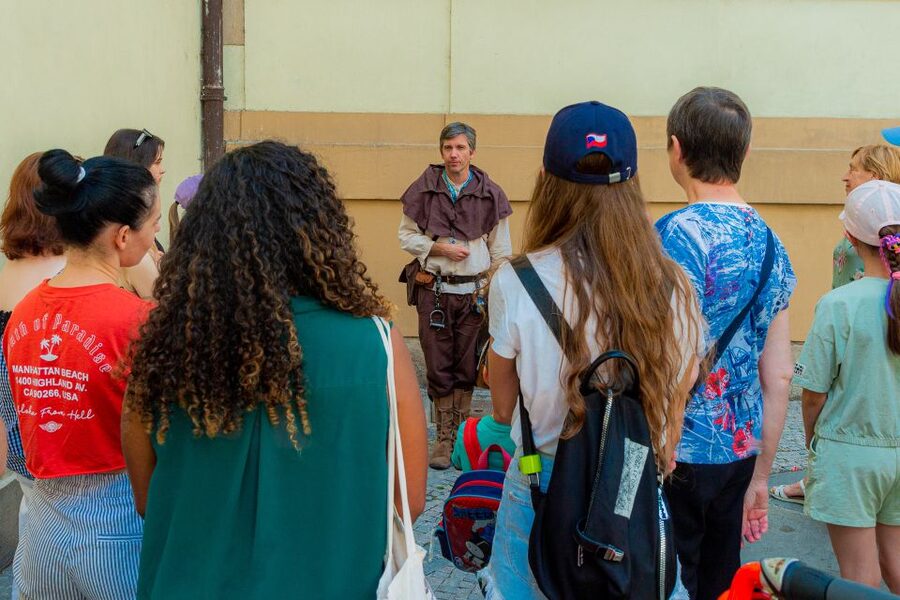
The tour finishes at Church of St Castulus. You also visit Saint Castulus Church as a stop right before the end. Timing-wise, it is about 10 minutes, enough to let the guide land the final themes.
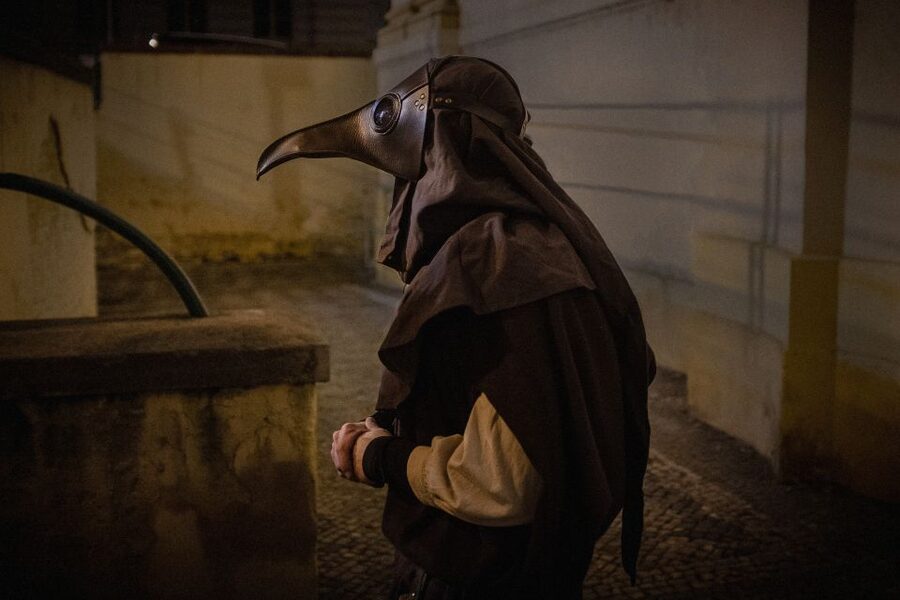
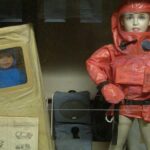
This ending matters because it wraps up the ideas you have been hearing throughout the walk. You will circle back to what plague doctors tried to do, why their look became famous, and how PPE was used during that time period. The tour specifically includes learning about the kinds of PPE plague doctors used, and the guide tends to explain it in a clear, practical way.
From the way guides perform, the goal is not to turn plague doctors into superheroes. It is to show their PPE as a tool shaped by the beliefs and limits of their era. That is why it connects so well with the rest of the route. The PPE talk is not floating in space. It follows your visits to places tied to illness response.
I also appreciate the humor that many guides bring to the performance. That laughter does not erase the topic. It just keeps you from feeling crushed. Guides are praised for being funny and engaging while still being sensitive about the subject.
And at the end, you also get an easy closing memory: the plague doctor costume is the final image you carry with you.
The A. Schamsky moment and why this tour names people
One highlight is meeting A. Schamsky, a forgotten 18th century hero who fought the Plague in 1713. Naming an individual like this is a smart move. It turns a mass tragedy into something you can understand through a person’s actions.
I like that the tour does not treat plague history as one anonymous disaster. When you hear about a named figure, it makes the story feel more grounded. It also helps you remember facts later, because your brain stores stories through characters.
If you are the kind of person who likes history that is more than dates, you will probably enjoy this part. It gives the walk a heartbeat, not just atmosphere.
Learning about plague doctor PPE in a way that actually sticks
The tour includes learning about kinds of PPE used by plague doctors in that time. And the way it is taught tends to be the reason the experience feels different from a standard walking history tour.
You are not just shown a costume. You hear the practical reasoning behind why the look existed. The beak-like shape, the coverings, and the overall idea of separation from danger become easier to understand when the guide explains what plague doctors were trying to do.
This is also where the included anti-plague pill (candy) fits in. It is small, but it reinforces the theme. It keeps the tour playful without being disrespectful, and it gives you a tangible souvenir from the experience.
If you come into this thinking plague doctors were only about the famous hat and mask, you will leave with a more thoughtful understanding. The costume becomes an entry point to how people tried to protect themselves and manage fear.
What the 90 minutes feels like on the ground
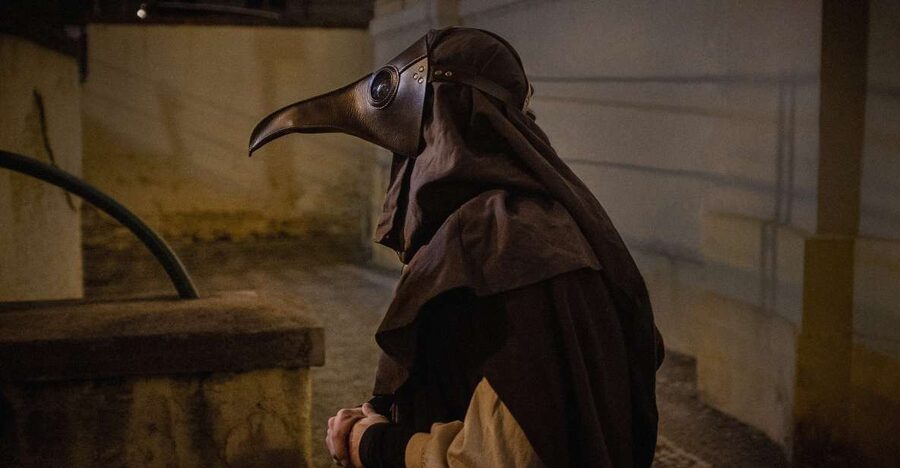
At 90 minutes, this tour is a great length for an evening. It is long enough for the guide to build story arcs, and short enough that you do not feel trapped into hours of standing.
From what people say about their guides, a lot of the success comes from pacing that stays comfortable. Guides keep the group involved with questions and prompts. Some guides also bring pictures to help explain details, which is a real help when you are listening while walking.
You may also notice that the experience tends to mix entertainment with education. Some guides go beyond talking with props and sensory moments like taste or smell. That is not guaranteed in every situation, but it is part of how several guides make the story memorable.
One practical tip for your own planning: wear weather-appropriate clothing. This tour runs rain or shine, so you want to be prepared for Prague streets when the weather changes.
Price and value at $23 per person
At $23 per person, this tour is priced as an easy add-on to a Prague itinerary. What you get is not just a guide speaking from a script. You get a licensed guide in plague doctor dress, a designed walking route through key areas of the Old Town, and plague-themed stops including hospitals and religious sites.
The big value for this price is the cost-to-time ratio. Ninety minutes is a sweet spot when you want something meaningful without giving up an entire evening. Plus, you are paying for a specific theme: plague history plus PPE plus named individuals like A. Schamsky.
You also get small extras included in the experience, like the anti-plague pill candy. It is not about the candy itself. It is about how the guide turns the lesson into something you feel.
If you are doing Prague on a budget but still want a story-driven activity, this is one of the more cost-effective ways to get a memorable evening with a clear theme.
Which guide style you are most likely to enjoy
You do not need to pick your guide in advance, but it helps to know what styles show up. Several guides are named in participants’ accounts, including David Merten, Óscar, Thomas, Tomaš, Noah, and Tersea.
Across those names, the common threads are character performance, strong storytelling, and good interaction. People also praise humor and a careful tone when dealing with a heavy subject. Some guides also make an effort to learn names, which helps the whole group feel connected.
If you like guides who answer questions and keep the group engaged, you will likely be happy with this format. If you hate performances and prefer quiet museum-style tours, this might feel too theatrical. But if you enjoy a lively guide with a costume, this is very much that.
Who should book this Prague Plague Doctor Old Town tour
This is a strong choice if you want:
- A 90-minute evening walk with a clear theme
- Plague history in everyday language, tied to Prague locations
- PPE details and plague doctor symbolism that feel understandable
- A guide who mixes humor and Q and A
It is also a good option if you want something different from the usual Prague highlights. This route focuses on the Old Town and selected sites tied to the plague story, so you get both atmosphere and a learning payoff.
If you are short on time, this length helps. If you want a slow paced, strictly academic tour, you might prefer something else. This one is built around performance and storytelling.
Should you book it
I think you should book this Prague Plague Doctor Old Town History Walking Tour if you like history that has a guide with presence, and you want your learning wrapped in a walk through real places like Na Františku Hospital and the Convent of St. Agnes. For $23, you get a full theme, a themed guide in costume, PPE education, and a route that gives your evening shape.
If you are sensitive to darker topics, go in knowing the tone is handled with care, and that guides often use humor to keep it from feeling grim. Just plan for rain or shine, and bring weather-appropriate clothing so you can enjoy the full 90 minutes.
FAQ
How long is the Prague Plague Doctor Old Town History Walking Tour?
It lasts 90 minutes.
Where does the tour start and how do I find it?
The meeting point is Seminářská 175/2, Staré Město. Look for your guide dressed as the plague doctor.
What stops are included on the route?
You will visit Clementinum, Mariánské náměstí, Old Town Square, Josefov, the Franz Kafka Monument, Na Františku Hospital, the Convent of St Agnes, and Saint Castulus Church. The tour finishes at Church of St Castulus.
What is included in the price?
The tour includes a licensed guide in plague doctor dress, an anti-plague pill (candy), and the walking tour.
Is it offered in English?
Yes. The live tour guide is available in English and Czech.
Will the tour run in bad weather?
Yes, it takes place rain or shine.
Is the tour wheelchair accessible?
Yes, it is wheelchair accessible.
More Walking Tours in Prague
More Tours in Prague
More Tour Reviews in Prague

Not for you? Here's more nearby things to do in Prague we have reviewed







Old Town & Astronomical Clock, compared.
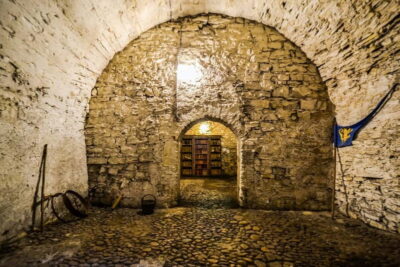 ★ 4.2Oldtown, Medieval Underground & Dungeon History TourFrom $308,244 reviews
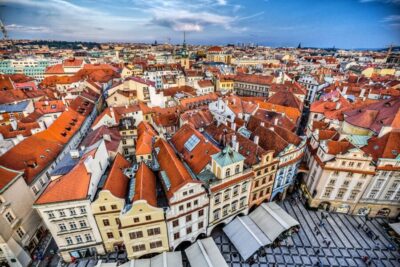 ★ 4.5Old Town Hall Tower Entry TicketFrom $216,749 reviews
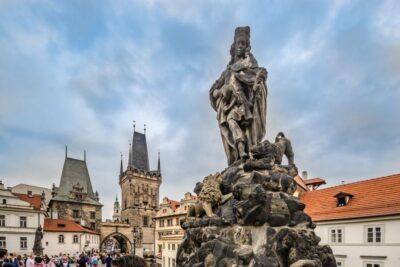 ★ 4.73-Hour Walking Tour of Old Town & Prague CastleFrom $305,696 reviews
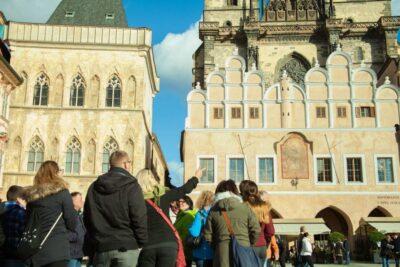 ★ 4.83-Hour Old Town and Prague Castle Tour in GermanFrom $365,671 reviews
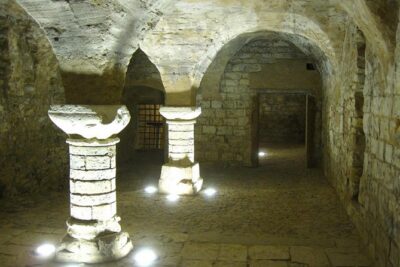 ★ 4.5Prague Old Town, Medieval Underground and Dungeon Historical TourFrom $323,227 reviews
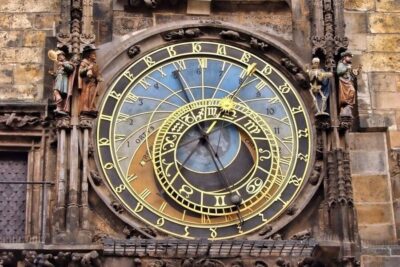 ★ 4.8Old Town and Jewish Quarter Guided Tour in GermanFrom $293,143 reviews
 ★ 4.5Ghosts and Legends of the Old Town Evening TourFrom $213,091 reviews
 ★ 4.6Old Town and Jewish Quarter Guided Walking TourFrom $222,847 reviews
Browse the lists this tour appears in