
REVIEW · OLD TOWN & ASTRONOMICAL CLOCK
WWII and Communism History in Prague’s Old Town Private Tour
Prague tells two stories at once. This private WWII and Communism tour connects the German occupation, resistance, and the communist era, using real Old Town streets and key memorials to make history feel specific instead of abstract. I especially like how it ties together Wenceslas Square then and now, from Nazi demonstrations to the 1989 Velvet Revolution.
The second thing I love is the guide quality. When you’re with someone like Sofija or Markéta, you get a fluent expert who can handle curveball questions and still keep the flow clear, with small human details that make the big events easier to follow.
One possible drawback: the subject matter is heavy. You’re looking at Holocaust deportations, state terror, and political executions, so it helps to be mentally ready, especially if you’re choosing the shorter option and still want the communist story in depth.
Key highlights you should care about
- Josefov walk with Maisel Synagogue and Spanish Synagogue, plus the story of transports to Theresienstadt
- Operation Anthropoid, 1945 uprising, and the May 5 to 9 damage around key Old Town landmarks
- Petschek Palace as former Gestapo headquarters, with a memorial plaque tied to Czech resistance
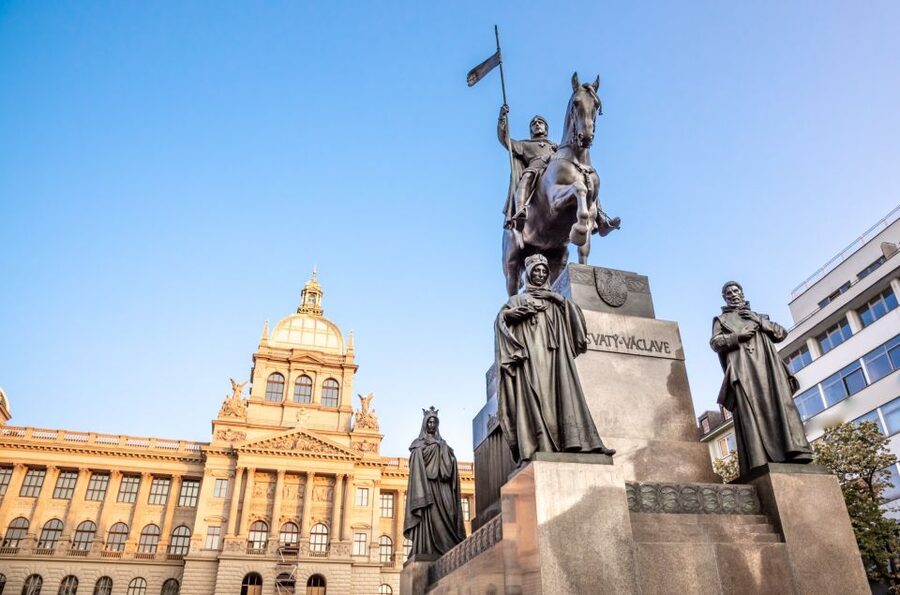
- Wenceslas Square history across regimes, from Nazi mass demonstrations to the 1989 Velvet Revolution
- Museum of Communism option that covers Cold War years, Prague Spring, 1968 invasion, Jan Palach, and 1989
WWII and Communism in Prague’s Old Town, what this tour does well
This is a history tour that focuses on cause and effect. You start in Josefov, move through wartime Prague’s most important public spaces, then end at Wenceslas Square, where the city’s political drama keeps repeating under different banners. If you’re the type of traveler who wants context for what you’re looking at, this kind of route works.
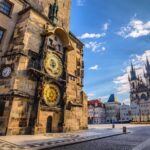
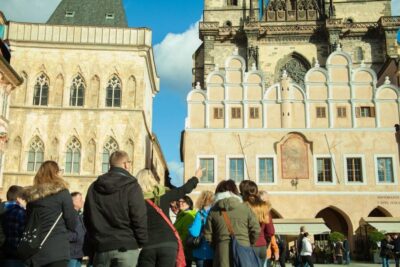
A big reason it feels valuable is the structure. You’re not just walking past famous buildings, you’re walking past decisions, arrests, propaganda, and resistance. Even when you’re staring at something iconic like the Old Town Hall area and its Astronomical Clock facade, the tour explains what happened around it in 1945 and why that matters to Prague’s later political messaging.
The experience is also set up for real conversation. It’s a private group, with a History Expert-Guide fluent in your chosen language (English, French, German, Italian, Polish, Russian, Spanish, Czech). That matters because WWII and communism are full of dates and names, and a good guide helps you keep the timeline straight without turning it into a lecture.
You can also read our reviews of more private tours in Prague


Meet your guide at Nám. Franze Kafky, and how to start the walk smoothly
Your meeting point is in Staré Město, right in front of the World of Franz Kafka: Nám. Franze Kafky 16/1. This is helpful because it’s a landmark area many people already use as a navigation reference in central Prague.
What you should plan for is a walking-focused experience. The stated duration is 2 to 4 hours, depending on whether you include the Museum of Communism. Even with a private group, you’ll be moving between meaningful outdoor stops: Josefov streets, the Old Town Square area, Petschek Palace, and finally Wenceslas Square. Wear comfortable shoes and give yourself a little buffer if you’re arriving late or coming from another activity.
Also, the tour is listed as wheelchair accessible. That’s a real plus in a city where some neighborhoods can be challenging. Still, you’ll want to mention any mobility needs when you confirm so the guide can keep the pacing workable for your group.
Josefov and the Jewish Quarter, Maisel and Spanish Synagogues plus deportation context

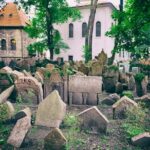
The tour starts with a walk through Josefov, which is described as one of Europe’s best preserved Jewish Ghettos. Josefov can look like a normal historic district at first glance. The guide’s job is to change your perspective by linking the buildings you see to what happened there under Nazi rule.
You’ll see Maisel Synagogue and the Spanish Synagogue. These aren’t just architectural stops. The guide uses them to set up the larger story of persecution and the machinery that turned targeted discrimination into mass deportation.
One of the most important pieces you’ll hear is the route that Czech Jews were forced to take, including transportation to Theresienstadt concentration camp. The tour also covers Hitler’s horrific plan connected to the idea of a museum of an extinct race. The point is not just to shock you, it’s to show how propaganda worked alongside violence.
Why this matters for you: if you visit synagogues without context, they can feel like quiet relics. With the tour framing, you understand them as part of a community that survived centuries, and then faced a modern, industrial level of destruction.
Old Town Square and May 1945, the Astronomical Clock’s wartime scar
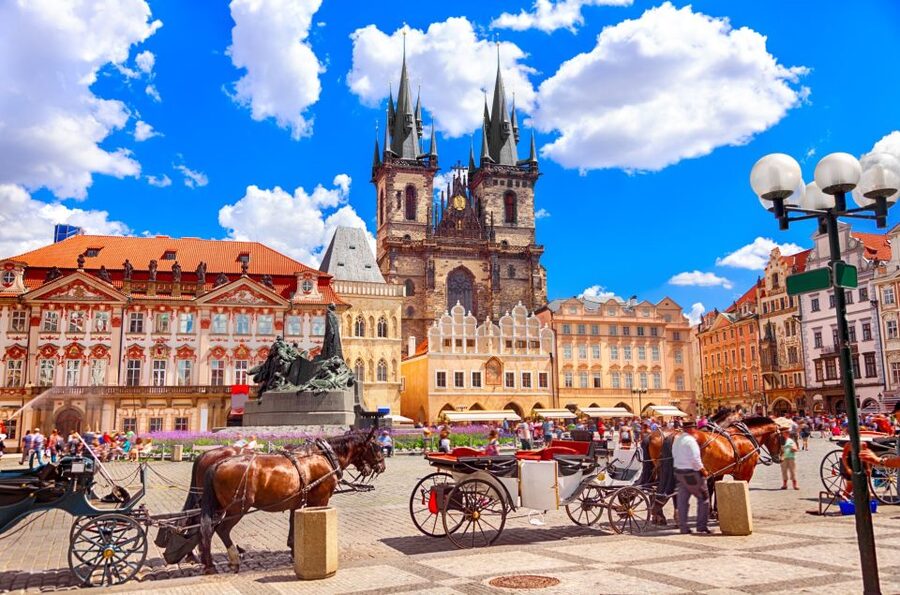
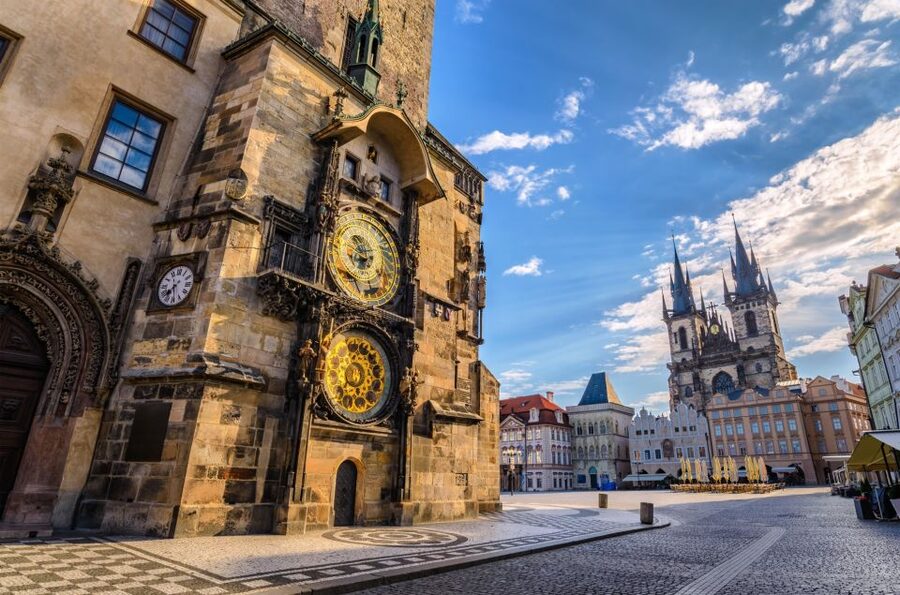
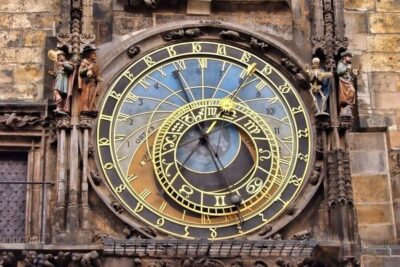
From Josefov, the tour moves into the Old Town center and the story of Prague under occupation and uprising. You’ll learn about the Prague Uprising connected to Old Town Square, and you’ll see the Astronomical Clock on the facade of the Old Town Hall.
The key wartime detail here is the clock area was heavily damaged during the bloody battles of May 5 to 9, 1945. That small date range is the kind of thing that helps you picture how close the fighting was to daily life and famous landmarks. It’s one thing to say Prague was liberated. It’s another to connect liberation to specific impacts on the city’s heart.
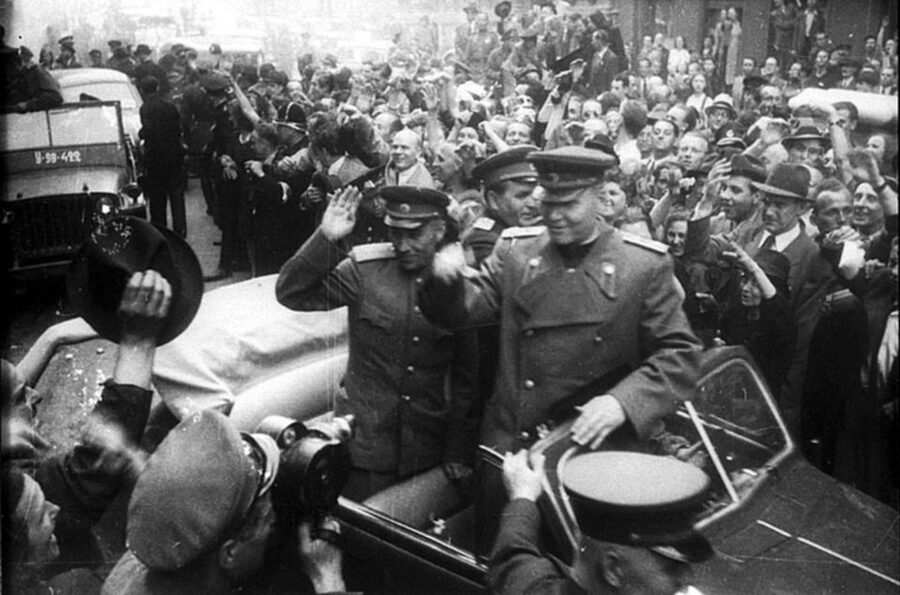
The tour also explains how the Red Army’s role in liberating Prague was later used by the Czechoslovak Communist Party to increase support for communism. That’s the sort of transition that smart history tours should cover, because it shows how even liberation can be reframed.
Practical takeaway: as you stand in Old Town Square, you’ll likely notice how the architecture encourages a postcard view. Let the guide’s narrative counterbalance that.
Petschek Palace, Gestapo power made visible through a resistance lens

Next comes Petschek Palace, identified as the former seat of the Gestapo headquarters. This stop is powerful because it tells you what kind of institution operated out of a real, existing building, not just a concept like secret police.
On the corner of the building, there’s a memorial plaque dedicated to Czech resistance. You’ll hear about resistance efforts, including interrogations and tortures carried out by the Gestapo.
This part of the tour is where you start feeling the theme shift from occupation into resistance and aftereffects. You’re watching the city’s physical map stay the same while the meaning of those spaces becomes darker.
What I find useful here, and what you should look for when you’re listening, is how the guide connects resistance to consequences. It’s easy to admire heroic acts in the abstract. A strong explanation shows you what “heroic” cost, and why people still did it.
You can also read our reviews of more historical tours in Prague

Wenceslas Square to 1989, from Nazi mass rallies to the Velvet Revolution
The tour ends at Wenceslas Square, and it’s an ending that makes sense. This is a wide, central stage, the kind of place where governments like to demonstrate power.
You’ll learn that the Nazis used Wenceslas Square for mass demonstrations, and then you’ll connect that to the square’s later role in the 1989 Velvet Revolution. The tour frames 1989 as a break in the script, not just a new political chapter.
Why this stop is especially valuable is the contrast. You’re seeing the same kind of public space used for two opposing stories: one built on fear and control, the other on pressure for independence and democracy. Even if you know the Velvet Revolution headline, this setting helps you grasp why it mattered where it happened.
Also, because the tour is private, you can ask questions about how communist propaganda and public spaces worked, since you’re standing in the exact “stage” where that play unfolded.
The 4-hour option and the Museum of Communism, what you gain (and why it’s not filler)
If you choose the extended 4-hour option, the tour includes regular tickets to the Museum of Communism. That’s the part you should consider if you want the story to go beyond wartime events and into everyday life under communist rule.
The museum covers four decades of communist rule in Czechoslovakia. It includes the Cold War, the Prague Spring, the Soviet invasion of 1968, and the suicide of student Jan Palach, then leads into the Velvet Revolution.
This is where the tour becomes more than a timeline. You’re told about the totalitarian system’s tools, including propaganda, censorship, political trials, and executions.
Why it’s worth paying the time: without this museum, it’s possible to treat communism as a purely political era. The museum helps you see how control reached into media, speech, and public life. In other words, it turns government into something you can picture as a daily pressure.
One caution: because the museum touches executions and state violence, it can feel emotionally intense. If you’re sensitive to that, plan a calmer evening afterward.
Price and value at about $104 per person for a private expert guide
At $104 per person, this isn’t a budget “walk and read plaques” style tour. It’s priced like a private, expert-led experience with real interpretive work.
Here’s why I think that price can be fair value:
- You’re paying for a guide who can connect multiple eras, WWII through communism, using the city’s actual locations.
- The tour includes a strong sequence: Josefov synagogues, wartime landmarks around Old Town Square, Gestapo history at Petschek Palace, then Wenceslas Square for 1989.
- The extended option adds the Museum of Communism, with regular museum tickets included in the 4-hour format.
If you choose the 2-hour option, remember that museum tickets are not included. In that case, the tour is more focused on WWII and key public spaces tied to the communist transition and 1989 context. If you’re specifically interested in what communism felt like on the ground, the 4-hour option is the one that aligns with that goal.
Picking the right duration: 2 hours vs 4 hours for your interests
Go with 2 hours if your top priority is getting the WWII through resistance to the 1989 endpoint, using Old Town locations that you can actually stand in. This is a strong “route-based context” tour.
Choose 4 hours if you want the communist era to feel concrete. The museum coverage of Prague Spring, the 1968 invasion, and Jan Palach’s story gives you details that a street-level tour alone can’t fully carry.
A good rule: if you want politics explained, 2 hours may be enough. If you want daily life under the system explained, 4 hours is where your money and time usually make the biggest difference.
Who should book this private Prague history tour
This tour suits you if:
- You like history with a clear storyline, not random facts.
- You want a guide who can handle questions and keep the timeline understandable.
- You’re visiting Prague for more than just views and landmarks.
It may not suit you as well if:
- You want a light, relaxed sightseeing session.
- You prefer history told through broad themes only, with less focus on violence and political repression.
The private format also helps if your group wants to move at a steady pace. Since the themes can be heavy, the flexibility matters.
Practical tips for enjoying it without burning out
A tour like this can be mentally heavy, even though it’s only a few hours. I recommend bringing water and keeping your energy up, especially if you add the museum.
Also, listen for the guide’s transitions between eras. WWII framing leading into communist messaging is a key theme. If you catch those explanations as you go, the final stop at Wenceslas Square lands harder.
Finally, if you care about language nuance, pick a guide language you can fully relax into. The tour runs in English, French, German, Italian, Polish, Russian, Spanish, and Czech, so you’re not stuck guessing what you missed.
Should you book this tour?
If you want Prague history to connect across time, I’d book it. The route is built around specific places tied to occupation, resistance, and 1989, and that makes the story easier to remember when you’re back home.
Choose the 2-hour version if you want the strongest street-level narrative from Josefov to Wenceslas Square. Choose the 4-hour version if communism’s daily reality matters to you, because the Museum of Communism is included and covers the key events that explain how Prague got from Prague Spring to Soviet invasion and then to Velvet Revolution.
If you’re sensitive to dark history, just go in with eyes open. You’ll still come away with a clearer understanding of Prague, not a generic postcard version of the past.
FAQ
How long is the WWII and Communism History in Prague’s Old Town private tour?
The duration is listed as 2 to 4 hours, depending on whether you select the basic option or the extended option that includes the Museum of Communism.
Where is the meeting point?
Meet your guide in front of the World of Franz Kafka, Nám. Franze Kafky 16/1, 110 00 Staré Město, Czechia.
Is the tour private or group-based?
It’s a private group tour.
What languages are available?
The guide is available in English, French, German, Italian, Polish, Russian, Spanish, and Czech.
What is included in the 2-hour option?
The 2-hour option includes the private WWII and Communism-themed tour of Prague’s Old Town. Museum of Communism tickets are not included in the basic option.
What’s included in the 4-hour option?
The 4-hour option includes the Museum of Communism, with regular museum tickets included.
What major locations do you visit during the tour?
The tour includes stops around Josefov, Old Town Square (including the Old Town Hall and Astronomical Clock area), Petschek Palace, and ends at Wenceslas Square.
Is the tour wheelchair accessible?
Yes, the tour is listed as wheelchair accessible.
More Private Tours in Prague

More Tours in Prague
More Tour Reviews in Prague
Not for you? Here's more nearby things to do in Prague we have reviewed




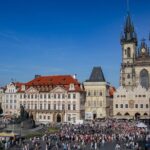

Old Town & Astronomical Clock, compared.
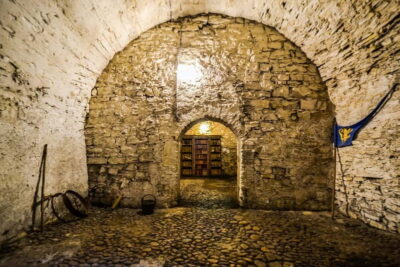 ★ 4.2Oldtown, Medieval Underground & Dungeon History TourFrom $308,244 reviews
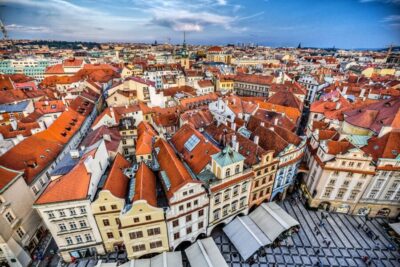 ★ 4.5Old Town Hall Tower Entry TicketFrom $216,749 reviews
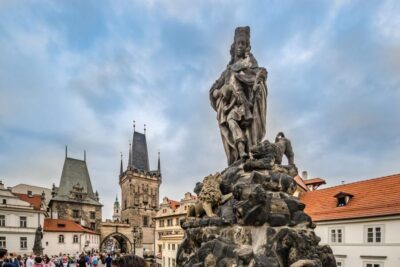 ★ 4.73-Hour Walking Tour of Old Town & Prague CastleFrom $305,696 reviews
 ★ 4.83-Hour Old Town and Prague Castle Tour in GermanFrom $365,671 reviews
 ★ 4.5Prague Old Town, Medieval Underground and Dungeon Historical TourFrom $323,227 reviews
 ★ 4.8Old Town and Jewish Quarter Guided Tour in GermanFrom $293,143 reviews
 ★ 4.5Ghosts and Legends of the Old Town Evening TourFrom $213,091 reviews
 ★ 4.6Old Town and Jewish Quarter Guided Walking TourFrom $222,847 reviews
Browse the lists this tour appears in