
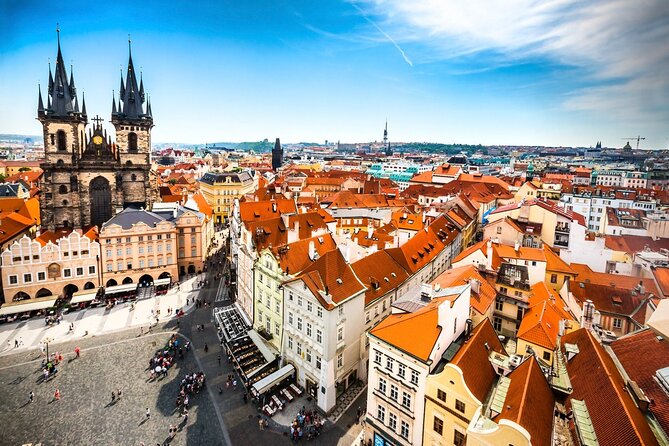
REVIEW · OLD TOWN & ASTRONOMICAL CLOCK
2-Hour Old Town and Jewish Quarter Tour in Prague
Jewish Prague in two hours sounds like a sprint. This guided loop mixes Old Town and Josefov so you get story and orientation without extra museum hunting. I like that it’s built around what you can see right there on the street.
I also like how the guide connects details to specific places, especially with the Astronomical Clock and the Jewish Quarter landmarks. One consideration: several highlights are viewed from outside only, so you should not expect entry tickets for those stops, and in cold weather, outdoor pauses add up fast.
Key highlights worth showing up for
- Small group (up to 20 people), so the tour stays conversational.
- Outside-only viewing at major sites, including the Astronomical Clock and several synagogues.
- Josefov with names and dates, like Mordechai Maisel and the meaning of ungelt.
- Old Town orientation in one loop, from Staroměstské náměstí through the Jewish Quarter.
- A nice mix of styles, synagogues, a historic merchants’ yard, then Parizská Street and Rudolfinum.
A 2-hour loop across Old Town and Josefov
This is a tight, well-paced way to see the core of Prague’s historic center and then shift gears into the Jewish Quarter, Josefov. The format is simple: you walk between major points, the guide tells you what matters, and you absorb the views at street level.
At two hours, you get enough context to stop feeling lost. You also get a clear visual checklist of places you can come back to later, if you want to go inside on your own time. The tour is offered in English, so you will not have to work hard to catch details as the group moves.
The walk is not described in distance terms, but the itinerary makes it clear you will be moving. If you want to do this while also enjoying long café breaks, plan to keep your schedule light afterward.
More Prague city tours, river trips, and Czech day trips to compare


Getting there: Staroměstská radnice start and Jan Palach finish
The tour starts at Staroměstská radnice on Staroměstské náměstí, address: Staroměstské nám. 1/3, Staré Město, 110 00 Praha-Praha 1. It ends at Jan Palach Square, address: nám. J. Palacha, 110 00 Praha 1-Staré Město, Czechia.
That end point is convenient because it sits in the center of the “classic Prague” grid. You can continue walking toward other Old Town sights or pivot toward new plans without having to backtrack much. The route also has stops spread through different neighborhoods, so using the tram and metro nearby is a practical option if you want to rearrange your day.
The tour operator provides a mobile ticket, which is useful on a day when you are already juggling maps, phone battery, and reservations.
Stop 1: Old Town Hall and the Astronomical Clock, seen from the street
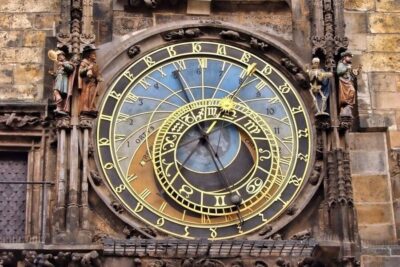
The tour’s first major visual magnet is the Old Town Hall area and the Astronomical Clock. You get time to admire the clock up close, and the guide shares the story behind it.
Here is the key detail: you do not enter the attraction. You stay outside. That means this portion is all about looking, listening, and learning the context that helps the clock make sense. If you are hoping to walk through the building, this stop is not built for that.
Still, for many people, this is the smarter way to start. The Astronomical Clock can be a “seen it, forgot it” spot if you wander without guidance. With the guide’s explanations, you leave with more than a photo. You start to notice the kinds of details that usually get overlooked when you are just trying to beat the crowds.
In short, it’s a strong opening, and it sets the tone for the rest of the tour.
Stop 2: Staroměstské náměstí, Prague’s main historic square
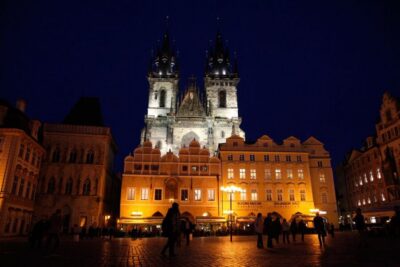
From there, you move to Staroměstské náměstí, described as the most significant square of historical Prague. The guide frames it as a place that has witnessed major events since it was founded in the 12th century.
This stop is short, but squares like this matter because they give you scale. You see how the city arranged power, trade, and daily life around a shared center. Even if you have visited other famous squares in Europe, this one feels like it belongs to a city that layers eras on top of each other.
Since admission is free at this stop, you are not juggling logistics. You are simply absorbing the setting while the guide explains why the square matters.
Stop 3: Týn Yard and Ungelt, the merchants’ yard that collected customs
Next comes the Týn Yard – Ungelt block of buildings. The name ungelt is explained as coming from customs duties that were collected there. This part of the itinerary points you toward how Prague worked economically long before modern tourism.
The important idea is not just the label. You start to understand that buildings in Old Town are not only decorative. They often trace older functions like trade, taxation, and protection.
Admission is free, and the stop is brief. But it gives you a different angle than you get when you focus only on churches, palaces, and major monuments.
If you like cities where the “why” behind street layouts is as interesting as the “what,” this stop does real work.


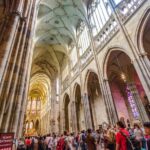
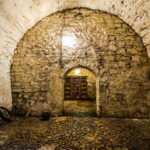

Stops 4 through 8: Josefov synagogues, all mostly viewed from outside
After the Old Town beats, the tour shifts into Josefov, with a series of synagogue stops. One theme runs through several of these: you do not enter the attractions. Instead, you get outside viewing time while the guide points out what to look for and explains why the sites matter.
That approach is not a downgrade. It is a deliberate choice that keeps the tour compact. It also lets you stay focused on understanding the Jewish Quarter as a place, rather than turning it into a set of separate museum visits.
Spanish Synagogue: the youngest synagogue you will hear about
At Spanish Synagogue, Jewish Museum in Prague, you get a look at what is described as the youngest and most beautiful synagogue in the Jewish Town. You spend time outside, and the guide provides context about the site.
Admission is not included here because you are staying outside. So think of this stop as a street-level orientation moment. You see where it sits within Josefov and you learn the story hooks that can make a later visit feel more meaningful.
The Old-New Synagogue: one of the oldest, and a name to remember
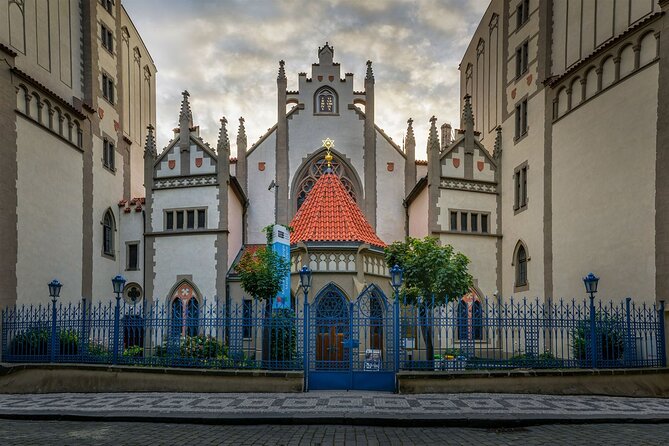
Next is The Old-New Synagogue. This stop is framed as one of the oldest and most valuable European and world Jewish monuments, and the oldest synagogue in Central Europe.
Again, you do not enter. You admire it from outside, and the guide tells you what happened inside. Even without going in, that guidance can be enough to help you decide whether you want to return for an interior visit later.
If you care about Jewish heritage sites, this is one of the anchors of the tour. The guide’s explanation gives you the why behind the building, not just the facade.
Pinkas Synagogue and Maisel Synagogue: Josefov’s human story through names and funding
You then continue through the Jewish Quarter with Pinkas Synagogue and Maisel Synagogue.
Pinkas Synagogue is presented as a key stop to help you feel overwhelmed in a good way by Josefov, with multiple significant synagogues in the area. You are not entering, but you are getting a broader mental map of where things are and how they relate.
Maisel Synagogue is where the tour gets especially specific. It was built from 1590 to 1592 by the mayor of the Jewish Town, Mordechai Maisel. The guide also explains that Maisel funded the extensive Renaissance reconstruction of the ghetto.
That detail matters. When a guide gives you names and dates, it helps your brain lock the place in. You are no longer just walking past beautiful buildings. You are tracking a chain of people, decisions, and reforms.
The experience also benefits from the “outside only” format. You are not switching between ticket lines and interior rules. You are staying in the same streetscape and letting the guide tie one stop to the next.
Stop 9: Rudolfinum and Parizská Street, a sharp shift from sacred to civic
The tour does not end in only one mood. It leaves Josefov and heads toward two very different Prague identities.
First is Parizska Street, described as Prague’s most prestigious boulevard, lined with luxury boutiques and major fashion brands. This is not about shopping for everyone. It is about watching the city change tone. One minute you are focused on historic synagogue landmarks, then you are in a corridor that signals modern wealth and global retail.
Then you reach Rudolfinum, described as Prague’s most prestigious concert hall and home of the Czech Philharmonic. The guide points out that the Czech Philharmonic performed here for the first time in 1896 under Antonín Dvořák.
You view Rudolfinum from outside, since the tour notes that you will not enter. The value is in the story and the architectural framing. Even if you are not a classical music fan, you can still walk away understanding that Prague’s cultural life has always had “stages” and institutions behind it.
It makes the whole tour feel like a full day compressed into two hours. Sacred, civic, and fashionable Prague appear in sequence, so you leave with a more complete sense of what the city is made of.
Price and what $30.25 buys you in real terms
At $30.25 per person for about 2 hours, this tour is priced in the “simple guided orientation” range. You are paying for a licensed guide, a tight route, and a structure that prevents you from wandering between major sights with no explanation.
What makes it decent value is how much the guide covers relative to the time. The itinerary hits: the Astronomical Clock area, two meaningful Old Town viewpoints, the ungelt merchants’ yard story, and multiple Josefov synagogue landmarks, plus Rudolfinum and Parizská Street.
The one thing to account for is entry. Several highlights are explicitly outside only, so you should not expect the ticket cost to include museum access. If you want interior visits, plan to book those separately.
Still, for many people, the “outside plus story” approach is the best first move. It helps you decide where to invest your time later. It is a practical way to earn context before you commit to extra paid tickets.
Also note the group size, maximum 20. That size matters because it often keeps the tour from feeling like a conveyor belt.
Group size, English guidance, and hearing the guide on the street
This tour runs with mobile tickets and is offered in English, with a maximum of 20 people. A smaller group is a real benefit here because you are walking and pausing often.
You will spend time looking at signs, facades, and streetscapes. In that setting, a guide who explains clearly becomes the difference between seeing a building and understanding what you are looking at.
One practical tip: Prague streets can swallow sound, especially around busy squares and between moving crowds. If you know you need clearer audio, position yourself closer to the guide and keep an eye out for when they slow down to make sure everyone catches up.
The guide style is also described as informative and personable, which usually translates into better questions and smoother pacing. When the group is under control, you also spend less time waiting around.
Weather and comfort: what to expect when you are mostly outside
Because multiple stops are viewed from outside, your comfort matters. If you are visiting in winter or shoulder season, wear warmer layers. The tour includes pauses where you are simply standing and listening while looking at exterior sights.
Good shoes help too. This is not a sit-and-watch outing. It is a walk-and-stop format, and Old Town streets often have uneven spots and lots of turns.
If you get cold easily, bring gloves or something you can put on quickly. You want to enjoy the stories, not just survive the outdoor waiting.
Best fit: who this Prague Old Town and Jewish Quarter tour suits
This tour fits best when you want a guided “big picture” walk and you like learning from place-based details.
It is a strong choice if:
- you want to see Josefov without committing to multiple separate museum visits
- you like facts tied to real streets, like the meaning of ungelt and the dates linked to Mordechai Maisel
- you want a first-day plan that covers major icons like the Astronomical Clock area and Rudolfinum
It may be less ideal if you mainly want interior access to synagogues and museum spaces. In that case, you will likely want a different tour or to add individual entries on your own afterward.
Where to go next: using this tour as your building block
One smart way to use this experience is to treat it as your orientation pass. When you finish at Jan Palach Square, you are set up to choose what you want to deepen.
If you liked a synagogue stop, you can come back and plan an interior visit. If you are more drawn to architecture, you now know exactly which facade you want to revisit and which stories the guide attached to it.
And because you saw Parizská Street and Rudolfinum too, you can also decide whether Prague for you is more about cultural institutions or more about historic courtyards and squares.
This tour gives you enough context to make those choices without guesswork.
Should you book? My practical decision guide
Book this tour if you want a 2-hour, guided orientation that connects Old Town landmarks to Josefov without overwhelming you with paid entries. The small group size and English guidance make it a good fit for people who want clarity fast.
I would skip it, or pair it with extra plans, if you strongly prefer going inside attractions. Since key stops are outside only, you should be comfortable with street-level viewing and guided storytelling.
If you want an efficient day plan and you enjoy learning as you walk, this one is a solid choice.
FAQ
How long is the Prague Old Town and Jewish Quarter tour?
The tour runs for about 2 hours.
What does it cost?
The price is $30.25 per person.
Is the tour offered in English?
Yes, it is offered in English.
Will I go inside the Astronomical Clock or the synagogues?
No. For several major stops, including the Old Town Hall Astronomical Clock area and multiple synagogues, you stay outside and do not enter the attractions.
Are any stops free to view?
Yes. Some stops are listed as free, including Staroměstské náměstí and Týn Yard – Ungelt, and others specify free admission where applicable.
What group size should I expect?
The tour has a maximum of 20 travelers (a small group).
Where does the tour start and end?
It starts at Staroměstská radnice on Staroměstské nám. 1/3. It ends at Jan Palach Square on nám. J. Palacha.
What if my plans change, can I cancel?
Yes. There is free cancellation, and you can cancel up to 24 hours in advance for a full refund.
More 2-Hour Experiences in Prague

More Tours in Prague

More Tour Reviews in Prague
Not for you? Here's more nearby things to do in Prague we have reviewed


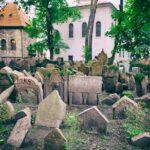





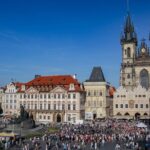

Old Town & Astronomical Clock, compared.
 ★ 4.2Oldtown, Medieval Underground & Dungeon History TourFrom $308,244 reviews
 ★ 4.5Old Town Hall Tower Entry TicketFrom $216,749 reviews
 ★ 4.73-Hour Walking Tour of Old Town & Prague CastleFrom $305,696 reviews
 ★ 4.83-Hour Old Town and Prague Castle Tour in GermanFrom $365,671 reviews
 ★ 4.5Prague Old Town, Medieval Underground and Dungeon Historical TourFrom $323,227 reviews
 ★ 4.8Old Town and Jewish Quarter Guided Tour in GermanFrom $293,143 reviews
 ★ 4.5Ghosts and Legends of the Old Town Evening TourFrom $213,091 reviews
 ★ 4.6Old Town and Jewish Quarter Guided Walking TourFrom $222,847 reviews
Browse the lists this tour appears in