
REVIEW · PRAGUE WALKING TOURS
Private Prague Art Nouveau and Cubism Walking Tour
Art nouveau turns the city into an open-air magazine. I love how this private tour teaches you to read Prague’s turn-of-the-20th-century design, from curvy lettering and ornate fixtures to Cubist angles on real buildings. I also love the mix of big-name architecture and small design cues, plus the human stories your historian guide brings in. One drawback to plan for, this is a lot of walking over about 3 hours, so it may not work well if mobility is limited.
If you book it, you’re not just passing sights. You get a structured route with short stop times and a guide who helps connect style to place, including Czech optimism around the 1900s and the symbolism behind modern touches like the upside-down statue. You’ll see venues tied to well-known Czech figures too, and when the guide is Robert Wesley, a Czech-born guide with a Nigerian father, that mix of personal history and architecture makes the route feel extra alive.
Key Things to Know Before You Go
- Private group up to 10: English-speaking historian guide with a mobile ticket
- Art Nouveau clues you can spot fast: signage lettering, ornate details, and even motif influences like gingko biloba leaves
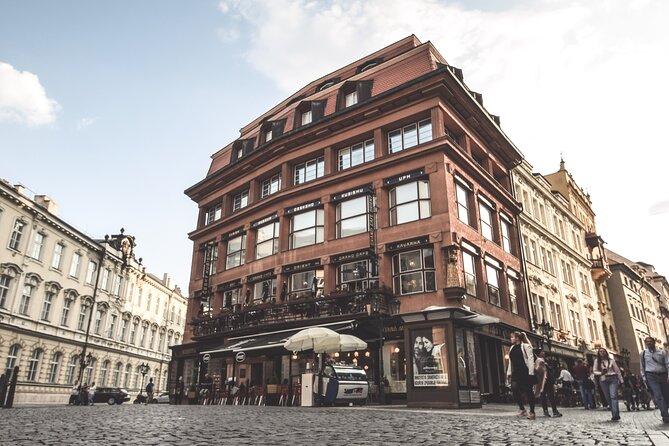
- Cubism on the street: you start with the House of the Black Madonna in a distinctive Cubist style
- Interiors included in the story: Café Imperial and Lucerna Arcade are built for design lovers
- Architecture tied to Czech milestones: the Legion bank, Vaclav Havel family connections, and World War I history
- A satisfying “finish with scale” stop: Praha hlavni nadrazi and its Art Nouveau dome inside
Prague After 1900: Why This Art Nouveau and Cubism Walk Feels Different
Prague does Gothic and Renaissance so well that it can make you forget the city kept changing. This tour picks up right where the old streets start meeting modern ideas, when artists and designers were pushing what buildings, signs, and public spaces could look like. You get to see how Art Nouveau tried to make daily life feel more artistic, and how Cubism brought a sharper, more broken-up way of thinking to architecture.
What I like is that the focus is not just on saying a building is Art Nouveau. Your guide points you toward the design language: curvy typography on signs that echoed posters and magazines of the era, ornate light fixtures, and façade elements that hint at wider influences. The gingko biloba leaf detail is a great example because it shows how a Czech building can borrow visual vocabulary from far beyond the country, without turning it into a museum display.
The Cubism part matters too, because Cubism often feels like a gallery movement. Here it’s attached to a specific building and a specific neighborhood moment, so it becomes easier to picture how Prague looked when people first saw these styles rising in the early 1900s.
You can also read our reviews of more walking tours in Prague

Value, Price, and the Smart Way to Think About It
The price is $396.46 per group for up to 10 people, and it runs about 3 hours. That pricing sounds like a lot until you do the simple math: if you take the full group size, you’re roughly at about $40 per person. In a city where guided walks can add up quickly, private pricing can become good value if you’re traveling with family or friends.
This isn’t a “drop you at a landmark and wish you luck” style tour. It’s built around a historian guide and a planned sequence of stops, including a mix of exteriors and brief interior moments. You get short time slices at each place, so the tour keeps momentum instead of turning into a slow sightseeing shuffle.
A practical note on logistics: pickup is offered, but hotel pickup and drop-off are not included. If you do not have hotel pickup arranged, you meet 15 minutes early at Grand Cafe Orient, Ovocný trh 19, Prague 1. It’s also near public transportation, so it’s easier to adjust if your plans change.
The 3-Hour Route: Stop by Stop in a Design-Lover’s Prague
This walk is organized like a lesson. Each stop is short, timed, and connected to the theme. You’ll spend about 10 to 15 minutes at most stops, with the longer moments reserved for the biggest visual payoffs.
Stop 1: House of the Black Madonna (Cubist style)
You start with the House of the Black Madonna, one of those buildings that makes you stop mid-walk. The key here is the Cubist style feel. Cubism breaks things into planes and angles, so instead of smooth curves dominating the look, you notice structure and geometry. Even in a few minutes, you can train your eyes to see that the building is not trying to be soft or decorative, it’s trying to be bold and constructed.
Potential drawback: because the stop is about 10 minutes, you won’t get a deep visit. The goal is visual recognition and context, not a long interior tour.
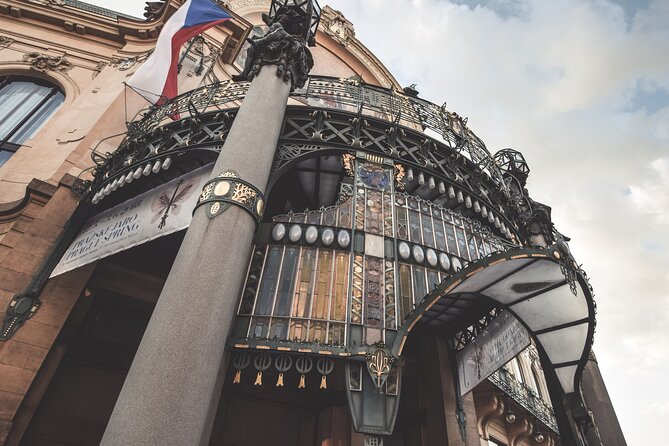
Stop 2: Obecní dům (Czech Art Nouveau at its best)
Next comes Obecní dům, an iconic Art Nouveau site in Prague. This is where the tour shifts from “how it looks” to “why people cared.” Art Nouveau was about making modern city life feel elegant and expressive, and Obecní dům represents the Czech embrace of those trends around the turn of the 20th century.
Spend time noticing the overall vibe the guide points out, especially the design rhythm on façades and the way decorative elements guide your eye. The stop is about 15 minutes, which is long enough to take in the big picture before you move on.
You can also read our reviews of more private tours in Prague



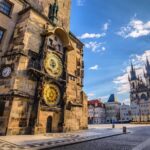


Stop 3: K+K Hotel Central Prague (first Art Nouveau building in Prague)
You then hit K+K Hotel Central Prague, described as the first Art Nouveau building in Prague. That detail matters because it turns a pretty façade into something like a historical turning point. This isn’t just a style sample, it’s a marker of how early Art Nouveau took hold locally.
The stop is about 10 minutes, so treat it like a quick but meaningful checkpoint. If you love design history, this is the kind of stop that makes the rest of the walk click. If you’re less into architectural history, the guide’s explanations help you still see what makes this style different from older Prague eras.
Stop 4: Café Imperial (Art Nouveau interior moment)
Café Imperial gives you a focused interior stop, about 5 minutes. This is where you learn why Art Nouveau was not only about outside appearances. Interior design of this style often uses decorative materials and flowing lines that make a room feel like a designed object.
Even if you only have a short time here, you can use it to reset your eyes. By the time you leave, you’ll be better prepared to spot how style carries through from buildings to spaces people actually used.
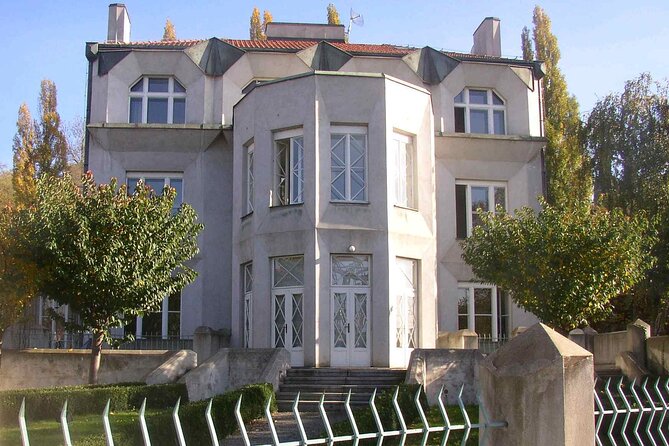
Stop 5: Czechoslovak Legion Bank (Cubism plus WWI story)
The Czechoslovak Legion Bank brings Cubist architecture together with a specific historical purpose: it’s dedicated to the Czechoslovak Legion of the 1st World War. That combination is a strong reminder that architecture can be propaganda, memory, and identity all at once.
If you like your sightseeing to have consequences, this stop delivers. The visual language helps you understand why Cubism fit certain messages in that era, even when the style itself is abstract on first glance.
Stop length is about 10 minutes, so again, think of it as a targeted briefing, then look carefully at what your guide points out.
Stop 6: Praha hlavni nadrazi (Art Nouveau dome inside)
At Prague Main Train Station, Praha hlavni nadrazi, you get one of the tour’s big scale moments: a magnificent interior Art Nouveau dome. This is an obvious “wow” stop, but it also has practical meaning. Stations are where style meets daily motion, and this dome makes the point that Art Nouveau wanted to affect ordinary routines.
You’ll spend about 15 minutes here. That time is a good balance, enough to take in the interior without rushing so hard you cannot appreciate the dome’s effect.
Stop 7: Wenceslas Square (Art Nouveau and Art Deco talk)
Wenceslas Square is about conversation as much as viewing. The tour discusses Art Nouveau and Art Deco architecture of the square. This is helpful because by now, you’ve learned what Art Nouveau is trying to do. Art Deco feels like the next conversation, and the square is a natural place to compare the visual shift in design attitudes.
The stop is about 15 minutes, which gives you time to connect buildings and streetscape texture to the style timeline instead of treating each façade as unrelated eye candy.
Stop 8: Lucerna Arcade (Art Nouveau interior arcades)
Lucerna Arcade is next, about 10 minutes, and you’ll see the Art Nouveau interior of the arcades. Arcades are perfect for this tour because they force you to slow down and look around. You’re not just facing one building, you’re surrounded by design choices.
You’ll also hear context from the area, including Lucerna Bar, which was once owned by Vaclav Havel’s family. That connection helps you see the continuity of Prague’s cultural identity, not just one style stuck in 1900.
Stop 9: Upside-Down Statue of King Wenceslas riding a Dead Horse (symbolism)
The final stop is the upside-down statue of King Wenceslas riding a dead horse, about 10 minutes. This is the tour’s “why does meaning matter?” moment. The guide discusses how the sculpture’s symbolism connects to Czech history and the Czech National Revival.
This works well as a closing thought because the walk started with early-1900 design energy. Ending with a symbol-based modern piece shows how Prague keeps reinterpreting its identity. If you’re the type who only likes styles and not stories, this stop might surprise you. If you like context, it’s a satisfying finish.
What You’ll Actually Learn to Spot During the Walk
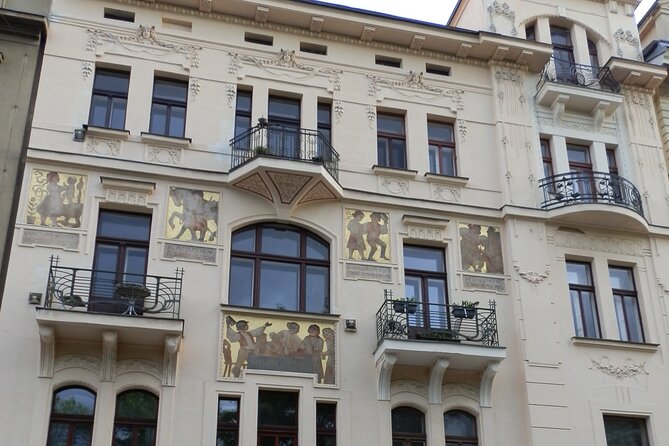
The best part of this style of tour is training your eye. After a few stops, you’ll stop seeing Prague as one big postcard city and start seeing it as a chain of design decisions.
Here are the main skills your guide helps you develop:
- You learn what makes Art Nouveau recognizable, including curvy typography and ornamental elements like light fixtures.
- You learn to spot small motif clues on façades, like gingko biloba leaves that reveal oriental influences.
- You learn why Cubism feels different on a building, more structured and broken up rather than softly decorative.
- You connect architectural style to the Czech context of the era, including optimism at the turn of the century and the way World War I memory is housed in places like the Legion bank.
- You notice how public spaces and interiors carry the same design language, not just one famous façade.
This is what makes the tour worth doing even if you already know Prague’s major sites. You’re getting a different layer of the city.
Practical Tips for Comfortable Walking and Better Photos
This is a 3-hour walking tour, with multiple short stops. That means it’s not about marathon endurance, but it is about staying on your feet and moving.
I’d plan for:
- Comfortable shoes. You’ll be walking between stops in central Prague.
- A phone camera that can handle interior lighting. Café Imperial and Lucerna Arcade are interior-focused moments.
- A clear sense of pace. Because each stop is timed, you’ll want to pay attention early, not save your questions for later.
On the guide side, it helps to know you’re getting a historian guide, not just someone who knows where to stand. The route is designed so you can learn something at every stop instead of just collecting photos.
If you’re mobility limited, take the walking factor seriously. The tour may not be suitable based on guide feedback, so it’s worth checking your own comfort level before booking.
Should You Book This Prague Art Nouveau and Cubism Tour?
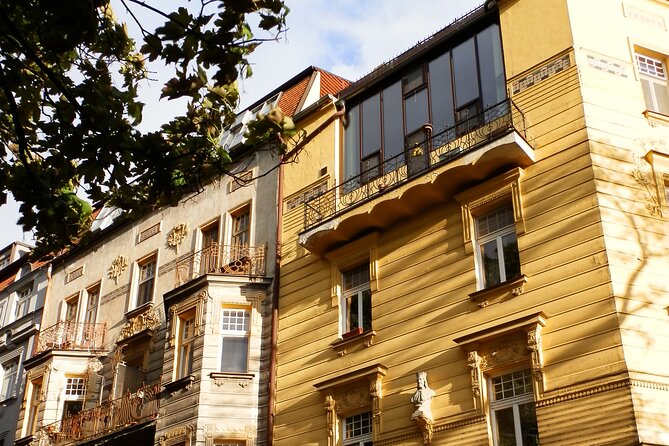
Book it if you:
- Care about architecture and design, not only scenic views
- Want a private, structured route with a historian guide in English
- Like understanding the “why” behind motifs, styles, and symbolism, not just the “what”
- Are traveling with up to 10 people and want the private format to make financial sense
Skip it or consider alternatives if you:
- Want a sit-down, slow-paced tour with minimal walking
- Prefer broad historical sightseeing without a specific focus on Art Nouveau and Cubism
If you’re on the fence, I’d think about how much you enjoy reading details in real places. This tour rewards that instinct. And if your schedule is tight, the average booking timing is about 8 days in advance, so reserving earlier helps you lock in the departure time that fits your day.
FAQ
How long is the Private Prague Art Nouveau and Cubism Walking Tour?
It runs for about 3 hours. The schedule is made of short timed stops, usually around 10 to 15 minutes, which helps keep the walk moving while still giving you time to take in architectural details.
Is this tour private or shared with other groups?
It is private. Only your group participates, up to a maximum of 10 people per group.
What language is the tour offered in?
The tour is offered in English.
Are there admission tickets included for the stops?
For the listed stops, admission tickets are shown as free. Still, you should expect brief stop times rather than full museum-style visits.
Is food and drinks included?
No. Food and drinks are not included unless specified by your tour arrangement.
Where do I meet the guide if I am not getting hotel pickup?
If hotel pickup is not arranged, meet your guide 15 minutes before the start time at Grand Cafe Orient, Ovocný trh 19 Prague 1.
More Walking Tours in Prague
More Tours in Prague
More Tour Reviews in Prague

Not for you? Here's more nearby things to do in Prague we have reviewed








Prague Walking Tours, compared.
 ★ 4.73-Hour Walking Tour of Old Town & Prague CastleFrom $305,696 reviews
 ★ 4.4Ghost Walking Tour Where Legends Come To LifeFrom $275,253 reviews
 ★ 4.7Jewish Quarter Walking Tour with Admission TicketsFrom $763,729 reviews
 ★ 5.0Prague Guided Walking Tour and Cruise with Authentic Czech LunchFrom $1023,627 reviews
 ★ 4.6Old Town and Jewish Quarter Guided Walking TourFrom $222,847 reviews
 ★ 4.5Prague Ghost and Legend of Old Town Walking TourFrom $212,630 reviews
 ★ 5.0Prague 3-hour Afternoon Walking Tour including Prague CastleFrom $531,899 reviews
 ★ 4.7Ghosts and Legends Nighttime Guided Walking TourFrom $221,462 reviews
Browse the lists this tour appears in