
REVIEW · PRAGUE CLASSICAL CONCERTS & SHOWS
Prague: Tyn Church Classical Music Concert
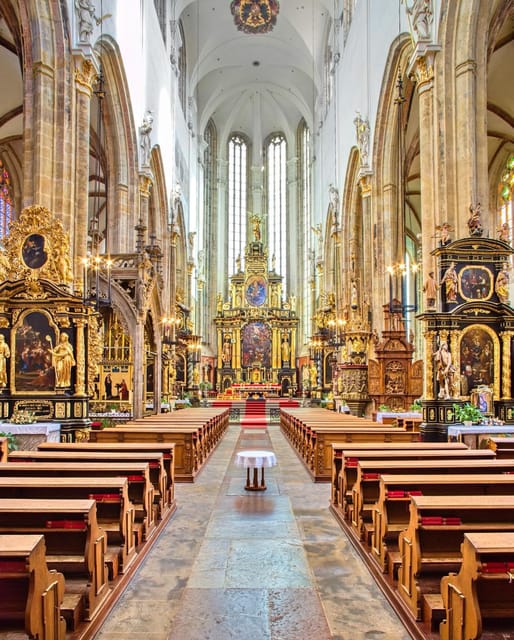
Prague’s Týn Church turns classical music into something close. I love the Týn Church setting, and I really like that this show gives you an organ spotlight by Aleš Bárta, plus major works you already recognize. One possible drawback to keep in mind, based on performance notes, is that the soprano Anda-Louise Bogza may look a bit tired onstage, even while the program still shines.
This is a focused, 70-minute concert built around vocal pieces, symphonic classics, and big-name baroque and Mozart moments, not background noise. The mix includes a soprano, a world-class organist, and a violin soloist Vlastimil Kobrle, with musicians from the Prague Philharmonic’s strings adding muscle and polish.
Key Things I’d Prioritize Here
- Týn Church acoustics: a historic Old Town Square space that makes notes ring clearly
- Aleš Bárta on the organ: especially strong if you like Bach-inspired organ writing
- Anda-Louise Bogza soprano: a leading opera voice known for major roles like Aida
- Vlastimil Kobrle violin solo: a Czech concertmaster with the technique to cut through the hall
- A well-balanced program: baroque, classical, Romantic, and even the famous Canon in D
- Good value for the repertoire: $36 gets you a serious program, plus a printed sheet
Týn Church in Old Town Square: why the setting matters
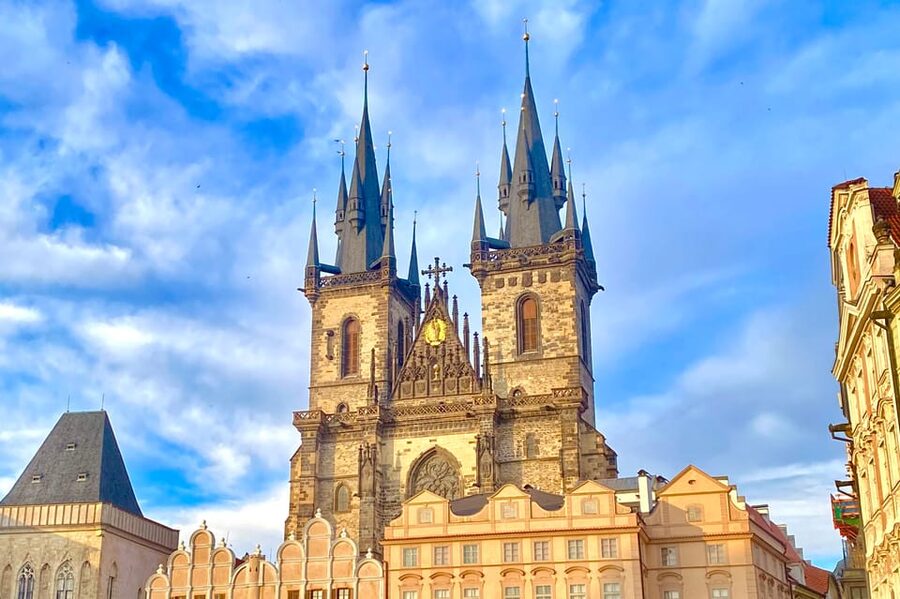
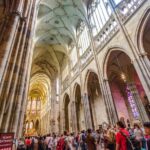
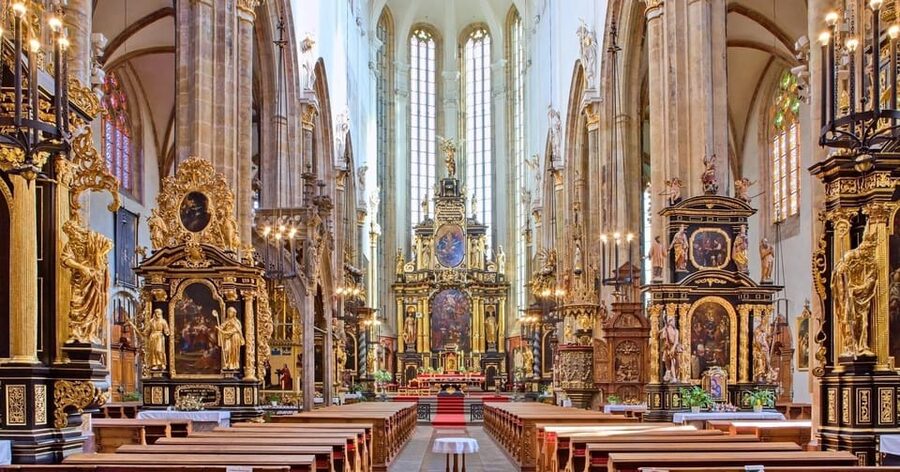
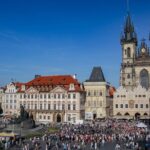
This concert takes place at the Church of Our Lady before Týn in Prague’s Old Town Square area. The building is part of the experience, not just a backdrop. In a space like this, quiet lines feel intimate, and louder orchestral writing lands with weight.
One big reason I like this venue for concerts is that it helps you hear structure. Even if you do not know every composer, you can track when the music turns from lyrical to dramatic. That is what you want from a one-evening ticket: clarity without needing to study beforehand.
Also, the Old Town Square area is lively during the day and often at night. If you prefer culture that feels connected to the street outside, you get that. You step in for a concert, then you still get to enjoy Prague around it.
More Prague city tours, river trips, and Czech day trips to compare

The soloists and Prague Philharmonic strings: what the performance lineup signals
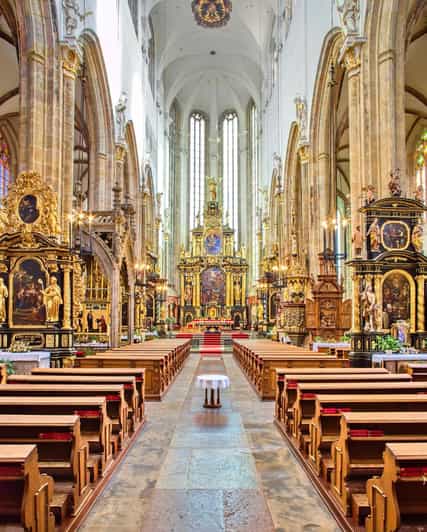
This show is not a small student recital. The program features musicians from the Prague Philharmonic strings section, plus three well-known soloists. That matters because it changes the sound. Strings can carry a hall, and in this kind of church, you notice how bow strokes and phrasing come across.
The soprano is Anda-Louise Bogza, associated with the National Theatre in Prague and known internationally for starring opera roles. If you like opera voices, you get a taste of that technique in a concert setting. Her parts also affect pacing because the program moves between orchestral momentum and lyrical vocal passages.
For the organ, you get Aleš Bárta, known especially for Bach recordings. In music like Bach, organ playing becomes more than pretty harmonies. You listen for counterpoint, for how one line keeps talking while another line answers. That is why the organ solo spot feels like a centerpiece rather than an add-on.
Then there is violin soloist Vlastimil Kobrle, a prominent Czech performer and the concertmaster of the Symphony Orchestra of Czech Radio. When violin appears in a program like this, you get both melodic clarity and agility. The violin can also act like a bridge between styles, since the repertoire here ranges from baroque to Mozart to Romantic-era emotion.
The 70-minute concert program: what each work does to the mood
This concert is built as a sequence of recognizable masters. You start with Vivaldi’s seasonal energy, then you travel through baroque devotion, classical punch, and Romantic atmosphere, before ending on Mozart’s Requiem section.
Here is the listening map I’d use while you watch.
Vivaldi, Spring and Summer, from The Four Seasons
Vivaldi is a great opener because it works even if you only know the tune. Spring tends to feel bright and springy, and Summer can shift into more heat and intensity. In a church space, the rhythms and repeated patterns stay easy to follow, which keeps you oriented right away.
Also, The Four Seasons is partly about vivid imagery. You do not need to picture literal birds or streams for the effect to land. The energy in the phrasing carries the picture for you.
Bach, Magnificat
Then the concert shifts from scenic to spiritual. Bach’s Magnificat brings layered vocal writing and harmonic momentum. Even if you do not read music, you can hear the architecture: the music steps forward, pauses, then moves again with purpose.
This is the kind of piece where a good soprano makes everything feel focused. The voice helps you separate lines that could otherwise blur in a resonant space.
Beethoven, Symphony No. 5, Allegro
Beethoven’s Fifth Allegro is basically a cultural landmark. The famous drive gives the concert a jolt. It is also a smart programming choice because it forces attention, and the strings from the Prague Philharmonic can really dig in here.
In a venue like Týn Church, you also get a strong sense of rhythmic pulse. That is part of why Symphony No. 5 works live: it feels like motion, not just sound.
Schubert, Ave Maria
After Beethoven’s force, Ave Maria gives you a human scale. Schubert is intimate and melodic, and it tends to slow the room down without turning it sleepy. If you have ever wanted to hear how a simple line can feel emotionally heavy, this moment often delivers.
For your listening, try noticing how the phrasing sounds like breath. That is where Schubert lives.
Bach, Jesu, Joy of Man’s Desiring
This is one of those pieces that feels immediately familiar, even when you cannot place it. It is built on steady forward flow, with a gentle emotional glow.
Because the organ and strings are strong in this concert format, you may feel the piece move like light across surfaces. It is soothing, but it does not go flat.
Smetana, The Moldau (Vltava)
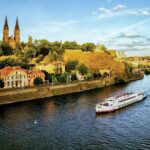
Smetana is where the concert starts to feel like storytelling in sound. The Moldau is famous for its musical landscapes. Even with no visuals, you can hear how the river energy builds, and then changes character.
This is also a nice moment for non-musicians. You do not need theory to grasp the “moving through time” effect. It becomes easy to listen without working at it.
Handel, Ombra mai fu from Xerxes
Ombra mai fu is a slow, elegant aria. Handel’s writing can feel almost ceremonial here, and it gives the soprano another chance to show control and beauty of line.
In this placement, the piece acts like a breather. You reset your ears after the emotional sweep of Smetana.
Mozart, Divertimento in D Major
Mozart brings clarity and sparkle. A Divertimento is often light on its feet, and Mozart tends to make you feel the lines fit together naturally. In a church with strong resonance, that matters, because the music stays readable.
If you enjoy hearing transitions, this is a good one. The energy seems to keep moving forward without getting harsh.
Pachelbel, Canon and Gigue in D Major
Canon and Gigue in D Major is probably the most widely recognized set of notes in the whole program. It is repetitive in a good way, like a gentle pattern that keeps revealing new balance.
This is a great piece for couples and friends with mixed tastes. Even if someone thinks classical music is “too serious,” Canon and Gigue often makes them smile.
Mozart, Requiem, Lacrimosa
The concert ends with a serious emotional turn. Lacrimosa from Mozart’s Requiem carries weight, and it is a dramatic closing choice. You get a finale that feels like it has something to say, not just a final cadence for the sake of a finish.
If you like a concert that leaves you quiet and a little reflective, this ending delivers.
Price and value: how $36 holds up for this kind of program
At $36 per person for a 70-minute concert, the value is strong because you are paying for more than a venue. You are paying for a program with major composers and named soloists, plus musicians from the Prague Philharmonic strings.
The printed program also helps. If you want to follow along, a paper sheet with the repertoire is an easy upgrade to your evening.
The other value angle is time. A 70-minute classical concert is the sweet spot for many first-timers. You can fit it into an Old Town evening without losing the rest of the night to logistics. If your energy is limited, you still get a full performance experience.
And because the repertoire spans baroque, classical, and Romantic-era color, you are likely to hear at least several moments that feel familiar. That makes the ticket easier to justify, especially if you are not sure what you like yet.
What to pay attention to while you’re seated in the church
A church concert can feel different from a theater concert. You tend to notice sound length, not just volume. In Týn Church, notes may linger enough that you should stop expecting the music to behave like a studio recording.
Here are a few simple ways to get the most from your seat:
- Listen for how the music shifts between vocal and instrumental sections, because that is where the drama comes from
- Watch the way phrasing changes in Bach and Mozart. That is often the difference between a blur and a beautiful read
- Keep an ear on the violin solo moments. The violin tends to cut through texture even when the room rings
One note from performance feedback is that the soprano may look a bit tired in appearance in this concert format. If that happens during your viewing, do not let it ruin your focus. The bigger payoff is the overall program structure and the strong support from the strings and soloists.
Who this concert suits best
This is a good fit if you love classical music and want a concentrated night of recognizable works. It is also a smart pick if you are new to classical. The program includes entry-level classics like The Four Seasons, Beethoven’s Fifth Allegro punch, Canon and Gigue, and Mozart’s Requiem Lacrimosa.
If you are traveling with someone who is not sure about classical, this concert can work because the mood swings keep attention. You get bright baroque energy, emotional vocal writing, dramatic Beethoven, and a satisfying ending.
One practical match to mention: unaccompanied minors are not allowed. If you are traveling as a family, you will need to think about supervision and who is attending.
Should you book this Prague Týn Church classical concert?
Book it if you want a compact program that feels genuinely high-level. The lineup signals professional musicianship, and the repertoire is curated in the sense that it moves across styles without leaving you stranded in one mood for too long.
Skip it if you hate long, resonant spaces or you want something fully casual and light. This is a concert, with major composers and an ending that lands with seriousness.
If you are on a first Prague trip and you want culture that feels tied to the city, this is a strong bet. You get Prague’s Old Town setting, a world-class organ presence, a named soprano, and a violin solo from a top Czech concertmaster, all inside one 70-minute session.
FAQ
How long is the Týn Church classical music concert?
The concert duration is 70 minutes.
Where does the concert take place in Prague?
It takes place at the Church of Our Lady before Týn in Prague’s Old Town Square.
What is the price per person?
The price is listed as $36 per person.
Who performs in the concert?
The concert includes musicians from the Prague Philharmonic strings section and three soloists: soprano Anda-Louise Bogza, organist Aleš Bárta, and violin soloist Vlastimil Kobrle.
What pieces are included in the concert program?
The program includes music by Vivaldi, Bach, Beethoven, Schubert, Smetana, Händel, Mozart, and Pachelbel, including works such as The Four Seasons (Spring and Summer), Magnificat, Beethoven Symphony No. 5 (Allegro), Ave Maria, Jesu, Joy of Man’s Desiring, The Moldau (Vltava), Ombra mai fu, Mozart’s Divertimento in D Major, Canon and Gigue in D Major, and Mozart’s Requiem (Lacrimosa).
Is the entry ticket and printed program included?
Yes, the entry ticket and printed concert program are included.
Are unaccompanied minors allowed?
No, unaccompanied minors are not allowed.
Is there free cancellation?
Yes, free cancellation is available up to 24 hours in advance for a full refund.
Can I reserve now and pay later?
Yes, you can reserve now and pay later.
More Concerts & Music in Prague
More Tour Reviews in Prague
Not for you? Here's more nearby things to do in Prague we have reviewed




Prague Classical Concerts & Shows, compared.
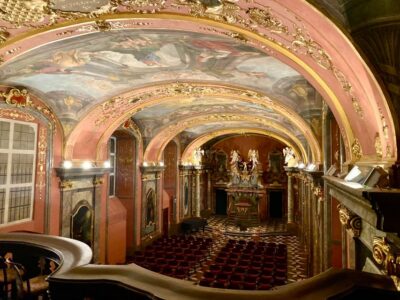 ★ 4.7Entry Ticket Classical Concert at the Mirror ChapelFrom $344,636 reviews
 ★ 4.0WOW Show Black Light TheaterFrom $313,990 reviews
 ★ 4.5Concert at Reduta Jazz ClubFrom $232,170 reviews
 ★ 4.4A. Vivaldi Four Seasons at St. Salvator ChurchFrom $341,951 reviews
 ★ 4.6Jazz Boat Cruise with Live Concert and Optional MealFrom $511,682 reviews
 ★ 4.01.5-Hour Black Light Theater Srnec PerformanceFrom $311,589 reviews
 ★ 4.8Mozart Ballroom Concert Ticket with 3-Course DinnerFrom $1221,200 reviews
 ★ 4.6Prague Castle: Midday Classical Concert at Lobkowicz PalaceFrom $281,106 reviews
Browse the lists this tour appears in