
REVIEW · PRIVATE
Prague: Private Prague Art Nouveau and Cubism Tour
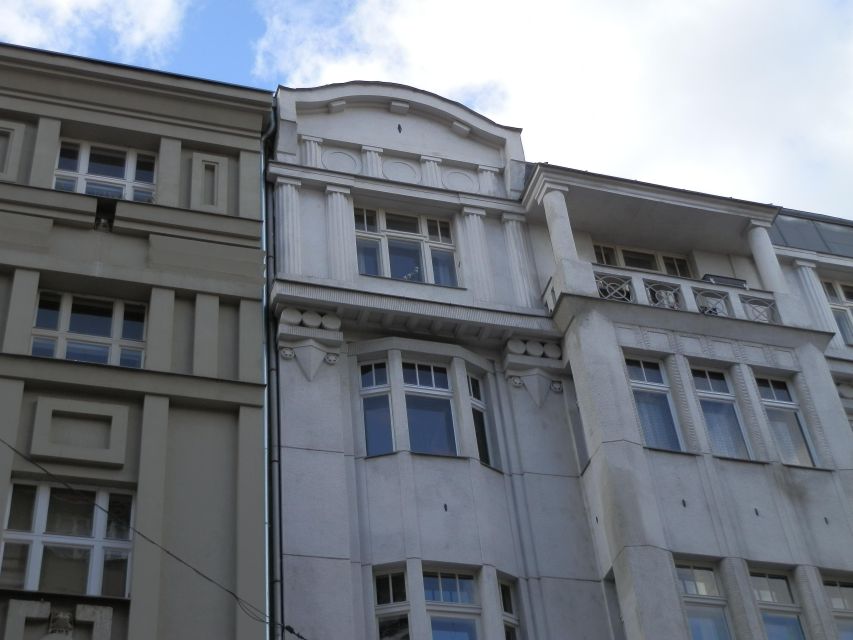
Prague has a second style story. This private one-day walk connects Art Nouveau and Cubism across Prague’s New Town, then pushes toward Vyšehrad for architecture you would not stumble into by accident. You get the big ideas and the close-looking details in one smooth arc.
I love how the guide links style to real 20th-century turning points, especially how World War I reshaped what lasted. I also love the mix of landmark buildings and side routes, with stops like the Municipal House and the Jubilee Synagogue (where Max and Eva-style explanations make the facades click fast).
One possible drawback: the day is packed, and some people may find the later sections a bit stretched if you want only the top hits. If you prefer shorter sightseeing chunks, think about skipping pace-heavy repeats and focus on the Cubist cluster near Vyšehrad.
Key things that make this tour worth your time
- Starts at the 1909 Central Train Station and frames the whole day with how modern design took shape
- Turns Art Nouveau into a story, not a style label, with clear explanations of its roots and why it mattered
- Shows Cubism as a reaction, including how it contrasts with Art Nouveau and why both changed after World War I
- Uses included transit, including tram rides back to the center
- Gets you to Vyšehrad’s more daring Cubist area, away from the busiest postcard route
- Private group, English or German, so questions about design, symbolism, and Prague’s preservation efforts actually get answered
Art Nouveau meets Cubism: the Prague story most people miss
Prague is famous for medieval streets and Baroque domes. This tour adds a different page of the same city, one written in the early 1900s. You see how modern aesthetics grew out of older traditions, and how the push-pull between decorative Art Nouveau and angular Cubism played out in real streets and buildings.
What I like most is that you are not just “looking at pretty stuff.” The narrative makes the architecture feel political and personal, like ideas were arguing with each other in brick and stone. And because Prague’s modernist era is recent enough to understand, it still feels connected to how cities look today.
You can also read our reviews of more private tours in Prague



Central Station on Platform 1: why the day begins in 1909
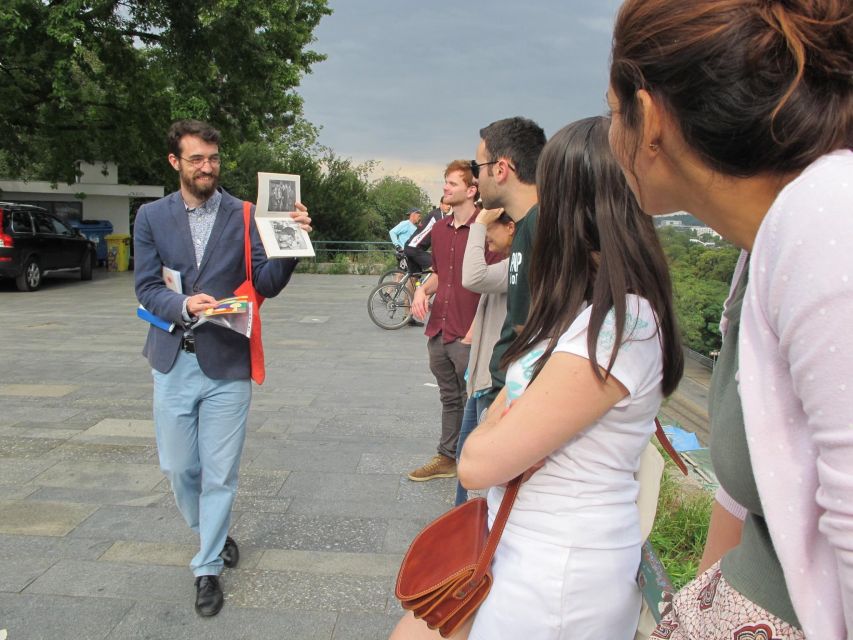
The tour meets at Prague’s Central Train Station, on Platform No. 1, in the middle, with the guide carrying a red folder. The pickup is also tied to the bankomat UniCredit Bank, so it is easy to orient yourself before you start walking.
Starting here is smart. The Central Station was built in 1909, and the recent reconstruction gives you a modern Prague hook at the very beginning. Before you even hit the New Town streets, the guide sets a timeline that you keep hearing throughout the day: 19th-century roots leading into Art Nouveau, then the reaction that fueled Cubism.
Practical note: you will be on your feet and walking between short stops. Comfortable shoes matter, because this is more “city stroll with expert commentary” than “sit and ride.”
New Town Art Nouveau: Jubilee Synagogue to Municipal House
After the station intro, the route threads into Prague’s New Town, where Belle Époque architecture shows off its confidence. The pacing is built for sight and conversation: short walks, then a building-by-building explanation of what you are seeing and why it looks that way.
Jubilee Synagogue: details you can actually notice
You hit the Jubilee Synagogue early, with a focused sightseeing moment. Even if you only catch parts from street level, it helps to set your eyes toward the kinds of decorative choices that later connect to Art Nouveau’s thinking.
The guide’s theme here is evolution. You learn how Art Nouveau did not appear out of nowhere. It grew from 19th-century artistic impulses, then offered a new visual language for modern life. Once you understand that, every subsequent facade feels less random.
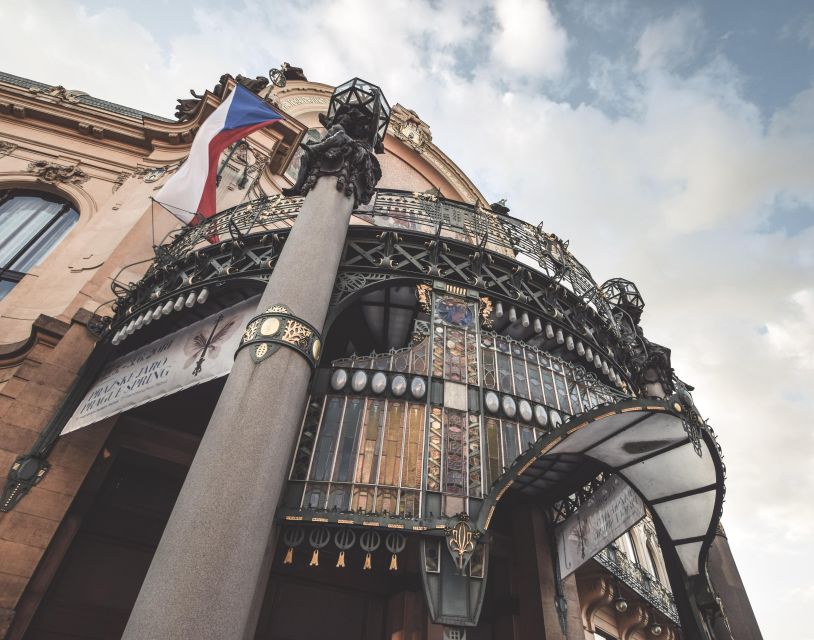
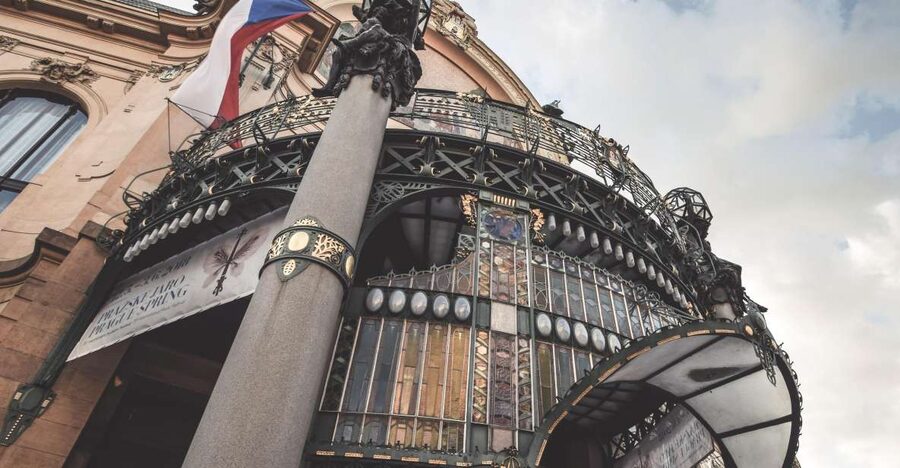
The Municipal House: where craftsmanship feels like storytelling
Next comes the Municipal House in Prague, again with dedicated sightseeing time. This is one of those buildings where the exterior alone can make you slow down, because the architectural “message” is meant to be read in surfaces, ornament, and proportions.
This stop is also a good checkpoint. If you are wondering whether the tour is too design-focused, the Municipal House is your answer. You still get context, but you also get to see why these aesthetics mattered to the city as it modernized. You start noticing how modern architects helped keep older Prague identity alive, not by freezing the city, but by building the next chapter carefully.



House of the Black Madonna: why a name is a clue
Then the walk shifts to the House of the Black Madonna. The key value here is the way the guide uses specific landmarks to talk about style transitions and cultural memory. Even if you have visited central Prague before, this kind of stop helps you see the city as a layered argument between eras.
You might walk past buildings like this on your own, but the guided timing makes you look up and pay attention to the design logic. That is where the “how locals do it” feeling comes in. The city becomes less of a checklist and more of a conversation.
Hidden modernist corners: how the guide trains your eye
Between the big names, you get several shorter detours described as lesser-known modernist stops. These are important, not filler. The guide points out details that you would likely miss if you were just taking photos and moving on.
The pattern is simple: each time the route turns down a side street, the guide gives you a reason to care. You learn what to look for in Art Nouveau lines and motifs, then you shift your eyes to the kinds of contrasts Cubism creates. You start catching the “family resemblance” across the day, even when the buildings look very different at first glance.
This is one of the tour’s most praised strengths, and it shows up in the way the guides present the material. Max, for example, has a reputation for clear, compelling explanations delivered in German with plenty of room for questions. Eva’s approach is similar in spirit, with architecture descriptions that make multiple styles feel readable instead of academic.
Wenceslas Square: a recognizable hub, used the right way
You also spend time at Wenceslas Square. This is not where most design tours want to spend time, but here it works because the guide uses it as a public-space reference point.
Think of it like this: once your eyes have learned Art Nouveau curves and Cubist angles, Wenceslas Square becomes a contrast test. You begin to notice how the city’s “main stage” relates to the off-stage modernist details you saw earlier. The square helps anchor the day in a place you already know, then turns it into a design lens.
If you are the kind of visitor who gets tired of crowds, plan your expectations. This stop is one of the more central ones, and you will be around the city’s daytime energy. The tour pacing still gives you focus, though, so it does not feel like wandering.
The tram ride to Vyšehrad: stepping into bolder Cubism
After the central stretch, you take public transportation for a short ride to a more remote area under Vyšehrad Fortress. This move matters because it changes the architectural mood.
In central Prague, you often meet style through famous landmarks. Under Vyšehrad, the architecture feels more daring and more concentrated. The guide leads you into a zone where you can see Cubist design principles at close range, not just as an art-history label.
Also, this tour includes transit. Tram tickets for the ride back toward downtown are included in the price, so you do not have to think about logistics at the end of a long walking day.
Three Cubist Houses and Kovařovicova vila: seeing Cubism as structure
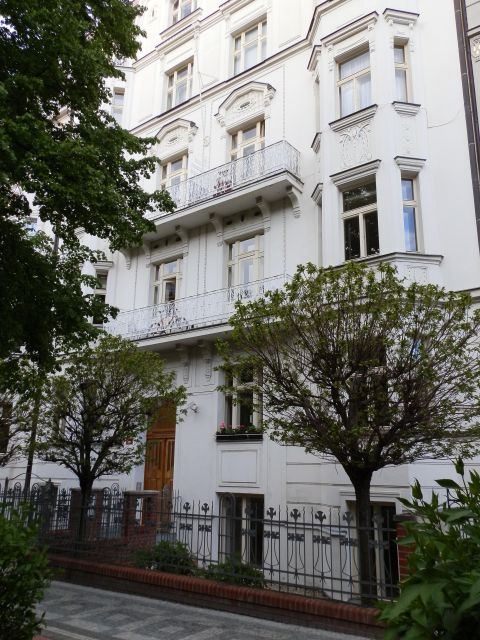
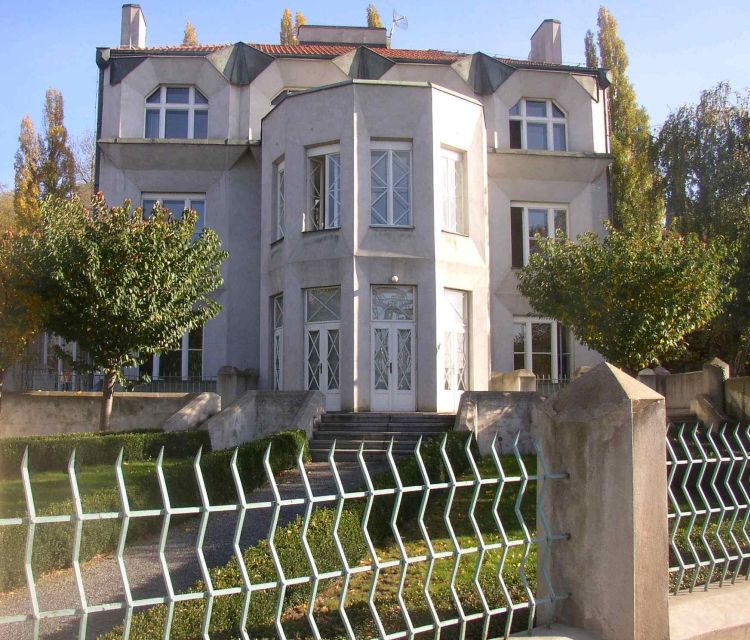
The climax of the architecture portion is the Three Cubist Houses. This cluster gives you a direct comparison point. Instead of treating Cubism as one style idea, you see it as a set of choices about geometry, angles, and how a facade can look almost like it is breaking into planes.
From there you also visit Kovařovicova vila and the cubist house Vyšehrad č. p. 98. These stops are your chance to confirm what clicked earlier. Once you understand Cubism as a revolt against the popular Art Nouveau of its time, the architecture becomes easier to read. You notice what changes: less about flowing decorative surfaces, more about fragmentation, tension, and structural rhythm.
One of the broader lessons you take away is that styles did not survive untouched. The guide ties the transition to World War I and the shake-up that followed. You learn why Cubism did not simply replace Art Nouveau and then stay forever unchanged. Modernity moved fast, and the city moved with it.
Timing and pacing: how a 1-day design tour fits your schedule
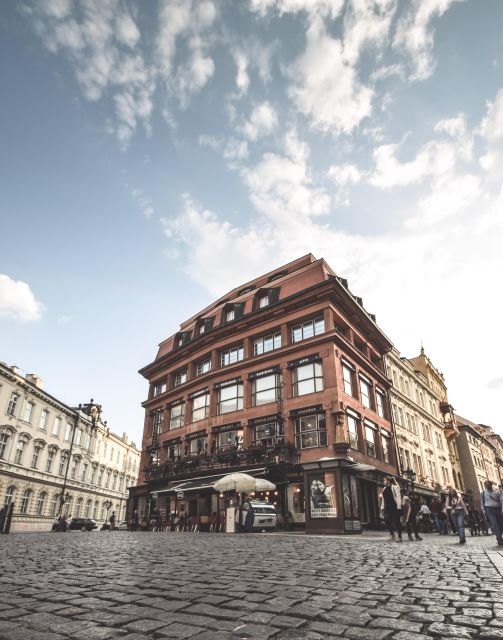
This is built as a full-day experience at about one day in length, with repeated short walks and short sightseeing pauses. You also have two tram segments: one short ride out toward Vyšehrad, and a tram ride back near the end.
The pace is generally friendly for an architecture tour because the stops are spaced out. However, there is one practical consideration. If you are only interested in the most famous moments, the later portion may feel like extra time for some visitors. That is not a fault of the subject, it is just how tightly packed design days can be.
My tip: go in with a clear goal. If your priority is the Cubist cluster near Vyšehrad, commit your energy there. If your priority is seeing how the day connects Art Nouveau roots to Cubism reactions, keep your attention on the narrative links, not only the buildings.
Price and value at $84: what you get for a private group day
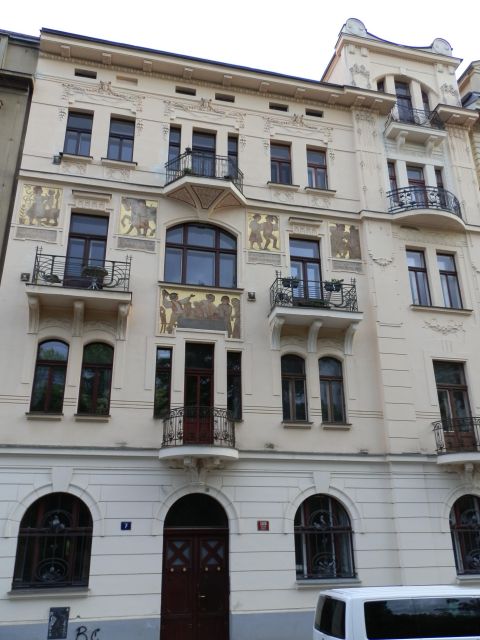
At $84 per person for a one-day private tour, value depends on how you like to travel. If you enjoy history you can see with your own eyes and you want someone to steer your attention to the right details, the price makes sense.
Here is the value equation I see:
- Private format means your guide can tailor the pace and answer your questions.
- Included public transportation tickets reduce friction at the end, especially after walking.
- The structure covers both a readable central set of landmarks and a more remote Cubist area under Vyšehrad, so you get range in one day.
If you are someone who loves self-guided architecture wandering, you can always build your own route. But you would need to do the hard part: learning how Art Nouveau evolved from 19th-century styles, why it felt revolutionary, and why Cubism formed as a revolt against it. The guide hands you that framework in a way that makes the buildings more than just photos.
Who should book this Prague Art Nouveau and Cubism tour
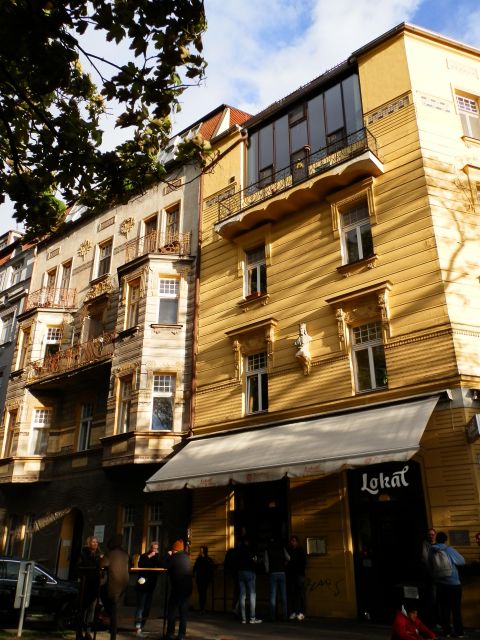
This tour is especially well suited if:
- You have already seen Prague’s top sights and want a different era.
- You like architecture enough to care about style transitions, not just finished monuments.
- You enjoy guided context that is close enough to understand but old enough to feel distinct.
It also works nicely for design-focused visitors who like to compare styles in real streets rather than in a museum room. And because the tour runs in English or German, you can match your comfort level.
One more fit factor: it is not suitable for children under 12. If you are traveling with younger kids, you will likely find the walking and sightseeing format too demanding.
Booking confidence: how to lock it in without stress
If your plans are flexible, you can book without paying right away, and you can cancel up to 24 hours in advance for a full refund. That is useful in Prague, where weather can shift your day and where walking-heavy tours benefit from a simple plan B.
Just remember to bring comfortable shoes. This tour has multiple on-foot segments, even though transit takes you between areas.
Should you book it? My decision guide
Book this tour if you want Prague to feel modern in a way that still connects to the city’s older layers. I think it is a great choice for repeat visitors because it shifts your attention from castles and churches to the design arguments of the early 1900s.
Pass or adjust your expectations if your idea of Prague is mostly short walks, minimal standing time, and only the most famous places. The day is structured, but it is still a day of movement, and a few late-stage stops may feel like more than you need.
If you can handle a good walking pace and you like architecture explanations that make you look closer, this is the kind of private tour that changes how you see Prague, even after you leave the streets behind.
FAQ
Where is the meeting point?
Meet on Prague’s Central Train Station on Platform No. 1, in the middle, where the guide is carrying a red folder. The start is also described near the UniCredit Bank ATM.
What languages is the tour offered in?
The live guide provides the tour in English and German.
How long is the tour?
It is a 1-day experience.
Is public transportation included?
Yes. Tickets for public transportation are included, and tram rides near the end are included as well.
Is the tour wheelchair accessible?
Yes, the tour is listed as wheelchair accessible.
Is this tour suitable for children?
No. It is not suitable for children under 12.
More Private Tours in Prague



More Tours in Prague


More Tour Reviews in Prague
Not for you? Here's more nearby things to do in Prague we have reviewed










Private, compared.
 ★ 5.0Prague Old Town: Private TourFrom $541,223 reviews
 ★ 4.5Prague Airport Private Arrival TransferFrom $48991 reviews
 ★ 4.5Prague Airport Private Departure TransferFrom $48780 reviews
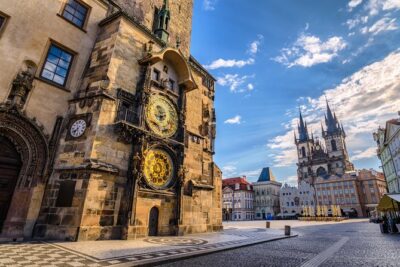 ★ 5.0Discover Prague Private Tour – 3 hoursFrom $133705 reviews
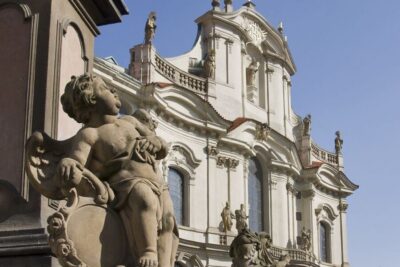 ★ 4.8City Highlights Private Walking TourFrom $210635 reviews
 ★ 4.8Shared Group/Private Segway Tour with Hotel TransferFrom $67574 reviews
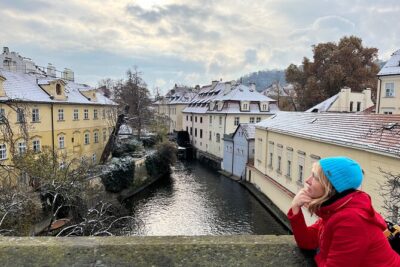 ★ 5.0Winter Charm of Prague – private tour with PERSONAL PRAGUE GUIDEFrom $113479 reviews
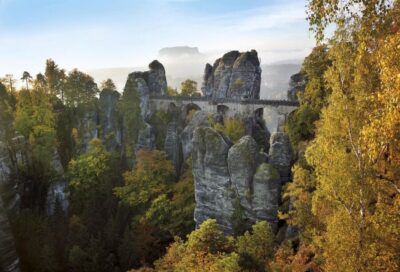 ★ 5.0From Prague: Bohemian & Saxon Switzerland Semi Private TourFrom $157458 reviews