
REVIEW · PRAGUE CLASSICAL CONCERTS & SHOWS
Prague: Mirror Chapel Classical Music Concert Ticket
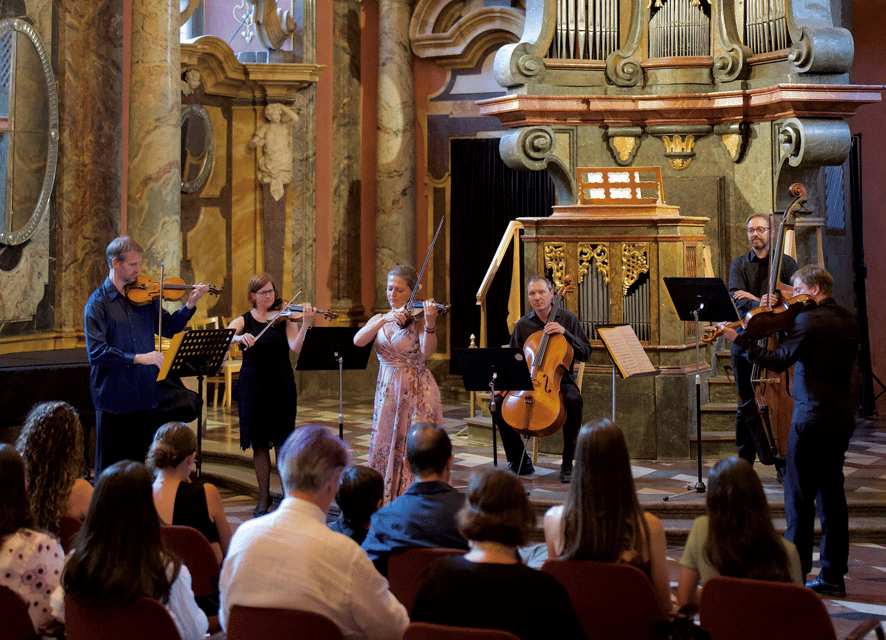
Prague’s Mirror Chapel is music with perfect timing. In the Baroque setting of the Clementinum, I love how this concert pairs the Royal Czech Orchestra with standout soloists like Eva Müllerová and piano featured within the program. The drawback to consider is the concert runs just one hour, so it’s best to plan your evening around an early finish.
Prague Mirror Chapel Review: A one-hour classical concert in a legendary room
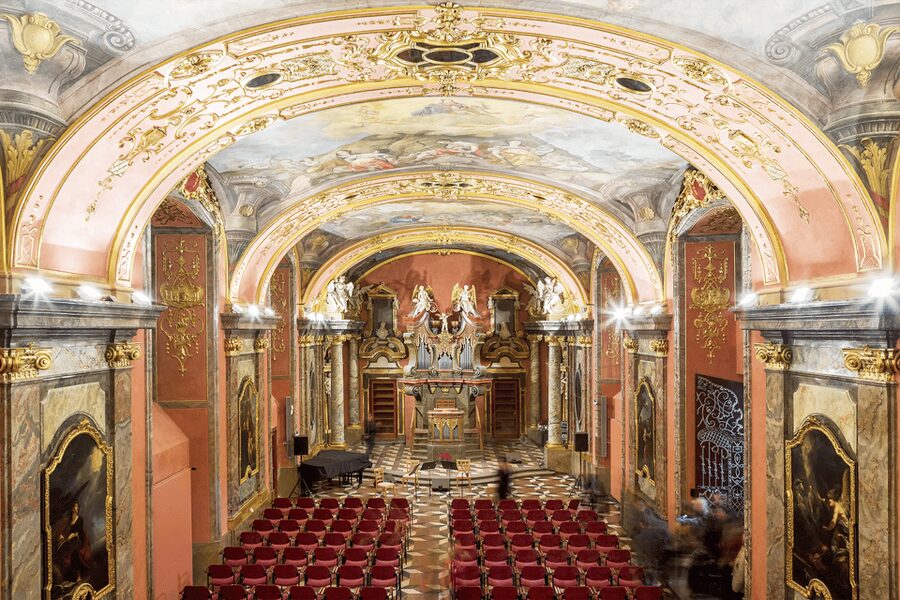
If you want a Prague music experience that feels special without eating your whole night, this is one of the easiest ways to do it. The Clementinum Mirror Chapel is famous for sound, and the program mixes big names and big emotions, from Vivaldi’s The Four Seasons to Mozart’s Requiem Lacrimosa.
What stands out most (so you know what to aim for)
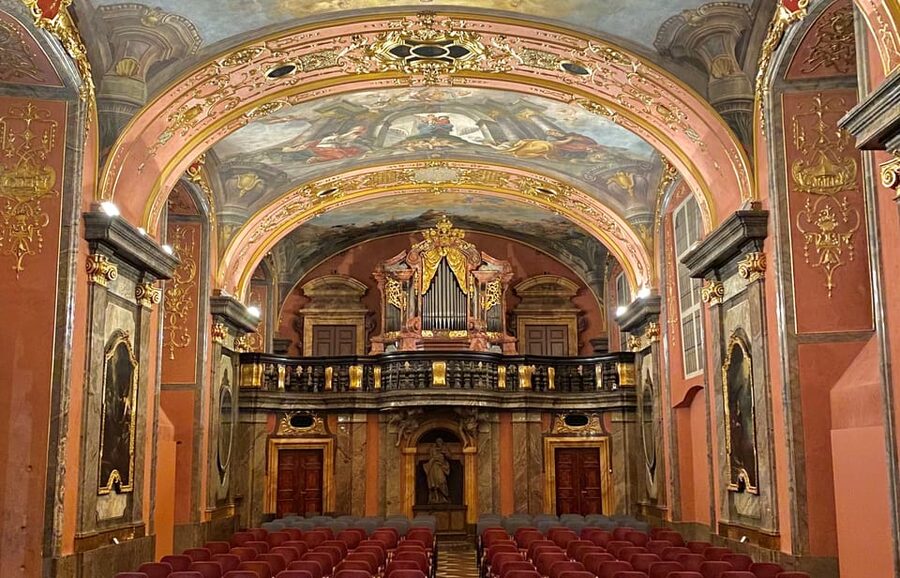
- Mirror Chapel acoustics: the room really carries sound, even for listeners further back
- A program that balances moods: Four Seasons, opera hits like Bizet, and a dramatic Requiem Lacrimosa
- Known Czech performers in the spotlight: Eva Müllerová, Stanislav Gallin, and Viktor Mazáček
- Piano in the Royal Czech Orchestra lineup: it adds an intimate layer you might not expect in a chapel concert
- A strong “great if you like variety” setlist: classical fans and casual classical listeners both tend to enjoy it
- Most performances end fast: you’ll get an excellent hour, but you will not get a long night of music
More Prague city tours, river trips, and Czech day trips to compare
Mirror Chapel at the Clementinum: why this room matters
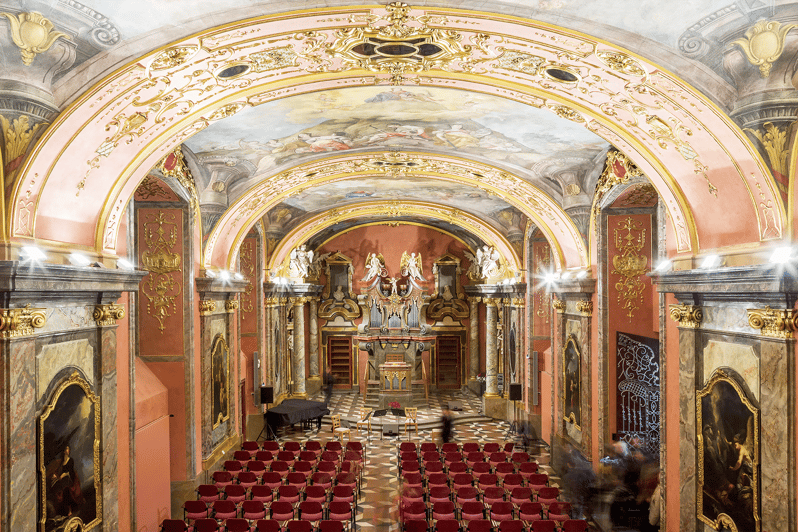
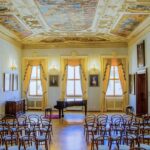
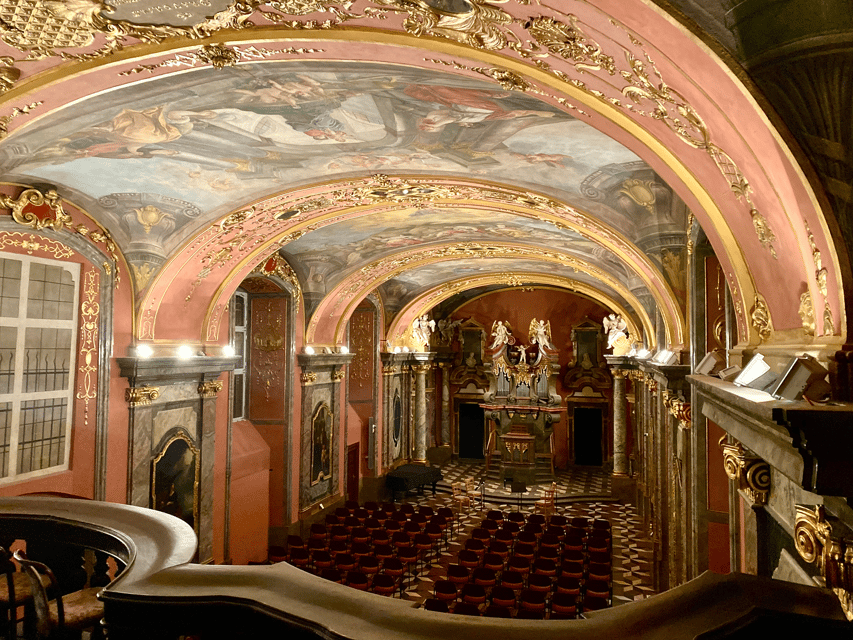
The main reason this concert works is the setting: the Baroque Mirror Chapel inside the Clementinum complex. In practice, that means you’re not just sitting in a church-like venue. You’re in a space where sound can feel close, clear, and shaped. One of the most consistent signals from audience feedback is how impressive the acoustics are, even when people choose a less premium ticket section.
You also get a real sense of “Prague at night.” The Clementinum area is central and walkable, so this can slot nicely into an itinerary that already includes Old Town sights. And because the concert is in a single location, you avoid the common headache of moving between multiple venues or waiting around for long gaps.
Two practical notes I’d keep in mind as you plan:
- The chapel is a small venue, so seating matters more than you might think.
- Since it’s a one-hour show, you’ll get the best value if you show up with your day already moving toward evening, not toward late-night fatigue.
The Royal Czech Orchestra program: what you’ll hear and how it flows
This concert is built like a quick tour through classical styles, with a Czech core and a lot of recognizable music. The full program runs through both Baroque and Romantic works, and the order matters. It moves from vivid, image-rich music into deeper drama, then toward familiar, emotionally punchy pieces.
Here’s how the program comes across as a listening experience:
Vivaldi to open: The Four Seasons (Spring & Winter)
Starting with Vivaldi’s The Four Seasons is a smart move because it instantly gives you something concrete to “follow,” even if your classical listening has gaps. Spring can feel bright and rhythmic, and Winter tends to bring darker colors. Reviews specifically call out Four Seasons as a highlight, and that tracks with how accessible Vivaldi can be in a live room.
Beethoven’s classical power, then Mozart’s emotional hit
Next comes Beethoven: Emperor Concerto, Adagio un poco mosso. The Adagio part is key here. It slows things down and highlights control and phrasing, which is exactly what you want in a chapel where details can carry.
Then Mozart: Requiem (Lacrimosa) arrives, and this is where the concert often makes people emotional. The Lacrimosa is already famous for grief and weight, but live performance in a chapel setting can make it land harder. If you’re the type who likes a dramatic center moment, this is likely the one.
More Prague city tours, river trips, and Czech day trips to compare
Czech middle: Smetana’s Moldau and Dvořák’s dance
Smetana: The Moldau (Vltava) brings you back to a more flowing, narrative feeling. It’s not just beautiful; it’s a musical story that tends to keep people present.
Then Dvořák: Slavonic Dance No. 8 (in G minor) adds swagger and momentum. This is a nice contrast after the heaviness of Mozart, and it helps the concert keep its energy.
Piano and vocal colors you might recognize
The program also includes pieces that many people associate with film or opera.
- Chopin: Nocturne No. 20 in C Sharp Minor (from The Pianist)
- Bach/Goundo: Ave Maria
- Bizet: Habanera from Carmen
Even if you do not know every composer, you’ll often know the emotional flavor. That’s a big part of why the set works for mixed audiences. It gives you a few “I’ve heard this” anchors while still staying firmly in the classical lane.
Beethoven’s final statement: Symphony No. 5 Allegro con brio
Ending with Beethoven: Symphony No. 5 Allegro con brio puts a familiar stamp on the night. It’s a strong closer because it’s energetic and confident. You finish feeling lifted, not just impressed.
Soloists you can track during the concert
One of the best parts of this experience is that the spotlight isn’t vague. You get recognizable names tied to specific roles. The performance features a soprano Eva Müllerová plus instrumental soloists including Stanislav Gallin and Viktor Mazáček.
What’s helpful for you as a listener: when you know the soloists, you’re more likely to follow the conversation between voice and instruments. That makes the hour feel less like background music and more like a real performance with distinct characters.
Also, the overall setup is orchestral, with strings plus piano, and an opera singer in the mix. One detailed audience note even described a lineup with multiple violins, viola, cello, bass, piano, and an opera singer. I’d take that as a sign that you should expect more than a “small group with one instrument.” This is a fuller sound, in a compact space.
The piano in a chapel setting: why it feels intimate
This concert includes a special twist: a piano performance within the program. In many chapel settings, the piano can sometimes feel out of place, like an extra sound in a stone room. Here, that is exactly what can make it memorable.
Why? Because the piano has attack and decay that cut through cleanly. It also works well with romantic pieces like Chopin, and it supports the lyrical moments like Ave Maria coloring. With the chapel acoustics, you can often hear detail that you’d miss in a larger hall.
If you’re not usually a piano listener, I’d still try to pay attention to how the piano phrases connect between the vocal and string passages. That “glue” effect is one of the reasons people describe the experience as moving and immersive in a good way, not just impressive on paper.
Where to sit: get close enough to feel the performance
In a small chapel, the seating strategy matters. Some audience feedback is very direct about this. The biggest practical tip: book the first rows if you want the musicians at the same level as your viewpoint. Another useful suggestion is to arrive 40 to 50 minutes early to improve your chances of getting the best seats within your section.
Also, do not assume you need the absolute top tier to get good sound. One review notes that acoustics were amazing even for a category C ticket. Still, that same general idea holds: closer seats usually feel more personal, especially when you want to catch the facial expressions and bowing details.
One caution for you: if you end up farther back, you might not see as much of the stage action. The sound can still be good, but visibility can be limited. If your goal is both sound and sightlines, plan for earlier arrival and better placement.
Timing and pacing: make the most of the one-hour format
Duration is one hour. That’s a feature for some people and a drawback for others. If you’re juggling dinner, sightseeing, and jet lag, one hour is easy to fit. If you love concerts and hate that the music stops fast, you might wish it ran longer.
My practical advice: treat it like a focused evening program, not a “hold me over until late.” Eat earlier, or keep dinner close by but not too close. You do not want to feel rushed at the end, because the emotional payoff often lingers.
Since it’s only one hour, you’ll also benefit from arriving early enough to settle, find your seat, and avoid that last-minute scramble in a packed venue.
Price and value: is $34 worth it?
The ticket price is $34 per person, and that number matters because it places this experience in a sweet spot. You’re not paying premium hall prices, but you are getting:
- Entry to a celebrated, small venue (the Mirror Chapel)
- A live performance by the Royal Czech Orchestra
- Named soloists (including the piano and soprano)
- A printed concert program
Transportation and food and drinks are not included, so you’ll budget for those separately. But from a value perspective, you’re paying for the concert itself and the venue atmosphere. The best way to judge value is by outcome: if you want an evening that feels Prague-specific, with live music that people clearly react to emotionally, the $34 figure is hard to beat for an hour of high-quality performance.
If you’re comparing alternatives, I’d look at what else you could do for a one-hour block. A great classical concert at a special room often wins, especially when you can arrive, listen, and be done without hours of extra wandering.
Who this concert suits best
This is a great match if:
- You want high-impact classical music in a compact timeframe
- You like a program that includes both big recognizable pieces and some less obvious choices
- You want a Prague activity that feels special without complicated logistics
- You appreciate Czech musical identity alongside broader European classics
It might be less ideal if:
- You want a very long concert evening
- You strongly prefer large modern concert halls over small historical venues
- You need a lot of stage visibility and you cannot get closer seating
One more rule: unaccompanied minors are not allowed. If you’re traveling with kids, check how that affects your plans.
Booking and entry basics, kept simple
You’ll show your ticket at the entrance of the Mirror Chapel. Plan around the one-hour duration and get there early if you care about seating.
The experience also offers flexibility options like free cancellation up to 24 hours in advance and a reserve now, pay later approach. Those matter if your schedule could shift due to weather or a late museum visit.
No matter what, keep in mind that the venue is centered around a specific entrance and a specific room. That means it’s worth showing up with enough time to find your seat calmly.
Should you book the Prague Mirror Chapel Classical Music Concert?
I’d book it if you want a practical, high-reward evening: beautiful chapel acoustics, a strong mix of composers, and named performers, all in a clean one-hour window. The strongest reason to choose it is how consistently the acoustics and atmosphere get praised, plus the emphasis on emotionally powerful pieces like Mozart’s Requiem Lacrimosa and Vivaldi’s The Four Seasons.
I would pause only if an hour feels too short for your concert taste, or if you can’t arrive early enough to improve your seating. If that’s you, consider aiming for better rows from the start.
FAQ
Where is the concert held?
It takes place in the Mirror Chapel at the Clementinum in Prague.
How long is the concert?
The concert lasts 1 hour.
How much is the ticket?
The price is $34 per person.
What’s included with the ticket?
Your ticket includes entry and a printed concert program.
What is not included?
Transportation, food, and drinks are not included.
Where do I enter or show my ticket?
Show your ticket at the entrance of the Mirror Chapel.
Are unaccompanied minors allowed?
No, unaccompanied minors are not allowed.
Who performs in the concert?
The Royal Czech Orchestra performs, featuring soloists Eva Müllerová, Stanislav Gallin, and Viktor Mazáček, with a program that includes piano.
What music is performed?
The program includes Vivaldi’s The Four Seasons, Beethoven’s Emperor Concerto and Symphony No. 5, Mozart’s Requiem (Lacrimosa), Smetana’s The Moldau (Vltava), Chopin’s Nocturne No. 20, Bach/Gounod Ave Maria, Bizet’s Habanera from Carmen, and Dvořák’s Slavonic Dance No. 8.
Can I cancel for a refund?
Yes. You can cancel up to 24 hours in advance for a full refund.
Are multiple languages available?
The activity notes that languages are available, and cancellation up to 24 hours in advance applies as well.
More Concerts & Music in Prague
More Tickets in Prague
More Tour Reviews in Prague

Not for you? Here's more nearby things to do in Prague we have reviewed





Prague Classical Concerts & Shows, compared.
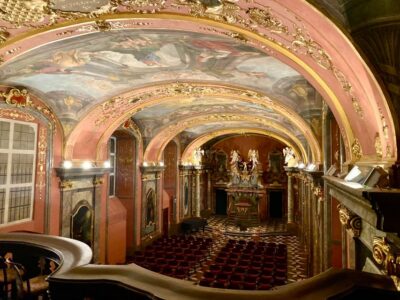 ★ 4.7Entry Ticket Classical Concert at the Mirror ChapelFrom $344,636 reviews
 ★ 4.0WOW Show Black Light TheaterFrom $313,990 reviews
 ★ 4.5Concert at Reduta Jazz ClubFrom $232,170 reviews
 ★ 4.4A. Vivaldi Four Seasons at St. Salvator ChurchFrom $341,951 reviews
 ★ 4.6Jazz Boat Cruise with Live Concert and Optional MealFrom $511,682 reviews
 ★ 4.01.5-Hour Black Light Theater Srnec PerformanceFrom $311,589 reviews
 ★ 4.8Mozart Ballroom Concert Ticket with 3-Course DinnerFrom $1221,200 reviews
 ★ 4.6Prague Castle: Midday Classical Concert at Lobkowicz PalaceFrom $281,106 reviews
Browse the lists this tour appears in