
REVIEW · PRAGUE ADVENTURE & ADRENALINE
Prague: Hurricane Factory Parachute Jump VR Simulator
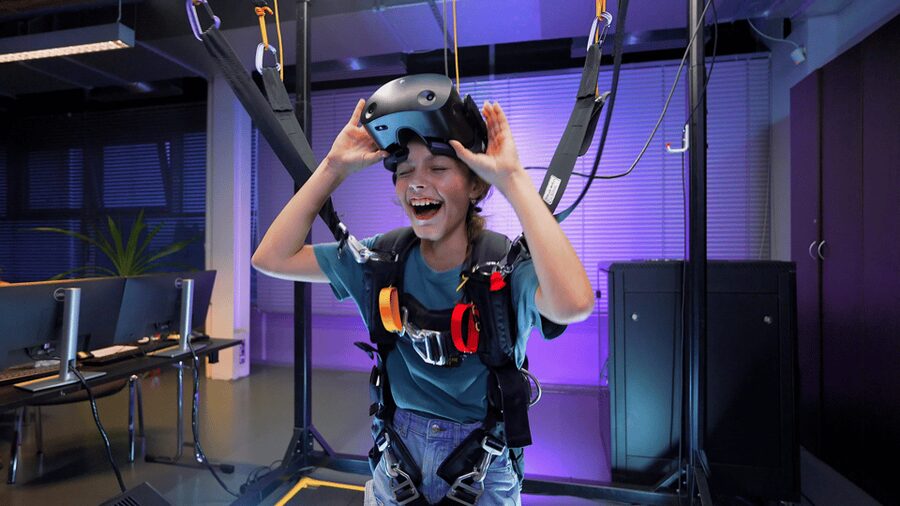
A parachute jump, minus the jump. The Hurricane Factory VR simulator recreates the feeling of a real jump using VR visuals plus a physical harness, and it is designed for parachute-jumper training rather than cheesy entertainment. Even better, it is close to Prague, so this fits easily into a day without complicated logistics.
I especially liked the realistic, hands-on gear setup. You get help getting geared up, and the harness is meant to make your body experience match what you see in VR. I also liked that the staff runs it in a small group, so you are not stuck watching someone else’s session through a crowd.
One heads-up: the price can feel steep if you expect a long “flight.” Your whole visit is about 30 minutes, and the actual VR jump is only a few minutes, so go in expecting a concentrated hit, not an extended ride.
Key things to know before you go
- Real harness, VR visuals: physical setup helps your brain buy into the experience.
- Built for parachute-jumper training: scenarios cover a range of experience levels.
- Small group (max 2): more time for instructions, less waiting around.
- Close to Prague city center: a short drive keeps this day simple.
- Body requirements: you must be over 150 cm tall to participate.
- Bring secure sports shoes: they help you stay stable during setup and movement.
Hurricane Factory: the easy Prague base for a VR parachute jump
Hurricane Factory is your meeting point for the Parachute Jump VR Simulator. The good news is how straightforward it is to reach from Prague’s city center, since you are only dealing with a short drive, not a long transfer day. That matters because this experience itself is time-efficient, so you want your travel time to be the easy part.
When you arrive, you check in and get a short briefing. Then the real work begins: the team fits you with the gear and gets you ready before you step into the simulator. If you prefer activities where you spend more time doing than wandering around, this one makes it pretty easy.
The staff can work in English and Czech, which is handy if your Czech is still in its learning phase. And since the group size is capped at two participants, you should expect more direct attention than most “tour-style” attractions.
You can also read our reviews of more tours and experiences in Prague.

Gear-up moment: what makes the harness feel real
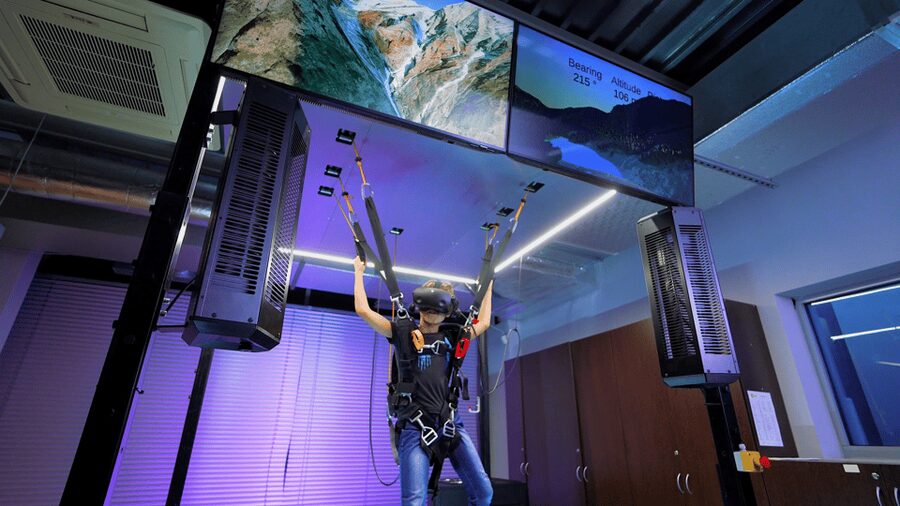
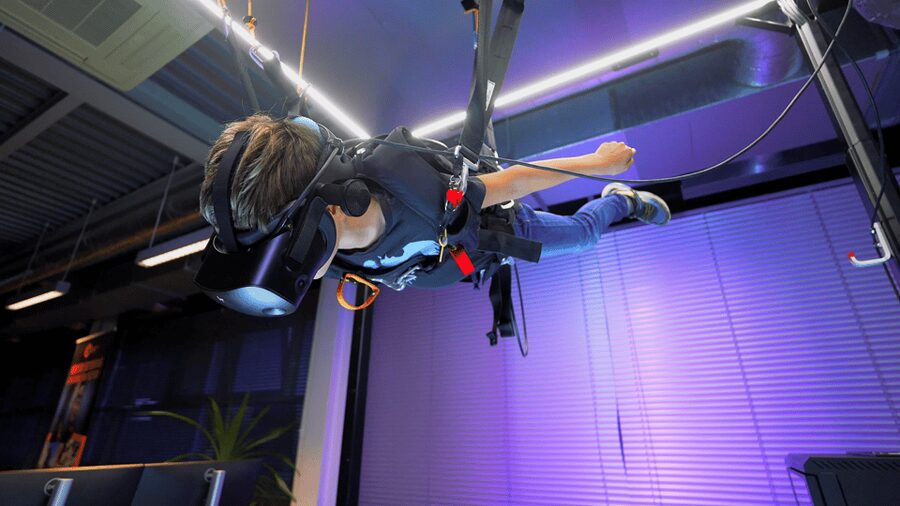
The star of this experience is not just the VR screen. It is the harness plus the way the session is structured to mimic what people feel during a parachute jump. You will use realistic equipment, and you get assistance with gearing up, which is important because the harness is not something you want to freestyle.
A practical tip: bring sports shoes with secure fastenings. If you do not have them, you can get shoes provided for free. Either way, you want footwear that helps you keep your footing during setup, movement cues, and any adjustments the team asks for.
Also note what is not allowed. The experience prohibits alcohol and drugs, which is exactly what you want for something that involves equipment and controlled movement. If you arrive feeling cautious and clear-headed, the whole session will feel smoother.
Finally, the experience is wheelchair accessible. I would still plan on arriving ready to move through the check-in and harness fitting process at a careful pace, since the session is equipment-based and safety-focused.
The “training” design: why this VR feels different
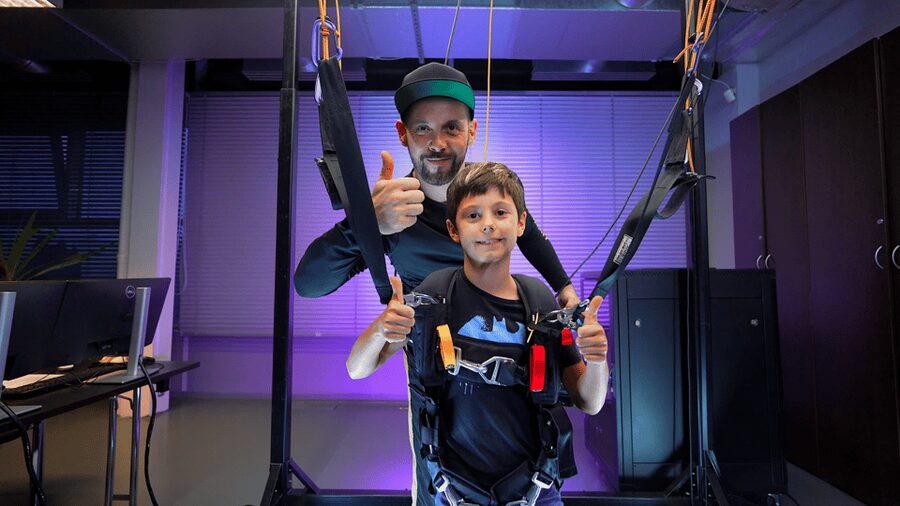
This simulator was developed specifically for training parachute jumpers. That is a big deal, because training usually means repeatable steps, clear cues, and realistic procedures. Here, VR is used to present jump scenarios in a controlled environment, so you can practice the motions and decision-making without the risks that come with the real thing.
In the training background, it is built for different levels, from complete beginners to experienced jumpers, and it has even been used in contexts for special forces soldiers. You might not need that depth for your first go, but it signals the intent: this is designed to teach and test, not just show off.
So what should you expect when the simulator starts? You get highly realistic VR visuals paired with the harness, so your body gets strong signals that match what your eyes are seeing. That combination is what helps many people feel like they are “in it,” without any actual jump happening outside the facility.
And since the group is small, your briefing and adjustments can be tailored to how you are reacting. If the first time feels a little intimidating, that is not unusual, because the simulation includes movement cues that you have never tried before.
How the 30 minutes works, and where the “few minutes” go
Your overall visit is about 30 minutes, including check-in, briefing, gearing up, and time to settle afterward. The actual simulation time is only a few minutes. This is not a full-length attraction, so do not plan your schedule expecting a long “hang time.”
Here is the flow you can plan around:
- Check-in and short briefing
- Gear fitting with staff help
- The VR parachute jump simulation
- Time to unwind, reflect, and then you leave from the same place
The “unwind” part is more valuable than it sounds. VR can hit your emotions fast, especially if you are nervous at the start, so having a moment to come down before you step back into the city is a nice built-in reset.
If you are the type who likes a quick adrenaline fix, this format works well. If you want a longer activity with repeated tries, you may feel you are done sooner than expected, because the session is designed as a single run.
Price and value: is $72 worth a short simulation?
At $72 per person, you are paying for a high-tech setup, a physical harness, and trained staff support. You are also paying for the fact that it is built for parachute-jumper training, not just casual VR play.
That said, value depends on what you want out of it. If you expected something closer to a long training session or multiple attempts, it can feel pricey for the short VR runtime. One person felt the experience did not match the time expectation, pointing out that the real action is closer to a brief window rather than a longer sequence.
For you, the smarter way to judge value is to ask two questions:
- Do you want one strong “taste” of the jump feeling, with safety and guidance?
- Or do you want a longer session with more repetition time?
If you are in the first camp, this can be a satisfying way to scratch the parachute-jump itch while keeping the day simple. If you are in the second camp, you might want to think about pairing this with another Prague activity, because you will likely finish quickly.
Also, remember you do not get transportation to and from the location included. That is normal for many experiences near a city center, but it means you should factor in your own travel costs and time.

Who should book, and who should skip it
This simulator has clear suitability rules, and I like that you get them upfront.
You must be over 150 cm tall. That includes both adults and teens, since height is the main filter. Children under 5 years are not suitable, and pregnant women are not suitable.
If you are traveling with kids or teens, parental consent is required for anyone under 18. This is a big one to confirm early if you are making plans for a family day.
For comfort and safety, I would also treat this as a “follow the rules” activity. You should expect guidance on how to move during the session, and you should arrive sober and feeling physically ready.
Wheelchair accessibility is listed, which is a plus. Still, because the session involves harness fitting and a simulator procedure, check in ahead of time with the provider if you have mobility needs beyond wheelchair access.
What you will feel in your body, not just on screen
Even without knowing the exact VR script, you can predict the key sensation: your brain is trying to match “movement” from the harness with what you see in the headset. That is why proper shoe choice matters and why staff fitting is so important. If you are slightly unstable, you will feel it.
The harness component also makes it less like a video game. It is closer to a guided physical simulation, so expect some anticipation and maybe a little hesitation when you first begin. That initial discomfort can fade once you realize the team is guiding you step-by-step.
If you are nervous about heights, this is still intense, but it is controlled. You get the thrill of the concept without the real-world jump exposure. It can be a great stepping stone if you are curious about parachute experiences but not ready for the actual thing.
Practical prep tips for your Prague VR jump day
You cannot over-prepare for something where body positioning matters.
- Wear shoes that fasten securely, or plan to get the free shoe option
- Avoid alcohol or anything that might affect coordination
- Arrive with enough time for check-in and harness fitting
- Expect the run itself to be short, then you will have a chance to reset
If you want the session to feel like the best version of itself, treat it like a focused appointment, not a casual stop. Use the time before you go to get calm, hydrated, and ready. Your experience will feel better when you are not rushed.
Also, since the session is only a small group of two, you will likely share the simulator time with just one other person. If you like quieter, more personal activities, that setup is a good match.
Should I book the Prague Hurricane Factory Parachute Jump Simulator?
Book it if you want a safe, guided way to experience the feeling of a parachute jump with a realistic harness, close to Prague, and with staff support in English or Czech. The small group format and the training design are the big reasons this can be worth your money.
Think twice if your main goal is a long session or multiple tries, because the total visit is about 30 minutes and the actual VR simulation is only a few minutes. If you are the type who measures value by time spent in the main action, you may leave feeling it went by fast.
FAQ
Where is the Hurricane Factory Parachute Jump VR Simulator located?
The meeting point is Hurricane Factory, in the Central Bohemian Region of the Czech Republic.
How long does the experience take?
The activity lasts around 30 minutes in total, and the actual simulation time is a few minutes.
How much does it cost?
The price is $72 per person.
What’s included in the experience?
You get a short briefing, all necessary equipment, and experienced staff assistance.
Do I need to bring anything?
Bring sports shoes that can be securely fastened. If you do not have them, you can be provided shoes for free. All necessary gear is otherwise provided.
Is it suitable for kids?
Children under 5 years are not suitable. For anyone under 18, parental consent is required. Suitability also depends on height.
What are the height requirements?
It is suitable for anyone over 150 cm tall.
Is it safe regarding alcohol and drugs?
Alcohol and drugs are not allowed.
What languages and group size should I expect?
The instructor speaks Czech and English. The group is limited to 2 participants.
Final verdict: quick yes, or quick maybe?
If you want one guided, VR-based parachute-jump taste with real harness gear and a small-group feel, this is a solid pick near Prague. If you are chasing a long, repeatable “flight” session, I would approach with caution, because most of the work and time is set up around a short simulation run.
More Tour Reviews in Prague
Not for you? Here's more nearby things to do in Prague we have reviewed









Prague Adventure & Adrenaline, compared.
 ★ 5.0Shooting Range Prague – RANGER PragueFrom $1024,344 reviews
 ★ 4.9Shooting Range Experience with up to 10 GunsFrom $961,231 reviews
 ★ 5.0All Inclusive Shooting Packages | Transportation & Snack incl.From $139938 reviews
 ★ 4.5Tandem Skydiving Adventure in PragueFrom $254141 reviews
★ 4.9Tandem Skydiving Adventure in PragueFrom $238136 reviews
 ★ 4.73-Hour Shooting Range ExperienceFrom $119128 reviews
 ★ 4.9Shooting Range ExperienceFrom $10098 reviews
 ★ 5.0Ak47 shooting experienceFrom $12646 reviews
Browse the lists this tour appears in