
REVIEW · PRAGUE WALKING TOURS
Prague: Highlights Walking Tour to the German embassy 1989
A balcony can change everything. This 150-minute Prague highlights walking tour strings together major sights with the story of the fall of the Iron Curtain in Prague, including the John Lennon Wall, Jan Palach and the 1989 refugee escape route. You’ll also spend real time looking toward the German embassy area, including the spot connected to Hans-Dietrich Genscher, while still getting classic photo wins like the Charles Bridge walk.
My favorite part is how the route hits both famous postcards and the specific places you want for the 20th-century story. The one thing to plan around: the German embassy interior is not open to the public, so you’re viewing from the outside rather than touring inside.
Key highlights that make this tour worth your time
- German embassy balcony focus tied to Hans-Dietrich Genscher, with the emotion of being there where history happened
- Charles Bridge crossing plus guided context as you look toward the embassy buildings
- John Lennon Wall and Lennon Wall homage in the middle of a broader political story
- Jan Palach Square and the Prague Spring connection to 1968 and how events unfolded
- Velvet Revolution Memorial stop that helps you connect 1989 to what came before
- Old Town, Lesser Town, and Josefov covered on foot, so you get a dense, efficient city-center loop
Where this tour fits on a first or return trip
This is a good choice when you want Prague’s big names, but you also want meaning behind them. Instead of just telling you which church is pretty, the guide ties the city-center streets to the rise and fall of communism in Central Europe and the refugee crisis that brought East German citizens to Prague to reach the West German Embassy.
If you’ve got limited time, you get a lot in 150 minutes. You also get a built-in “why” for stops that can otherwise feel like random monuments in a hurry. It’s especially satisfying if you care about the moment 1989 changed the mood across Europe, not just the dates.
One more practical note: this is a walking route through busy central neighborhoods, including Old Town, Lesser Town, and Josefov. It is not suitable for people with mobility impairments, so plan accordingly.
Meeting point, pickup options, and how to arrive without stress
You meet in front of the Faculty of Law. If you arrive by metro, get off at Staromětká station, which is about 550 meters from the meeting point. Prefer tram? Take tram number 17 and get off at Pravnicka Fakulta.
There’s also pickup, but it is optional. Depending on what you choose, pickup can be at a hotel in Prague 1, 2, or 3, or in the city center near the metro station Můstek. You can also start at the Faculty of Law itself at nám. Curieových 7.
The start is easy to reach, but Prague’s center is made for walking, so give yourself a little buffer. Even when the directions are simple, you’ll be on foot right away.
The first leg: Čech’s Bridge and the “set the scene” photo stop
The tour begins with a brief stop at Čech’s Bridge for photos and guided orientation (about 10 minutes). This is the kind of start that helps you get your bearings fast, so the rest of the route feels connected rather than scattered.
What I like about a warm-up stop like this is that the guide can set the tone early: you’re not just sightseeing, you’re following a narrative through Prague’s urban layout. You’ll likely get a clear idea of where you’ll be headed next, and why that matters to the 1989 theme.
Old Jewish Cemetery and Josefov: turning streets into memory
Next you move toward the Old Jewish Cemetery for a photo stop (about 10 minutes), then on to Josefov for another short photo stop (about 10 minutes).
These stops are quick, but they’re meaningful within this particular tour. The Jewish quarter, the cemetery, and Josefov are part of the larger Prague story that stretches beyond any single political era. On this walking route, the guide uses these areas to remind you that Prague’s 20th-century history plays out over real communities and real neighborhoods, not just in government buildings and headlines.
Tip for this part: take your time with photos, but also look up. Prague’s center rewards glances above street level.
Jan Palach Square: 1968 in your head as you walk
At Jan Palach Square, you’ll have another photo stop plus guided tour time (about 10 minutes). This is where the tour starts to lean hard into the 1968 thread.
You’ll learn about Jan Palach, a student connected to the Faculty of Philosophy, and how his story fits into the Prague Spring of 1968. This matters because it gives you a longer view of resistance and political pressure before you reach the 1989 turning point.
If you only know the headlines about communism falling, this stop can change how you understand the pressure that people lived with for years.
Velvet Revolution Memorial: connecting 1989 to what led there
Your next “history anchor” is the Velvet Revolution Memorial (photo stop and guided tour, about 15 minutes). This stop helps connect what you’re learning about the late 1980s to earlier tensions and public longing for change.
Even though the time is limited, you’ll get enough guided context to make sense of why the tour keeps returning to specific places. The story is not abstract here. It’s grounded in physical points on the map.
Charles Bridge walk: classic Prague views with a political lens
Now the itinerary swings back to one of Prague’s most famous sights, the Charles Bridge (about 15 minutes including photo stop, guided tour, sightseeing, and walking).
This is your chance to see the bridge up close rather than as a distant postcard. It also becomes more than scenic. As you cross, the guide points you toward how the city’s layout relates to the embassy area you’ll see later.
What you’ll enjoy most here is the combination: you get the famous views, and you also get a sense of direction for the next stage of the tour. If Prague is your first stop in Czech Republic, this is the moment you’ll feel the “I get it now” factor.
John Lennon Wall: art, memory, and the push-pull of politics
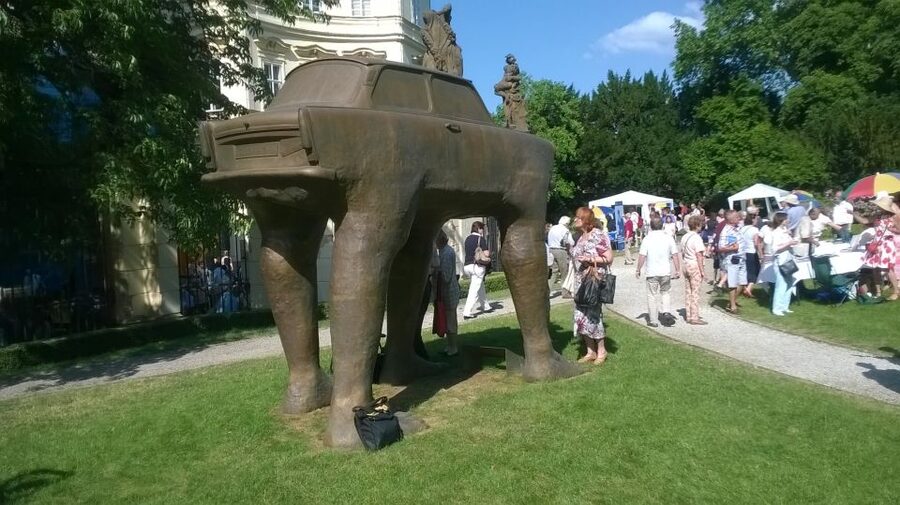
At the John Lennon Wall you’ll spend about 10 minutes (photo stop, guided tour, sightseeing). The tour focuses on the homage displayed there, and the guide’s framing ties it to the broader push and pull of political life in the era.
This is one of those stops that can feel like just a street scene if you don’t get context. With guided explanation, it lands differently. You start to notice how public spaces in Prague can act like bulletin boards for values, frustration, and hope.
If you’re the type who likes photographing street art, this is also your best place on the route for that kind of shot.
Wenceslas Square and the National Museum moment
Next: Wenceslas Square (about 15 minutes total, including visit and guided tour time). Then there’s a quick photo stop at the Prague National Museum (about 5 minutes).
Wenceslas Square is one of those central places where you can feel the scale of Prague’s city life. On this tour, it’s used as a major backdrop while the guide continues the story of the era. You’re not stopping just to say you were there. You’re stopping because it helps explain the atmosphere and the public-facing side of politics.
Practical tip: this area can be busy. Keep your group flow in mind, and don’t linger in a place where you slow the line too much.
Malostranské Square and the final approach to the embassy
You’ll have a photo stop at Malostranské Square (about 5 minutes), then move on foot for around 10 minutes as you make your way toward the embassy area.
This segment matters because it’s the walk from “big square Prague” into “historic core Prague,” then into a more focused, specific destination. By the time you reach the embassy exterior, you’ll feel like you’ve been walking toward something, not just ticking boxes.
German Embassy in Prague: seeing the balcony-linked story from the outside
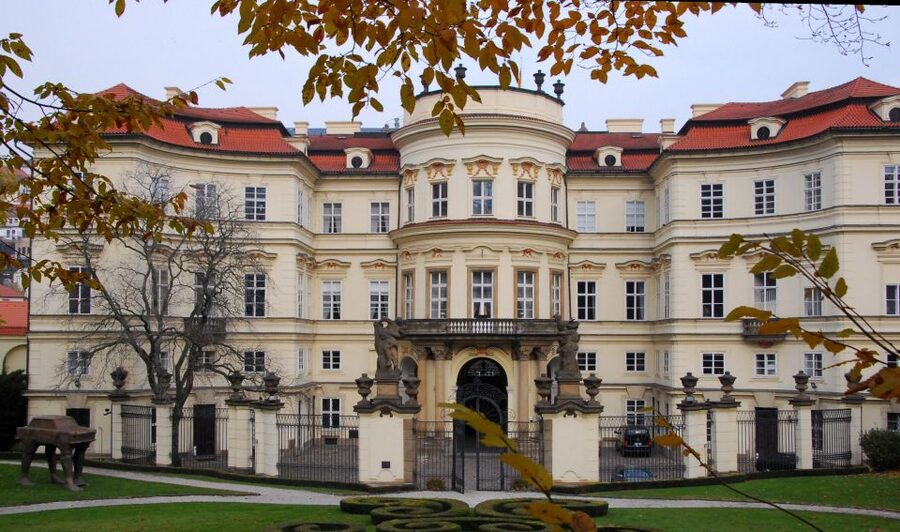
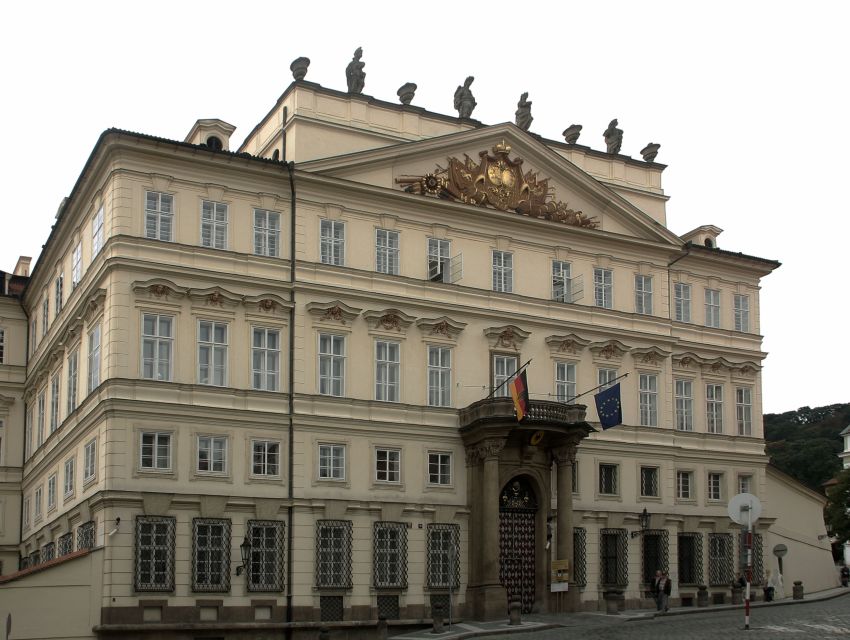
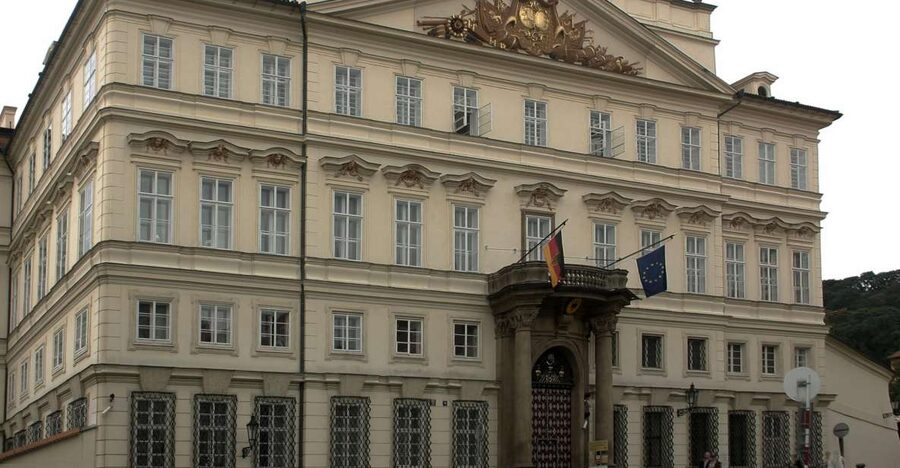
The tour culminates at the Embassy of Germany, Prague with a photo stop and sightseeing time (about 10 minutes). You’ll look from the outside at the embassy buildings and the area connected with the famous balcony where Hans-Dietrich Genscher made his speech.
One key detail to set expectations: the embassy interior is not open to the public. So you’re not touring the building, and you’re not going inside. What you are doing is standing in the right place to connect the refugee story and 1989 moment to Prague’s streets.
That outside view is the payoff. It’s also what makes this tour feel different from a standard walking loop. When you add the Charles Bridge approach and the earlier stops about 1968 and public resistance, the embassy stop becomes the storyline’s final scene.
And if you’ve ever wondered why people get emotional about this topic, the Genscher balcony connection is a big part of it. One of the tour’s standout themes is exactly that emotional return to a location tied to a family memory of hearing the news long ago.
Duration and pace: what 150 minutes actually feels like
150 minutes is long enough to do a proper city-center loop, but short enough to keep energy up. This isn’t a museum-heavy day. It’s a walking tour made for moving through neighborhoods and stopping frequently for photos, short guided context, and orientation.
Times on the route add up across multiple photo stops. The most intense feeling of walking is likely when you cross the bridge and later move on foot toward the embassy. The good news: you get stops that break the walking, so you’re not stuck moving nonstop.
Who this tour suits best
This experience is a strong fit if:
- You want Prague highlights plus political history tied to real places
- You care about 1989 in Prague, including the West German Embassy and the refugee crisis story
- You want a guided explanation that connects locations like Jan Palach Square, Velvet Revolution Memorial, and John Lennon Wall
- You’re traveling with someone who likes meaningful stops, not just scenery
It may be less ideal if you:
- Need step-free or low-mobility accommodations, since it is not suitable for people with mobility impairments
- Prefer purely relaxing sightseeing with no heavy historical framing
Price and value: $32 for a tight, place-based story
At $32 per person, this tour is priced like a budget-friendly guided walk, not a premium private excursion. The value comes from two things.
First, you’re getting a licensed German-speaking guide, and that guide is doing more than reciting facts. The route is built around connecting major locations to the political story of the era.
Second, you’re covering multiple central neighborhoods in one go, including Old Town, Lesser Town, and Josefov. For many visitors, that density is the real bargain. You spend one morning or afternoon walking with purpose rather than planning multiple separate outings.
If you want a quick way to understand why Prague still matters to 1989, the price feels fair for what you get.
What you should wear and bring
The tour is walking-focused, so wear comfortable shoes. Bring a camera for the bridge and the embassy exterior. If you’re sensitive to crowds, plan your pace during Wenceslas Square and Charles Bridge since those are high-traffic spots.
Also, bring the question you care about most. Is your main interest the Iron Curtain story, 1968, or the embassy balcony moment? The guide can keep the narrative centered if you ask.
Should you book Prague Highlights Walking Tour to the German Embassy 1989?
Book it if you want Prague’s best-known sights with clear context, especially if Hans-Dietrich Genscher’s balcony and the 1989 refugee route are on your must-see list. This tour is made for people who like their sightseeing connected to real stories, not just views.
Skip it or look for another option if you need step-free access, since it is not suitable for mobility impairments. Also skip it if you’d be disappointed by not seeing the embassy interior, because that portion is outside viewing only.
If your schedule allows a 150-minute walk and you want a guided “map of meaning” through Prague’s center, this is a solid, efficient way to do it.
FAQ
What is the duration of the Prague Highlights Walking Tour to the German Embassy 1989?
The tour lasts 150 minutes.
How much does the tour cost?
The price is $32 per person.
Is hotel pickup included?
Hotel pickup and drop-off are not included, but pickup can be optional in Prague 1, 2, 3, or in the city center near Můstek. Pickup is also available at the Faculty of Law area.
Where do I meet the tour?
Meet in front of the Faculty of Law. If you come by metro, get off at Staromětká (about 550 meters away). By tram, take tram 17 and get off at Pravnicka Fakulta.
Does the tour include a visit inside the German embassy?
No. The embassy interior is not open to the public, so you only see it from the outside.
What language is the tour guide?
The tour is in German.
Are food and drinks included?
No. Food and drinks are not included.
Is the tour suitable for people with mobility impairments?
No, it is not suitable for people with mobility impairments.
Can I cancel for a refund?
Yes. You can cancel up to 24 hours in advance for a full refund.
Prague Walking Tours, compared.
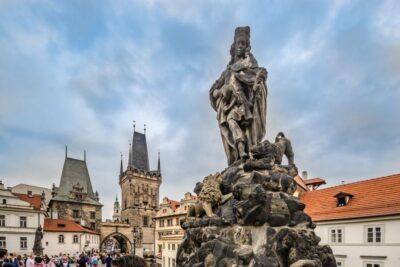 ★ 4.73-Hour Walking Tour of Old Town & Prague CastleFrom $305,696 reviews
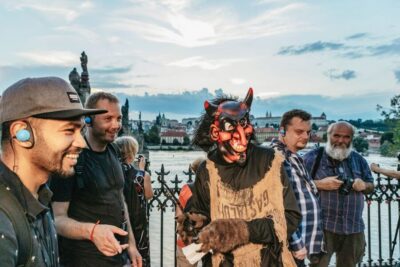 ★ 4.4Ghost Walking Tour Where Legends Come To LifeFrom $275,253 reviews
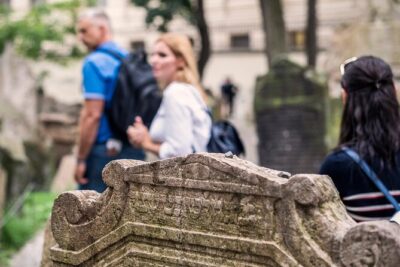 ★ 4.7Jewish Quarter Walking Tour with Admission TicketsFrom $763,729 reviews
 ★ 5.0Prague Guided Walking Tour and Cruise with Authentic Czech LunchFrom $1023,627 reviews
 ★ 4.6Old Town and Jewish Quarter Guided Walking TourFrom $222,847 reviews
 ★ 4.5Prague Ghost and Legend of Old Town Walking TourFrom $212,630 reviews
 ★ 5.0Prague 3-hour Afternoon Walking Tour including Prague CastleFrom $531,899 reviews
 ★ 4.7Ghosts and Legends Nighttime Guided Walking TourFrom $221,462 reviews
Browse the lists this tour appears in