
REVIEW · PRAGUE ATTRACTION TICKETS
Prague: Clam-Gallas Palace Entry Ticket with Audio Guide
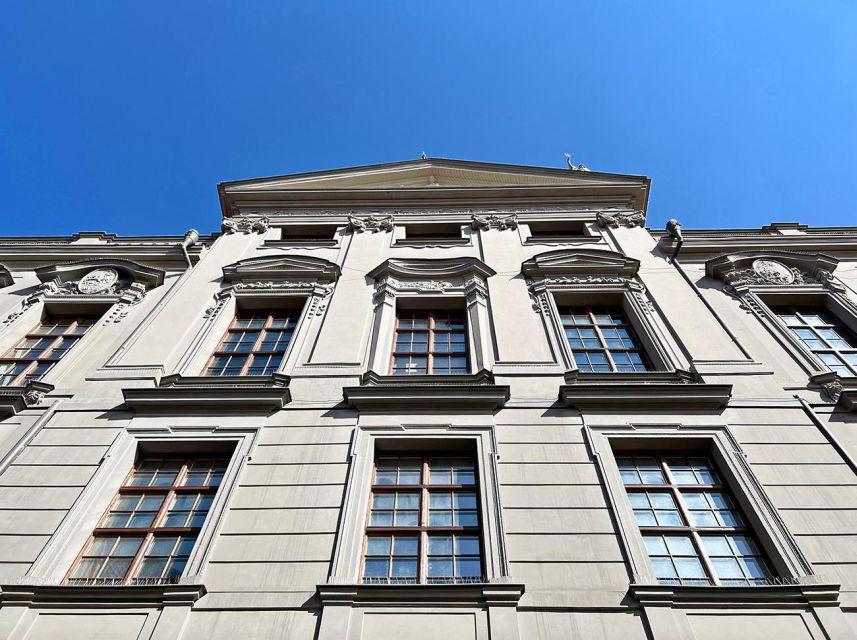
Prague’s baroque grandeur feels surprisingly close at hand. The Clam-Gallas Palace entry ticket is one of the best ways to see a top-tier palace interior, with Carlo Carlone artwork and a self-paced visit through the piano nobile. I also like that the audio guide is built for your own timing, with texts that go beyond the highlights.
One thing to keep in mind: if you need lots of interactive exhibits or a long, stuffed itinerary, this is more about detailed room-by-room looking than big spectacle, and the palace is not suitable for wheelchair users or people with mobility impairments.
Key takeaways before you go
- Audio guide you can use on your phone or swap for a kit, right inside the palace
- Baroque design by Johann Bernard Fischer from Erlach, built 1713 to 1718
- Carlo Carlone and Matyáš Bernard Braun workshop decoration, focused on the artwork in the rooms
- Piano nobile highlights in the west wing, plus a conservatory space in the north wing
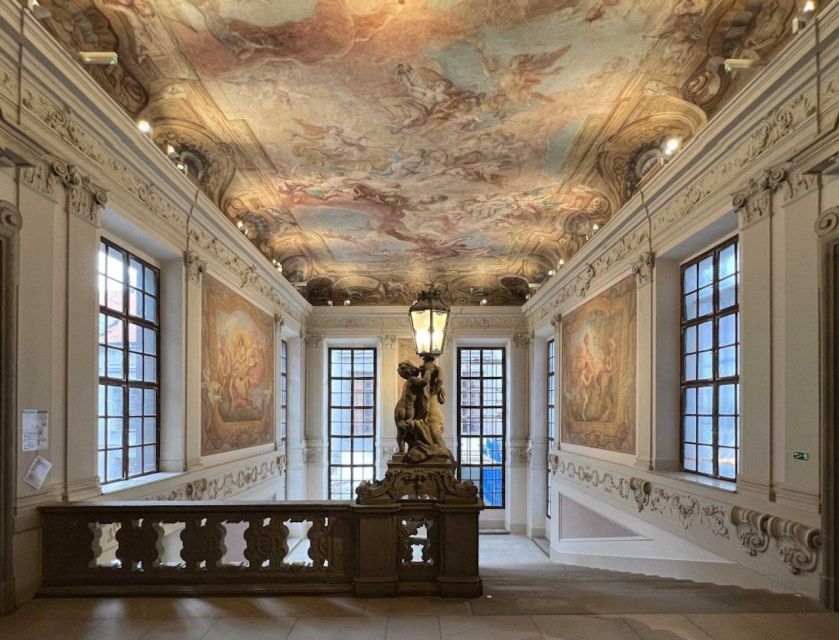
- Ceremonial staircase to the 2nd floor, built to make cramped old town structures feel clever
- Finishes in the courtyard on fine weather, so the visit ends with space, not just walls
Clam-Gallas Palace: a top baroque interior for $8
For $8 per person, you’re buying entry into one of Prague’s best-preserved baroque palaces, not just a quick photo stop. The palace was built between 1713 and 1718, following a design attributed to Johann Bernard Fischer from Erlach, and later decorated by Carlo Carlone and the workshop of Matyáš Bernard Braun. That combination matters: you’re not looking at a modern reconstruction, you’re looking at a real palace with its layers still visible.
The ticket is valid for 1 day, with starting times based on availability. The good news is that this is designed as a self-guided route, so you can move at a steady pace, stop when something catches your eye, and keep going when you’re ready.
The tone inside is also different from many museum visits. This one leans into how the palace rooms functioned, including later adjustments that made life comfortable for the noble family, so you’ll be reading the building as well as admiring it.
More Prague city tours, river trips, and Czech day trips to compare
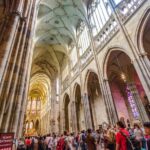

Your visit, timed by an audio guide (not a group)
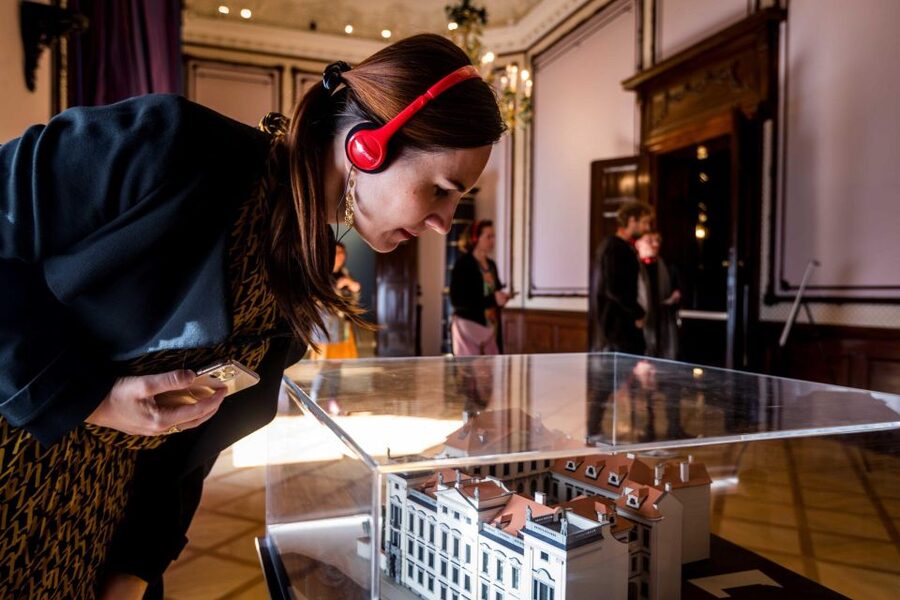
What I like most here is control. This experience is set up for individual audio guide tours, and you can use the audio guide on your smartphone by downloading it right in the palace. If your phone setup is tricky, you can get an audio kit on-site, and headphones are available for rent there too.
Why that’s valuable: the palace is visually busy. If you walk too fast, you miss the small story beats like the restored fittings on doorways or what was changed for later use. The audio guide gives you a way to slow down without committing to a fixed tour pace.
The audio guide also offers more extensive texts if you want extra depth. The languages are English and Czech, so it works well for mixed groups or couples who want to hear the details in different languages.
Start in the west wing: the piano nobile and north wing conservatory
The main route is built around the piano nobile in the west wing, plus a conservatory in the north wing. If you’re new to palace layouts, this is the moment to pay attention, because these terms are not just fancy names. The piano nobile was the “main floor,” where the most important rooms were located and where ceremonies and daily status played out.
On this visit, you’ll walk through representative premises at your own pace. The stops are organized so you understand the palace as a sequence, not a set of disconnected rooms. Even when the route feels like a straight line, the audio guide helps you notice what changed over time and how those changes were integrated into the original structure.
In practical terms, keep your eyes up and your eyes ahead. Baroque palaces often reward people who look diagonally, not only straight-on. You’ll want to glance from the artworks to the sculpted and stucco details, then back to the walls, because the decoration is meant to be seen in layers.
The ceremonial staircase: your “wow” moment on the way up
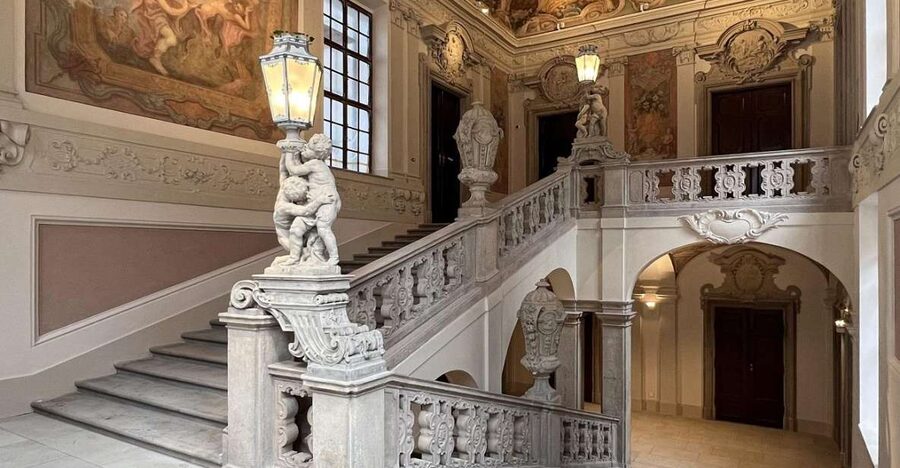
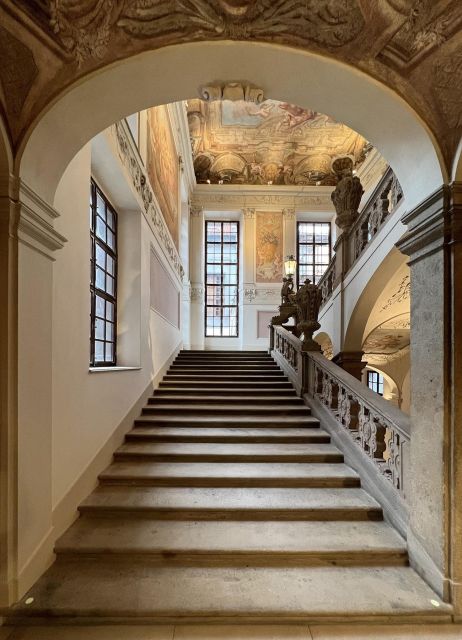
The route includes a climb of the majestic ceremonial staircase to the 2nd floor. This section is more than a connector to the next rooms. It’s designed to show you how the builder, Fischer from Erlach, handled the reality of old town building density.
That’s a useful thing to notice: when a palace is squeezed by existing streets and buildings, the architecture has to negotiate space. Standing partway up the staircase, you can get a feel for that challenge, then connect it to the way the upper floors were arranged.
The staircase also sets a pace shift. You move from room-based looking into a more vertical sense of scale, which helps you understand why the next rooms feel so deliberate and grand.
Antecamera and the palace theater adaptation
On the 2nd floor experience, the audio route begins by entering the antecamera, or an anteroom. Here’s a detail I’d bet you’ll enjoy if you like the history of how spaces get reused: the anteroom was adapted for the needs of the palace theater at the beginning of the 19th century.
So you’re seeing a baroque palace, but you’re also seeing a palace that learned new tricks later. This is exactly the kind of mixed-era layer that makes self-guided audio tours valuable. Without a guide, you might assume every room was always meant for one purpose. With the audio, you get the sense of time passing inside the building.
Then you move into the adjacent Golden and Turquoise Halls, where the restored elements take center stage.
You can also read our reviews of more guided tours in Prague





Golden and Turquoise Halls: restored details you can actually spot
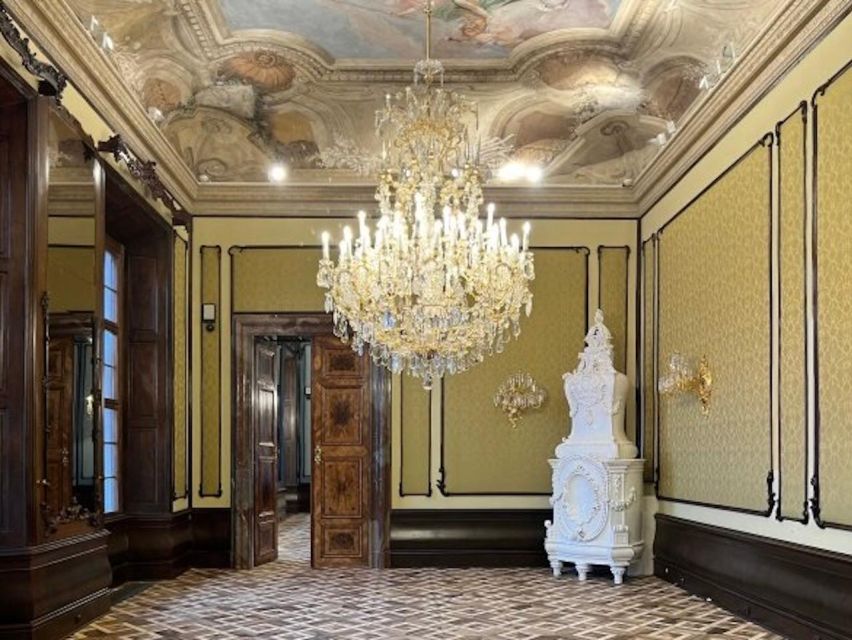
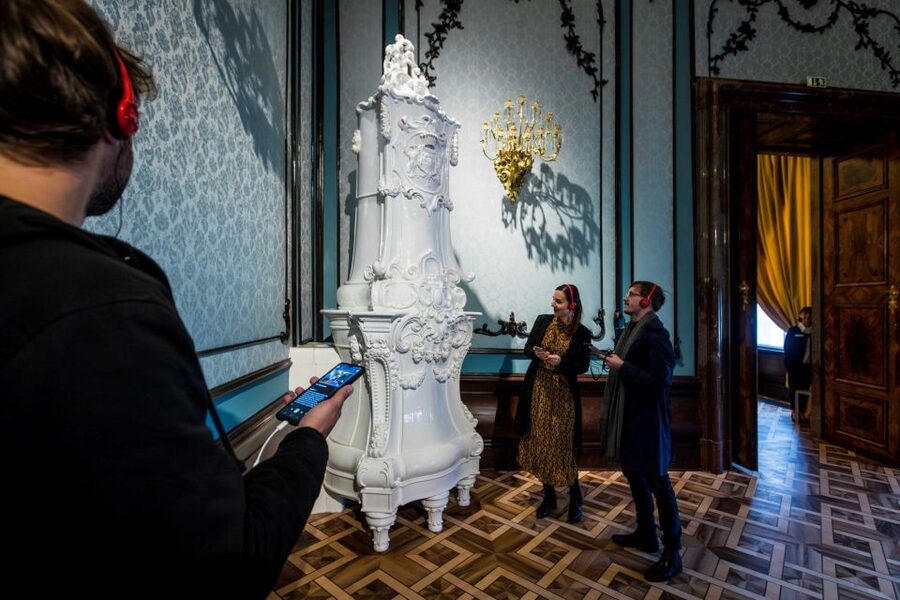
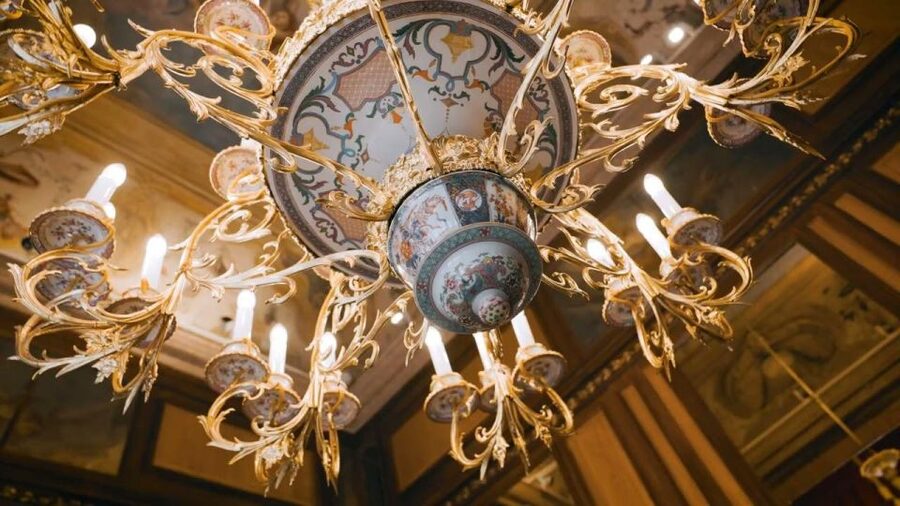
The Golden and Turquoise Halls impressed with restored elements of the interior, including tiled stoves, hanging lamps, and fittings on the doors. That’s the kind of information that changes how you look. Instead of viewing a room as “pretty,” you start scanning for specific objects and build a mental inventory of what was restored and why it matters.
This is also where I’d advise you to take your time with lighting. Hanging lamps and wall surfaces can make photos misleading. If you rely only on pictures, you can miss the subtlety of how the surfaces reflect light and how the decoration was preserved.
If you’re the type who likes architecture and interiors more than art history lectures, this section is a good match. The audio gives you cues, and the rooms give you the payoff.
Marble Hall and the Chinese Lounge: the palace’s playful contrast
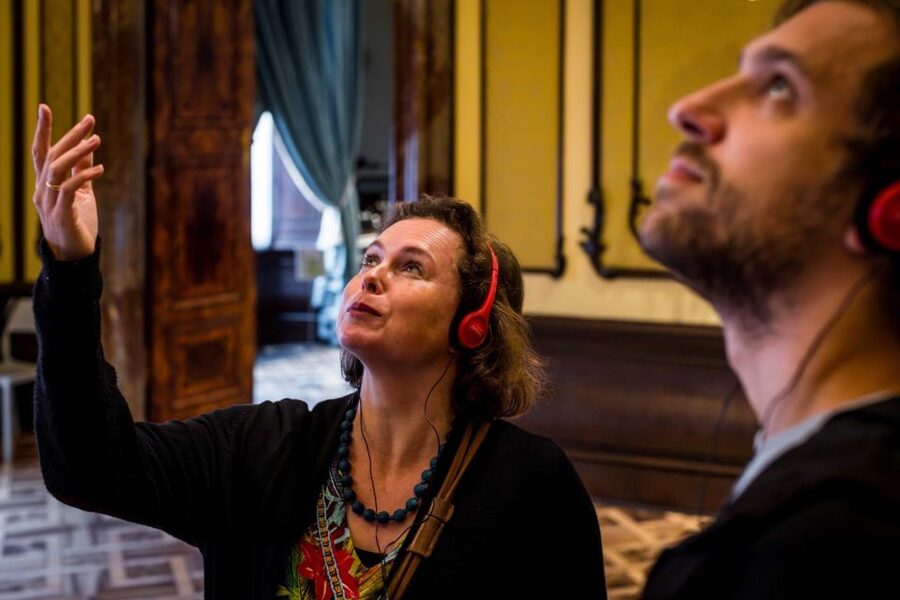
Next up is the Marble Hall, known for its airiness and whiteness, plus a hidden charm that feels like surprise. Adjacent to it is the Chinese Lounge, which adds a different flavor to the route.
That pairing is a clever way to keep your senses awake. Baroque interiors can feel like they run on the same visual notes, but the route changes character from room to room. Marble Hall’s brightness and Chinese Lounge’s thematic feel create a “contrast ladder” that helps you remember the visit later as a sequence, not a blur.
If you’re prone to getting museum fatigue, this kind of room-to-room shift is an underrated benefit. You don’t need to force your attention, because the palace does it for you.
Winter garden rooms and the courtyard finish
Near the end of the tour, you’ll visit two rooms adapted to a winter garden in the first third of the 19th century. These changes matter because they show the palace evolving. The original baroque shell didn’t freeze at one time period. It got repurposed for comfort and seasonal life.
Then, if the weather is fine, the route ends in the courtyard. That final transition is practical and emotional. You stop looking at ceiling-to-floor decoration and get a sense of scale again, with open air and space that makes the palace feel bigger, not just taller.
Even if your day includes overcast weather, the route structure still gives you a gradual release of intensity. The courtyard finish just turns that release into something more memorable.
What this ticket includes, and what it doesn’t
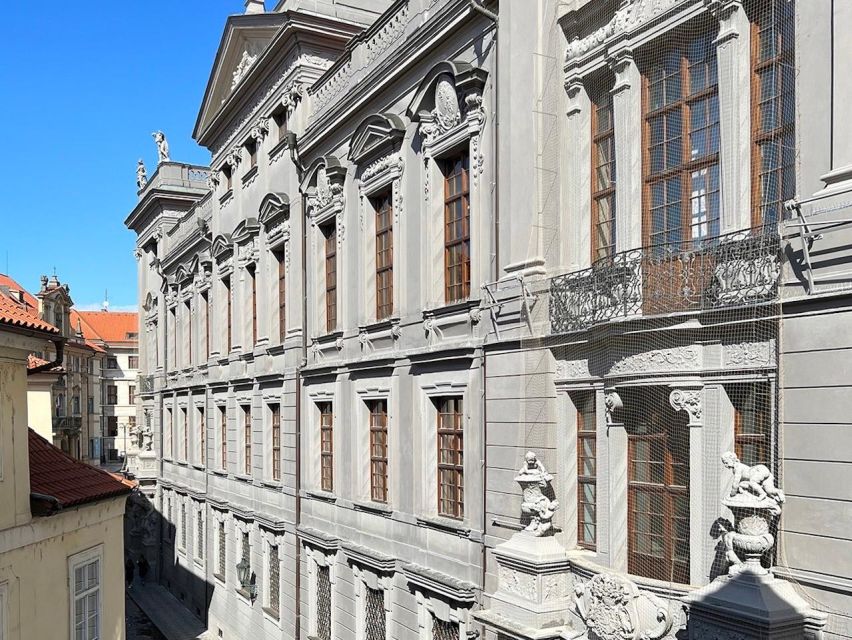
You get Clam-Gallas Palace entry plus the audio guide. If you can’t use your smartphone, you can rent an audio kit on-site, and headphones can be rented too.
What you don’t get is a live guide. That’s not a downside by default. It just means you should be ready to read the room through audio, not through conversation. If you love back-and-forth questions, you may prefer a different format in Prague.
The host or greeter is listed for English, so you’ll have help on the ground if you need it. That support matters most at the start, when you’re deciding whether to use your phone audio or the rental kit.
Crowd levels: built for quiet pacing
One of the nicer surprises from people’s experiences is that the visit can feel calm when you choose the right time slot. That’s not something I’d promise every day, but the fact that the experience is self-paced means you’re less stuck in a crowd than you would be on a strict guided group tour.
My practical advice: pick a starting time that gives you breathing room. If you’re touring multiple sites in Prague, don’t stack this back-to-back with another heavy indoor museum. Clam-Gallas is best when you can spend time looking.
Accessibility: plan a different option if needed
This experience is not suitable for people with mobility impairments and wheelchair users. Baby strollers are also not allowed.
So if accessibility matters for your group, you’ll want to choose a different palace option or a different type of tour. The good news is that Prague has many alternatives, but this specific one is clearly not designed for wheelchair access.
Price and value: why $8 is such a fair deal here
At $8 per person, the value is strong for three reasons.
First, you get access to a high-quality baroque palace where the decoration and layout are the main event. You’re not paying mainly for a single highlighted room. The route takes you through multiple wings and floors, including the staircase experience.
Second, the audio guide changes the deal. Without audio, this kind of palace can turn into “pretty walls.” With audio, you get context for why rooms exist, why they were changed, and what to notice in the details.
Third, it’s low-pressure. You can take your time. You can step away. You can return to a room if you want a second look. That flexibility matters when you’re tired, jet-lagged, or just easily distracted (in a good way).
Also, the overall rating is 4.6 with 115 reviews, which suggests people generally find the experience worth the money and the self-guided format.
Who should book this ticket (and who might not love it)
This is a great fit if you:
- Like baroque interiors where details matter
- Want an audio guide that explains more than just the headline highlights
- Enjoy a slower pace and room-to-room contrasts like Marble Hall and Chinese Lounge
- Appreciate how palaces changed over time, like the theater adaptation in the anteroom and the winter garden rooms
It might not be your best choice if you:
- Expect a longer, more crowded program with lots of interactive exhibits
- Prefer a live guide who can answer questions in real time
- Need wheelchair access or step-free routes
That second group is real, and it’s worth taking seriously. One person’s take was that there is much less to see than they expected, which is a reminder to set your expectations: this is about careful attention to a preserved interior, not a theme-park style tour.
Should you book Clam-Gallas Palace with audio?
If you want a high-value Prague interior, I’d book it. The self-paced audio guide, the piano nobile rooms, and the standout areas like the Golden and Turquoise Halls, Marble Hall, and Chinese Lounge make this ticket feel like more than a checklist stop. At $8, you’re paying for a proper slice of baroque palace atmosphere, plus context you can actually use as you look.
Skip it only if your day plan needs lots of action, hands-on displays, or a live guide, or if accessibility is an issue for your group. Otherwise, this is one of those Prague experiences that rewards calm attention, and that’s a rare kind of value in a city full of big sights.
FAQ
Where is the Clam-Gallas Palace located?
It’s in the central Bohemian region of the Czech Republic, in Prague.
How much is the ticket?
The price is listed as $8 per person.
How long does the experience take?
The duration is 1 day.
What’s included with my ticket?
Your ticket includes entry to Clam-Gallas Palace and an audio guide. Audio kit rental is available if you cannot use your smartphone.
Is there a live guide included?
No. A live guide is not included.
What languages are available for the audio guide?
The audio guide is available in English and Czech.
Can I use headphones during the visit?
Yes. Headphones can be rented on-site.
Can I download the audio guide on my phone inside the palace?
Yes. You can download the audio guide to your smartphone right in the palace.
Is the palace wheelchair accessible?
No. The experience is not suitable for wheelchair users.
Are baby strollers allowed?
No. Baby strollers are not allowed.
More Guided Tours in Prague
More Tickets in Prague


More Tour Reviews in Prague


Not for you? Here's more nearby things to do in Prague we have reviewed











Prague Attraction Tickets, compared.
 ★ 4.3Skip-the-line Castle Ticket and Optional AudioGuideFrom $3511,121 reviews
 ★ 4.6Castle Tour with Local Guide and Entry TicketFrom $6110,422 reviews
 ★ 4.7Prague Castle 2.5-Hour Tour Including Admission TicketFrom $578,927 reviews
 ★ 4.5Old Town Hall Tower Entry TicketFrom $216,749 reviews
 ★ 4.1Entry ticket to Ice Pub Prague with Nightclub OptionFrom $145,273 reviews
 ★ 4.4Prague Castle and Lobkowicz Palace Entry TicketsFrom $385,066 reviews
 ★ 4.7Entry Ticket Classical Concert at the Mirror ChapelFrom $344,636 reviews
 ★ 4.3Museum of Fantastic Illusions Entry TicketFrom $174,337 reviews
Browse the lists this tour appears in