
REVIEW · PRAGUE WALKING TOURS
Prague Art Nouveau and Cubism Walking Tour
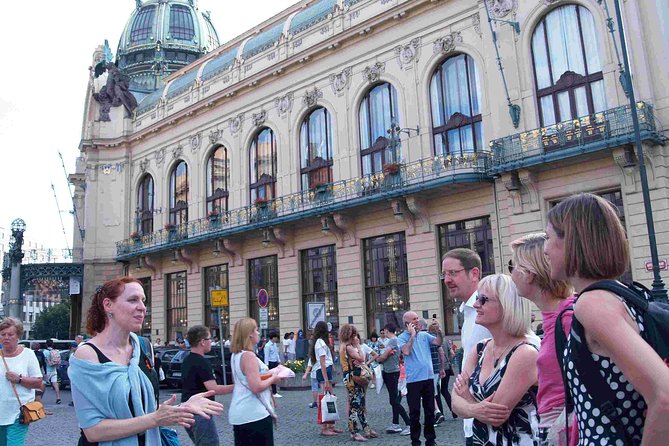
Prague turns buildings into a street-level art lesson. This Prague Art Nouveau and Cubism walking tour helps you read façades like a diagram, from ginkgo biloba leaf details to the style’s oriental hints, and then connects it to Prague’s Cubist and Rondo-Cubist architecture. I especially liked how the walk spotlights the social side of design, since so many Art Nouveau buildings were cafés, bars, hotels, and train-station hangouts used by the city’s pre-war elite. You’ll also see major interiors and cocktail-culture landmarks like Lucerna Bar and the elegant Grand Hotel Europa, with expert storytelling from guides such as Robert and Vadim Erent, and sometimes Bonita.
That said, the pace is brisk for a reason. In 3 hours you cover a lot of ground, so if you want long, slow façade reading or extra photo time at each stop, you might feel a little rushed.
Key Things I’d Prioritize Before You Go
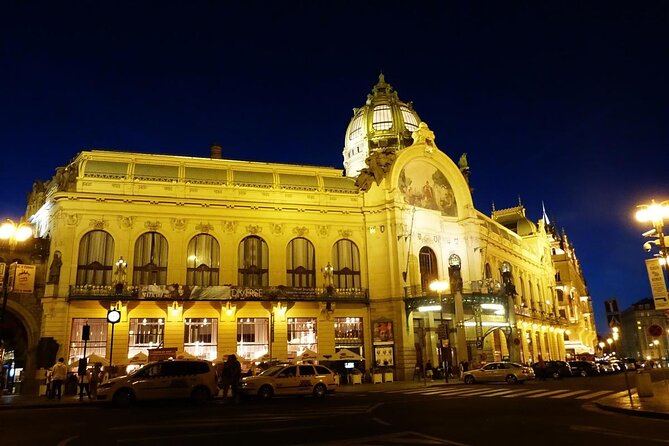
- You learn to spot Art Nouveau details fast, not just admire them
- Lucerna Bar and Grand Hotel Europa give you real “where people met” context
- Cubism in parallel helps you see Prague’s modern identity right on the street
- Expert guides with real research backgrounds keep the facts clear and the mood light
- The walk stays moving, so plan for quick looks and short stops
Art Nouveau Meets Cubism, Prague Style
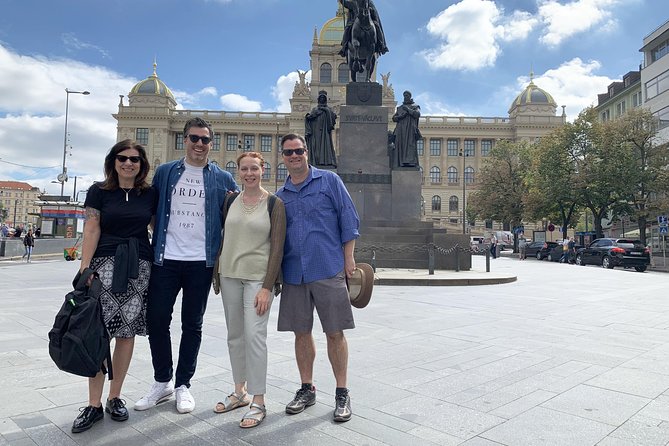
Prague’s turn-of-the-20th-century architecture is not just pretty. It’s a time capsule of ambition. Art Nouveau rose in the late 1800s as a broad European trend, and Prague adopted it with gusto. Then, as tastes shifted, Cubism and Rondo-Cubist forms took over parts of the city’s visual language.
What I like about this tour is that it treats architecture as culture, not trivia. You’re not only learning what a building looks like. You’re learning why it looks that way, and who used spaces like cafés, hotels, and transport hubs when travel was changing fast.
This matters for you because it changes how you move through Prague. After this walk, even on your own, you’ll notice ginkgo-like leaf motifs on façades, you’ll look for the ornate light fixtures inside, and you’ll start comparing curves, angles, and decorative rhythms across different styles.
You can also read our reviews of more walking tours in Prague

Starting Point at the House of the Black Madonna and Grand Café Orient
Your tour meets at the House of the Black Madonna / Grand Café Orient, downstairs at the front doors on the square (Ovocný 19, Prague 1).
This is a smart starting block for two reasons. First, it anchors the day’s theme in a very Prague way: religious imagery, café life, and modern architecture rubbing shoulders in one area. Second, it sets you up to spot contrasts early, because the tour doesn’t treat Art Nouveau and Cubism as separate worlds. You’re asked to compare them.
As you begin, you’ll likely get a quick mental framework for the day: how Art Nouveau tends to use organic and decorative motifs (that ginkgo biloba leaf detail is a classic cue), while Cubism takes a more geometric, angular approach that still feels distinctly local. That comparison keeps you from getting lost when you’re scanning multiple buildings in a short 3-hour window.
Practical note: since you’re starting at a café building, it’s easier to handle a quick coffee stop or restroom break without killing the tour rhythm.
How You Spot Art Nouveau Details on the Street (Ginkgo Leaves to Light Fixtures)
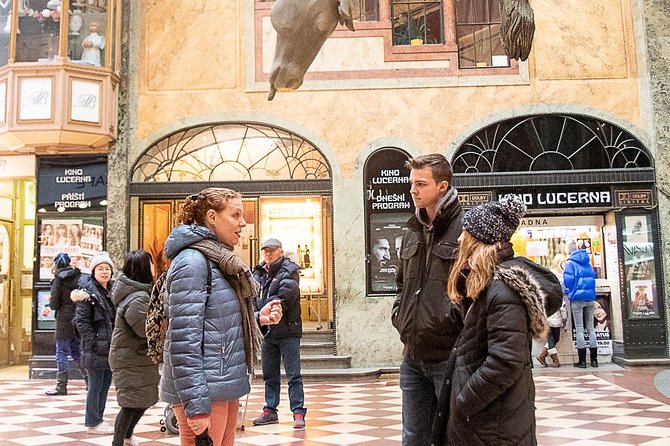
Art Nouveau can look overwhelming if you only see the overall effect. This tour teaches you the “how to look” part, which is the real value.
You’ll focus on specific markers, such as:
- Ginkgo biloba leaf motifs on façades, a signature that makes the style easier to recognize quickly
- Oriental influences in certain design details, which helps explain why some Prague Art Nouveau elements feel less purely European in mood
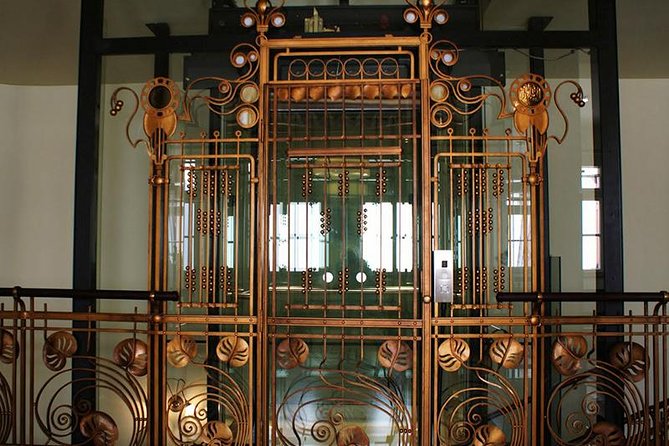
- Elaborate interior lighting, including the kind of decorative fixtures that turn a lobby or café into an experience
I like this approach because it stops you from being a passive observer. You become an interpreter. When you’re in front of a façade, you start asking: Are the lines flowing like plants? Is the decoration calling out nature, movement, or something more theatrical? Are interior details designed to impress first-time visitors?
One more bonus: you’re not just looking at exteriors. The walk often works in short moments inside select buildings, so you can see those interior light fixtures and get a warm-up when weather turns unfriendly. Even in cold months, that indoor access can make the whole tour feel more comfortable and more informative.
Lucerna Bar: Art Nouveau as Social Theater
One of the standout stops is the Lucerna Bar. This is exactly the kind of place the tour wants you to notice: Art Nouveau works best when you see it in the context it was made for.
Bars and elegant restaurants were not random venues. They were gathering points for a pre-war social elite, and they also functioned as cultural showrooms for visitors and locals who wanted to be part of the modern world. When industrialization changed everyday life, these spaces gave people something tactile and beautiful to enjoy.
What you should pay attention to at Lucerna Bar is not just the wow factor. Look for how the design supports conversation, movement, and the feeling that you’ve stepped into a curated environment. Art Nouveau isn’t only about decoration. It’s about turning a space into a mood.
Also, because this is a walking tour with limited time, you’ll get a focused visit. That’s good for you if you want to see key buildings without spending half a day stuck in one spot.
Grand Hotel Europa: When Hotels Became Architecture Billboards
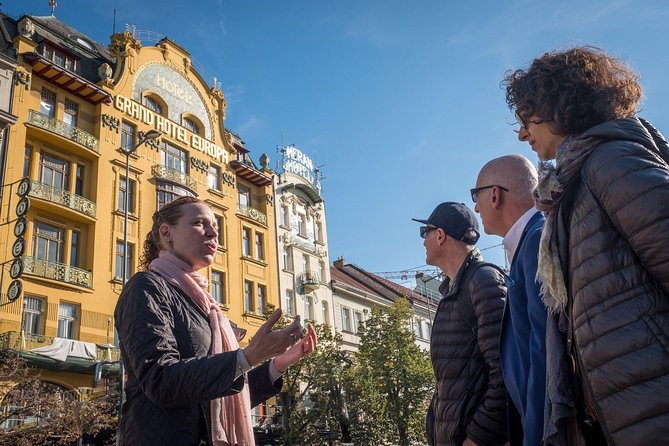
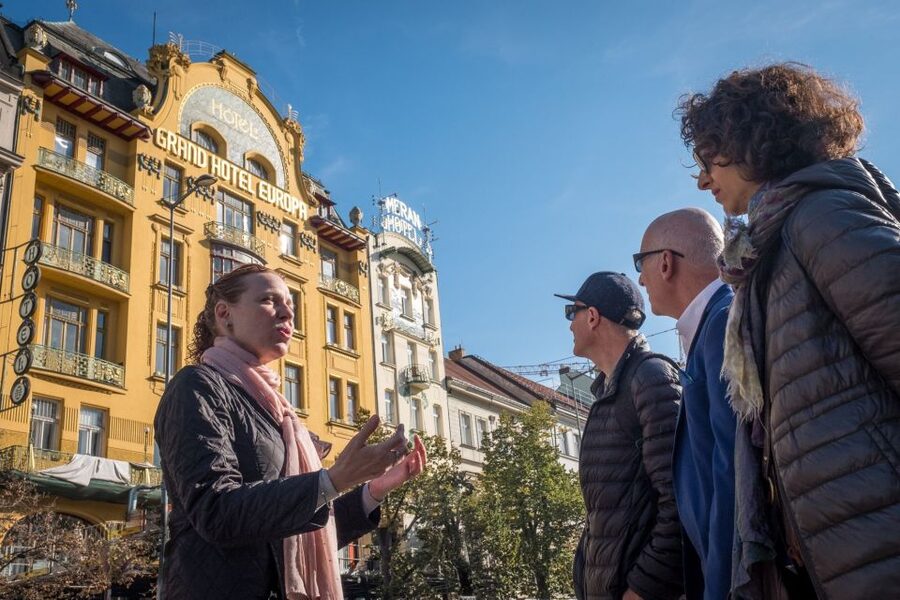
Another highlight is the Grand Hotel Europa, a location that turns the tour’s thesis into something you can feel.
The logic is simple: most Art Nouveau landmarks in Prague are tied to hospitality and public-life spaces. Hotels, bars, restaurants, and even stations were where first globetrotters showed up, where travelers compared notes, and where new money and new ideas met refined design.
This stop gives you a clearer answer to the question: Why does Art Nouveau show up so often in these specific building types?
Hotels are built to impress. They’re built for arrivals. They’re built for people who may not understand the city yet, so the architecture has to work immediately, even if you only glimpse it from the street or see it in passing. Once you understand that purpose, Prague Art Nouveau starts making sense as a kind of visual welcome sign.
If you like architecture but you also like how people lived, this is a powerful connection. It’s not an isolated museum building. It’s part of the city’s rhythm.

Cubist and Rondo-Cubist Comparisons: Bank of the Legions
The tour also draws clear parallels to Prague’s Cubist architecture, including Rondo-Cubist examples. The big named stops here include:
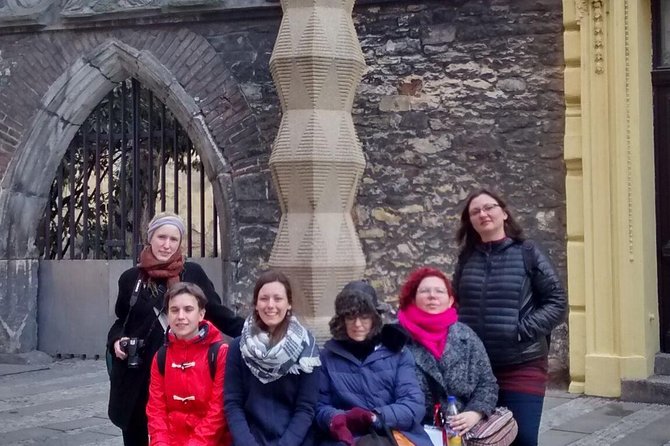
- The House of the Black Madonna (also your meeting area)
- The Bank of the Legions
This is where the tour becomes more than a style tour. You’re invited to compare. Art Nouveau can feel like it’s borrowing motion and organic rhythm from nature. Cubism, by contrast, often makes you look at the structure as if it’s been broken into planes and reassembled with purpose.
Rondo-Cubism adds another layer. It brings curved elements into Cubist thinking, which can make buildings feel more playful or fluid than you’d expect from strict geometry. That’s useful for you because it prevents the common mistake of treating Cubism as only sharp, only severe, only angular.
At the Bank of the Legions, you can learn to read those design choices as statements of Prague modernity and local identity. In other words: the architecture isn’t just being different. It’s participating in the city’s sense of sophistication and self-definition during a period when national identity and modern style were both in motion.
A Tour That Keeps Up, With Breaks That Matter
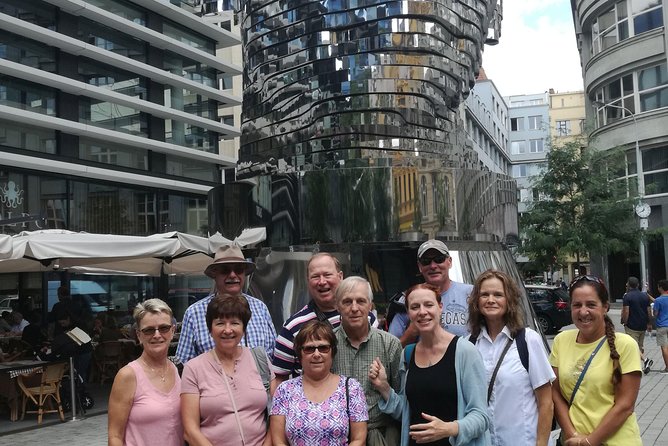
A big reason this walk earns high marks is the way guides handle pacing. It’s not a slow meander. It’s a 3-hour format built for constant learning momentum.
From the experience of guides associated with the tour, I’d expect:
- Strong storytelling, with humor mixed into the facts
- Lots of Q and A, with answers that don’t feel rehearsed
- Short indoor or pause moments when access allows, which helps with comfort in winter or when you just want a breather
You may also notice that some guides thread in extra historical layers beyond the strict Art Nouveau and Cubism focus. For example, guides have been known to connect the architectural storyline to places like a University grand hall, an underground chapel, Roman ruins and fresco moments, and quiet stops in student cafés or passáží (passageways). That kind of context is valuable if you like Prague as a long narrative, not just a sequence of pretty stops.
Group size is another factor. Private or small-group options help keep the pace practical and allow you to ask specific questions without shouting. That’s ideal if you travel with a partner, small family group, or a friend who likes details.
Value Check: Is $123 per Person Worth It?
At $123 per person for about 3 hours, this tour isn’t a budget stroll. So I’d judge it on what you actually gain.
Here’s where the value comes from:
- Expert-led architecture reading. You’re learning how to recognize features like the ginkgo motifs and the interior lighting style. That skill carries over into the rest of your trip.
- Major stops, not random side streets. Lucerna Bar and Grand Hotel Europa are big-name, high-relevance locations for Art Nouveau culture, and Bank of the Legions is a key Cubist comparison point.
- Context that connects styles. The tour links Art Nouveau’s social elite spaces to the rise of modern sophistication, and then you compare that to Cubism and Rondo-Cubism. That makes the city feel coherent.
- Time efficiency. In three hours, you get multiple architectural arguments made in stone and glass. If you have limited time in Prague, that’s a real advantage.
The main reason it might not feel worth it for some people: if you want a very slow, photo-first day with lingering at each façade, the tour’s format may feel too focused and fast.
Who Should Book This Prague Art Nouveau and Cubism Walk?
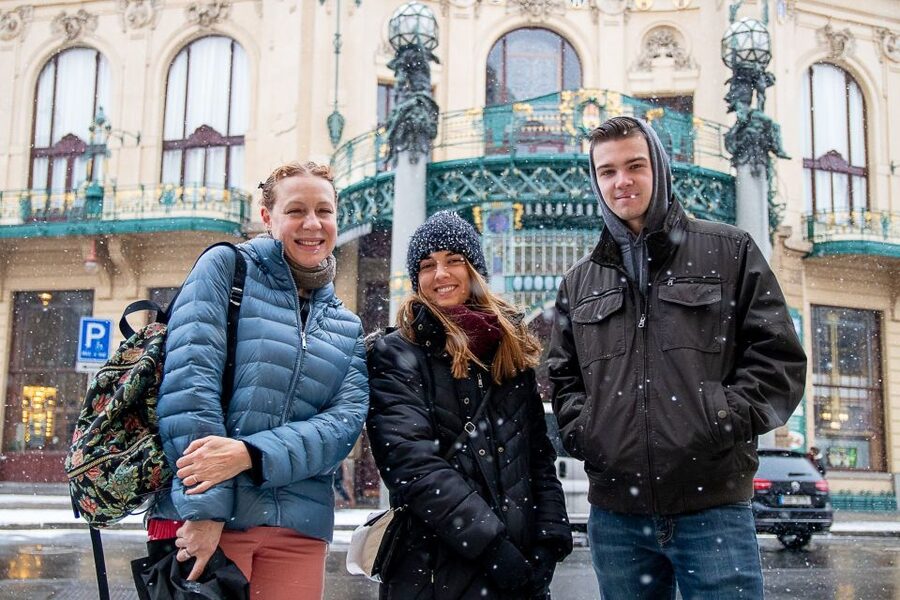
This is a great fit if you:
- Love architecture and want to learn how to spot the style cues yourself
- Want Art Nouveau and Cubism in one connected storyline, with direct comparisons
- Enjoy coffee and cafés as part of travel, not just as a pause
- Appreciate expert guides, including historians and published authors, who can explain details clearly
It’s less ideal if you:
- Prefer pure sightseeing over interpretation
- Need long, quiet time for photos at every stop
- Dislike guided pacing and want a fully self-directed route
Should You Book This Tour?
I’d book it if you want Prague architecture you can actually read. The combination of Art Nouveau pattern recognition plus Cubist comparisons makes your walk more than a highlight list. And because you’re seeing places like Lucerna Bar, Grand Hotel Europa, and the Bank of the Legions, you’re not just learning from the street. You’re learning from the spaces people used.
If you’re coming to Prague for the big sights only, this might feel too detailed. But if you’re even slightly interested in design, the $123 ticket starts to make sense fast, because you leave with a sharper eye.
FAQ
How long is the Prague Art Nouveau and Cubism Walking Tour?
The tour lasts 3 hours.
What is the tour price?
The price listed is $123 per person.
Where is the meeting point?
Meet at the House of the Black Madonna / Grand Café Orient, downstairs at the front doors, on the square (Ovocný 19, Prague 1).
Is the tour in English?
Yes, the live guide conducts the tour in English.
What is included in the booking?
You get a 3-hour guided walking tour.
Does the tour visit Lucerna Bar and Grand Hotel Europa?
Yes, Lucerna Bar and Grand Hotel Europa are included highlights.
Does the tour cover Cubist architecture too?
Yes. The walk includes comparisons that feature Cubist and Rondo-Cubist examples, including the House of the Black Madonna and the Bank of the Legions.
Are private or small groups available?
Yes, private or small groups are available.
Can I reserve now and pay later?
Yes, the option listed is reserve now & pay later, meaning you pay nothing today.
Is free cancellation available?
Yes, you can cancel up to 24 hours in advance for a full refund.
More Walking Tours in Prague
More Tours in Prague
More Tour Reviews in Prague
Not for you? Here's more nearby things to do in Prague we have reviewed







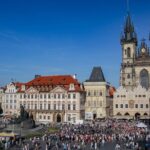

Prague Walking Tours, compared.
 ★ 4.73-Hour Walking Tour of Old Town & Prague CastleFrom $305,696 reviews
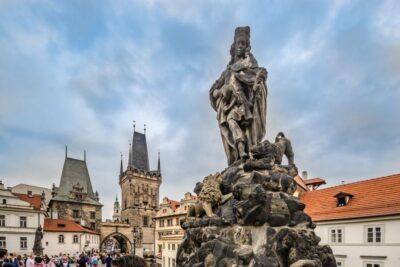
 ★ 4.4Ghost Walking Tour Where Legends Come To LifeFrom $275,253 reviews
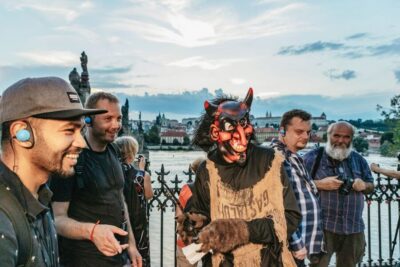
 ★ 4.7Jewish Quarter Walking Tour with Admission TicketsFrom $763,729 reviews
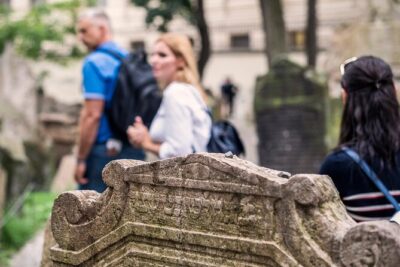
 ★ 5.0Prague Guided Walking Tour and Cruise with Authentic Czech LunchFrom $1023,627 reviews
 ★ 4.6Old Town and Jewish Quarter Guided Walking TourFrom $222,847 reviews
 ★ 4.5Prague Ghost and Legend of Old Town Walking TourFrom $212,630 reviews
 ★ 5.0Prague 3-hour Afternoon Walking Tour including Prague CastleFrom $531,899 reviews
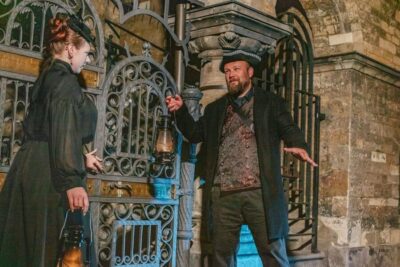 ★ 4.7Ghosts and Legends Nighttime Guided Walking TourFrom $221,462 reviews
Browse the lists this tour appears in