
REVIEW · ČESKý KRUMLOV DAY TRIPS
Český Krumlov 20th century tour
History sits on every corner here. This private 20th-century walking tour traces Český Krumlov’s shocks, from Hitler’s prewar visit to the 1968 Soviet invasion, with black-and-white photos guiding the route. It’s the kind of tour that makes you look at familiar streets and suddenly understand they were part of real events.
I like that Jan has done real homework, and you can feel it in how smoothly the story connects. I also love the multiple viewpoints on one small town, weaving together Jewish life, Nazi-era power, and the perspective of nobles.
The downside is that the topics are heavy, so this isn’t the stroll you want when you’re trying to keep things light. Also, the tour requires good weather, so a rainy day can mean a change of plans.
Key things to know before you go
- Private group, up to 15: You stay restricted to your own party, which makes questions easier and the pace more relaxed.
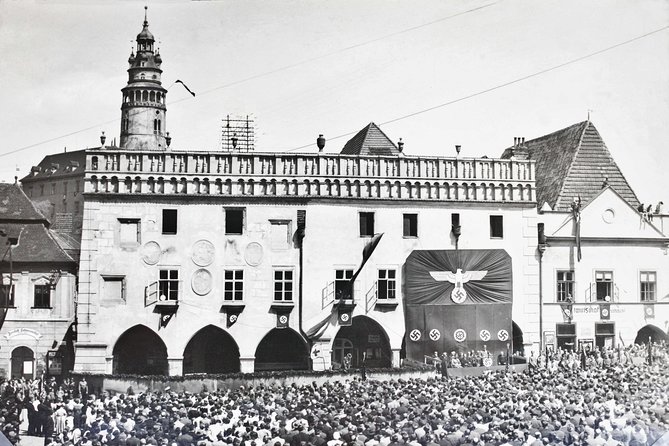
- Photo-led storytelling: Expect black-and-white images that help you picture what the town looked like during key moments.
- Castle-focused context: The route includes Český Krumlov Castle, described as the second biggest castle in the Czech Republic.
- Jewish history stop: You spend time at the synagogue area, with a clear focus on local Jewish history.
- World War II and beyond: The story stretches from the prewar period through the war years, then into later events like 1968.
Why Český Krumlov’s 20th century story feels so personal
Most towns have history you can read on a plaque. In Český Krumlov, the past feels close-up because the same walls, gates, and viewpoints were part of political drama and human lives. This tour helps you connect those dots, so you’re not just seeing scenery, you’re seeing consequences.
What I especially like is that the tour doesn’t treat World War II as one big, distant “event.” It brings the story down to named places and specific moments, like Adolf Hitler’s visit to Český Krumlov before the war and later upheavals tied to the Soviet invasion in 1968. That timeline shift can be surprising, in a good way, because it reminds you that 20th-century control was not one single day.
You’ll also get a wider emotional map than you might expect. The route touches Jewish history, Nazi power, and the way local nobles lived under pressure. That matters because it changes how you interpret what you see.
You can also read our reviews of more tours and experiences in Cesky Krumlov.


Price and pacing: how a group tour can still feel intimate
This is $90.76 per group, for a group size up to 15, and it runs for about 2 hours. When you think of it that way, it can be strong value, especially if you’re traveling with friends or family and want a guide for a set time. If your group hits the maximum size, the per-person cost drops a lot compared with typical per-person tours.
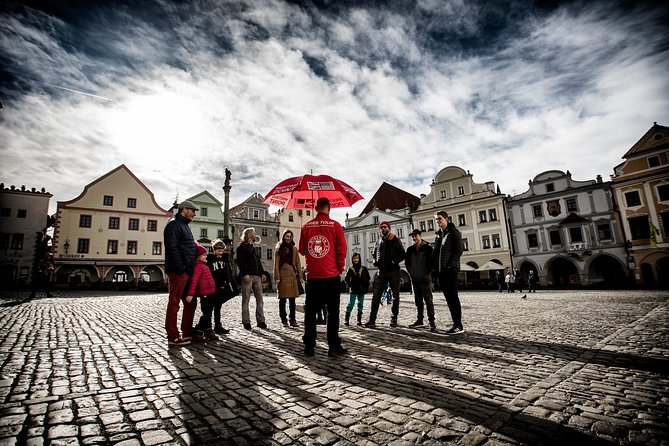
Because it’s private, your group doesn’t get mixed with strangers. That tends to make the walking flow smoother and helps if anyone in your group asks extra questions. It also makes it easier to keep a consistent pace, rather than rushing to keep up with a larger crowd.
Timing is practical here: you move through several key points without trying to cram in everything. Stops are short, but they’re targeted, which is perfect for a town like Český Krumlov where wandering can easily swallow your whole day.
One more small but real perk: mobile ticket. It’s simple and cuts down on fuss.
Where you start, where you end, and how that affects your walk
You meet at Info Czech Krumlovnám. Svornosti 2, 381 01 Český Krumlov. The tour ends at Budějovická Gate, Latrán 106, Latrán, 381 01 Český Krumlov.
That matters because you’re not doing an exact out-and-back route. You’re moving through the historic core and then finishing at a specific gate area. Practically, that often helps because you can keep exploring right after the tour finishes without backtracking as much.
If you’re planning your day, give yourself a little buffer afterward. Your guide’s story is tied to visual points and photos, so you’ll likely want a few minutes after each stop to re-look at what you just heard.
Stop 1, the historic center: modern history in plain sight
Your first stop is the Historic Center of Český Krumlov, with about 40 minutes set aside. This is where the tour gives you the framework, so later stops land with more meaning. You’ll learn about the town’s role in World War II, including the reality that Adolf Hitler visited Český Krumlov before the war.
This first part works well because it gives you context before you start focusing on specific locations like the synagogue and the castle. If you’re the type of person who needs the big picture before details, this start helps a lot.
A practical consideration: the historic center is where you can easily feel tempted to wander off on your own. Keep close to the guide in this first stretch, since the time is doing real storytelling work, not just “standing around.”
Stop 2, the synagogue: Jewish history you can actually connect
The tour then moves to the Synagogue of Český Krumlov, with about 15 minutes dedicated to the history of Jews in the town.
This stop is valuable because it shifts the emotional center of the tour. You’re not only tracking power and conflict. You’re also learning about the community that existed here, which makes later references to Nazis and persecution hit harder and feel less abstract.
Another detail worth noting is the emphasis on photographs, including images connected to the synagogue. Black-and-white visuals can do something text often can’t, they help you picture what the town looked like and how ordinary daily life sat inside larger events.
If you prefer tours that focus on people rather than just politics, this is one of the best segments to lean into.
Stop 3, Hitler’s arrival: a prewar visit with real weight
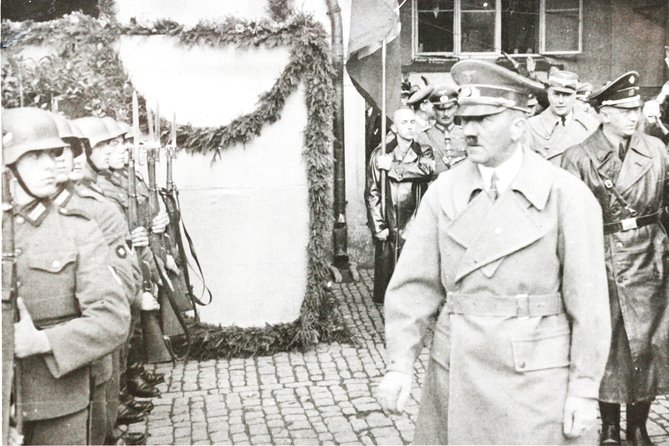
Next you’ll spend about 10 minutes learning about Adolf Hitler’s arrival to Český Krumlov. Even though it’s a short stop on paper, it’s often the moment where a tour like this changes from “history lesson” into “how did this happen here?”
Hitler’s prewar presence matters because it shows how international political decisions were not confined to capitals. They were tied to towns and places that were already meaningful locally. When you hear it explained alongside what you’re looking at, it becomes harder to treat the period as distant.
This stop is brief by design. The goal is to plant the idea, not to overwhelm you before the castle segment where the story turns more personal.
Stop 4, Český Krumlov Castle: the last lord vs Nazi pressure
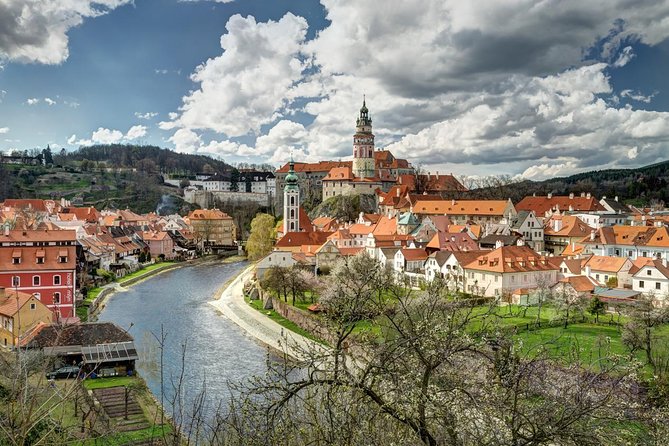
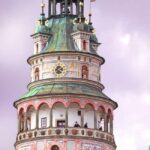
The tour then heads to Český Krumlov Castle for about 20 minutes. You’ll listen to a story about the last lord of the town and his struggle against Nazis.
This is where the tour’s focus on nobles becomes more than a side note. A castle can feel like a tourist postcard, but here it’s used as a lens for power, fear, and survival. Even if you know some Czech history already, the framing tends to make it feel more human.
The overview also points out that you’ll be admiring a castle that’s described as the second biggest in the Czech Republic. That scale can help you understand why rulers cared so much about controlling this kind of space. And as the guide explains the last lord’s situation, it connects architecture to lived pressure.
Practical tip: treat this stop as your time for slow looking. If you’re rushing, you’ll miss the small visual cues the guide ties into the narrative.
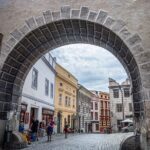
Stop 5, Budějovická Gate: WWII stories and the 1938 battle
Your final stop is Budějovická Gate (Budějovická Gate), with about 15 minutes set aside. Here you’ll grasp the town’s World War II context, including the battle of Český Krumlov in 1938.
Gates are powerful story tools. They’re thresholds, and they mark how people moved in and out of important zones. When the tour ties the gate to 1938 and the broader WWII period, it helps you understand how conflict affected everyday movement and control.
This stop also works as a strong ending point because it gives the narrative a clear wartime anchor. After you finish, you’re already standing in a historic place, which makes it easier to keep exploring without losing the emotional thread.
The black-and-white photos: how they change what you see
One of the most praised parts of this tour is the visual element. The guide shows photographs of events unfolding, often in black and white. That doesn’t just add color, it changes the way your brain maps time.
When you’re standing in the present, photos help you imagine the past in the same frame. The guide also connects those images to the exact corners and key spots you’re visiting, so you’re not stuck trying to picture history in some unrelated setting.
In short, the photos do two jobs:
- They make the timeline feel real.
- They help you see continuity, the same places used in very different years.
If you like tours where the guide uses images to help you build mental pictures fast, this is a big reason to book.
What kind of guide experience you get with Jan
Across the experience, the guiding style is a major strength. Jan is praised for preparing carefully, and for answering questions as you go. The tour also leans into a broad set of topics tied to Český Krumlov, so you get a coherent story rather than random facts.
That matters if you’re the type of traveler who wants more than a script. A guide who can explain why a place mattered, not just what happened there, is the difference between forgetting the details later and remembering them.
You’ll also notice that the structure feels intentional. Stops are short, but they’re paced so you can absorb what’s happening without walking fatigue taking over the experience.
Who should book this tour (and who might skip it)
This tour is a good fit if you want:
- A private, photo-supported history walk rather than a generic highlight tour
- World War II context in a small-town setting, plus later events like the 1968 Soviet invasion
- A mix of stories, including Jewish history, Nazi-era power, and the experience of nobles
You might consider skipping it if:
- You only want light, casual sightseeing and you’d rather avoid wartime and occupation themes
- You prefer long stops at one location over a route that moves through multiple key points in about two hours
If you’re traveling with mixed interests, the variety helps. You’ll hit major historical themes, but the stops stay tied to specific places you can see.
Booking checklist and practical expectations
This tour is offered by Wiseman Free Tour and works with a mobile ticket. It’s also restricted to your own group, with a maximum group size of 15.
Good weather is required. If the weather is poor, you should expect the operator to offer a different date or a full refund. The tour also requires a minimum number of travelers, meaning it can be rescheduled or refunded if that threshold is not met.
On the ground, it’s near public transportation, and service animals are allowed. Most people can participate.
If you like to plan tightly, check that day’s weather and build in a little flexibility around your schedule.
Final verdict: should you book the Český Krumlov 20th century tour?
Yes, I think you should book it if you want a history tour that feels grounded in specific places and images, not just dates. The combination of the castle, the synagogue stop, and the gate ending gives the story a satisfying structure, and the black-and-white photos add clarity fast.
It’s also strong value for groups because the price is per group, not per person. If you’re traveling with friends or family, this can turn into a practical way to get a guided walk without paying premium per-head tour rates.
One caution: bring the right mindset. The subject is heavy, and the tour doesn’t pretend otherwise. If you’re ready for that, you’ll likely leave with a much sharper understanding of how Český Krumlov’s 20th century shaped the town you see today.
FAQ
How long is the Český Krumlov 20th century tour?
The tour lasts about 2 hours.
What is the cost for the Český Krumlov 20th century tour?
It costs $90.76 per group, with a maximum group size of up to 15 people.
Is this tour private?
Yes. It is a private tour, restricted to your own group only.
Do I get a mobile ticket?
Yes. The tour uses a mobile ticket.
Where do I meet for the tour?
The meeting point is Info Czech Krumlovnám, Svornosti 2, 381 01 Český Krumlov.
Where does the tour end?
The tour ends at Budějovická Gate, Latrán 106, Latrán, 381 01 Český Krumlov.
Which stops are included?
The tour includes the Historic Center of Český Krumlov, the Synagogue of Český Krumlov, a stop focused on Adolf Hitler’s arrival, Český Krumlov Castle, and Budějovická Gate.
Are admission tickets included for the stops?
Yes. The listed stops are marked as admission ticket free.
Is the tour suitable for most people?
Most travelers can participate.
What should I know about cancellations and weather?
You can cancel for free up to 24 hours in advance for a full refund. The tour requires good weather, and if it is canceled due to poor weather, you will be offered a different date or a full refund.
More Tours in Cesky Krumlov

More Tour Reviews in Cesky Krumlov
Not for you? Here's more nearby things to do in Cesky Krumlov we have reviewed


Český Krumlov Day Trips, compared.
 ★ 4.6From Prague: Full-Day Trip to Český KrumlovFrom $901,172 reviews
 ★ 4.5Cesky Krumlov Full day tour from Prague and backFrom $140902 reviews
 ★ 4.0From Prague: Český Krumlov and České Budějovice Day TripFrom $77818 reviews
 ★ 4.0UNESCO Cesky Krumlov from Prague with Guided Tour and TransferFrom $109812 reviews
 ★ 4.9Český Krumlov: Wooden Raft River CruiseFrom $35450 reviews
 ★ 4.7From Prague: Český Krumlov Full-Day Tour with PickupFrom $119392 reviews
 ★ 5.0Český Krumlov Free TourFrom $30260 reviews
 ★ 4.4From Prague: Full-Day Český Krumlov Tour with LunchFrom $102211 reviews
Browse the lists this tour appears in