
REVIEW · PRAGUE WALKING TOURS
Prague Renaissance and Baroque Gardens Walking Tour
Prague’s gardens tell politics in plant form. This 3-hour walk connects Renaissance elegance to Baroque drama, using real palace grounds and legendary water features to explain how power liked to look. Two things I really like: you get the backstory behind each garden plan, and you also walk past specific structures like the Fig House and Orangery instead of just looking at flowers.
The tone stays friendly and focused, and the route is short enough that you can keep your energy for Prague after. One consideration: the tour includes stair climbing, and some steps can be narrow or steep, so plan your pace or choose a private tour if mobility is an issue.
Key reasons this garden walk is worth your time
- Ferdinand I’s Italian hiring story, including why he imported gardeners and architects to shape a new style north of the Alps
- Cast-1564 Singing Fountain details, where bronze water drops create a resonant, almost musical effect
- Central Europe’s early figs and citrus, explained at the Fig House and Orangery, plus tulips introduced as a diplomatic gift
- Wallenstein Garden’s character, from albino peacocks to grottos, statues, and myth-inspired fountains
- Vrtba Garden’s 1720 walled layout, a Lesser Town (Mala Strana) design you usually only see if you go looking
Prague Renaissance and Baroque Gardens: how the tour frames the city
Prague has a way of making you feel time in your legs. One minute you’re watching water do its thing in a palace garden, the next you’re hearing why a ruler wanted that exact effect. This is not a generic “pretty plants” stroll. The guide links garden design to what the era believed about beauty, authority, and faith, then shows you the physical evidence as you move.
I like that the story starts earlier than the Renaissance. The tour points out that medieval garden space often served practical purposes, especially herbs for medicine and cooking, and that what’s left is mostly found in Gothic cloisters. From there, you shift into the big idea: a palace-level garden in this region becomes a political statement, not just a pastime.
Then the Renaissance piece lands. Emperor Ferdinand I is presented as the spark who pushed “Mediterranean lushness” into Prague, inspired by Italian gardens. He’s the reason you’ll hear so many Italian names tied to Prague Castle Grounds, and it helps you understand why the gardens feel designed rather than accidental.
The Baroque half matters too. Baroque landscaping is about motion, surprise, and emotional theater. You see that philosophy in how space turns corners, how fountains appear like stage props, and how statues and waterworks are used to build a mood instead of a straight-line view.
You can also read our reviews of more walking tours in Prague



Where the tour starts, and why Bagel Lounge Malostranska makes sense
You meet at the door of Bagel Lounge Malostranska. It’s an easy starting point if you’re staying on the Malostrana side, and it also keeps the early part of the walk logical. Since the route includes Prague Castle-area gardens and finishes in the Lesser Town (Mala Strana) area with Vrtba Garden, beginning in Malostrana reduces the “dead travel” time between zones.
The tour runs about 3 hours, which is a sweet spot for this kind of material. Renaissance and Baroque gardening can be deep, but 3 hours keeps it from turning into a lecture marathon. You get story, visuals, and a steady walking rhythm.
The Renaissance engine: Emperor Ferdinand I and the Italian gardeners
The tour’s biggest theme is how Ferdinand I shaped the idea of a large palace garden in Prague. Early medieval gardens were mostly functional. By the 1500s, the palace garden becomes the place where the ruler’s taste shows off, and it’s also where the court wants to stage refinement.
Ferdinand is described as unusually keen on lush Mediterranean gardens inspired by the Italian Renaissance. That is where the story becomes practical for you as a visitor: if you understand why Italian talent was imported, you’ll “read” the gardens differently. You start noticing symmetry, pleasure-palace sightlines, and planned water effects.
You’ll also learn that Ferdinand wanted more than plants. He introduced classicism north of the Alps, bringing a formidable team of Italian gardeners and architects. That helps explain why parts of Prague Castle Grounds feel like a transplanted idea from Italy, then adjusted for local conditions.
The Prague Castle garden highlights: Belvedere Summer Palace to the Singing Fountain
One of the most rewarding stops comes from the pleasure-palace story tied to Ferdinand I. You’ll hear about the Belvedere Summer Palace, commissioned by Ferdinand as a gift for his wife, Queen Anne. She didn’t live to see the completion, but the garden-and-palace pairing still shows the court’s intention: relaxation with status built into the view.
The tour also points out a relief showing Ferdinand presenting his wife with a flower from the Royal Gardens. That kind of tiny detail matters, because it turns the garden from “background scenery” into part of a message system.
The palace design is credited to Paola della Stella, and it’s often described as one of the most beautiful Renaissance structures outside Italy. Even if you’re not chasing architectural awards, this helps you appreciate why the surroundings feel curated.
Then you get to the front-of-palace pleasure garden, the Giardinetto, and the famous Singing Fountain. Here’s the exact kind of detail that makes this tour fun: the fountain was cast in 1564 in bell bronze, and the falling water into the bowl makes it resonate or sing. You’re not just told “there’s a fountain.” You’re given a reason it’s special, and you can actually see how design creates an effect.
Fig House and Orangery: why citrus and figs mattered
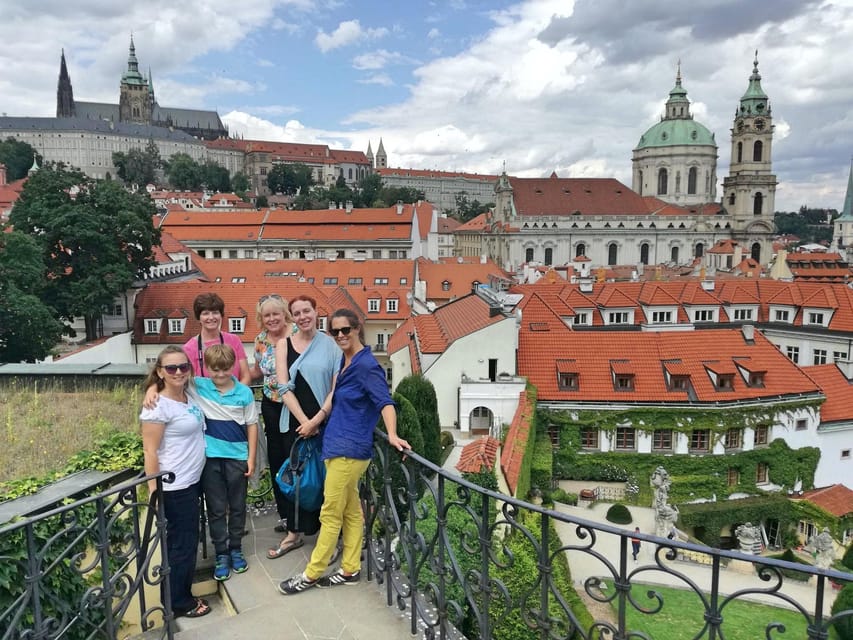
From the Renaissance pleasure-palace mood, the walk shifts into something more surprising: the Fig House and Orangery. The tour explains that figs, almonds, oranges, and lemons were grown there for the first time in Central Europe. That is the kind of “wait, really?” fact that makes gardens feel like living history, not preserved decoration.
You’ll also hear how tulips entered the Royal gardens. They were reportedly introduced as an exotic gift by the Sultan of Constantinople, and at the time, tulips were previously unknown in Europe. Again, this is useful context for you. These gardens were part of an international network, with plants moving through diplomacy, trade, and prestige.
If you’re the kind of traveler who likes details that connect art and science, this stop is a win. Gardens were not passive. They were managed systems, and they required knowledge, space, and money.





Crossing through the castle grounds: stag moat, courtyards, and stairs
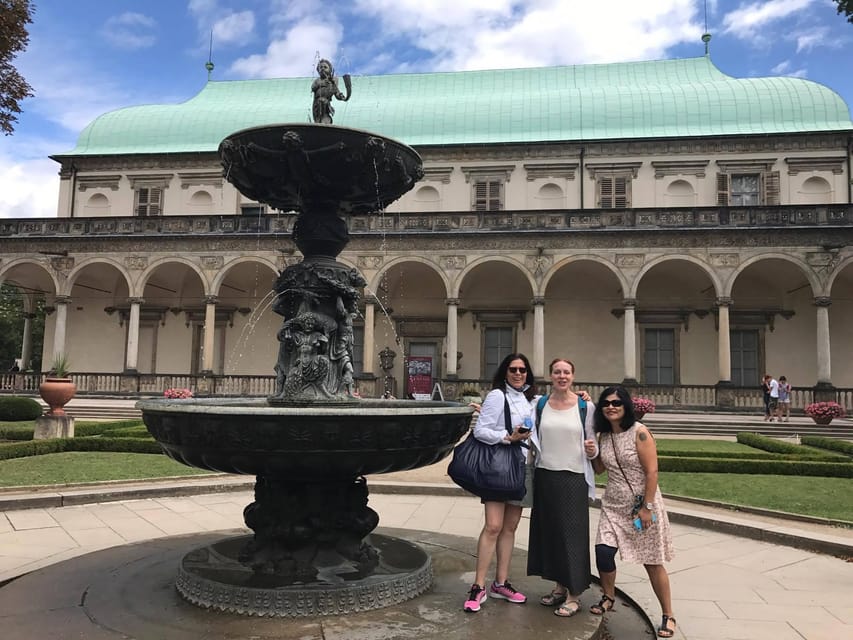
The tour then moves you through the garden structure itself, including a stag moat and the castle courtyard. It’s a good moment to reset your brain. Water features and statuary get the attention, but moats and animal zones remind you that Renaissance and Baroque gardens were often designed as full environments.
After that, you descend the Bull Stairs into the South Gardens. If you’ve ever felt uncomfortable when a historic site turns into a stair workout, take this as a heads-up. The itinerary includes stairs that can be narrow and steep in places. If that’s an issue, I’d strongly consider a private tour so the guide can tailor the route and avoid the tightest sections.
The South Gardens: Garden of Paradise and the Garden on the Bulwark
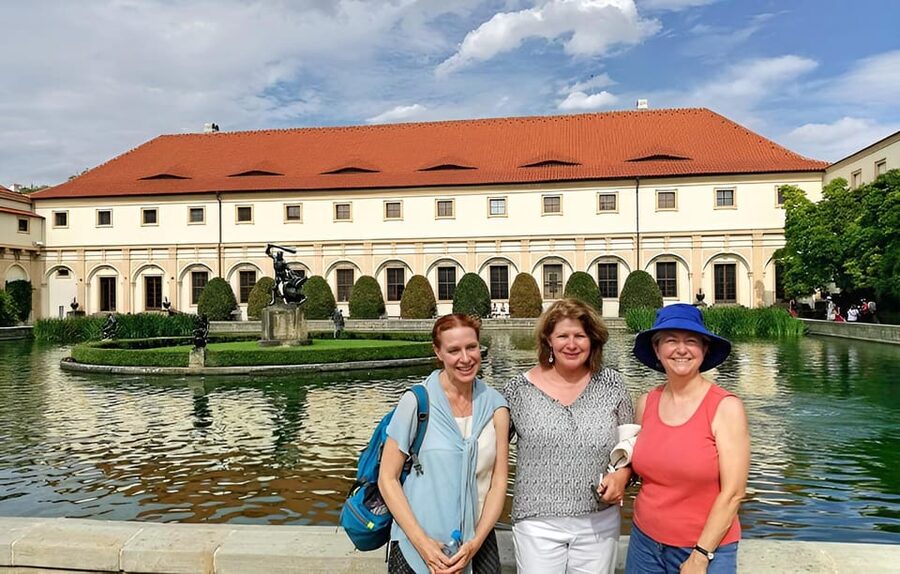
In the South Gardens, the tour highlights the Garden of Paradise and the Garden on the Bulwark. Even without turning this into a “myth vs reality” debate, the titles give you the clue: these spaces were meant to create emotion. Renaissance classicism often aims for clarity and order. Baroque design leans more into drama and surprise.
As you walk terraces and changes in elevation, you’re also getting the physical explanation for why Baroque architecture and gardens worked so well together. When you move downhill through terraced gardens, you see how sightlines and “reveal points” matter. A fountain, a statue, or a wall feature can appear at just the right second, like stage lighting.
Wallenstein Garden: albino peacocks, grotto walls, and myth fountains
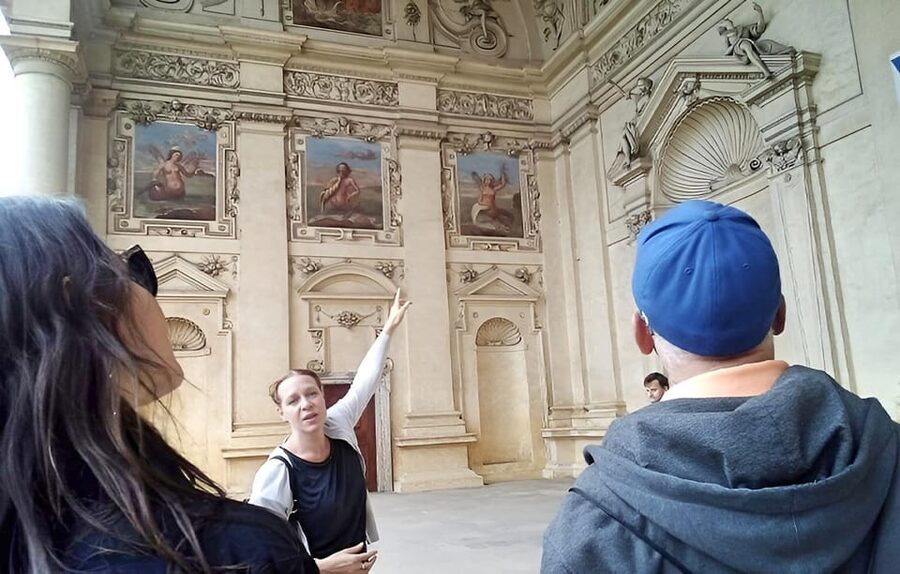
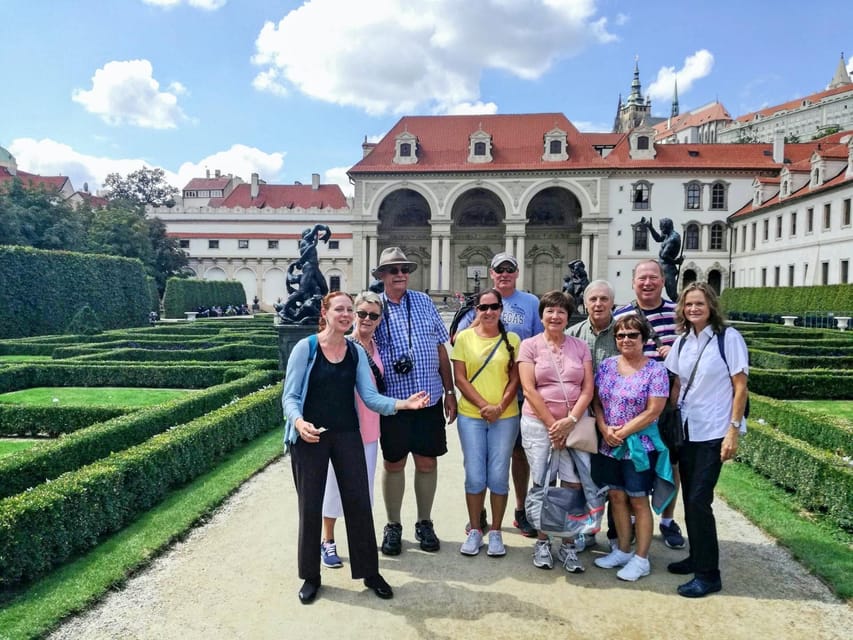
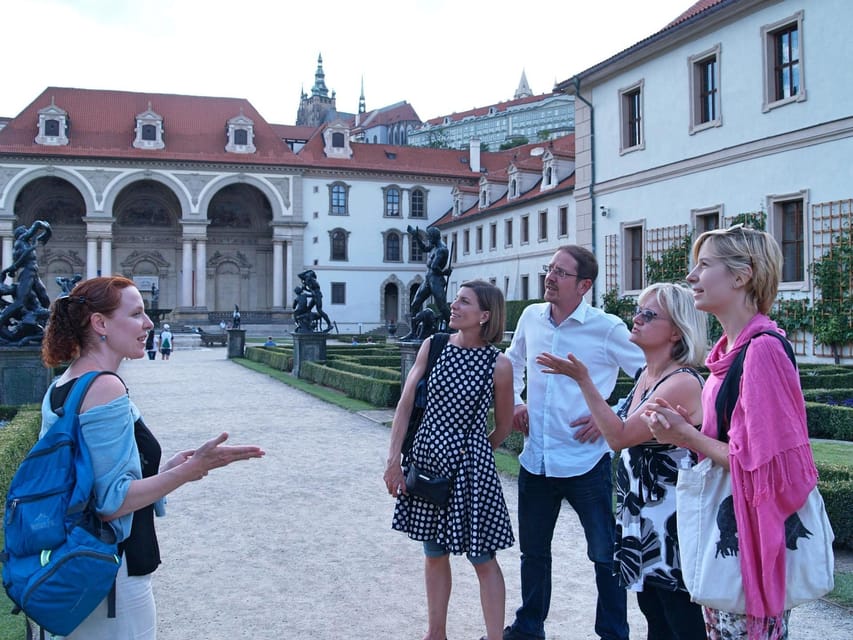
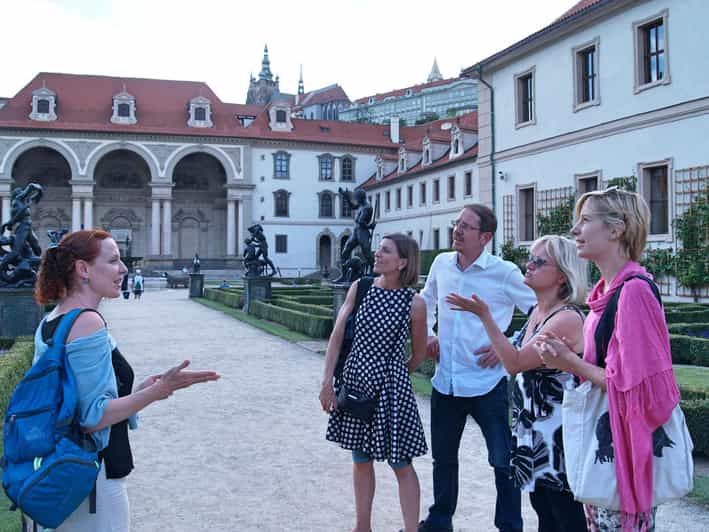
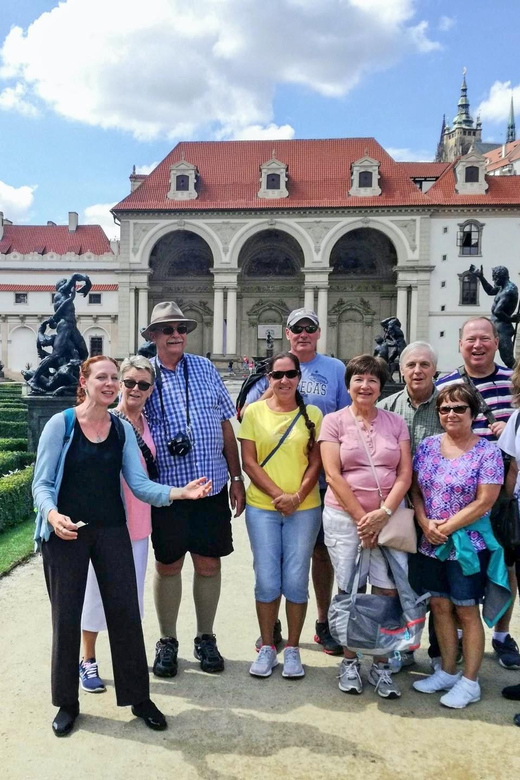
Then comes the main event: the Wallenstein Garden. It’s described as grand and breathtaking, and for good reason. This is where you see the garden’s personality through details: albino peacocks, Mannerist statues, a grotto wall, and mythical fountains.
You’ll also hear about the commissioner, Albrecht von Wallenstein, and how the garden reflects the transition from Renaissance classicism to Baroque philosophies. That phrase matters less if it’s abstract. What matters is how the garden feels when you’re there. You can sense the shift in attitude, from “perfectly arranged pleasure” to “designed experiences.”
If you love gardens that tell stories through animals, water, and sculpture, this is the stop that will stick in your memory. Albino peacocks are not something you can fake with imagination, and they instantly make the space feel like a living display rather than a static exhibit.
The grotto and fountain elements also help you understand Baroque taste. It’s not only beauty. It’s theatrical effects, controlled wonder, and moments that trigger curiosity. The tour’s framing makes that easier to catch while you’re walking.
Vrtba Garden in Mala Strana: the Baroque walled garden most people miss
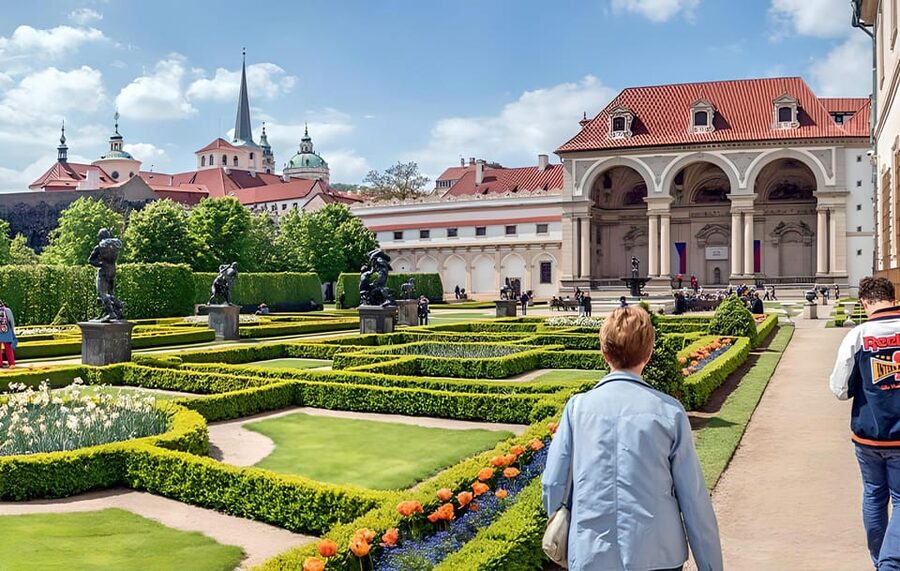
The tour finishes by showing Vrtba Garden, a walled Baroque garden dating from 1720 in the Lesser Town (Mala Strana). This is the kind of place that many visitors don’t prioritize, and it’s exactly why it works as a closing highlight. After Prague Castle-area grandeur, you get a more intimate, enclosed garden atmosphere tied to noble life in the 18th century.
You’ll walk up to a top courtyard and see a marine-themed grotto. That marine idea gives you another way to read the Baroque mind: the garden becomes a world, not just a collection of plants. And when you climb to the top courtyard, you’re rewarded with stunning views across Prague’s cityscape.
This pairing of enclosed theatrical design plus open outward views is a strong end to the tour. It helps you connect garden design to the broader city.
Price and value: what $123 gets you in real experience time
At $123 per person for a 3-hour guided history walk, the price is very much in the “you’re paying for interpretation” category. You’re not just buying access to plants. You’re buying explanations of why the gardens look the way they look, and which rulers and designers pushed those ideas.
That value becomes clearer because some garden access is not included. Gardens under Prague Castle may require a Prague Castle admission fee, and Vrtba Garden admission is not included. You’ll want to budget for those extra tickets if you expect to spend time inside the garden areas that require entry.
Still, the tour’s structure helps you. A guide can connect the dots across multiple sites in a short time, and it saves you from piecing together historical context on your own while you’re walking. For $123, the key question is simple: do you want the story told while you stand in front of the objects? If yes, the pricing makes sense for a 3-hour walking tour.
Practical tips for getting the most from the walk
Wear shoes you trust. The route includes stairs, and some are narrow or steep, especially around the castle garden areas. If you prefer a gentler pace, ask about a private tour so the guide can tailor the route.
Bring water, even in cooler months. Gardens and viewpoints encourage slow stops, and 3 hours can feel longer once you start paying attention to fountain mechanics and design details.
If you’re the type who likes to photograph architecture, keep your phone ready for the moments where water and bronze details matter, especially around the Singing Fountain concept and the grotto elements. The tour helps you know what to look for, so your photos end up meaning more.
Also, time matters. The tour is designed as a single flow from Prague Castle-area gardens down toward Wallenstein, then to Vrtba in Mala Strana. If you schedule lunch right after, give yourself a buffer for the stairs and for lingering at viewpoints.
Should you book this Prague gardens walking tour?
Book it if you want history that you can actually see. The tour explains how Renaissance rulers like Ferdinand I used Italian inspiration and pleasure-palace design, then shows how Baroque taste shifted toward drama, surprise, and symbolic effects. You’ll also enjoy the specific details, like the Fig House and Orangery connections to Central Europe’s earliest citrus and figs, the tulip introduction story, and Wallenstein’s mix of albino peacocks, grotto wall, and myth fountains.
Skip it or choose a private option if stairs are a deal-breaker. The itinerary includes walking up and down narrow or steep stairs, and you may want a route adjusted to your limits.
If you’re comfortable adding a bit of extra ticket budgeting for Prague Castle gardens and Vrtba Garden entry, this is a strong way to understand why Prague’s garden spaces feel like more than decoration. They’re designed statements, and this tour helps you read them fast.
FAQ
How long is the Prague Renaissance and Baroque Gardens Walking Tour?
The tour lasts 3 hours.
Where is the meeting point?
Meet at the door of Bagel Lounge Malostranska.
Is the tour guided in English?
Yes, the live tour guide is English.
What is included in the price?
You get a 3-hour guided history walk with a historian guide.
Do I need separate tickets for the gardens?
Yes. Gardens under Prague Castle admission fee and Vrtba Garden admission fee are not included.
Is the tour suitable for travelers with mobility issues?
It includes walking up and down stairs that can be narrow and steep. If you expect difficulties, a private tour is recommended so the guide can tailor the route.
More Walking Tours in Prague



More Tours in Prague

More Tour Reviews in Prague
Not for you? Here's more nearby things to do in Prague we have reviewed












Prague Walking Tours, compared.
 ★ 4.73-Hour Walking Tour of Old Town & Prague CastleFrom $305,696 reviews
 ★ 4.4Ghost Walking Tour Where Legends Come To LifeFrom $275,253 reviews
 ★ 4.7Jewish Quarter Walking Tour with Admission TicketsFrom $763,729 reviews
 ★ 5.0Prague Guided Walking Tour and Cruise with Authentic Czech LunchFrom $1023,627 reviews
 ★ 4.6Old Town and Jewish Quarter Guided Walking TourFrom $222,847 reviews
 ★ 4.5Prague Ghost and Legend of Old Town Walking TourFrom $212,630 reviews
 ★ 5.0Prague 3-hour Afternoon Walking Tour including Prague CastleFrom $531,899 reviews
 ★ 4.7Ghosts and Legends Nighttime Guided Walking TourFrom $221,462 reviews
Browse the lists this tour appears in