
REVIEW · PRAGUE WALKING TOURS
Wars and Totality Private Walking Tour in Prague
Prague turns dark fast on this private walk. You get a 3-hour wartime and communist history route built around real sites, guided by a local historian who can connect the story from WWI to 1989 without hand-waving. It’s private, so the pacing and questions can match your curiosity.
I like two things in particular. First, the tour maps Czechoslovakia’s 20th-century roller coaster in a way that makes the timeline feel concrete, from Nazi occupation to Soviet rule. Second, the stop at the Museum of Communism gives you everyday-life context, not just dates and slogans. One thing to plan for: it’s mostly a walk, and you may spend stretches standing while the guide explains what you’re looking at, so build in comfort time.
Key highlights worth your attention
- Private guide, private focus: only your group, with a historian-style explanation you can steer with questions
- WWI to Soviet rule to 1989, fast: the tour covers a huge span of history in about three hours
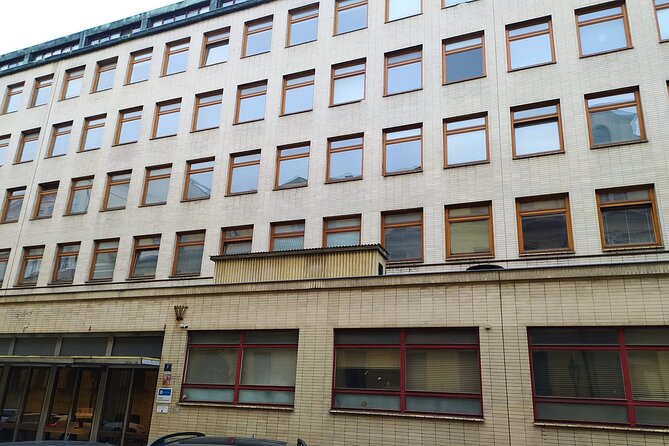
- Nazi-era site visit: Petschek Palace is tied to the Gestapo, with grim context built in
- Hope to collapse route: Wenceslas Monument to Narodni tracks the emotional arc of modern Czech history
- Museum of Communism stop: you see artifacts meant to show what Soviet control felt like in daily life
- Comfort matters: expect walking and some long standing moments during explanations
A private walk through 20th-century Prague’s toughest chapters
Prague has always been a stage for bigger powers. This tour leans into that reality. You start in central Prague and follow a thread that runs from the country’s modern birth through foreign occupation, then into 40 years of Soviet totalitarianism, and finally the hard-won independence that arrived in 1989.
The best part is the format: it’s not a bus tour where you stare at buildings from a distance. It’s a walking tour with a local historian guide, so you’re in the same spaces where those events unfolded, or right next to the structures tied to them. The story lands because you can look at the same street, square, or landmark the guide is talking about.
This is also a tour where your questions actually matter. Since it’s private, you are not competing with a crowd to ask about resistance, propaganda, daily life, or how Czech people lived under pressure.
You can also read our reviews of more walking tours in Prague
How the storyline connects WWI, Nazis, Soviet rule, and 1989
The tour is built around a clear theme: Prague and Czechoslovakia kept getting pulled into the agendas of outside empires, especially in the 20th century. You begin with the modern Czech story, then move into WWII-era terror, then into the long Soviet period starting in 1948.
What I find useful is how the guide’s narrative is tied to places, not just abstract politics. You’re given the pattern, then you’re shown the evidence in the built environment and in what the museum tries to explain. That makes it easier to remember. You are not just learning facts, you are learning what the facts meant in the places you see.
If you like history with a human center, you’ll also appreciate that the tour explicitly includes the Czech people’s resistance and bravery. That matters because totalitarian stories can easily become one-note and bleak. Here, you get the stubborn determination that helped lead to independence in 1989.
Municipal House and Republic Square: where modern Czech identity begins
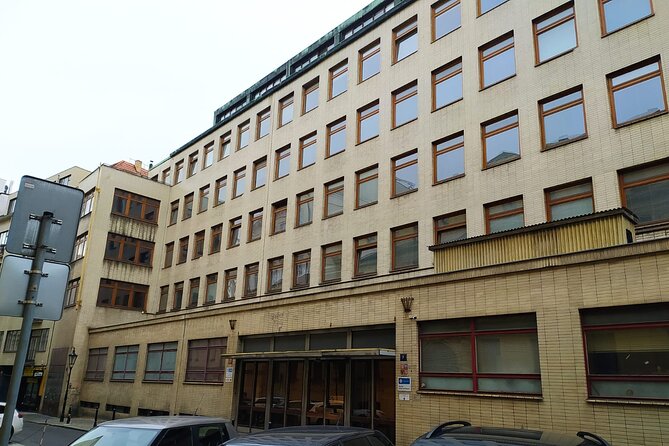
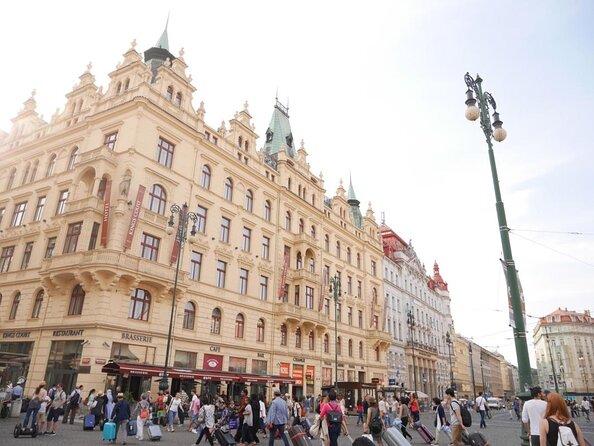
Your tour gets going near the Municipal House area. This is where the story of independence is introduced, with a stop framed as the declaration of Czechoslovak independence. Even if you do not know a lot of names yet, the guide’s setup helps you understand why this kind of public moment mattered so much.
From there, you move to Republic Square, again anchored by the Municipal House. The guide treats this as the symbolic beginning of modern Czech history, which is exactly the kind of framing that helps on a short tour. Instead of trying to read every architectural detail yourself, you get the big idea first: this is where identity is performed in the open.
Practical note: these are central, active public areas. Expect a bit of moving around quickly, with short stops and street-corner explanations. If you get motion sensitive, wear comfortable shoes and keep your water handy.
Petschek Palace: confronting the Gestapo connection
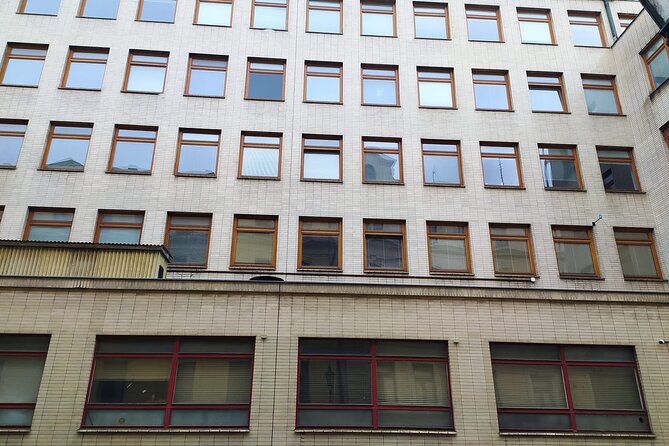
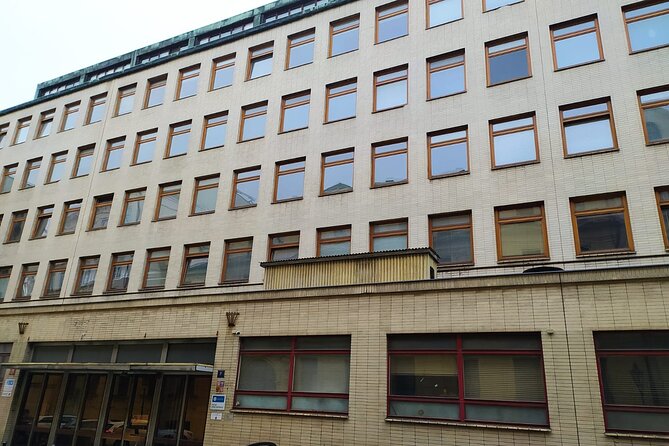
Next comes Petschek Palace, presented as a former seat of the Gestapo. This is the part of the tour where the mood tends to shift. The guide uses the site connection to explain how terror worked, how control was maintained, and what kind of fear and consequences occupied ordinary life.
I like that the tour does not treat this as a spooky photo stop. It’s framed as evidence of a system, not just a grim building. You get context for why people resisted and how oppression tightened.
Time-wise, this stop is short, but it’s an important hinge. It separates the “big historical storyline” from the “how daily life got squeezed” storyline that follows later. If you’re worried that you’ll be tired by this point, that hinge actually helps, because it gives your brain a clear change of gear.
Wenceslas Monument and the emotional arc of modern history
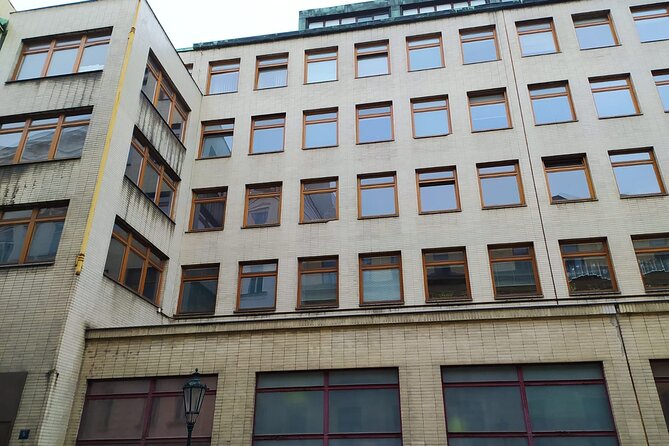
At Wenceslas Monument, the guide uses the square as a living witness to Czech modern history, built around the feeling of hope and despair. That line matters because it hints at what the tour is doing overall. It is not just about regimes. It is about how people endured, hoped, and tried to keep meaning alive in public space.
This section is often where visitors start to feel the tour’s “through-line” most. You see how a single location can gather multiple eras of meaning depending on who controls it and what people are fighting for.
Then the tour continues toward the ending of the communist era, culminating around Narodni, framed as the symbolic end of that period. This is a clever way to close: instead of ending on a museum wall of text, you end on another public anchor tied to the idea of change.
You can also read our reviews of more private tours in Prague


Museum of Communism: seeing Soviet control in everyday terms
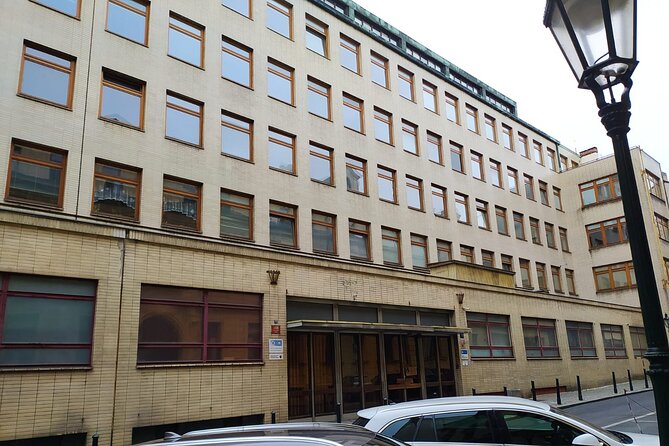
The tour includes a visit to the Museum of Communism to learn about everyday life under Soviet times. This is where the story turns from street-level sites to curated artifacts and explanations. If your main question is what communism looked like in practice, this stop is the best place on the route to get it.
One practical consideration: confirm that the museum stop happens on your specific departure and ask whether any admission is included. The tour description says you will visit, but museum logistics can vary day to day. I like asking early, before you’re already mid-walk, so you’re not stuck adjusting expectations on the fly.
What I’d do if you want maximum value here is bring a small list of questions before you arrive. For example:
- How did ordinary routines get affected by the system?
- What symbols and artifacts best explain the regime’s daily control?
- How do exhibits connect propaganda to real life?
A museum visit is great for clarifying what the guide says on the street, but only if you let it answer your questions.
Pacing and comfort: a full 20th-century timeline in a tight 3-hour window
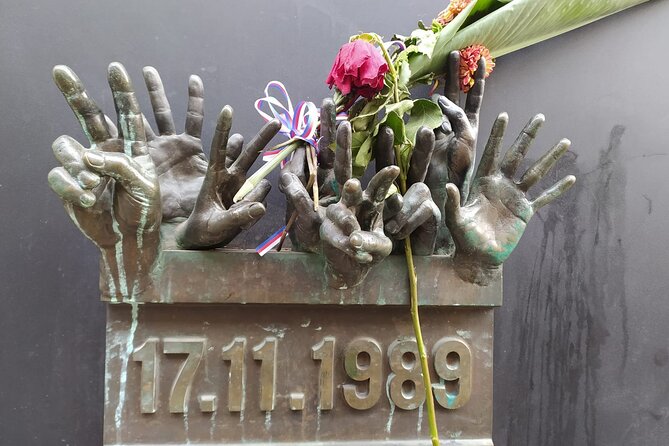
This is a private tour, but it still has one hard reality: 20th-century history from WWI through Soviet rule to independence in about three hours is a lot of ground to cover, even with a talented guide. The structure is designed to give you the highlights quickly, which means:
- you walk mostly at an efficient pace
- you likely spend some time standing during explanations
- you may not get long sitting breaks even if the group stops are longer than you expect
That’s not a deal-breaker, but it’s a consideration. If you have limited stamina, tell the guide early. Private format usually helps, because the guide can adjust attention and pacing for your needs within the time window.
Also watch the weather. Central Prague can throw rain at you without warning, and standing time adds up fast. If there’s even a chance of showers, bring a light rain layer or compact umbrella so you can focus on the story, not the discomfort.
Price and value: what $51.06 buys you in Prague
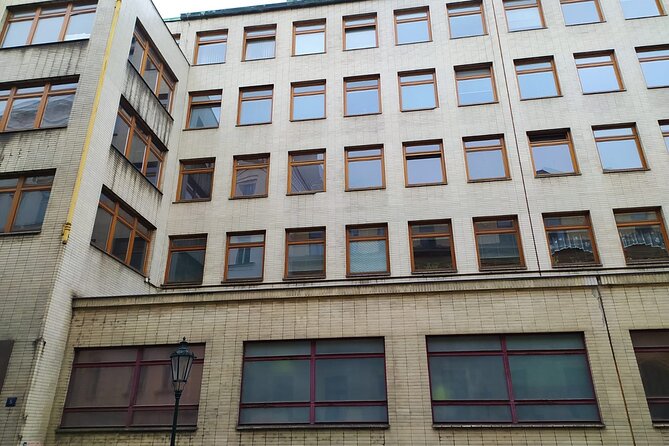
At $51.06 per person for a private, historian-led walk of about three hours, the value is strongest if you care about context more than sightseeing checklists. You’re paying for a person who can connect buildings to events and make the timeline intelligible fast.
What’s included is a professional guide, the private tour format, and hotel pickup where the guide meets you (hotel pickup is described as guide only). You also get a mobile ticket and group discounts are offered.
What is not included is transportation to and from attractions, at your own expense. The tour itself is largely walking, with public transport sometimes used when needed. In real life, that means you should budget a bit for local transit if your stop distances or timing require it.
For me, the best value scenario is traveling with one or more people you can share the private cost with, especially if you want the guide’s attention rather than audio apps. If you’re traveling solo, it can still be a fair spend, but your money-to-meaning ratio gets better when you can fully lean into questions.
One more value tip: this tour is on people’s radars early, with an average booking lead time of about 51 days. If your dates are set, book sooner rather than later.
Tour logistics that actually matter once you’re in Prague
Your meeting point is listed at Na Příkopě 864/28, Nové Město, 110 00 Praha-Praha 1, Czechia. Pickup is offered at hotels and residences across Prague, with the practical note that hotel pickup is guide only.
You’ll see options for morning and afternoon departure times, and operation hours run daily from 8:00 AM to 8:00 PM (with the stated operating window covering 2021 through 2026). That matters because it gives you scheduling flexibility around museums, meals, and other classic sights.
Language is English, and the tour is described as a private activity with only your group participating. Service animals are allowed, and the tour says most travelers can participate.
The big takeaway: because this is a walking tour with central stops and short windows, it rewards showing up ready. Comfortable shoes, weather protection, and a bit of mental focus go a long way.
Who should book this wartime and totality tour?
I’d book this if you:
- want more than surface-level “old town” Prague and prefer the city as a political and human story
- like guided interpretation tied to real places, especially around WWII and Soviet rule
- enjoy the arc of resistance and independence, not just the darker chapters
- want a museum stop that helps you understand daily life under the regime
You might skip it if you want a very relaxed stroll with lots of sitting and no urgency. Also, if you have very limited mobility, you should double-check how the route is managed on your day. The tour is described as walk-focused, with some public transport used when needed.
Should you book this Wars and Totality private walking tour?
If you want a concentrated, private way to understand Prague’s 20th-century suffering and resilience, I think this is a strong choice. The route is built around key sites tied to Nazi and Soviet power, and it includes the Museum of Communism to ground the story in everyday life, not just political theory.
My main caution is practical: go in knowing the timeline coverage is ambitious. You may walk more than you expect, and you may stand during explanations. If you can handle a moderate pace and you bring curiosity, this tour can feel both sobering and deeply meaningful.
FAQ
FAQ
How long is the Wars and Totality private walking tour in Prague?
It is listed as approximately 3 hours, and the walking time is described as about 3.5 hours.
Is the tour private or shared?
It is a private tour. Only your group will participate.
What language is the tour offered in?
The tour is offered in English.
Do I get hotel pickup?
Yes, pickup is provided at all hotels or residences in Prague, and the pickup is described as guide only.
Where does the tour start?
The start location is Na Příkopě 864/28, Nové Město, 110 00 Praha-Praha 1, Czechia.
Is transportation included in the tour price?
No. Transportation to or from attractions is not included, and if public transport is needed it is at your own expense.
What stops are included on the route?
Stops listed include Modernista Art Shop Municipal House, Republic Square (Municipal House area), Petschek Palace (former seat of the Gestapo), Wenceslas Monument, and Narodni. The Museum of Communism is also included as a visit in the tour description.
How much does the tour cost?
The price is listed as $51.06 per person.
Are tickets involved for the stops?
The tour information lists free admission for the listed stops such as Modernista Art Shop Municipal House, Republic Square, Petschek Palace, Wenceslas Monument, and Narodni. The tour also describes a visit to the Museum of Communism.
Are there multiple departure times?
Yes, there are various morning and afternoon departure times, with operating hours shown as 8:00 AM to 8:00 PM daily.
Can I cancel for a refund?
Yes. You can cancel up to 24 hours in advance for a full refund.
More Walking Tours in Prague
More Tours in Prague
More Tour Reviews in Prague
Not for you? Here's more nearby things to do in Prague we have reviewed






Prague Walking Tours, compared.
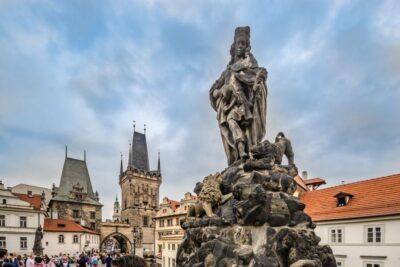 ★ 4.73-Hour Walking Tour of Old Town & Prague CastleFrom $305,696 reviews
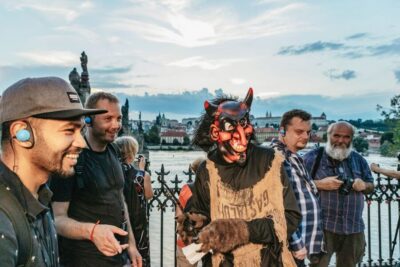 ★ 4.4Ghost Walking Tour Where Legends Come To LifeFrom $275,253 reviews
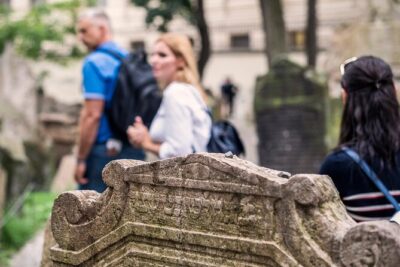 ★ 4.7Jewish Quarter Walking Tour with Admission TicketsFrom $763,729 reviews
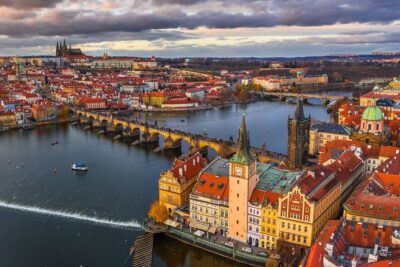 ★ 5.0Prague Guided Walking Tour and Cruise with Authentic Czech LunchFrom $1023,627 reviews
 ★ 4.6Old Town and Jewish Quarter Guided Walking TourFrom $222,847 reviews
 ★ 4.5Prague Ghost and Legend of Old Town Walking TourFrom $212,630 reviews
 ★ 5.0Prague 3-hour Afternoon Walking Tour including Prague CastleFrom $531,899 reviews
 ★ 4.7Ghosts and Legends Nighttime Guided Walking TourFrom $221,462 reviews
Browse the lists this tour appears in