
REVIEW · WALKING TOURS
Walking through ages: 11th to 21st century, Prague flavoured
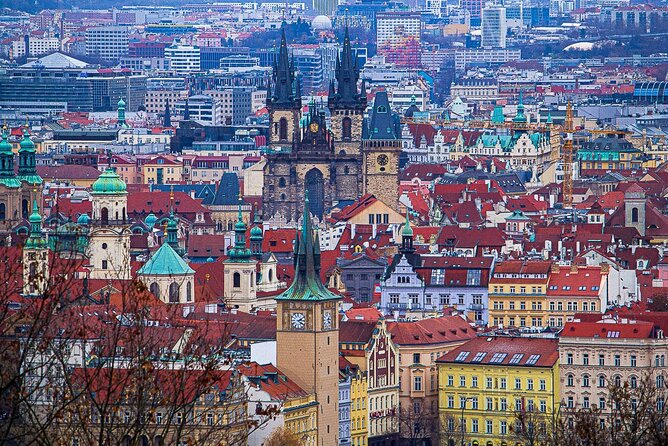
Prague changes fast, if you watch closely. This guided walk strings Prague Castle and Charles Bridge together with Josefov, Old Town Square, and modern Wenceslas Square, so you get a real feel for how Prague evolved from medieval power to 20th-century identity. I love how the guide, Vadim, answers questions with clear street-level context, and I love the built-in momentum that keeps the story moving without turning into a museum day. One drawback to plan for: the tour is exterior only, so several major sights have admission fees you would pay separately if you want to go inside.
The best part is the format. It’s a small group with a maximum of 10, in English, and you get a guide service that makes the walking stops feel like chapters, not a checklist.
You start at Prague Castle and finish at Wenceslas Square, roughly 4 hours later. Public transport is part of getting up to the hill (listed at €2 per person), and you’ll want water and snacks because admission tickets are not included for many indoor stops.
Key things that make this Prague walking tour work
- Vadim keeps it lively and adjusts to timing, including questions and pace
- Tram hints help you navigate fast after you’re done with the tour
- You hop centuries in a single loop, from castle power to Wenceslas Square’s modern layers
- Charles Bridge and Old Town Square are built for viewpoints, great for photos and orientation
- Josefov and the Old-New Synagogue bring a deeper Prague flavor, including the Golem legend
- Art Nouveau and Czech independence show up near the end, not just medieval streets
A half-day Prague story, from castle power to Wenceslas Square
This is the kind of tour that works best when you want clarity. You’re not just seeing monuments, you’re building a mental map of how Prague is organized by eras and neighborhoods.
The theme is basically ages, 11th through the 21st century. You start on the castle hill, move through Baroque-era Lesser Town, cross the iconic river, then shift into Josefov and the Old Town core. By the time you reach Wenceslas Square, you’re looking at the Czech story after independence, filtered through early 1900s design and later 20th-century change.
You also feel the rhythm. Stops are short, so you get quick orientation at each place instead of spending the whole day trapped in lines.
You can also read our reviews of more walking tours in Prague

Getting started at Prague Castle, plus practical tram guidance
You begin at Prague Castle, at Pražský hrad 169 00 in Prague 6. The start time is 10:00 am, and the tour ends at Wenceslas Square at Václavské nám., 110 00 Prague 1.
Pickup is offered, and that helps if you are not feeling confident about the tram system yet. Even when pickup is not the main plan, the walking tour still uses public transport to get to the starting area, and public transport is listed at €2 per person.
I like how this detail changes your whole trip. If you can learn the basic tram moves on day one, you stop paying the tourist tax later. After all, Prague rewards people who can move efficiently between hills and river crossings.
Prague Castle and St. Vitus: the story starts at the top
Your first stop is Prague Castle, Prague’s dominant landmark and a UNESCO World Heritage Site. The seat of Bohemian rulers since the 10th century, it’s the obvious place to start if you want the political backbone of the city.
You get about 10 minutes here, with admission ticket not included. Translation: you’ll get outside context and key sight lines, not a full interior tour. If you do want to go inside, this tour does not bundle that cost, so you’ll need to budget separately.
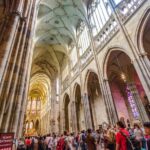
From there, you get a brief look at St. Vitus Cathedral, another headline landmark. It’s a world-famous Gothic masterpiece and a symbol of Czech state, and you spend roughly 10 minutes. Again, admission is not included, so treat this as a focused preview.
If you’re trying to decide where to spend your money later, this sequence helps. You see what the building is for and why people care, then you can choose your next ticket based on interest.
Hradčanské náměstí views: the castle forecourt moment
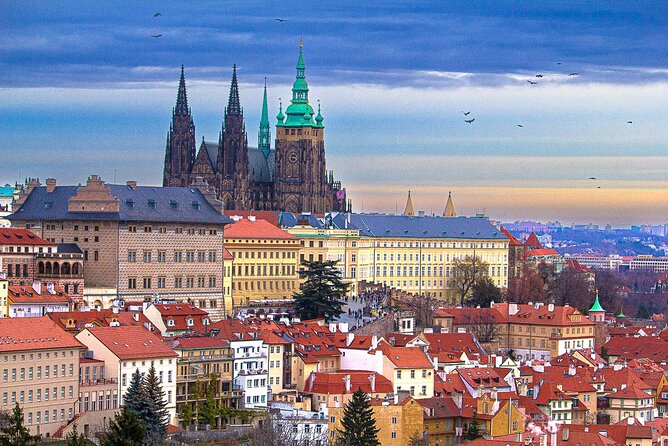
Next comes Hradcanske Namesti, the square in front of Prague Castle. You’re there for about 15 minutes, and admission is free.
This is one of those stops that feels small but matters. You get the “step back and see it” viewpoint, framed by 17th-century palaces of powerful noblemen. It also gives you an easy way to orient your photos and understand the castle grounds layout.
If you’ve ever felt like Prague Castle is a maze once you arrive, this square helps you anchor the geography before you move on.
Lesser Town and Malá Strana: Baroque streets you can actually enjoy
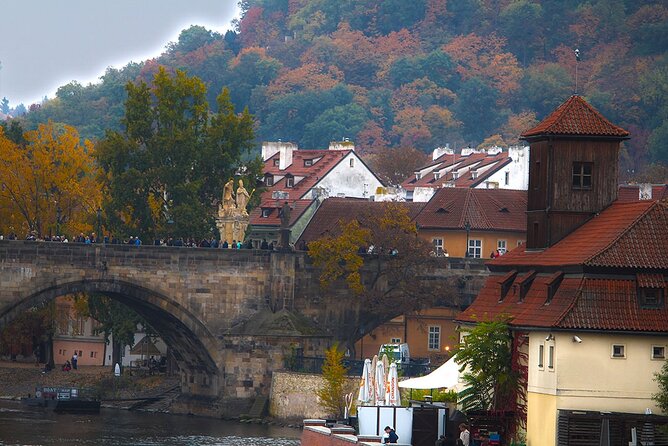
Then the tour shifts into Lesser Town. You get about 30 minutes here, and it’s free to enjoy the exterior sights.
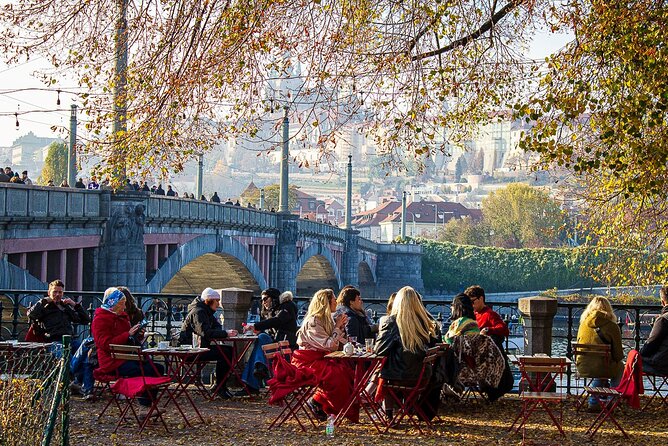
This area is known for being one of the best preserved Baroque quarters of Europe, with gardens, majestic palaces, and fancy houses. The practical part: it’s also where you can slow down a touch. You’ll find cozy restaurants and small shops, which makes it easier to recover energy before the river crossing.
You then stop at Malostranske namesti, the center of the Lesser Town. About 15 minutes here, with free entry for exterior viewing. It’s especially useful because you get a compact hit of the neighborhood’s “center of gravity.”


St. Nicholas Church dome views: a skyline landmark
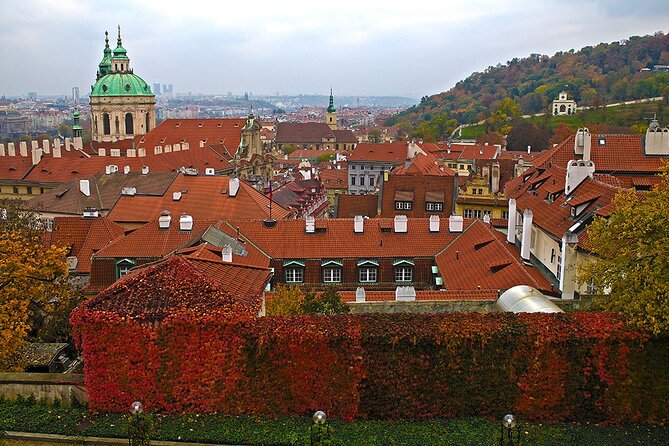
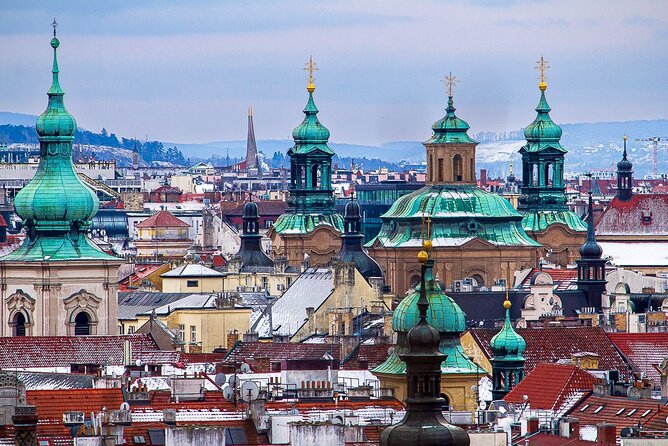
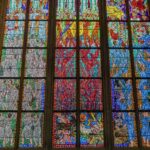
Your next landmark is St Nicholas Church, a jewel of Prague Baroque architecture. You get roughly 10 minutes, and admission is not included.
The highlight is its dome, one of the most recognizable things on Prague’s skyline. Even if you do not go inside, this is a spot where exterior viewing makes sense, because the dome is the point.
It’s also a good mental bridge between the Baroque feel of Lesser Town and the next big open view, across the river.
Charles Bridge: 700 years of statues and perspective
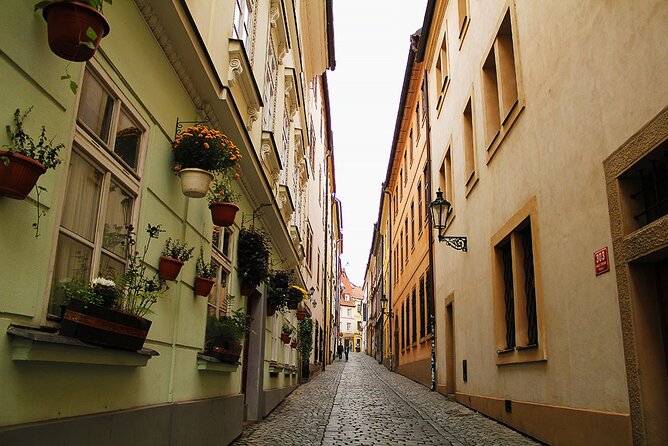
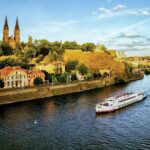
Now you hit the big icon: Charles Bridge. It’s one of Prague’s main landmarks, about 700 years old, and decorated with statues.
You spend around 15 minutes, and admission is free. This stop is all about views. From the bridge you can take in the city’s layering, and it’s a natural photo stop that also works as a navigation anchor.
If you want a useful tip, treat this like your mid-tour reset. Stand, look, then walk a few steps and look again. Prague’s river views change quickly as you move, so don’t just take one photo and leave.
Josefov, Prague’s Jewish Quarter: style shifts you can see
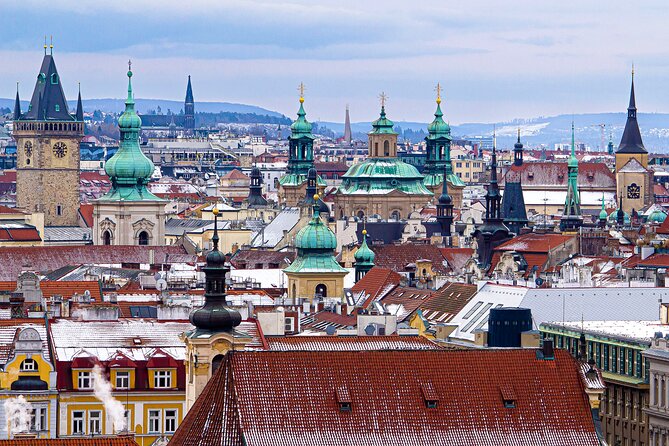
After the bridge, you head to Josefov, Prague’s Jewish quarter. You get about 30 minutes, and admission is free for exterior viewing.
Josefov was rebuilt across the border of the 19th and 20th centuries, which means you see neorenaissance and art nouveau styles in the same area where you also feel the older Jewish history. That mix is the “Prague flavor” part. You are not only chasing medieval; you’re seeing how the city remade itself.
This stop also helps you understand Prague as a living city. It wasn’t frozen in time, and the architecture shows that.
Old-New Synagogue and the Golem legend
Then you get to the Old-New Synagogue, one of the oldest surviving synagogues in Europe, dating to 1270. You have about 10 minutes, and admission is not included.
This is where Prague storytelling shows up. There’s a legend about a closed attic holding the remains of the Golem, a human-like creature tied to Jewish folklore. Even if you do not go inside, the legend adds texture to what you’re seeing around Josefov.
If you like cities where the past lives in the stories people still tell, this is a strong stop. It also works well because it comes after you’ve already shifted into Josefov, so it doesn’t feel random.
Old Town Square and the Astronomical Clock area
Next up is Old Town Square. You spend about 20 minutes here, and admission is free.
This is the heart of Prague’s roughly 800-year history, and it’s also where the famous Astronomical clock sits. You likely won’t get a deep “clock tour” with long explanations in a short stop, but you will get the layout and context so you can come back later with better focus.
This is also a place where you can tell when you are tired. If you keep your feet moving and take brief pauses, it stays enjoyable. If you sit too long too early, the next stops will feel like a sprint.
Stare Mesto: universities, Mozart connections, and Old Town context
You then step into Stare Mesto, the Old Town area, for about 30 minutes with free exterior viewing. This part is helpful because you start connecting the dots between the city’s old institutions and its cultural life.
You also pass by Charles University, one of the oldest in Europe, and the Estates Theater area. One specific detail here matters: the Estates Theater is the only theater in the world still in operation where Wolfgang Amadeus Mozart personally conducted his operas.
That’s the kind of fact that turns a walk into something you remember, even if you are not a theater nerd.
Estates Theatre: a Mozart link you can see in one quick stop
Next you have The Estates Theatre, for about 10 minutes. Admission is not included.
This stop is short on purpose. You get the landmark context and the Mozart connection, then you move on rather than losing half your day.
If you are the type of person who loves music history, this is an easy highlight. If you are not, at least know this is where the tour shows you why Prague earned its reputation as a cultural hub.
Obecní dům: Art Nouveau and 1918 Czech independence
Then comes Obecni Dum, a major Art Nouveau building and a turning point in the tour’s “ages” theme. You spend about 10 minutes and admission is not included.
The building was completed on the eve of Czechoslovak independence, and it was conceived as a celebration of Czech art and national identity. It’s also connected to the proclamation of the new state in 1918.
This is one of my favorite kinds of stops because it pulls Prague out of medieval tourism mode. You see the city making a statement about modern identity, right in the middle of the walk.
Wenceslas Square: where Prague’s 20th and 21st centuries show up
Your final major stop is Wenceslas Square. You get about 20 minutes, with free exterior viewing.
This is the main square of new-time Prague, a place that never sleeps. The interesting part for a walking-tour day is the mix of eras and styles you can spot along the way, including the gothic Church of Our Lady of the Snows, planned to be the biggest church in Prague, plus neo-classical elements like the National Museum building.
You’ll also notice Art Deco influences like Hotel Europa, plus rondocubism from the early 20th century. The square becomes a quick visual timeline. It’s not subtle, and that’s exactly why it works after the castle and bridge.
Price and logistics: what you really pay for at $60.21
At $60.21 per person for about 4 hours, you’re paying mainly for the guide service and the planning that strings the route together.
You do not pay for interior admissions. Several stops explicitly list admission as not included, and the tour is exterior only. That doesn’t make it bad, it just changes expectations. If you want to go inside multiple landmarks, budget extra for tickets and time.
Also factor in public transport: public transport is listed at €2 per person, since you reach the starting area via transit. Private transportation is not included.
The value calculation changes if you travel with a time crunch. A guide helps you avoid dead ends, helps you understand why each place matters, and gives you a cleaner path through a city that can feel steep and sprawling.
Small group max 10 and Vadim’s Q and A energy
One reason this tour earns top marks is the guide’s style. Vadim is described as very knowledgeable across Prague’s areas old and new, and he’s willing to answer lots of questions.
That question-answer flow matters on a short walking day. You get to use the guide like a live handbook, not just a person reading dates. The other thing I like is the flexibility: the tour can be tailored to timing requirements, which is a big deal if you have dinner plans or you’re sensitive to walking pace.
And yes, he also shared food and drink recommendations. That kind of practical advice helps because Prague’s best meals are often a few streets off the postcard paths.
Who this tour is best for
This walk is a strong match if you want:
- A first-time orientation to Prague, especially if you want a loop that hits the big must-sees without a huge day commitment
- A guide-led way to connect medieval power sites with modern Prague identity in one route
- A short day plan that stays mostly exterior, so you can choose which interiors to add later
It may not be your best fit if you want:
- A full interior museum crawl with lots of paid entry sites
- A slow, deep architectural study where you spend long periods inside cathedrals or theaters
Should you book this Prague 11th to 21st century walking tour?
I’d book it if you’re aiming for momentum and context in a half day. The route hits Prague Castle, St. Vitus, Charles Bridge, Josefov, Old Town Square, the Mozart-linked Estates Theatre area, and the modern identity landmarks at Obecni Dum and Wenceslas Square. That is a lot of city for the time, and the small group size keeps it interactive.
If you’re the type who plans ticketed interior visits, just treat this as the best pre-game. You’ll learn what each place is and why it matters, then you can decide what to pay for afterward. And if you want help getting your bearings, Vadim’s tram tips and practical recommendations make the tour pay off beyond the walk itself.
FAQ
What is the duration and start time?
The tour lasts about 4 hours and starts at 10:00 am. It runs from Prague Castle to Wenceslas Square.
Is pickup included?
Pickup is offered. The tour begins at Pražský hrad 169 00 Prague 6 and ends at Wenceslas Square.
Is admission included?
No. Admission fees are not included because the tour is exterior only. Some sights have admission ticket not included, while others are free to view from the outside.
What is the price per person?
The price is $60.21 per person.
Is the tour in English?
Yes, the tour is offered in English.
How do you get to the starting area?
This is a walking tour, and you get to the starting point using public transport. Public transportation is listed at €2.00 per person.
Can I cancel for a full refund?
Free cancellation is available. You can cancel up to 24 hours in advance of the experience start time for a full refund.
More Walking Tours in Prague
More Tour Reviews in Prague
Not for you? Here's more nearby things to do in Prague we have reviewed







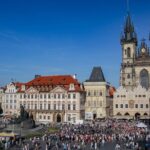

Walking Tours, compared.
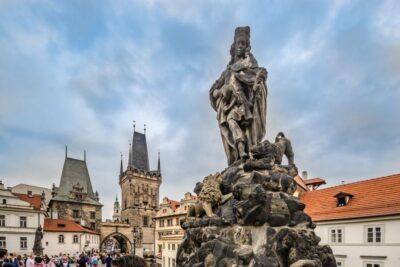 ★ 4.73-Hour Walking Tour of Old Town & Prague CastleFrom $305,696 reviews
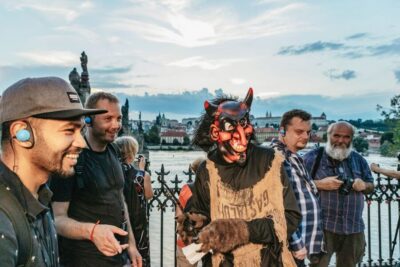 ★ 4.4Ghost Walking Tour Where Legends Come To LifeFrom $275,253 reviews
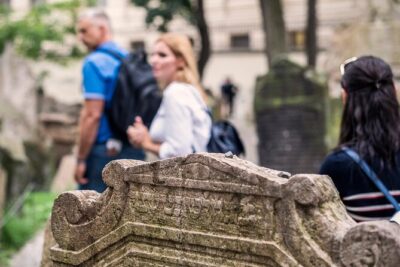 ★ 4.7Jewish Quarter Walking Tour with Admission TicketsFrom $763,729 reviews
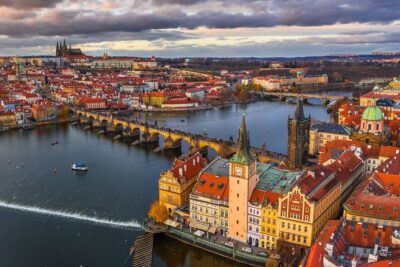 ★ 5.0Prague Guided Walking Tour and Cruise with Authentic Czech LunchFrom $1023,627 reviews
 ★ 4.6Old Town and Jewish Quarter Guided Walking TourFrom $222,847 reviews
 ★ 4.5Prague Ghost and Legend of Old Town Walking TourFrom $212,630 reviews
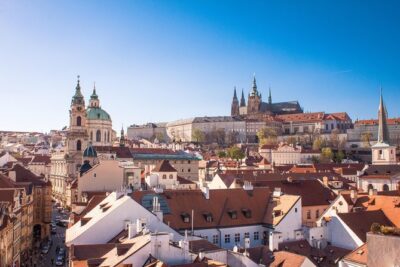 ★ 5.0Prague 3-hour Afternoon Walking Tour including Prague CastleFrom $531,899 reviews
 ★ 4.7Ghosts and Legends Nighttime Guided Walking TourFrom $221,462 reviews
Browse the lists this tour appears in