
REVIEW · PRAGUE MUSEUMS & GALLERIES
IAM Illusion Art Museum Entry Ticket
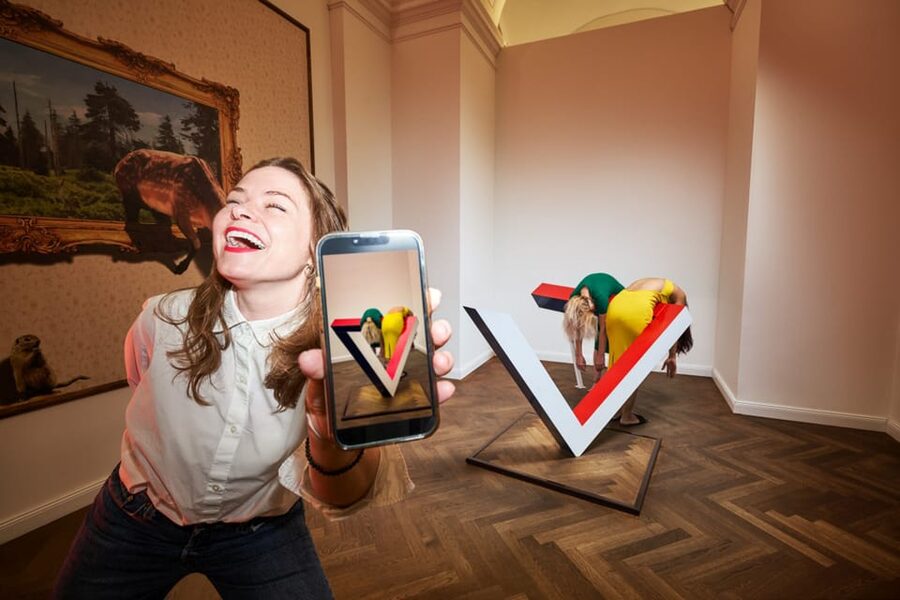
Prague stops being flat at IAM Illusion Art Museum. This small, playful museum turns optical illusions into hands-on photo effects, with QR codes, an app, and staff who help you get the shot. You’ll see famous illusion styles, from reverse perspective to anamorphic 3D, plus interactive moments where you star in the artwork.
One thing to plan for: it can feel crowded at peak times, and the museum is on the smaller side, so your best experience comes when you go with photo patience.
Key takeaways before you buy
- QR codes and an app power the effects, so bring a charged smartphone and be ready to scan as you go
- Reverse perspective and anamorphosis show how viewpoint changes what your eyes believe
- Staff help with photos (people even mention help from Adam and Tomasz with QR use and picture poses)
- Plan 60 to 90 minutes, not a half-day, since the museum moves fast
- Crowding can interrupt photos, so timing matters
- Not wheelchair suitable, so check access needs before you go
IAM Illusion Art Museum Prague, what it actually feels like
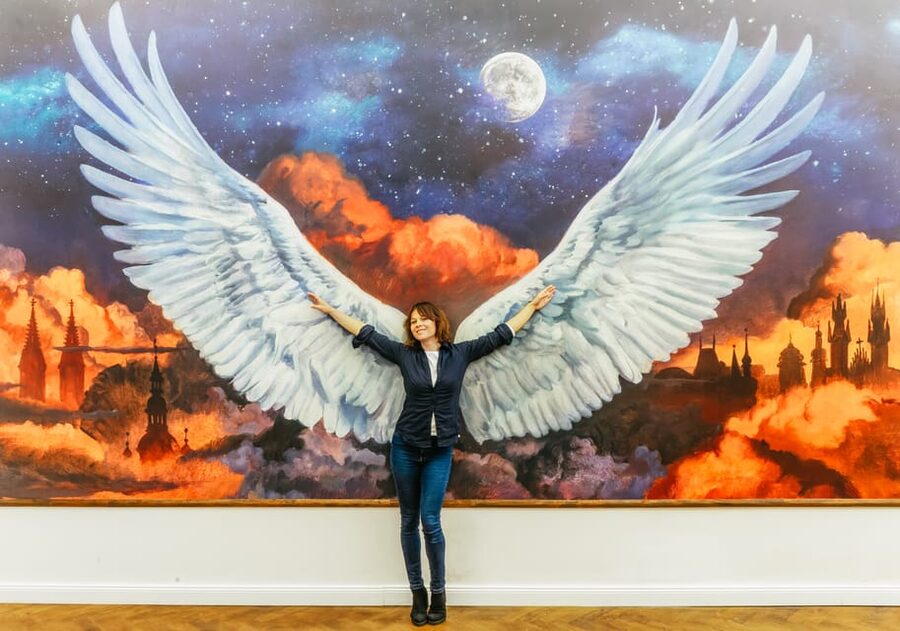
If you like museums that make you do something, IAM Illusion Art Museum is a great stop in Prague. Instead of standing back and reading labels all day, you move, scan, and adjust your angle. The theme is simple: art that plays games with perspective, light, and how your brain guesses what you’re seeing.
I especially like the way the museum mixes classic illusion techniques with modern tools. You go from physical tricks, like anamorphoses that only work from a specific spot, to technology that responds to your camera. The result is an art break that feels like entertainment, but still has real educational structure.
You’ll also notice the staff are a big part of the value. When people say they got excellent photo help, that matters here. Illusion art often depends on exact placement, and having someone point out the right angle or explain the QR step saves time and frustration.
The one practical drawback is crowding. When too many people target the same photo position, it can turn into a choreography problem. So go at a calmer time of day if you can, and don’t expect every effect to be instantly accessible the moment you arrive.
More Prague city tours, river trips, and Czech day trips to compare
Buying your ticket and getting your timing right
This is a 1-day museum ticket. The visit is short enough to fit between Prague highlights, but long enough to feel like a real activity. Based on common visit pacing, think about 60 to 90 minutes. Some people clear it faster, especially if they focus mainly on the photo spots.
The museum also uses starting times. If you have flexibility, pick a time that avoids peak foot traffic. You’ll get better photos and a calmer walk through the rooms.
Price is $16 per person, and for the experience you get, it’s usually fair value. You’re not just paying for static displays. You get:
- Interactive exhibits where you participate
- Photo-focused installations
- Included audio guidance options in many languages
- QR code and app-based effects that make your smartphone useful rather than distracting
If you’re expecting a giant museum complex, adjust your expectations. It is small. That’s not automatically bad, it just changes how you should plan. You will likely be done in about an hour and a half, so pair it with other nearby sights for a balanced day.
What you should bring: camera, phone, and a little patience
Come ready to document what you see. You should bring a camera and a charged smartphone. The museum leans on camera-triggered effects, especially QR codes and app features. If your phone battery is low, you’ll feel it immediately.
From a comfort standpoint, the museum is indoors and some visitors have flagged limited air conditioning. Prague weather can swing, so on hot days or stuffy days, you’ll enjoy it more if you schedule it earlier or later in the day rather than midday.
Pets are not allowed, though assistance dogs are allowed. And mobility access is limited because it’s not suitable for wheelchair users.
Entering the illusion zone, your first scans and photo wins
The experience starts right away with the idea that your viewpoint is part of the artwork. Expect stations where you scan a code, move into position, and see the scene change. Many installations reward you for doing exactly what the exhibit suggests, then redoing it slightly differently to see a second effect.
Here’s the practical approach that works best:
- Start at a normal walking pace. Let the first room teach you the rhythm.
- When you hit a QR or app moment, pause and follow the instruction at eye level.
- Take one photo quickly from the suggested spot.
- Then reposition a step left or right if the display indicates a specific angle.
You’ll notice why staff help is such a big deal. People specifically mention being guided through QR codes and photo positions. When you get it right the first time, the museum feels like it’s designed for you. When you don’t, it turns into time spent guessing.
Also, if you run into app issues, don’t panic. One visitor noted their phone wasn’t compatible with the app, and they still managed to make it work by going around again. In other words, the museum still offers plenty even if the tech portion doesn’t cooperate perfectly with your device.
The artists and styles you’ll see, from reverse perspective to metallurgical art
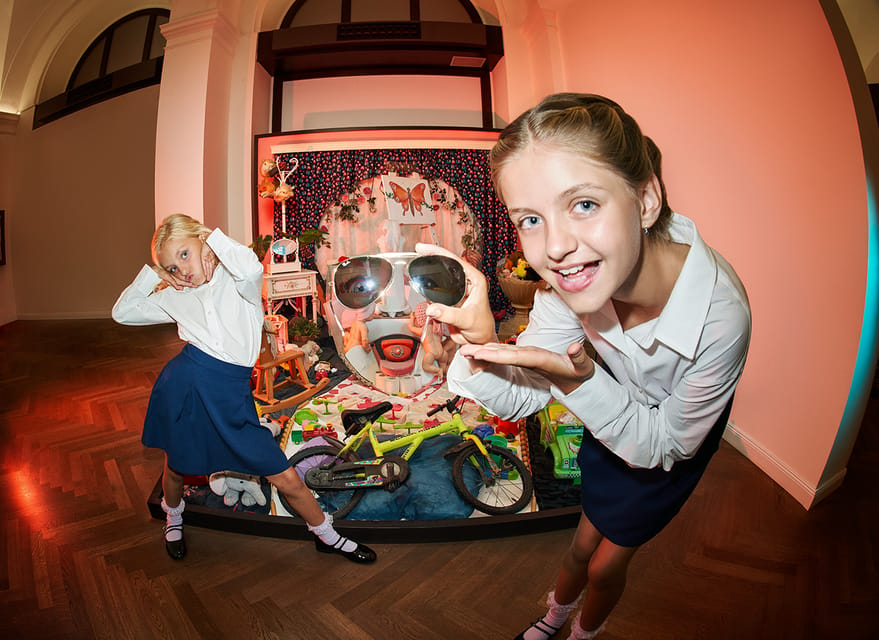
IAM is built around different illusion styles, so it doesn’t feel repetitive. As you move through the rooms, keep an eye out for the types of tricks each artist uses.
You can also read our reviews of more museum experiences in Prague
Reverse perspective, where the rules flip
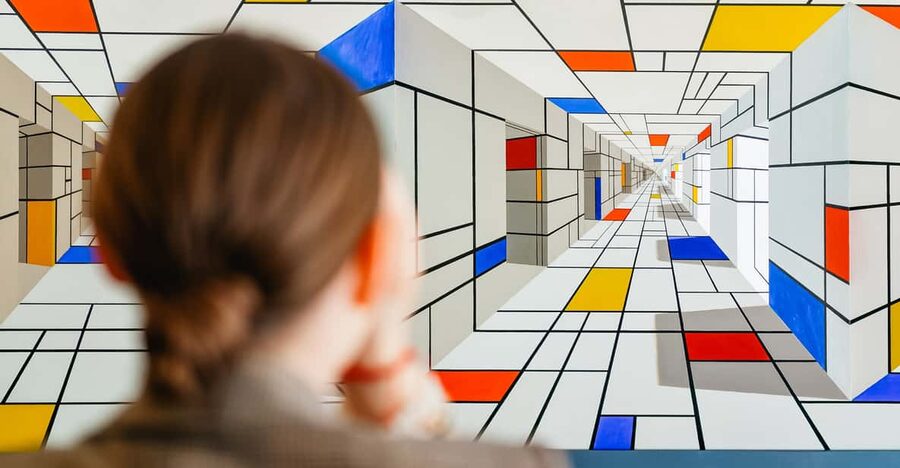
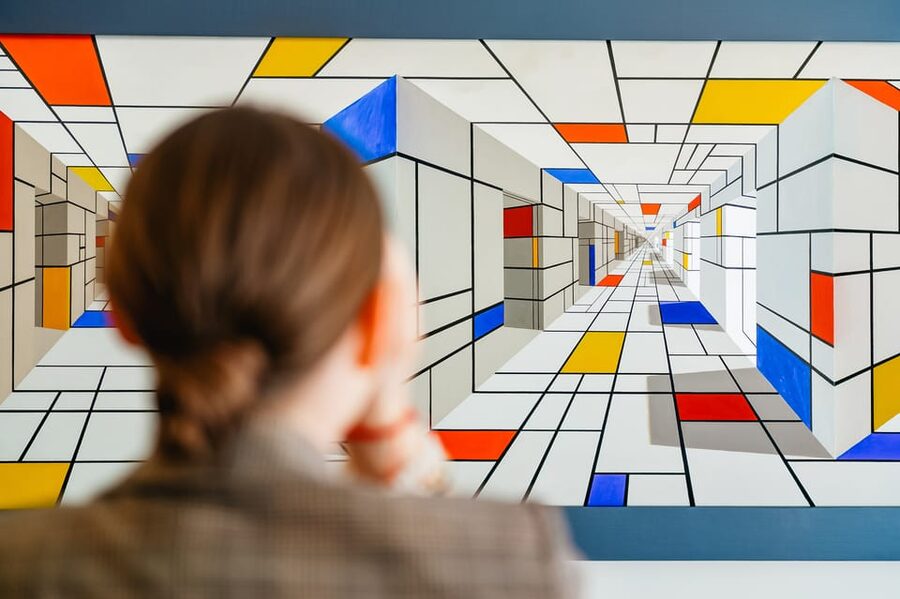
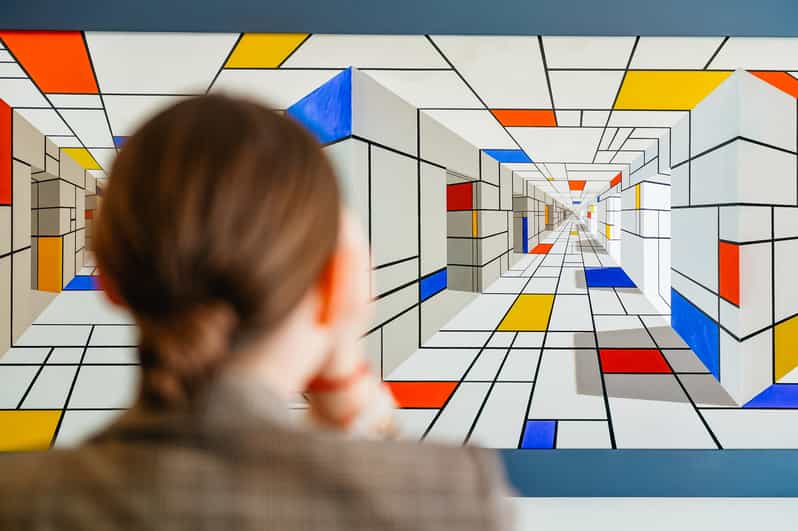
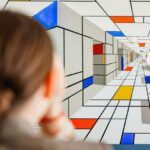
One highlight is reverse perspectives by British artist Patrick Hughes. Reverse perspective takes a familiar trick and turns it on its head. From one angle, the scene looks ordinary. From the right spot, the depth and scale behavior contradicts what your brain expects.
This is one of those installations where a good photo needs both alignment and timing. You’ll often be asked, or you’ll naturally realize, that you need to stand exactly where the effect expects you. The payoff is strong because the difference between before and after is obvious in a photo.
Anamorphosis, the 3D image hidden in plain sight
You’ll also see 3D anamorphic creations by Patrik Proško. Anamorphosis is the style where the artwork only looks correct from a particular angle or viewpoint. The museum makes this easy to experience because it uses the space to guide you. You walk to the spot and then the image “snaps” into something readable or dimensional.
This is great for anyone who likes science-y visual tricks without needing a lecture. Your eyes do the work. Your feet do the positioning.
Metallurgical paintings, physical materials as illusion
Another named artist is Ladislav Vlna, with original metallurgical paintings. This part adds a different flavor. Instead of only relying on perspective, it leans on how materials and surfaces can create effects. It’s a reminder that illusion art isn’t only optical. Texture and technique matter too.
If you want a museum moment that feels less like a photo booth and more like art appreciation, this kind of work helps balance the experience.
Optical reliefs and distorted 3D, where your brain needs a second look
Several artists focus on distortion and depth cues.
- Ivana Štenclová brings optical reliefs, which play with how raised surfaces appear to your eyes.
- Zdeněk Daňek and Jan Jírovec use distorted 3D paintings that manipulate shape so your brain reads one form while the artwork is doing something else entirely.
These pieces are the ones where slowing down helps. Don’t just fire off a photo and move on. Take 10 seconds, tilt your head slightly, and notice how the illusion changes. That’s the whole point: the artwork is teaching you that perception is not a camera. It’s a guess.
Morphing lenticular images and stereoscopic adventures
Two more illusion styles make the museum feel like a journey through different visual technologies.
David Strauzz is represented with morphing lenticular images. Lenticular art can create motion and transformation when you move, because separate image strips align differently depending on your viewing angle. It’s a “wait, did that move?” moment that never feels old.
You’ll also see stereoscopic photos tied to adventurers Zikmund and Hanzelka. Stereoscopy is about depth, created by offset perspectives. It’s a nice change of pace because it ties illusion back to real history and exploration, not only to modern tech tricks.
Interactive moments you can’t do from the hallway
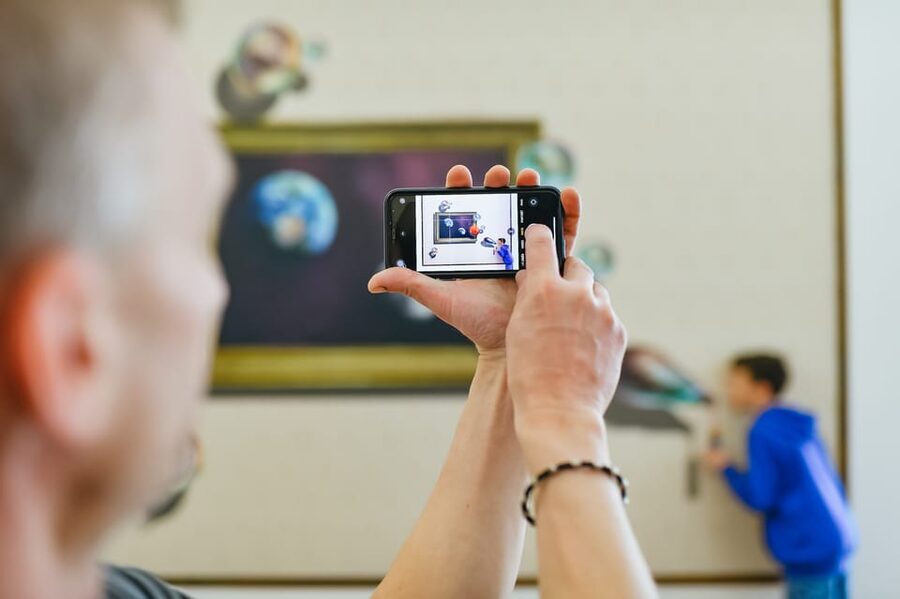
The museum isn’t only about looking. It’s designed for interaction, and that’s why it works as a Prague activity even when you don’t want another “standing in a line” attraction.
Expect interactive exhibits along these lines:
- Turning 2D images into 3D spaces
- Transforming sculptures into paintings
- Light painting experiments
- Mini cinema content
- An augmented reality option using the museum app
- Chances to star in your own illusory stories
Not every interactive feature will feel equally exciting to everyone, but the overall effect is that you’re not passive. You’re part of the mechanism that makes the illusion work. For kids, it’s usually the best kind of museum. For adults, it’s a relief from the usual “read about it” pace.
And yes, take photos. Many people make that the main reason for visiting because the museum is practically built for camera tricks.
Czech stories in the background, not just eye candy
What makes IAM more than a gimmick is how it uses illusion art to talk about Czech themes. The exhibits connect artworks to Czech history and notable figures. You might see illusory portrayals related to:
- The Swedish siege of Prague
- The fall of the Bohemian monarchy
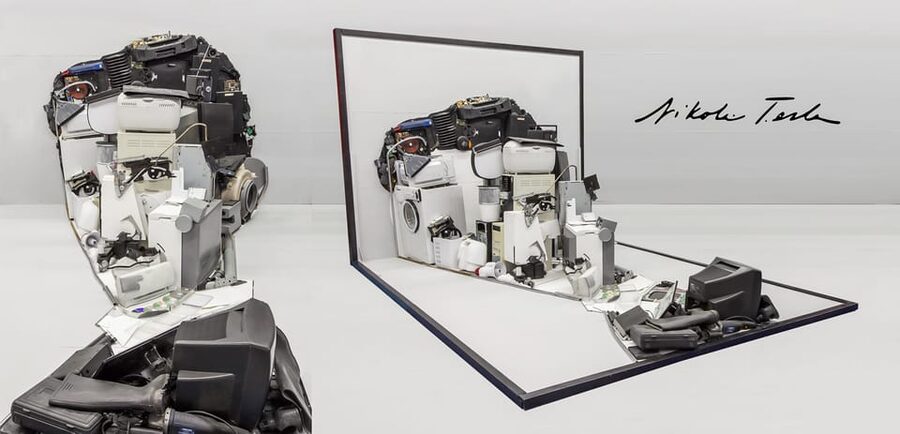
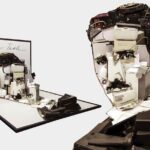
- Figures like St. Agnes of Bohemia, Bedřich Smetana, and Nikola Tesla
- Stories tied to Charles IV, Franz Kafka, Václav Havel, and others
This matters because it gives you something to do besides react to effects. You start asking why illusion artists used these ideas, and how perception and propaganda can overlap in art. Even if you skip reading every label, the audio guidance helps connect what you see to a bigger story.
The audio guide is included and available in English and many other languages, including Czech and several more. If you’re traveling with language needs, this is a practical bonus.
Staff help, QR guidance, and why it improves your photos
One of the most consistently praised parts of this museum is the human support. People describe staff who are helpful with QR codes and photo setups. They’ll also take photos for you, which is handy if you’re traveling as a couple or solo and want a proper shot without handing your phone to strangers.
Names that come up include Adam and Tomasz. When you need help, ask. If an illusion depends on a specific position, your best photo is usually the one staff guide you toward quickly.
Also, if you feel like you’re getting in everyone’s way, don’t just stop. Step aside, let the next person get their shot, then return when the space clears. This museum runs on turn-taking.
Comfort, crowding, and how to avoid the photo bottleneck
Crowding is the main complaint theme, and it’s believable. Several illusion artworks require specific viewing spots, so people naturally cluster. If it’s busy, you might feel rushed or blocked while others are composing.
Your best anti-crowd tactics:
- Go early or late rather than mid-afternoon
- Give each installation one quick attempt, then come back if you want better photos
- Don’t stay directly in front of the exact photo spot longer than needed
Also, the museum has been described as small. That means there’s no long corridor to spread out. If you’re easily frustrated, you’ll have a better time by going with a flexible mindset, and by focusing on the biggest, most different illusions rather than trying to perfect every single shot.
Accessibility and rules, quick but important
A few practical limits matter:
- Not suitable for wheelchair users
- Pets are not allowed (assistance dogs allowed)
- You’ll want a camera and a charged smartphone
- The staff and exhibit flow may require standing and walking between rooms, so wear comfortable shoes
If you need accessibility accommodations, it’s worth checking on arrival, since the info provided here is specific about wheelchair suitability.
Food and timing around the museum
The ticket includes the museum entry, but food and drinks are not included. That said, there may be a cafe option on site, since visitors have mentioned food there. If you want a snack or a coffee, treat it as an add-on, not part of your ticket plan.
Because your visit is usually about an hour to an hour and a half, you can schedule this museum as:
- A rainy day plan
- A short indoor break between outdoor sights
- A late-morning or early-afternoon reset before more walking
Who should book IAM Illusion Art Museum Prague
This ticket is a strong fit if you:
- Want a photo-friendly, interactive museum
- Like optical and perspective tricks
- Enjoy short, high-energy indoor activities
- Travel with kids, since the interactive elements tend to land well
It might not be your best choice if you:
- Want a large, long museum experience
- Need wheelchair accessibility
- Hate crowds and prefer quiet spaces where you can linger
Should you book this ticket?
If your goal is a fun Prague stop that also teaches you something about how images can bend perception, I’d book it. The price is reasonable for the time you get, and the interactive QR and app elements make it feel modern without losing the art focus.
My advice for the best return on your $16: arrive with your phone charged, aim to visit when it’s less busy, and lean on staff help early. If you do that, you’ll come away with photos that actually make sense, plus a clear sense of how illusion art works from reverse perspective to anamorphosis and beyond.
FAQ
How long does the IAM Illusion Art Museum Prague visit take?
The experience is valid for 1 day, and it is commonly done in about 60 to 90 minutes.
What is the price of the IAM Illusion Art Museum entry ticket?
The ticket price is listed as $16 per person.
Is food and drink included with the ticket?
No. Food and drinks are not included.
Do I get an audio guide?
Yes. An audio guide is included, with languages such as English and Czech plus several others.
What languages are available for the audio guide?
The audio guide is listed in English, Czech, Croatian, French, Chinese, German, Italian, Polish, Portuguese, Russian, Spanish, Ukrainian, and Vietnamese.
What should I bring for my visit?
Bring a camera and a charged smartphone.
Are pets allowed in the museum?
Pets are not allowed, but assistance dogs are allowed.
Is the museum wheelchair accessible?
No. It is not suitable for wheelchair users.
What is the cancellation policy?
Free cancellation is available up to 24 hours in advance for a full refund.
More Museum Experiences in Prague
More Tickets in Prague
More Tour Reviews in Prague

Not for you? Here's more nearby things to do in Prague we have reviewed





Prague Museums & Galleries, compared.
 ★ 4.5Klementinum Library & Astronomical Tower Guided TourFrom $185,050 reviews
 ★ 4.3Museum of Fantastic Illusions Entry TicketFrom $174,337 reviews
 ★ 4.3Petřín Tower and Mirror Maze Entry TicketFrom $142,294 reviews
 ★ 4.0Museum of Senses Admission TicketFrom $181,445 reviews
 ★ 5.0IAM Illusion Art Museum Prague Fast Pass TicketFrom $13957 reviews
 ★ 4.5Admission Ticket to Museum of Senses in PragueFrom $19861 reviews
 ★ 4.2Museum of Bricks Entry TicketFrom $14851 reviews
 ★ 4.4Ticket to Audiovisual Light Art at Lumia GalleryFrom $17607 reviews
Browse the lists this tour appears in