
REVIEW · PRAGUE ESCAPE GAMES & VR
Prague City Tour with Virtual Reality
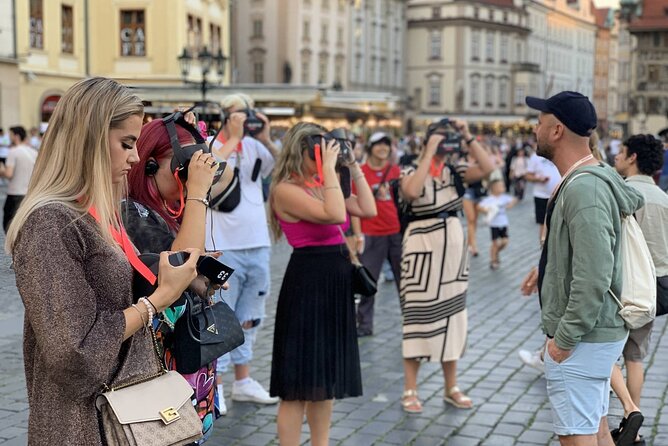
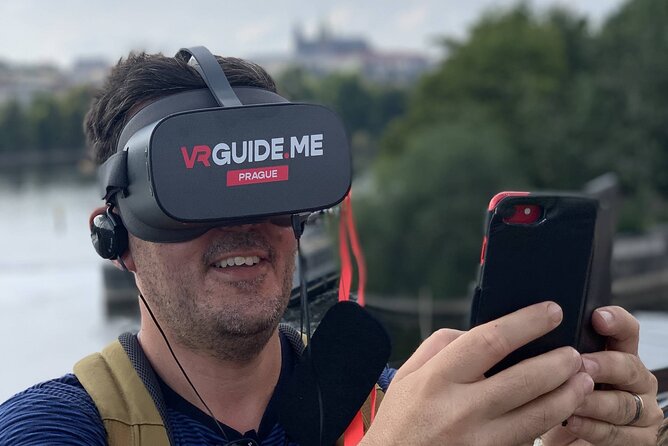
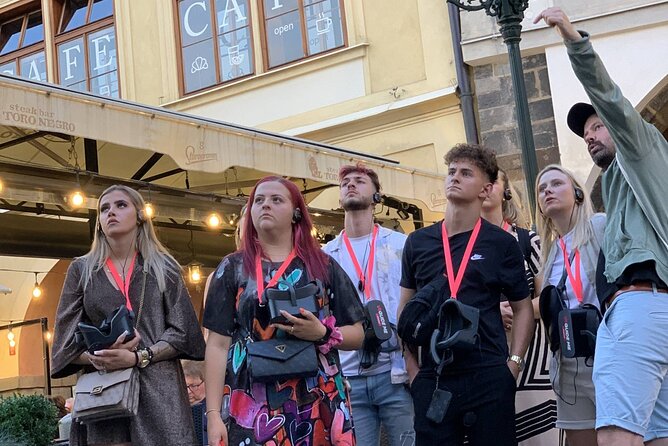
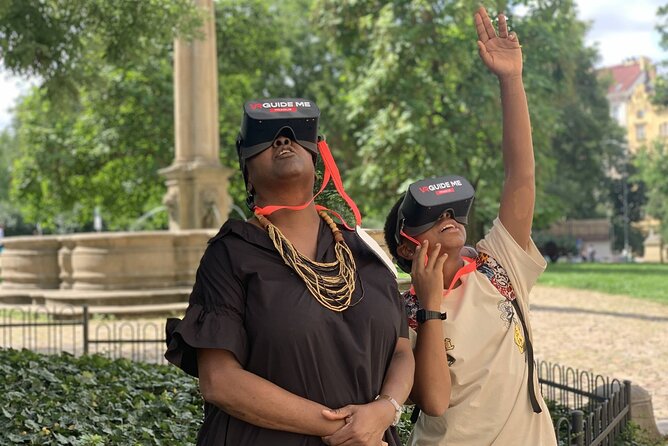
Time travel in Prague, with a VR headset. This Prague City Tour with Virtual Reality uses VR glasses to help you picture key moments in the city, from Old Square in 1900 to the ideas behind Prague Spring. I also love how the walk mixes big landmarks with quieter stops like Kafka’s Head, so you are not stuck in the same photo loop all day. The one thing to consider is that the experience depends on wearing the glasses at several stops, so if you are sensitive to headgear or you hate tech, it may not be your style.
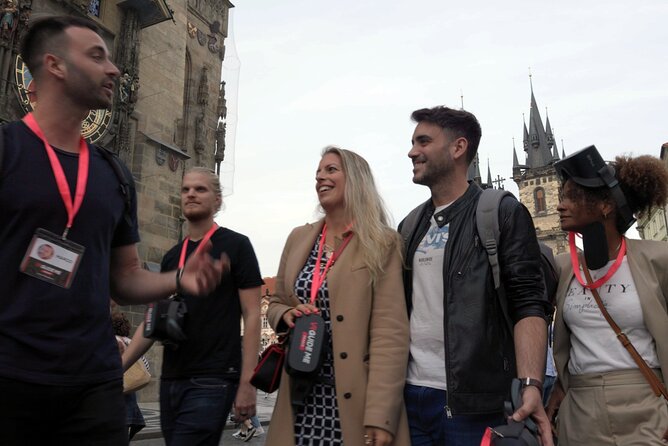
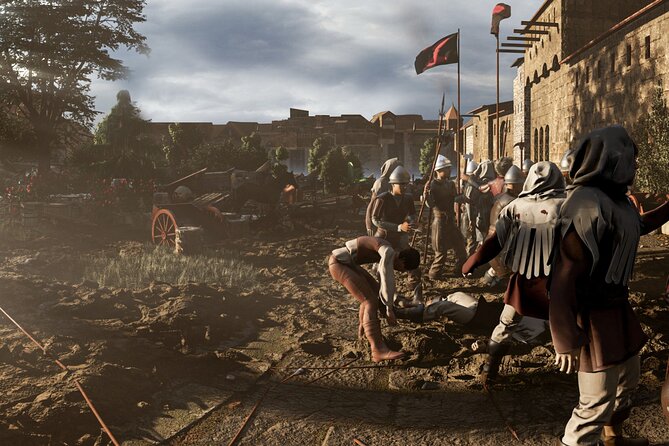
What really makes it work is the small group size, capped at 15 people, and the guide’s pacing. Marco, the guide highlighted in one of the standout comments, was described as kind, professional, and patient, especially when translating for a multi-language group. You get time to ask questions, which helps the facts stick better than the usual rush-through.
Finally, you end in a very modern place, the Dancing House, after a route that spans history, art, and architecture. If the weather is poor, the tour can be affected, so plan for a backup day when Prague decides to be Prague.
Key things I’d circle on your map
- VR glasses at real locations: you see recreated moments while you are standing where they happened.
- Old Square plus major landmarks: you get context for both iconic sights and lesser-visited corners.
- Tight group size (max 15): better conversation with your guide, not just a headset lecture.
- Architecture and art in the mix: Gothic and Baroque church details, plus Kafka’s Head for a modern reset.
- A memorable ending at the Dancing House: modern Prague as the finale to the history-heavy route.
Why Prague’s Old Square and VR glasses set the tone
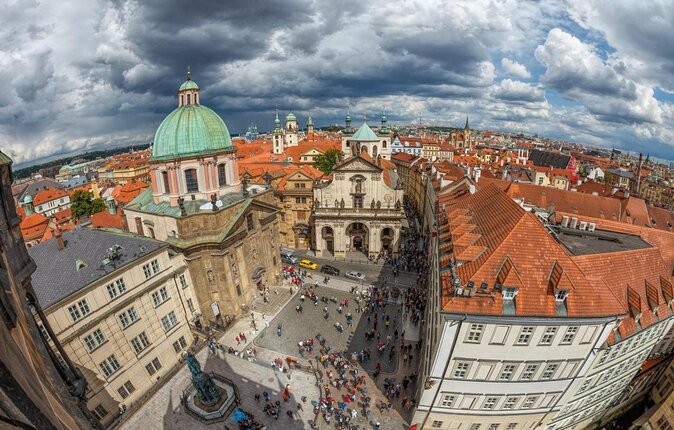
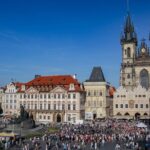
The tour starts in Nové Město and moves you into the historic center fast. Your first big moment is Old Square, the kind of place where Prague feels layered, because it keeps changing while still looking familiar. Here is where the VR part makes the route feel different from your standard walking tour.
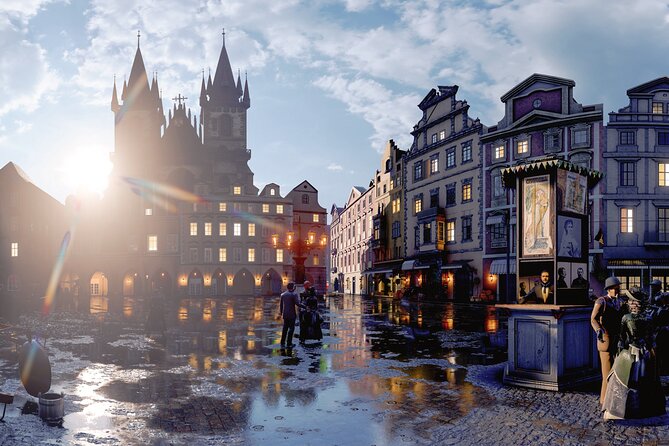
At Old Square, the VR recreation aims to show you what the square looked like in 1900. You are not just hearing dates. You are looking around at current buildings, then switching to a version of the street scene from more than a century ago. That trick matters. Prague can feel confusing on first visit, especially if you are trying to connect stories to buildings. VR gives you that mental picture so later stops make more sense.
The tour also signals what kind of guide experience you will get. VR is not treated like a gimmick. It is used to frame the story, then you walk on while the setting stays in your mind.
You can also read our reviews of more city tours in Prague
The astronomical clock stop: stories, not just sightseeing
Next comes the astronomical clock story, the one Prague is famous for. This stop works best when the guide focuses on what the clock represents and why it became a magnet for attention. You get more than a quick “look up here” moment. The tour approach is built around story, so you understand the clock as part of how people tracked time and meaning.
Even if you have read about the clock before, I like the way a guided explanation can turn a “pretty mechanism” into something more human. You start thinking about who built it, who would gather around it, and why it mattered to daily life. That is when the clock stops being just a landmark and starts feeling like a window into Prague.
If you are the type who likes facts but also wants them connected to place, this stop is a good one to stay present for. Don’t rush past it just because it is famous.
Prague Spring at the National Museum view
One of the tour’s standout strengths is using VR to handle modern history without making it feel like a school lecture. The walk brings you to a main square with views toward the National Museum. Then the guide uses the VR glasses to help you understand what happened during Prague Spring.
This is the part that I think many standard Old Town tours underuse. Prague is full of historic dates, but Prague Spring can feel distant until you see it tied to the spaces where it unfolded. The VR element helps you bridge that gap quickly, so you are not just collecting names and dates.
Practical note: because you are looking through the glasses at specific points, you will want to listen while you are standing in the right spot. If you drift a little, you may miss part of the intended visual reference. Keep your group position and you will be fine.
Inside a Gothic and Baroque church, plus a quick art reset
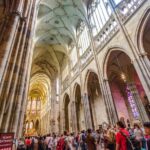
After the Prague Spring context, the tour slows down for a church stop. You enter a Gothic and Baroque church where the focus is on the beauty and height. This is not a random interior detour. The tour uses the architecture to change the pace and reset your senses.
Prague’s churches can be overwhelming if you walk in cold. The tour framing gives you a checklist in your head: look for the vertical drama, notice the mix of styles, and treat the interior as part of the city’s storytelling. Even if you are not the “church person,” you will likely appreciate this stop because it is visual and immediate.
Then comes an art shift with Kafka’s Head, a stop that is more modern than what you might expect mid-walk through historic core streets. Kafka’s Head is the kind of modern sculpture break that stops the day from becoming one long stream of old-world visuals. It gives your eyes somewhere else to land.
I like tours that understand contrast. This route does that on purpose.
Kafka’s Head, Old Town Hall, and the city’s plot twists
Kafka’s Head is an attention-grabber, but the tour does not leave you there. It continues to the Old Town Hall area, where you are surprised by what happened there. The point is not only that it is an important building. It is that the building becomes a stage for stories you do not always hear on the quick circuit.
Old Town Hall stops can go two ways on group tours. Either you get a photo moment and a shrug, or you get a real narrative. Here, the tour treats it as a plot twist. You come away with a better sense of how civic spaces in Prague were tied to events, decisions, and public life.
If you like the feeling of learning the city’s “why,” this section is for you. It helps you connect the physical map you are walking with the human drama that made Prague what it is.

The Prague butcher story and the dramatic corners people miss
One of the more memorable stops centers on a tale often referred to as the Prague butcher. The tour frames it around a dramatic historical moment, including the detail about paratroopers hiding there so one of history’s most intense events could unfold.
I am glad this is included, because it expands Prague beyond the postcard version. Prague has stories that are complicated, and that complexity matters if you want your mental picture of the city to feel real. This stop gives you a strong narrative hook and puts it in the physical setting you are walking through.
The risk with stories like this is that they can get simplified. The guide approach here is the opposite of that. The tour keeps it tied to place and uses it to show how ordinary-looking corners can carry huge historical weight.
Also, it is a good example of why the VR approach matters on this route. VR is used to clarify major turning points, but the walking stories help you keep the smaller, human-level details connected.
Castle views and the Dancing House finish
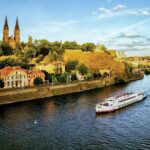
Near the end, you get what I consider the payoff view segment. You arrive at viewpoints over Prague Castle and you also take in the Dancing House, the tour’s endpoint.
This ending choice is smart. If your day is history-heavy, it is hard to know where to place your last photo. The Dancing House gives you a modern counterpoint, and it makes the route feel like a full journey through Prague’s different faces.
Prague Castle views are the classic finale for a reason. They give your brain a “big picture” moment right before the tour ends. You can look up, orient yourself, and decide what you want to explore next on your own.
The fact that the tour ends at a clearly identifiable landmark makes it easy to continue your day. You finish where you can easily connect to the rest of the city plan.
Price, duration, and value for first-time context
The price is $43.14 per person, and the tour runs about 2 hours. For Prague, that is the right length for a high-impact orientation, especially if you are mixing “see it” and “understand it” in the same outing.
Here is the value logic I used: you are paying for (1) a guided narrative, (2) small-group conversation time capped at 15, and (3) the added production of VR glasses at multiple stops. If you were just paying for a standard Old Town walk, the cost would be easier to compare. But here you are getting more interpretive depth, plus VR recreations at specific locations.
Also, VR tours can be hit or miss if they feel like a tech demo. This route uses VR at key moments you actually care about: Old Square in 1900, and Prague Spring. That keeps the tech from taking over the experience.
So, if you have limited time in Prague and you want more than a sightseeing list, this price starts to make sense. You get a focused path, a guide you can question, and a memorable way to connect stories to buildings.
Practical tips for a smooth Prague VR walking tour
A few things will help you enjoy this one without annoying surprises:
- Bring your patience for brief pauses. VR moments work best when everyone is lined up and looking in the same direction.
- If you wear prescription lenses, the tour notes it is possible to do it with lenses. Still, consider bringing your usual eye comfort strategy since you will be wearing the VR glasses at stops.
- Listen for the guide’s directions about where to stand. The VR effect is linked to location, so small repositioning can matter.
- Plan around good weather. The tour requires it, so if you see a rainy forecast, consider scheduling with flexibility.
- You start at 10:30 am and your meeting point is on Panská 892 in Nové Město. The ending point is the Dancing House area at Jiráskovo náměstí. If you like smooth logistics, look up those two anchors before you go.
Also, the tour offers mobile tickets, and it is offered in English. Audio guides are available in several European languages, which can be a big help if you are with people who prefer listening in their own language.
Should you book this Prague VR tour?
Book it if you want Prague to feel more than a pile of monuments. This tour is built for understanding. The VR glasses are not random, and they are used at meaningful moments, which makes the rest of the walk easier to follow.
Choose it especially if:
- you are a first-timer who wants history explained without drowning in dates
- you like asking questions and want a guide who can respond, not just talk at you
- you enjoy mixing iconic sights with stops like Kafka’s Head and the Old Town Hall surprise
Skip it or think twice if:
- you dislike wearing VR glasses or you get uncomfortable with head-mounted gear
- you are traveling on days when the weather is uncertain and you do not have a backup plan
My take: for the time you spend and the price you pay, the mix of guided storytelling and VR context is exactly the kind of “smart shortcut” that helps Prague click fast. And ending at the Dancing House gives you a modern final image that feels like a clean exhale after the history stops.
More City Tours in Prague


More Tours in Prague

More Tour Reviews in Prague
Not for you? Here's more nearby things to do in Prague we have reviewed






Prague Escape Games & VR, compared.
 ★ 5.0Prague Wizard Experience Magic School Escape GameFrom $47746 reviews
 ★ 5.0Apocalypse Zombie 2213 Escape Game in PragueFrom $47383 reviews
 ★ 5.0Magic School: Episode II Escape Game in PragueFrom $47304 reviews
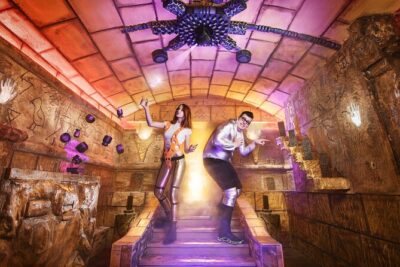 ★ 5.0Star Element Escape Game in PragueFrom $47275 reviews
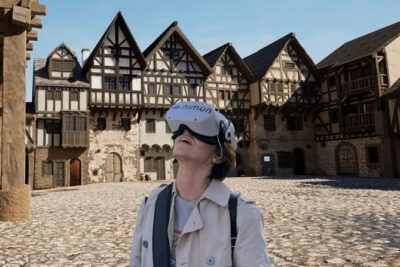 ★ 5.0Prague Immersive Tour: Travel back in time with virtual realityFrom $18248 reviews
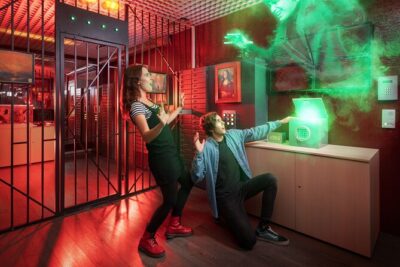 ★ 5.0Moriarty’s Phantom Trap Escape Game in PragueFrom $47140 reviews
 ★ 5.0Enigma – Spy MissionFrom $7058 reviews
Browse the lists this tour appears in