
REVIEW · PRAGUE FOOD TOURS
Best of Prague – City walking tour with Czech Cuisine Lunch
Prague hits hard when you walk smart. This Best of Prague route is built for a focused day on foot, hitting the big sights fast while still leaving room to understand what you are actually looking at, including a proper Czech lunch. I like that it is paced for people who want both wow moments and clear context.
I especially love two parts: the small-group feel (up to 8 for a more personal experience) and the Czech cuisine lunch that comes with local wine and beer sampling. The route also threads together major monuments in a way that makes Prague Castle and the Old Town feel connected, not separate stops you tick off and forget.
One thing to consider is that this is a sprint day. You get short, timed visits at major places like Charles Bridge, Prague Castle, and St. Vitus Cathedral, so if you want long museum time or slow wandering, you will likely need to add extra hours on your own.
Key things to know before you go
- Small-group pace: marketed as up to 8 people, with the operator noting a maximum of 15.
- A guided route that ties sites together, including the Coronation or Royal Route theme.
- Czech lunch plus wine and beer sampling, in a traditional restaurant setting.
- Free admission ticket stops at each listed landmark along the way.
- A true “camera and questions” walking day, with lots of famous facades and details to spot.
Entering Prague through architecture, not just photos
A good walking tour should do more than point. It should help you read the city. This one leans into architecture and cultural symbols, so you are not just looking at pretty buildings, you are learning what they meant when they were built and why they still matter.
The group size is designed to feel manageable. When the tour stays small, you can hear your guide without playing walking-echo-tag, and questions actually fit into the rhythm of the day. If you hate crowd bottlenecks, that matters.
And yes, you do get plenty of the classic Prague sights. But the difference here is that the route is built like a story line: facades and towers that connect to royal power, then bridges and civic buildings that show daily life and city pride.
One name that came up with real enthusiasm is guide Iva Karlickova. Her approach is described as whirlwind and breathtaking, with strong knowledge of Prague’s architecture and cultural stories. That is the kind of guiding style that helps a fast day still feel satisfying.
You can also read our reviews of more walking tours in Prague

Meeting point and timing: a 10:00 am start for a 5-hour loop
The tour starts at 10:00 am at Kavárna Obecní dům 5, Obecní dům, Náměstí Republiky 1090, Staré Město, Praha 1. You end at Kavárna U Prašného mostu 6, in the Letná area (Praha 1-Letná).
Plan on about 5 hours of walking and short sightseeing stops. The big win is that you do not have to plan what to see in what order, and you do not have to guess how the famous landmarks relate.
You should also assume you will move between several parts of central Prague. This is generally the kind of day where comfortable walking shoes pay off. It is also offered in English, and you get a mobile ticket.
Municipal House facade and the Municipal Library area, a sculpted welcome
Your day begins near the Municipal House complex, with a stop described as the Municipal Library of Prague area and the Municipal House facade. If you have ever stared at an ornate building and thought, what am I supposed to notice, this is a great first lesson.
Here, the facade is eye-catching because of its monumental sculptural program. You will see allegorical figures placed across the exterior that represent historical and cultural symbols of the time. The effect is like a stone textbook, and the guide’s job is to help you spot what those figures are communicating.
Why this is worth starting with: it sets the tone. Prague is full of carved saints, kings, and stories. If you learn how to look early, later stops make more sense.
Possible drawback: this first stop is about 10 minutes, so it is not a slow admiration session. You will get the key points and the major visuals, then you move on.
Powder Gate Tower (Mihulka): the Coronation route starts here
Next comes Mihulka Powder Tower, also known as Powder Gate Tower. This is one of Late Gothic Prague’s big entrance monuments, and the story is tied directly to royal movements.
The tower was completed in 1475. It used to serve as a gunpowder store, and it is still recognized as the starting point for the Coronation or Royal Route that led toward Prague Castle. If you like the feeling of tracing power through the city, this stop gives you that sense fast.
One practical plus: the viewing gallery sits about 44 meters up. Even if you do not plan to spend ages up there, it is the sort of spot that changes how you understand the Old Town approach to the castle side.
You are only there for about 10 minutes. So again, think of this as a quick orientation point that helps you connect later sights. The tower is also listed as free admission, which makes it easy to stop without feeling nickeled-and-dimed.
Old Town Hall and the Astronomical Clock: what to watch, what to ignore
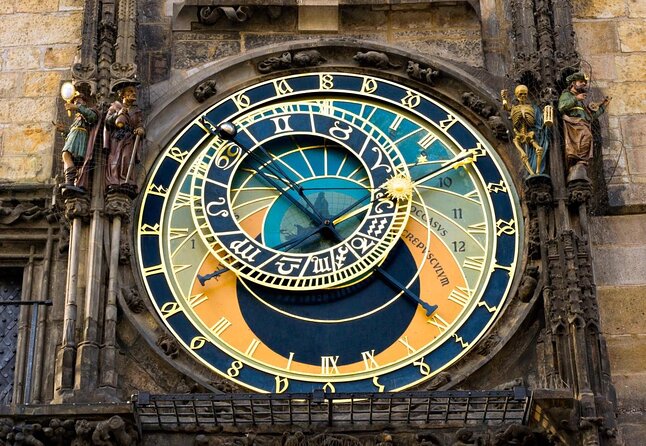
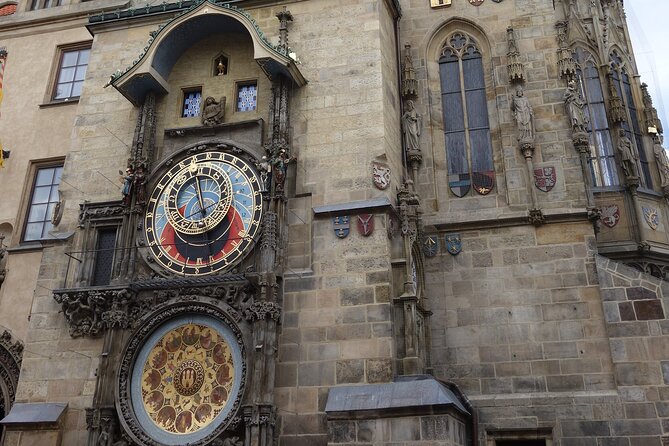
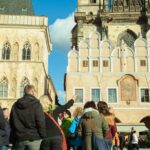
Then you hit one of the most famous civic icons in Prague: the Old Town Hall and its Astronomical Clock. This clock is first installed in 1410 and is described as the third-oldest astronomical clock in the world, and the oldest still operating.
With a guided stop, you learn where to look. Instead of getting stuck on the most obvious parts, you start spotting how the clock connects to timekeeping, display, and the show people come to see. The guide helps you avoid the common trap: staring too long without understanding what you are seeing.
This stop is around 30 minutes. That feels short, but it is enough time to get the overview, take pictures from the right angles, and still move on before the square becomes a total scrum.
Good to know: you will likely be surrounded by people. If you are the type who hates waiting, arrive with a calm mindset. The key is letting your guide tell you what matters most in that moment.
You can also read our reviews of more city tours in Prague



Charles Bridge at human speed: saints, towers, and 14th-century grit
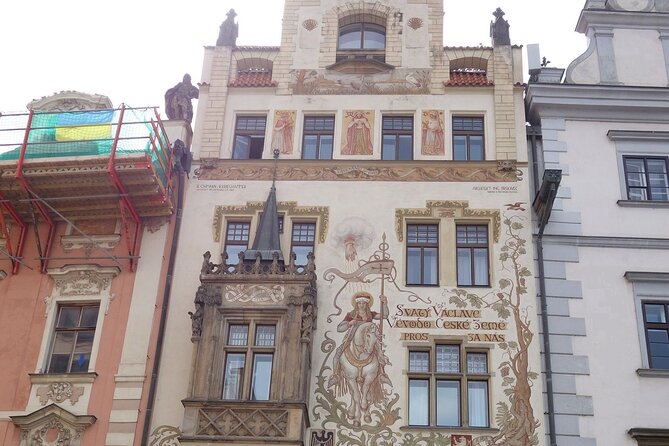
Now for the walk most people picture when they think of Prague: Charles Bridge. This is Prague’s oldest bridge, originally built to replace an earlier bridge damaged by floods in 1342. Construction of the new bridge began in 1357 under Charles IV and finished in 1402. It was called Stone Bridge or Prague Bridge at first, and the name Charles Bridge took hold in 1870.
You will learn why the bridge looks the way it does. It is built of sandstone blocks, and it is flanked by fortified towers, the Lesser Town Bridge Towers and the Old Town Bridge Tower. Then there is the saint story: from 1683 to 1928, 30 statues of saints decorated the bridge, with St. John of Nepomuk being the most famous.
This stop is about 30 minutes. That is plenty of time to walk the bridge, notice the statues, and understand why it became such a symbol of Prague life and legend. It also helps to have someone tell you which statues and tower features are worth focusing on, because at first glance, it can all feel like a blur of stone.
A fair consideration: Charles Bridge can be crowded. If you want wide-open, quiet photos, you probably will not get that during a daytime group tour. Still, you can get great understanding and solid photos if you follow your guide’s timing and look for details as you walk.
Wallenstein Palace to the next layer of power and style
After Charles Bridge, the route shifts to Wallenstein Palace (also spelled Waldstein Palace in some contexts). This is where the city’s style shifts into early Baroque energy.
The palace is described as expressive of the early Bohemian Baroque period, and you will be told to look at architectural elements both inside and outside. Since you are only there for about 30 minutes, the goal is not to tour every room. It is to understand the exterior language and why the palace looks different from what you saw earlier.
Why this matters for your day: it prevents Prague from feeling like one uniform “old town postcard.” You are seeing that the city is layered, with different eras speaking in different architectural dialects.
If you are sensitive to rushing, you might wish this stop lasted longer. Still, it works well as a palate cleanser right before Prague Castle.
Prague Castle: where rulers sat, and where the crown jewels were kept
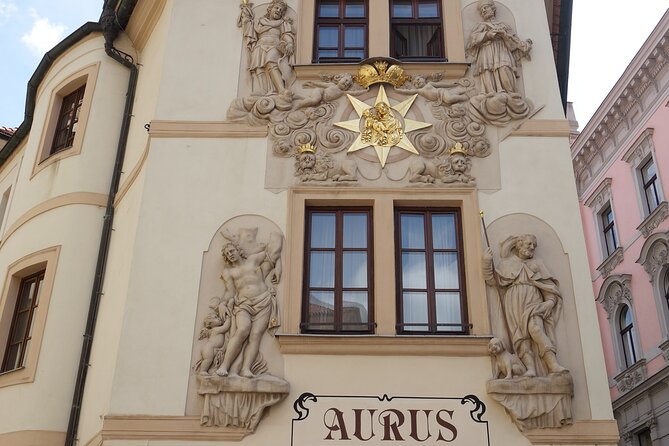
The centerpiece stop is Prague Castle, a complex built in the 9th century. It is now the official office of the President of the Czech Republic. Long before that modern role, it served as a seat of power for kings of Bohemia, Holy Roman emperors, and presidents of Czechoslovakia.
This is where the earlier theme clicks. The Coronation route connections start to feel real when you stand in the castle zone and realize the city was designed for movement between authority points.
The stop description also points out the Bohemian Crown Jewels are kept within a hidden room inside the complex. Even if you do not go hunting for every detail on your own, you come away with the big picture of why this place is so politically symbolic.
You get about 30 minutes here. That is enough for an overview and a sense of scale, but it is not enough for deep independent exploration of everything inside the grounds. If you want to pair this with extra time later, you will know exactly where to spend it.
St. Vitus Cathedral: coronations and the burial places behind the stone
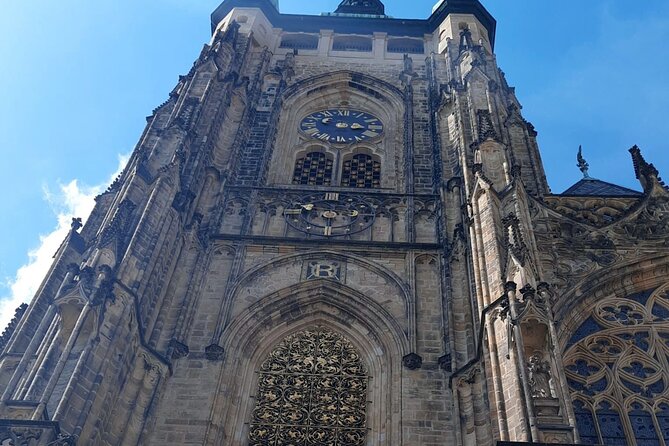
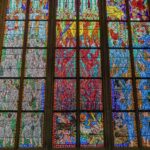
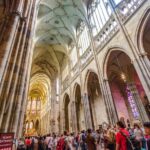
Right after Prague Castle, you visit St. Vitus Cathedral, described as the largest and most important temple in Prague. It is not just a religious building, it is tied to major civic moments.
The cathedral hosted coronations of Czech kings and queens. It is also a place of burial for several patron saints, sovereigns, noblemen, and archbishops. That mix is key. You are not just visiting a pretty church. You are stepping into a monument to power, faith, and remembrance layered together.
You have about 30 minutes at this stop. The good part of that timing is you get the highlights without losing your entire day to one site. The tradeoff is that people who want a slower, more artistic art-and-architecture session may want extra time.
If you want a practical approach, focus on the big visual statements first, then use the guide’s cues to find where the cathedral’s story becomes more specific.
Czech cuisine lunch with local wine and beer: the best kind of planning
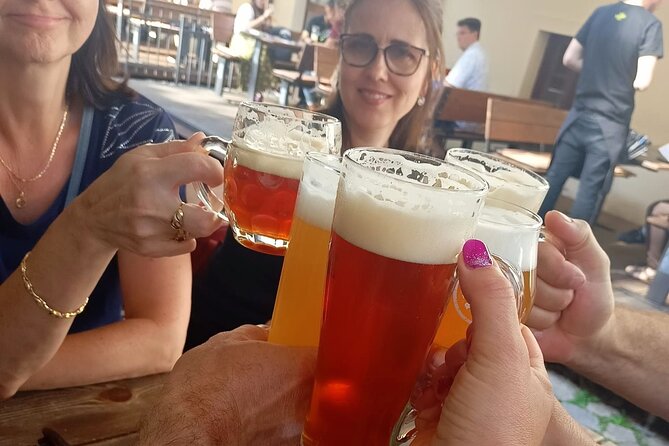
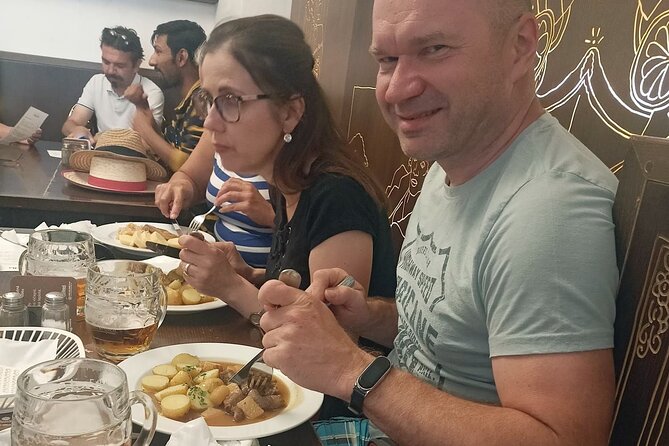
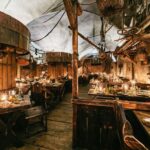
The tour includes lunch in a traditional Czech restaurant, plus sampling local wine and beer. This is one of those inclusions that feels small on paper but matters a lot in real travel.
You do not have to choose a restaurant while you are walking and tired. You also get to refuel in a way that fits the culture theme of the day. The wine and beer sampling adds a gentle intro, especially if you are new to Czech beverages and do not want to commit to a full dinner flight.
What I like about this setup is that it keeps the tour from feeling like a museum run with a snack break. It turns into an actual day in Prague, where you stop, eat, and take in the pace people live at.
Because the schedule is built around a 5-hour format, you should expect lunch to be timed rather than a lingering long meal. Still, it is a solid value add since food and drinks are often the hidden cost of any “cheap” walking day.
Price and value: what $176.34 buys you in time saved
At $176.34 per person, this tour is not a bargain-basement option. But it can be good value if you care about your time and you want a guided route that helps you understand what you are seeing.
Here is what you are paying for that you might otherwise have to piece together yourself:
- A small-group structure that supports real guidance, not just radio announcements
- A set route that strings together major monuments in a logical order
- Lunch at a traditional restaurant, plus wine and beer sampling
- A guided pass through multiple famous sites in about 5 hours, with free admission ticket mentions at each stop
If you would spend time planning, mapping, and deciding where to eat, this price can start to feel reasonable. It also can save you stress. On a first visit, getting oriented fast is worth real money.
If you are the type who loves hours of independent wandering and already knows the architectural basics, you might feel the pace is too structured. In that case, you might prefer using Prague for DIY exploring and booking only a museum or castle day later.
But if you want a one-day framework that includes food and drink, this tour checks a lot of boxes.
Should you book this Prague walking tour?
I think you should book it if you want a guided first-day plan that covers the highest-demand Prague sights without turning your trip into a stressful logistics problem. It is especially good for architecture and symbolism lovers, and for anyone who wants lunch, wine, and beer included in the same smooth flow.
I would skip or adjust expectations if you need long, quiet time inside big sites. The stops are timed. You get the main story, not a full self-guided museum marathon.
Also, if you are hoping for a really confident guide, take comfort in what has been highlighted about Iva Karlickova’s style: her architecture and cultural storytelling makes a fast day feel meaningful. Even if not every tour has the exact same guide, the emphasis on that kind of guidance is clearly part of the experience.
If you want to see Prague in one day and leave with more than just photos, this is a strong choice.
More Walking Tours in Prague
More Tours in Prague
More Tour Reviews in Prague
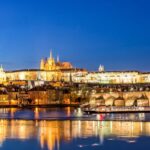
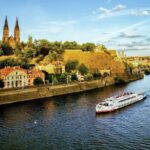
Not for you? Here's more nearby things to do in Prague we have reviewed

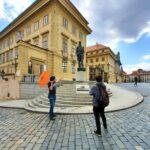





Prague Food Tours, compared.
 ★ 5.0Prague Eat, Sip and Make Friends on Food Tour by Taste of PragueFrom $1783,700 reviews
 ★ 5.0Delicious Prague Food Tour by Prague Food TourFrom $175617 reviews
 ★ 5.0Prague Food Tour with 10 Tastings of Authentic Czech ClassicsFrom $105343 reviews
 ★ 4.9Food and Beer Guided Walking Tour with TastingsFrom $104341 reviews
 ★ 4.9Guided Street Food Walking TourFrom $70285 reviews
 ★ 5.0Prague by Night: Drinks & Food Tour with Eating EuropeFrom $119261 reviews
 ★ 4.8Guided Food Tour with TastingsFrom $75214 reviews
 ★ 5.0Prague Food tasting tour of Hidden Gems for Small GroupsFrom $10597 reviews
Browse the lists this tour appears in