REVIEW · PRAGUE
Discover Prague’s most Photogenic Spots with a Local
Prague looks best through a camera and a local’s eyes. This 90-minute, small-group walk focuses on photogenic spots while you learn what to notice, from Charles Bridge’s statues to David Cerny’s brainy sculptures. I especially like the tight pacing, you cover big landmarks without feeling like you’re sprinting, and the personalized recommendations that help you frame shots instead of just walking past them. One thing to consider: the info quality can vary a bit by guide, so if you want deeper details, bring questions and ask what you’re seeing.
I also like that the route mixes old and new Prague in a smart way. You get both postcard stops and the weirder, more playful art side of the city, which makes your photos feel less repetitive. The only real catch is access, because it’s not recommended if you have impaired mobility.
If you like architecture, street art, and sharp photo angles, this tour is built for you. The group stays small, up to 8 people, so the local can adjust the walking pace and even adapt stops to weather or your interests.
Quick hits for your camera roll
- Small group, up to 8 people means you can ask questions and get real guidance on what to photograph.
- Charles Bridge plus the Old Town core covers the skyline and the classic shot in a focused loop.
- David Cerny stops bring the fun surreal side of Prague, including the Kafka head and Isla Kampa sculptures.
- Lennon Wall and the Kafka/Freud area give you bold, story-rich visuals beyond the usual tourist circuit.
- Letná Park with the Metronom Monument finishes with big city views that work great for phone and camera photos.
Prague Photo Walk Value: Small Group, Real Stops, Tight Time
This is a 1 hour 30 minutes photo-focused walk in Prague, priced at $76.46 per person. For the money, you’re really paying for three things: a local who knows where to stand, small group size (up to 8), and a route that’s built around what looks good on camera.
In practical terms, that short duration matters. Prague can eat time fast, between crowds, trams, and the fact that one alleyway can turn into a 20 minute detour. Here, you get a sequence of high-impact locations in a single session, with the itinerary adapting to walking pace and your interests.
The route is also offered in English, and you’ll use a mobile ticket. On the ground, that usually means less fuss and more time watching, framing, and walking.
If you’ve been to Prague and thought, I’ve seen Charles Bridge, what else, this tour gives you several answers quickly. You also end in a great part of town for continuing on your own near Letná.
You can also read our reviews of more tours and experiences in Prague.
Where You Start and Finish (and Why It Matters)
You meet at Jiráskovo náměstí in Nové Město (Prague 2). The tour ends at Letenské sady 173 in Prague 7, near Holešovice.
That end point is a nice bonus. Letná Park is one of the best places to keep your momentum going, especially if you want a view after all the landmark photos. It also helps you avoid the classic Prague trap, backtracking across town just to catch sunset.
The tour is near public transportation, which is useful if you want to plan an easy arrival. Service animals are allowed, and stops may vary depending on weather conditions, so don’t plan anything super tight right after the end time.
One practical note from a past experience: one guide, Stefan, communicated arrival details by text message. So keep your phone handy and check it before you head to the meeting spot.
Stop 1: Dancing House, a Twist for Modern Photo Angles
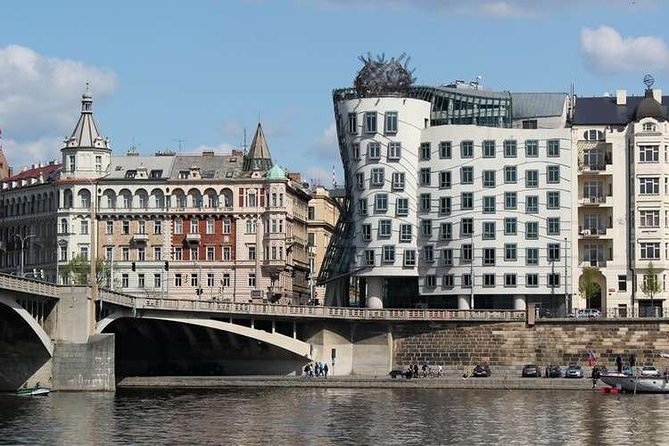
The first big visual hit is the Dancing House, a modern design that plays with Prague’s older, more rigid architecture. The building’s shape feels like it’s mid-motion, and that matters for photography because it creates curves and reflections you just do not get from medieval stone.
If you want strong photos, look for two things. First, angles where the building’s twisting form lines up with straight streets in the background. Second, any reflective surfaces, because light can turn the façade into a color palette.
This stop works as a warm-up. After it, the more symbolic and surreal art stops in the route will feel more natural, like you’re moving through different layers of the city’s personality.
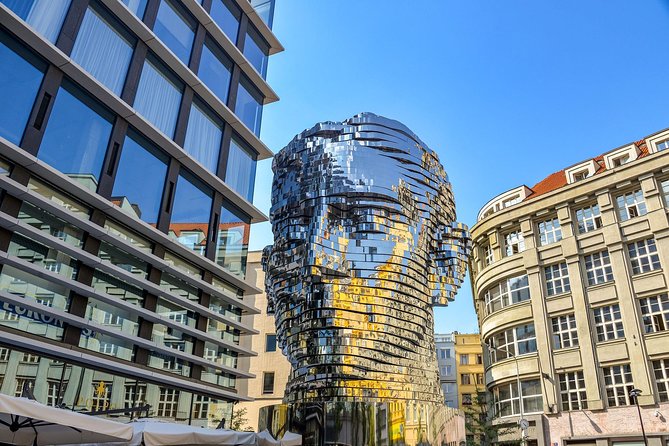
Kafka, 11 Meters of Moving Metal (and How to Shoot It)
Next up is a tribute to Franz Kafka: an 11-meter rotating metallic head with 42 moving layers. That detail is a gift for photographers. It means you are not just photographing a sculpture, you are photographing motion and complexity, which is exactly what Kafka’s writing is often described as.
What you should do on this stop is slow down. Wait for different layers to catch the light, and try a few different heights, from eye level to slightly lower. Even if you’re shooting with a phone, changing your angle by a step can turn a flat view into something that looks three-dimensional.
This is also one of those moments where a local helps. You get help interpreting what you’re seeing, and not just where it is. That turns the photo from decoration into something with meaning.
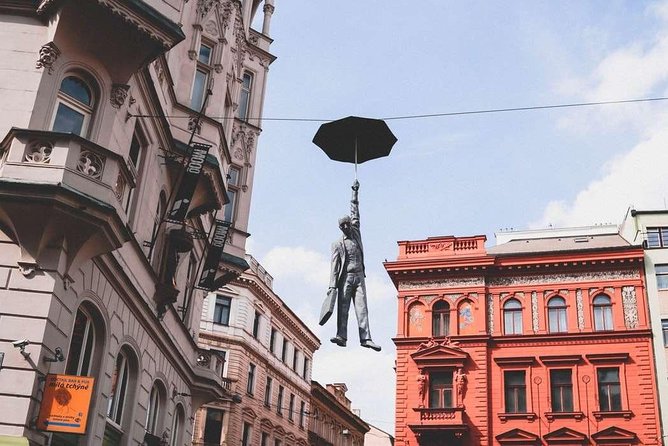
David Cerny Stops: Freud and the Idea of Being Watched
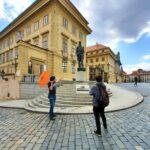
Prague is famous for architecture, yes. But it also has a way of turning ideas into street-level drama. Here, that shows up with David Černý’s work, including Man Hanging Out – Sigmund Freud.
This piece is provocative, and that’s part of why it’s such a good photography subject. It gives your images an emotional edge. You also get better results if you treat it like a composition problem, not a sightseeing checkmark. Step around to find the cleanest background, and watch how passersby change the story in your frame.
Cerny’s style tends to reward patience. Give yourself a minute to see how the sculpture interacts with the surrounding buildings and the people moving around it. A “perfect” shot is often the one where the scene looks slightly alive.
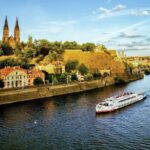
Old Town Square and the Astronomical Clock in Action
Then you land in the heart of Prague’s old core at Old Town Square. This is where you’ll see ancient architecture up close and the Astronomical Clock in motion.
The key with this stop is timing and restraint. It’s easy to stand in the middle of the crowd and get a photo that looks like every other Charles Bridge photo. Instead, try to find a spot where you can include the clock without blocking the view of the building lines around it.
A local angle can help a lot here. You are not just looking at a clock, you’re learning what it represents and why it matters in the flow of the square. That context makes your photos feel less random, like you captured a moment with a reason.
Also, the square is photogenic from more than one direction. Spend a few minutes exploring the edges of where the crowd thickens. You often get a cleaner frame on the sides.
Charles Bridge: The 14th Century Icon, Shot With Intent
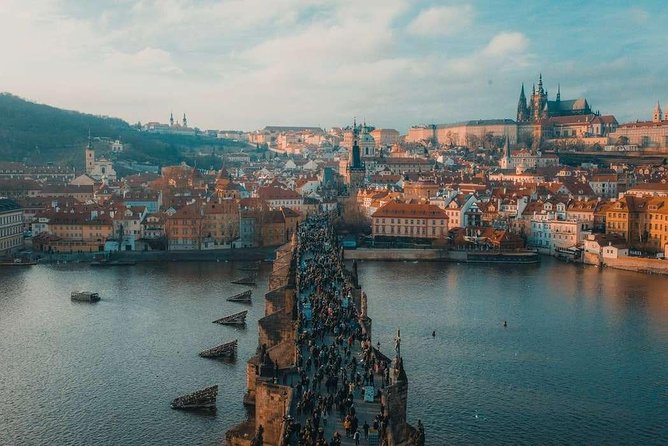
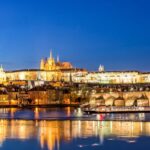
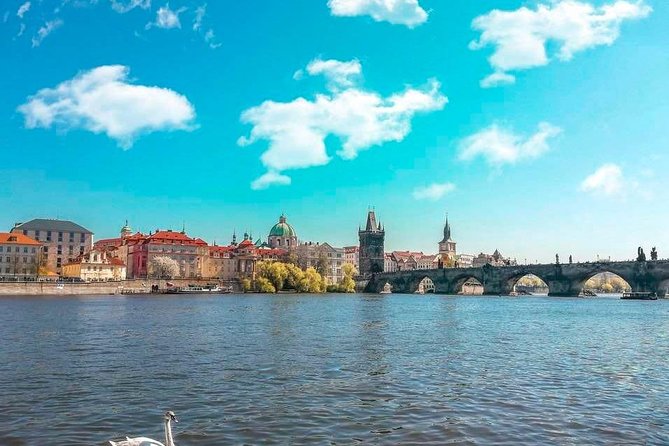
Charles Bridge dates back to the 14th century, and it delivers the classic Prague skyline and the statue-lined look that made the postcard famous.
But the real question is how you shoot it so it feels personal. Start by thinking in layers. The bridge gives you a strong horizontal line, the statues give vertical accents, and the background buildings give depth. If you frame for all three, your photos will look richer than a simple point-and-shoot.
One reason a local helps: crowd behavior changes minute to minute. Your guide can steer you to viewpoints that are more workable and explain how the bridge fits into Prague’s culture.
Also watch for details in the stonework and the perspective lines. Prague’s best bridge photos often come from small decisions: where you place your feet, how far you step back, and whether you include more sky or more people.
Wallenstein Palace Gardens: Quiet Frames in the Middle of Prague
One of the highlights includes a wander through the Wallenstein Palace Gardens. This stop adds contrast, because it is not the loud open-square experience.
Gardens are where you can slow down for photos without juggling crowds. You get nice framing opportunities, and the greenery and stone structures can make your images feel more balanced after heavy landmark stops.
Even if you’re not a garden person, this is a useful break. It gives you a chance to reset, check your camera settings, and look for compositions that feel calm instead of frantic.
If weather shifts, this is also a good stop to linger in, because gardens give you options. You can shoot the architecture edges, any pathways, and the way light moves through the area.
Lennon Wall and Isla Kampa: Messages and Strange Bronze Babies
The Lennon Wall is next, an ever-evolving canvas for freedom and peace inspired by John Lennon’s messages. Photographing street art is tricky because the best shot is not always the straight-on one.
Try including the surrounding scene, so the wall feels like part of the neighborhood, not a random mural slapped onto a wall. Also, since it changes over time, you’re capturing a moment that belongs to this year, not just Prague in general.
Then the tour heads toward Isla Kampa to see David Černý’s Babies, eerie bronze sculptures crawling their way around the island. This is an excellent photo subject because it’s playful, weird, and slightly unsettling, all at once.
For photography, treat it like a close-up and a context shot. Close-up angles work for the texture and expression. Wider angles work for the idea of babies crawling through the public space, like they escaped from a children’s story and wandered into adult Prague.
This combination of Lennon Wall and Babies is smart because it mixes message art with kinetic sculpture energy. Your photos end up feeling like Prague, not just Prague’s famous buildings.
Pařížská Street and Letná Park: From Fashion Avenue to Big Views
Pařížská Street is Prague’s prestigious boulevard, and it’s a different kind of photo location. Think style, storefront energy, and elegant architecture lines. It’s a fashion epicenter, so your shots can feel modern even after the surreal sculpture stops.
Then you finish at Letná Park, a green oasis with big city views and recreational space, plus the Metronom Monument. If you’ve been photographing Prague’s old town and bridges, the city-wide perspective is what makes the trip feel complete.
The Metronom Monument gives you a landmark to anchor your final photos. It’s the kind of subject that looks great when you frame it against the city horizon, so you get both an object and a sense of scale.
This is also where you can slow down and breathe. After intense landmark walking, a viewpoint stop is a reward, and it sets you up well for your next self-guided move.
Price and Value: What You Really Get for $76.46
Let’s talk value directly. At $76.46 per person for about 1 hour 30 minutes, you’re not paying for a long sightseeing bus ride. You’re paying for focused access to a sequence of standout photo subjects plus a small group format.
You also get group discounts, which can make it more reasonable if multiple people in your group want the experience. The mobile ticket helps keep things smooth, and the local provides personalized recommendations, which is the part that tends to matter most for photography.
Here’s the balanced part. The overall rating for this experience is 3.7 out of 5 based on three ratings. One negative note was that the information shared felt vague and general, with some questions not answered in a way that felt accurate. That doesn’t mean you will have the same experience, but it does suggest your best strategy: ask specific questions while you’re there.
If you care most about photos, you can still get value even when historical explanations are brief. Your best photos come from guidance on angles, pacing, and what to include. Keep your curiosity active and your results will likely be better.
Who This Tour Suits Best (and Who Might Want to Rethink)
This tour is best for you if you like photos, architecture, and street-level art. It’s also a good fit if you want a local viewpoint without committing to a full day.
It’s hosted by an independent local, with a small group up to 8 people, and the walking pace adapts to your interests. That means it can feel calmer than larger group tours.
You might want to skip it if you have impaired mobility, since it’s not recommended for that. Also, if you want a super deep, lecture-style historical tour, the time is short and the focus stays on photogenic stops.
One smart way to get more out of it: bring a simple plan. Tell your guide what you care about, like bridge statues, surreal sculpture, street art, or skyline views. Then ask for the best angle for your style.
Should You Book This Prague Photo Tour?
Book it if you want a high-impact photo route in a short time, with a local to help you frame shots and understand what you’re seeing. The mix of Charles Bridge, Old Town Square, David Černý art, Lennon Wall, and the Letná viewpoint makes your camera roll feel like Prague’s full personality, not just one famous landmark.
Consider waiting or choosing another format if you need lots of detailed history or if mobility is an issue. Also, if you’re the type who expects every answer to be ultra specific, plan to ask pointed questions on site.
If your goal is better photos and a smoother way to see the city’s most photogenic corners, this one is a solid buy, especially because the group stays small and the stops hit a nice variety of styles.
FAQ
How long is the Prague photogenic spots tour?
It runs for about 1 hour 30 minutes.
How many people are in the group?
The group is limited to a maximum of 8 travelers.
What language is the tour offered in?
The tour is offered in English.
Where do I meet, and where does the tour end?
You start at Jiráskovo náměstí and finish at Letenské sady 173.
What is included in the price, and what is not?
Included are a local host, a small group experience, and personalized recommendations. Not included are personal expenses, and entry tickets for public transportation, museums, and monuments.
Is the tour suitable if I want to use public transport?
Yes, it is near public transportation, but any entry tickets for public transportation are not included.