
Prague looks better on foot. This 2.5-hour walking tour connects Old Town landmarks, the Jewish Quarter, and the riverside drama of Charles Bridge, with stories you can actually picture. You also get real photo time at the sights that most people only see from postcards.
I love the walking pace and tight route, from Wenceslas Square into Stare Mesto (Old Town), then onward to the river. I also love that you get context for what you are looking at, not just names, especially around the Astronomical Clock and the synagogues in the Jewish Quarter.
One trade-off to plan for: you do not enter paid monuments. You will admire key buildings and learn what they mean, but this is exterior sightseeing and quick looks rather than long indoor visits.
Key takeaways before you go
- A route that strings together major Prague sights without sitting on a bus
- The Astronomical Clock gets explained in plain language, so it makes sense while you stand there
- Jewish Quarter stops include the Old-New Synagogue and the Old Jewish Cemetery as part of the walking story
- Charles Bridge is your finish point, with a view from the river bank
- Tip-based model with a small admin-style reservation payment, so you control the final spend
The value of a 2.5-hour Prague highlights walk
This tour is built for people who want the big Prague moments without turning the day into a ticket-hunting exercise. It’s also short enough that you can still do your own exploring after, whether that means hunting down coffee, a better photo spot, or a side street you noticed mid-walk.
Price is listed at $3.63 per person, but that number fits the tour’s tip-based style. You typically pay a small reservation amount for admin purposes, and then you tip your licensed guide at the end if you feel it was worth it. For budget-minded travelers, that can feel like a smart way to get a guide’s eye without paying for a long lineup of paid entrances.
The tour also runs in English, and you can usually choose between a morning or afternoon departure. That matters in Prague, because light and crowds can change how a “quick photo stop” feels in real life.
You can also read our reviews of more tours and experiences in Prague.


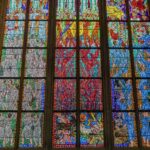
Wenceslas Square: Czech history at street level
The tour starts at Prague Pulse Tours at Na Příkopě 13/394, Staré Město. From there, you head straight to Wenceslas Square, where the guide sets the historical stage. This is not just a pretty plaza stop. It’s positioned as the foundation for how Czech history shaped the city you will see on the next stretch.
If you have only a day or two in Prague, this is a useful warm-up. You arrive at major sights with some context, so the rest of the walk feels less like you’re memorizing a map.
At this stop, the time is short (about 7 minutes). So expect a quick orientation, a few key ideas, and then onward. If you’re the type who likes to linger, you can always come back later. This walk is more about getting oriented fast.
Old Town (Stare Mesto): learning how to read Prague’s monuments
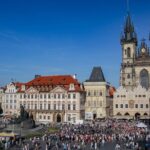
Next you move into Stare Mesto (Old Town), where the guide points out how concentrated the monuments are in this part of the city. This stop is your “pattern recognition” moment. Once you understand what to notice, Prague’s skyline and street details start to feel less random.
The guide focuses on the stories behind what you see, which is what makes a walking tour worth more than just strolling. Even if you’ve been to Prague before, Old Town can still surprise you when someone explains what a building represents and why the area developed the way it did.
Time here is about 15 minutes. It’s enough to absorb the big landmarks around you, but not enough to get lost. That’s a good thing if your goal is to cover many icons in one go.
Old Town Hall and the Astronomical Clock: where the details become fun
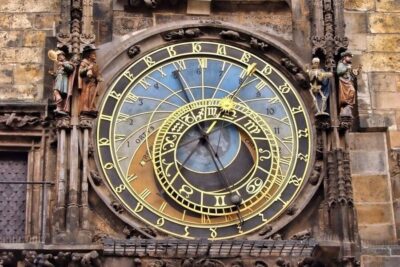
One of the biggest “wait, what am I looking at?” sights in Prague is the Old Town Hall Astronomical Clock. This tour tackles that problem directly. You spend about 15 minutes here learning how to read the clock’s mechanism and what it represents.
The payoff is simple: once you understand the clock’s parts, your photos look better because you’re not guessing. Also, you stop feeling like you’re just taking a photo in a crowd and instead you feel like you are watching a historical machine.
Several guides associated with this tour model have been singled out for making the clock understandable from start to finish. If you end up with a guide like Mel or someone with a similar teaching style, you’ll likely get extra clarity on what the clock shows and why it mattered.
Practical note: this is a high-activity area, so stand where your guide tells you. If you wander for a better angle, you can accidentally miss the most useful explanation.
Church of Our Lady before Tyn: why it took over a century
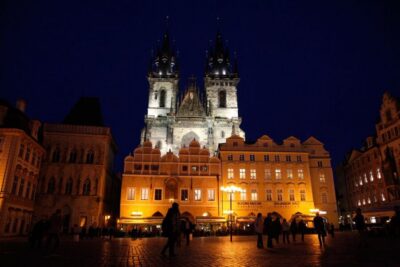
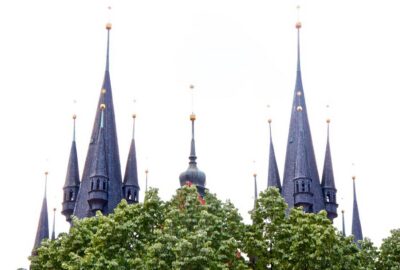
After Old Town Hall, you step toward Church of Our Lady before Tyn. This stop is about 10 minutes, and the focus is the church’s story, including why construction took over a century.
That single detail helps you look at the church differently. Instead of seeing it as just another Gothic silhouette, you start thinking about the long timeline of politics, money, design changes, and civic priorities that shaped it. That sort of context is why I like walking tours like this: you’re not just looking, you’re interpreting.
If you like architecture, this stop gives you a quick but meaningful framework. If your interest is mostly photos, it still helps because you’ll know what to highlight when you frame your shot.
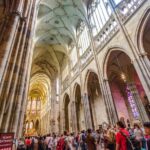
Jan Hus Monument and Theatre Des Etats: Prague’s identity in two quick stops
Two more Old Town Square landmarks follow. First, the Jan Hus Monument (about 10 minutes), where you learn about Jan Hus as a Czech national hero and why the monument is so prominent.
Then there’s Theatre Des Etats for about 5 minutes, tied to the time of Mozart in Prague. Even with limited time, this is the kind of stop that broadens Prague beyond buildings. It connects the city to cultural life, not just medieval stone.
These micro-stops are a strength of this tour. You get a mix of political identity, culture, and architecture in a short walk. The downside is also obvious: each place gets only a taste, so the guide’s pointers matter. If you want to go deeper, you can use the tour as your shortlist for what to revisit later.
Powder Tower: the last gateway to Old Town
Next comes The Powder Tower (about 5 minutes). This is described as the very last gateway to the old town, and that framing is helpful. You start to see the city as something that used to have edges, entry points, and controlled movement.
Powder Tower is one of those sights that people photograph without fully understanding. Here, you get the story in a short stop, then you’re already moving again.
If you like history that feels connected to streets rather than museums, this one works. If you want long explanations, you’ll likely wish you had more time. But for a 2.5-hour highlights tour, it’s a smart use of time.
Prague Jewish Quarter: a walking story you can follow
The route then shifts into the Prague Jewish Quarter, with about 30 minutes for this section. This is the most time you get anywhere in the Old Town area, which signals that the tour wants you to slow down a bit here.
You’ll explore the neighborhood’s streets and learn what shaped life in this area. This is where the walk stops feeling like a greatest-hits list and starts feeling like a historical thread. The guide’s job here is especially important because the meaning of what you see is not always obvious from the street view.
If you care about human stories and how communities lived, this is one of the best parts of the tour. You are not only seeing architecture. You are learning how the area functioned and what it meant to the people who lived there.
Old-New Synagogue and Old Jewish Cemetery: two essential chapters
Two specific stops round out the Jewish Quarter portion.
First is the Old-New Synagogue (about 10 minutes). The focus is that it is the oldest still practicing synagogue in Europe. Even if you have seen photos before, hearing that fact while you stand in the area gives the building a different weight.
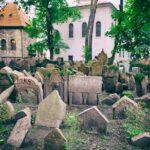
Then comes the Old Jewish Cemetery (about 10 minutes). The stop includes learning about the cemetery and life connected to this part of Prague. Cemetery stops are never just visual. They turn your attention from what is around you to what is remembered by those who came before.
Important reminder: the tour data says no paid monument entry, so you are learning from where you stand and what the guide can point out. Still, a guided context like this can make the difference between a quick glance and an experience you carry with you.
Charles Bridge: finish with photos and river-bank views
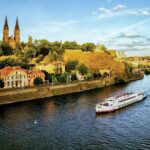
The tour ends at Charles Bridge, with about 10 minutes specifically on the bridge itself. The stated plan is to finish on the river bank with a stunning view of Charles Bridge.
This finish is practical. It’s one of the best ways to end a walking tour because you get a clear final frame for photos and a place to regroup. It’s also helpful if you want to keep walking on your own afterward, since you can branch out into the bridgeside streets right away.
Charles Bridge is famous for a reason, but it can feel chaotic if you approach it cold. Having the morning or afternoon walk context in your head makes the bridge more than just a statue lineup. You see it as part of the city’s geography and movement patterns.
Also, with crowds, a guided finish helps. Your guide can point you toward the best spot to capture the bridge while keeping the group moving.
Meeting points, timing, and why the schedule works
The tour starts at Prague Pulse Tours, Na Příkopě 13/394 and ends at Alšovo nábř. 70/8 near the river bank. If you’re trying to get the most from your day, arrive a few minutes early and stand where your guide indicates.
Total duration is listed as about 2 hours 30 minutes, and the itinerary uses short stop times. That means you will see a lot, but you will not linger long anywhere. For most first-time visitors, that’s exactly the point.
This also explains why photo fans tend to like the tour. You get stops positioned on major icons and you get guidance on what to photograph. It won’t replace a slow, self-guided afternoon, but it gives you a strong foundation and a set of targets for later.
One note on English delivery: some guides are reported as speaking very fast. If English is not your strongest language, keep this in mind. Don’t hesitate to ask for a slower repeat of the key point when you have trouble.
Guides, pace, and the tip-based style
The tour includes a licensed local guide, and the walk is designed for a small group, with a maximum of 30 travelers. That group size is important because it affects how easy it is to hear explanations on crowded streets.
From the guide names that have been mentioned, you might be with people like Mel, Dylan, Zach, Aris, Ian, Andy, Seb, or Paul. Different personalities mean different teaching styles. Some guides are praised for turning landmarks into a living story, with room for questions. Others may be more rapid in delivery, so if you want to absorb at a calmer pace, you should pace yourself and ask questions early.
The key thing: because it is tip-based, you should treat the guide like an actual service. If the tour gives you value, tip. If you want more depth, ask more questions while you are still on the route.
If you prefer a set-price tour with timed entry to museums, this might feel less structured. If you love walking, photos, and context, it often lands right.
Who should book this Prague Old Town, Jewish Quarter, and Charles Bridge tour
Book it if you:
- Want a high-coverage walking route that links major Prague icons
- Like having a guide interpret what you see, especially the Astronomical Clock
- Are interested in the Jewish Quarter with stops that include the Old-New Synagogue and Old Jewish Cemetery
- Want a morning or afternoon option and a clear finishing point near the bridge
Skip it (or pair it differently) if you:
- Want long indoor time and paid monument entry
- Get frustrated by crowds and short stop durations
- Prefer a slower pace that focuses on fewer sights
If you’re traveling with older teens or adults, the pacing and storytelling structure usually fit well. For families with very small kids, the route could feel like too many quick transitions, depending on the group.
Should you book Prague Pulse Tours for this route?
I think this is a strong choice when you want Prague highlights with context and no extra entrance fees. The route makes sense, the stops cover the headline sights, and the Jewish Quarter section gives you enough time to feel you actually saw something meaningful, not just walked past it.
If you are the type who enjoys learning while walking, you’ll likely find it worth your attention. And if you care about photos, Charles Bridge as a finish point is a smart way to end, especially when you want river views without hunting for them yourself.
If you want a ticketed, inside-only, deep museum day, look elsewhere. But for a first pass through Old Town, the Jewish Quarter, and a confident finish at Charles Bridge, this is a solid buy in both time and value.
FAQ
How long is the Iconic Prague Tour Old Town, Jewish Quarter and Charles Bridge?
The tour lasts about 2 hours 30 minutes.
Is the tour offered in English?
Yes, it is offered in English.
What is included in the tour price?
The tour includes a licensed local guide.
Do we enter paid monuments during the tour?
No. The tour does not include entering any paid monuments, and no admission fee is needed for the stops.
Is it tip-based, and what is the small reservation payment for?
It is tip-based. The small reservation payment is described as an admin-style payment, and the guide expects tips at the end.
Where do I meet and where does the tour end?
You meet at Prague Pulse Tours, Na Příkopě 13/394, Staré Město, and you end at Alšovo nábř. 70/8, finishing on the river bank with a view of Charles Bridge.
More Tours in Prague

More Tour Reviews in Prague
Not for you? Here's more nearby things to do in Prague we have reviewed







Old Town & Astronomical Clock, compared.
 ★ 4.2Oldtown, Medieval Underground & Dungeon History TourFrom $308,244 reviews
 ★ 4.5Old Town Hall Tower Entry TicketFrom $216,749 reviews
 ★ 4.73-Hour Walking Tour of Old Town & Prague CastleFrom $305,696 reviews
 ★ 4.83-Hour Old Town and Prague Castle Tour in GermanFrom $365,671 reviews
 ★ 4.5Prague Old Town, Medieval Underground and Dungeon Historical TourFrom $323,227 reviews
 ★ 4.8Old Town and Jewish Quarter Guided Tour in GermanFrom $293,143 reviews
 ★ 4.5Ghosts and Legends of the Old Town Evening TourFrom $213,091 reviews
 ★ 4.6Old Town and Jewish Quarter Guided Walking TourFrom $222,847 reviews
Browse the lists this tour appears in