
REVIEW · PRAGUE WALKING TOURS
Prague Art Nouveau and Cubism Walking Tour
Prague can look like a movie set, but this walk makes it make sense fast. You’ll track Art Nouveau details and Cubist forms through real streets, real façades, and a few interiors, with a historian guide who ties design to history.
What I liked most: the contrast is sharp and easy to spot, and the route is packed with recognizable Prague landmarks without feeling rushed.
One thing to consider: it’s a 3-hour walking tour, so wear good shoes, even if rain shows up.
Key highlights before you go
- Small group (max 8) so you get time for questions, not just a photo stop.
- Art Nouveau to Cubism contrast is the whole point, from gingko-like leaves to crystal-like shapes.
- Historian guide who connects style to Prague history and shifting politics.
- Free-entry stops at each location on the route, so you’re not constantly paying add-ons.
- Flexible departure timing with morning or afternoon options, plus a start point near public transport.
- Practical city skills like learning your way around Prague Main Train Station.
Prague’s Art Nouveau vs Cubism, in one easy walking route
This tour is built for people who want more than pretty buildings. Prague’s turn-of-the-century design scene wasn’t just decoration. It was a way of thinking, a way of showing identity, and a way of responding to new tech, new ideas, and hard times.
You start with Art Nouveau, then your eyes shift to Cubism, and suddenly the city feels like a timeline you can walk through. You’ll look for things like curling, distinctive typography and natural motifs such as gingko leaves on façades. Then you’ll see the harder angles and crystal-like forms associated with Cubism, including pyramids and geometric punch.
You can also read our reviews of more walking tours in Prague

Meeting at Ovocný trh, then walking like a local (not like a stampede)
The meeting point is Ovocný trh 19 in Staré Město, and the tour ends at Café Louvre on Národní 22. The day I planned around it, the start time was 10:00 am, but the tour also offers morning or afternoon departures, so you can match it to your energy and sightseeing schedule.
This matters because a 3-hour walk can either feel smooth or feel long. Here, the format is designed around a manageable pace and a group capped at 8 travelers max. You’ll be near public transportation, which helps if you want to self-adjust during your day.
Also, the tour uses a mobile ticket, and confirmation comes at booking. Average booking timing is 69 days in advance, which is a hint that this one sells out in popular weeks. If your dates are fixed, booking early is a smart move.
Stop 1: House of the Black Madonna, where Cubism grabs your attention
You begin at the House of the Black Madonna, a Cubist-style building. The time here is short, about 10 minutes, but it’s the right starting move. Cubism isn’t subtle, so when you see it first, you’ll know what to look for for the rest of the tour.
What I’d watch for is how the design language changes your reading of the street. Instead of flowing ornament, you get more angular emphasis and a more structured feel. That shift makes the later Art Nouveau stops snap into focus too, because you’ll be comparing in real time.
Stop 2: Obecní Dum, Czech Art Nouveau and the hidden story of new tech
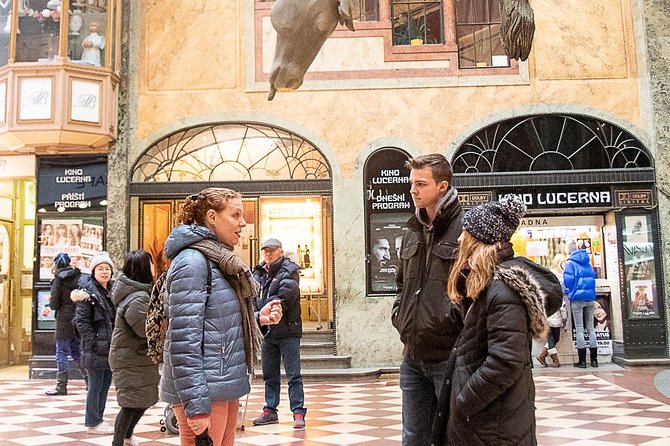
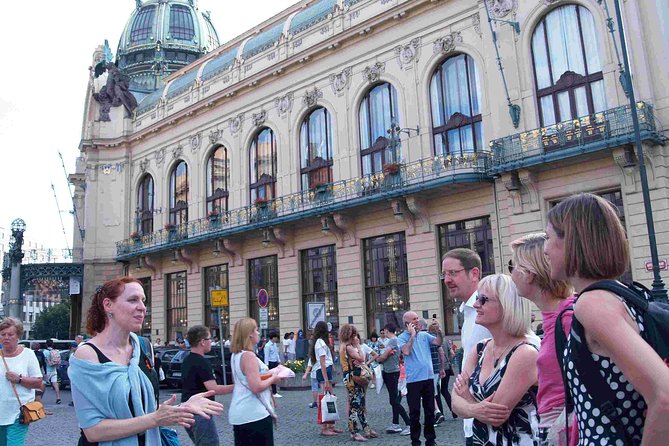
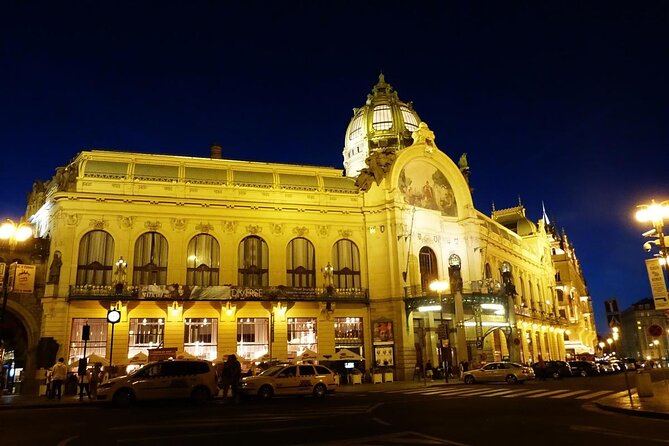
Next comes Obecní Dum, one of the headline Art Nouveau landmarks in Prague. You get about 15 minutes here, and that time is used for more than photos. Your guide explains how the building era was about engineering as much as aesthetics.
This is where the tour gets extra interesting for non-architecture people. You’ll learn about the construction thinking of the time, including central heating and ventilation, drinking water systems, hydraulic elevators, steam-powered laundry, and even an intercom system. That’s not just trivia. It tells you why these buildings felt modern, even when they looked like they belonged to an art show.
A practical tip: take a minute to stand back and look at the building as a whole. Then let your guide point out specific elements. Otherwise, it’s easy to get lost in details before you understand the overall design idea.
Stop 3: K+K Hotel Central Prague, where Art Nouveau arrives early
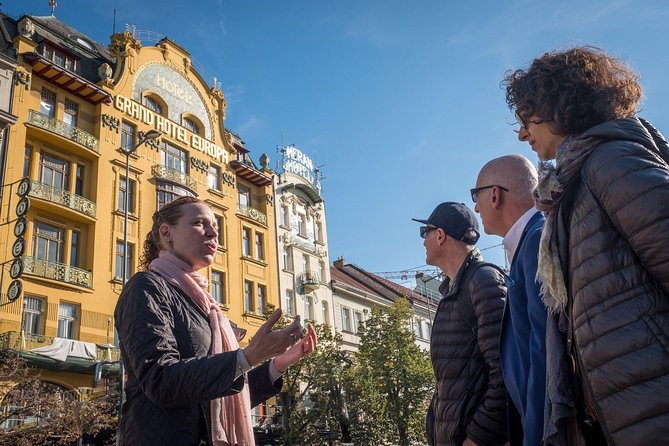
K+K Hotel Central is a great “bridge” stop. It’s described as the first Art Nouveau building in Prague, and you’ll get about 10 minutes to see it in context. If you’re building a mental checklist for Art Nouveau, this stop helps you calibrate quickly.
The best use of this short stop is pattern spotting. Art Nouveau loves movement, curve, and nature-inspired detail. Once you can identify those traits, you’ll start noticing them again later in the tour at cafés, arcades, and public interiors.

Stop 4: Café Imperial, turn-of-the-century optimism you can walk into
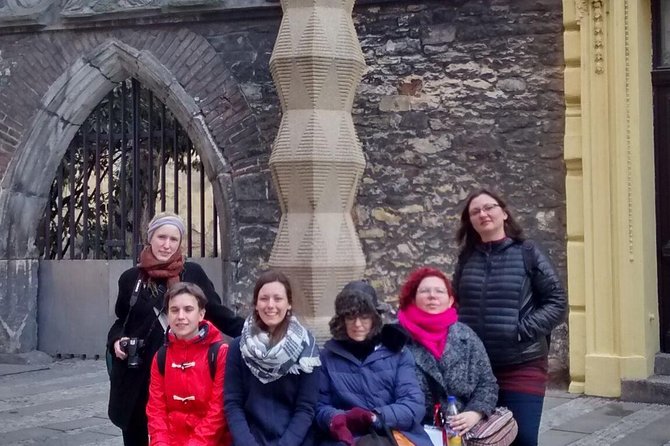
Café Imperial is a compact stop, about 5 minutes, but it can be a mental reset. This is where you see how Art Nouveau shows up not only in façades, but in the mood of an interior.
What you’ll get out of this stop is perspective. The style wasn’t only for official buildings. It was also for everyday places where people went to meet, talk, and show taste. That fits with the wider theme of the tour: Prague’s design movements were tied to the feeling of the era, including Czech optimism and avant-garde thinking.
If you want to make this stop pay off, don’t rush. Quick photos are fine, but spend 30 seconds looking first, then asking your guide what to focus on.
Stop 5: Czechoslovak Legion Bank, Cubism meets national memory
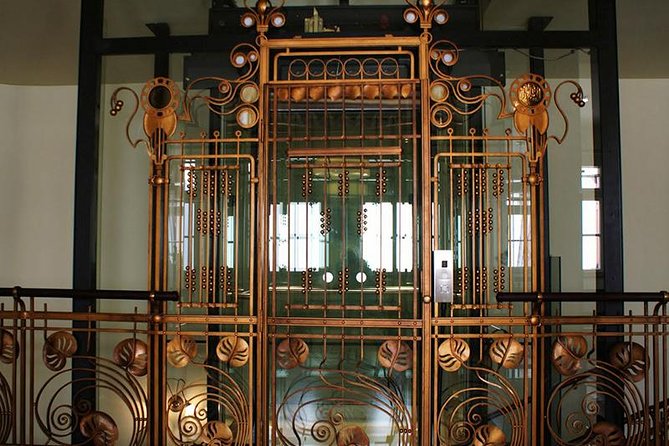
The Czechoslovak Legion Bank stop (about 10 minutes) is a strong example of Cubism in a civic setting. It’s also dedicated to the Czechoslovak Legion of the First World War, so it’s not just style, it’s meaning.
This is a good moment to listen for how the guide connects design choices to the political and cultural climate. Prague’s architectural language changed as Europe changed. Wars and shifting power altered what people valued, and that’s reflected in what looks “modern” in each era.
If you care about context, you’ll likely enjoy this stop the most. It’s a place where the architecture is part of a story you can feel.
Stop 6: Prague Main Train Station, Art Nouveau at the city’s busiest nerve
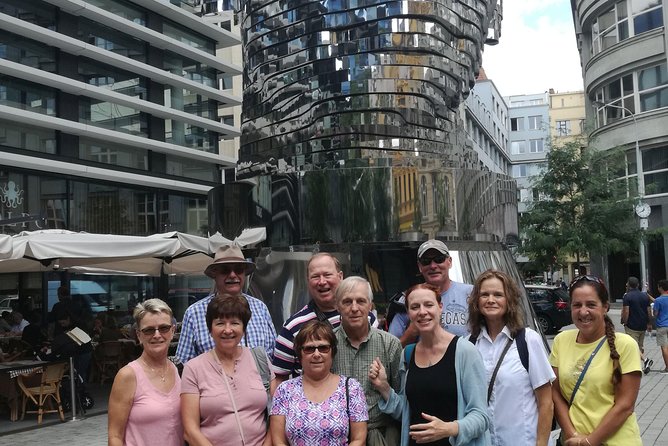
Then you hit Prague Main Train Station, with about 10 minutes to take in the magnificent interior Art Nouveau dome. This stop is practical too. Even if you never use the station the day of the tour, it gives you a mental map for later.
The dome is the headline, but the value is what your guide helps you do with it: understand the space and how to navigate it when you’re tired, late, or holding luggage.
One smart approach here is to look up first, then find landmarks at eye level. Domes can be visually overwhelming when you enter fast. Slowing down helps you remember the building later.
Stop 7: Wenceslas Square, Art Nouveau and Art Deco in one public stage
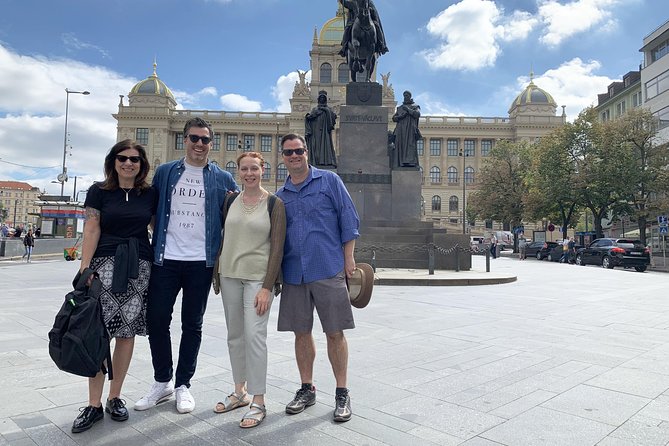
Wenceslas Square gets about 15 minutes, and the theme is the relationship between Art Nouveau and Art Deco in that public space. This stop is useful because it shows that design movements don’t live in isolated neighborhoods. They share streets, façades, and eras.
Your guide will help connect what you see to Czech history and national symbols tied to the Czech National Revival. The square is also a natural place to take a short breather, since it tends to be an open-air pause compared to the more detailed building stops.
Tip: keep an eye out for contrasts. Even when two buildings are close, the design language can feel entirely different. That’s the point of the tour, and this square is where the comparison becomes obvious.
Stop 8: Lucerna Music Bar, arcades and the look of confidence
Lucerna Music Bar is where you get another interior look, around 10 minutes, and it’s described as having some of the most beautiful arcades of Prague with Art Nouveau style. This stop supports the tour’s mood shift: from heavy symbolism to a sense of creative confidence.
What I’d focus on is how the architecture shapes movement. Arcades are designed for flow, and that tells you how people were expected to move through the city, socialize, and spend time. It’s also where the tour’s earlier theme about optimism and avant-garde movements starts to feel real, not abstract.
If you’re photographing, keep it simple. Capture one wider shot, then one close detail. Your brain will thank you later.
Stop 9: The upside-down King Wenceslas, reading modern symbolism
To close, you’ll see the Upside-Down Statue of King Wenceslas Riding a Dead Horse, with about 10 minutes dedicated to symbolism in the context of Czech history and the Czech National Revival.
This final stop matters because it’s the “aftertaste.” The tour is about Art Nouveau and Cubism, but it also shows how Prague keeps reinterpreting identity through art. A contemporary sculpture placed in a historical conversation makes the older styles feel less like museum pieces and more like living influence.
You don’t need to be an art scholar here. Just follow the guide’s framing, and you’ll leave with a cleaner idea of what Czech revival themes look like across different time periods.
What the best guides do with this tour (and why it feels personal)
One of the biggest strengths of this experience is the way guides tailor the walk to your interests and to what the group needs that day. I’ve seen guides steer based on specific architecture preferences like Cubism or Art Deco, and they can adjust timing if buildings are further apart than expected.
You might even get practical help navigating Prague’s main train station, which is no small gift if you’re connecting onward later. And if it rains, the tour still works. The format is designed for problem-solving, not just sunshine.
Guide names you may hear in different departures include Vadim, Matous, Bonita, Betty, and Vad. Whoever you get, the pattern is the same: design details are explained in a way you can actually use to look at buildings yourself afterward.
Learn to spot the clues: gingko leaves, curves, pyramids, and the rest
This tour teaches you a set of visual skills, not just facts. Once you’ve practiced spotting the cues, you’ll notice them everywhere in Prague, even outside the walking route.
Here are the cues your guide will help you find:
- Gingko-like leaves on Art Nouveau façades
- Curvy, distinctive typography tied to the era’s taste
- Elaborate lighting fixtures influenced by Eastern art and aesthetics
- Cubist crystal-like forms and pyramids that feel geometric and bold
- The way styles shift as wars and history changed what Prague needed and valued
If you’re the kind of person who usually walks past buildings without thinking, you’ll start reading the city like a book. If you already love architecture, you’ll enjoy how the tour turns that love into a structured, memorable comparison.
Price and value: why $126.71 can make sense for this many stops
At $126.71 per person for about 3 hours, this isn’t the cheapest way to see Prague. But it can be good value because you’re buying several specific things at once.
First, you get a historian guide for the full time, and the tour is set up as a small-group walk capped at 8 people. That means more back-and-forth, more chances to ask why certain choices were made, and less time lost to noise.
Second, the route includes a string of major landmarks, and the stops are listed as admission ticket free at each location. That reduces surprise costs and makes it easier to plan a day that matches your budget.
What you should plan for: food and drinks aren’t included, and there’s no hotel pickup or drop-off. Also, this is architecture-focused, so it’s not built around long sit-down breaks. If you want cafes, you can plan them yourself near the finish, especially since the end point is close to restaurants and attractions.
Who should book this Prague Art Nouveau and Cubism walk
This tour fits you best if:
- You want Prague’s architecture explained in history context, not just described
- You care about Art Nouveau and Cubism as movements, and you like spotting details
- You appreciate small groups and Q and A time
- You like a guided plan that still leaves you time to explore afterward
It may not be the best choice if you hate walking or you need long indoor breaks every hour. The tour is built for steady movement through central Prague.
Should you book this tour or choose another?
If you want a fast start that makes the rest of Prague click, I’d book it. The route covers iconic stops like Obecní Dum and Prague Main Train Station, but it also trains your eye for Cubism and for the design logic linking the two movements. The small-group size and free-entry structure help this feel like a practical use of a half-day.
If you’re unsure, use this quick checklist: good shoes, you’re curious about architecture details, and you want a historian guide to connect style to Czech history. If that’s you, this tour is a strong pick.
FAQ
How long is the Prague Art Nouveau and Cubism Walking Tour?
The tour lasts about 3 hours.
How much does the tour cost?
The price is $126.71 per person.
Is the tour in English?
Yes, it is offered in English.
What is the group size?
The tour has a maximum of 8 travelers.
Where do I meet the guide and where does the tour end?
You meet at Ovocný trh 19, Staré Město, and you end at Café Louvre, Národní 22.
What sites does the tour include?
Stops include the House of the Black Madonna, Obecní Dum, K+K Hotel Central Prague, Café Imperial, Czechoslovak Legion Bank, Prague Main Train Station, Wenceslas Square, Lucerna Music Bar, and the Upside-Down Statue of King Wenceslas.
Are admission tickets included for the stops?
Admission tickets are listed as free for the stops included on the tour.
What’s included in the price?
A historian guide is included.
What is not included?
Food and drinks are not included unless specified, and there is no hotel pickup and drop-off.
Can I get a full refund if I cancel?
Yes. You can cancel up to 24 hours in advance for a full refund.
More Walking Tours in Prague
More Tours in Prague
More Tour Reviews in Prague
Not for you? Here's more nearby things to do in Prague we have reviewed






Prague Walking Tours, compared.
 ★ 4.73-Hour Walking Tour of Old Town & Prague CastleFrom $305,696 reviews
 ★ 4.4Ghost Walking Tour Where Legends Come To LifeFrom $275,253 reviews
 ★ 4.7Jewish Quarter Walking Tour with Admission TicketsFrom $763,729 reviews
 ★ 5.0Prague Guided Walking Tour and Cruise with Authentic Czech LunchFrom $1023,627 reviews
 ★ 4.6Old Town and Jewish Quarter Guided Walking TourFrom $222,847 reviews
 ★ 4.5Prague Ghost and Legend of Old Town Walking TourFrom $212,630 reviews
 ★ 5.0Prague 3-hour Afternoon Walking Tour including Prague CastleFrom $531,899 reviews
 ★ 4.7Ghosts and Legends Nighttime Guided Walking TourFrom $221,462 reviews
Browse the lists this tour appears in